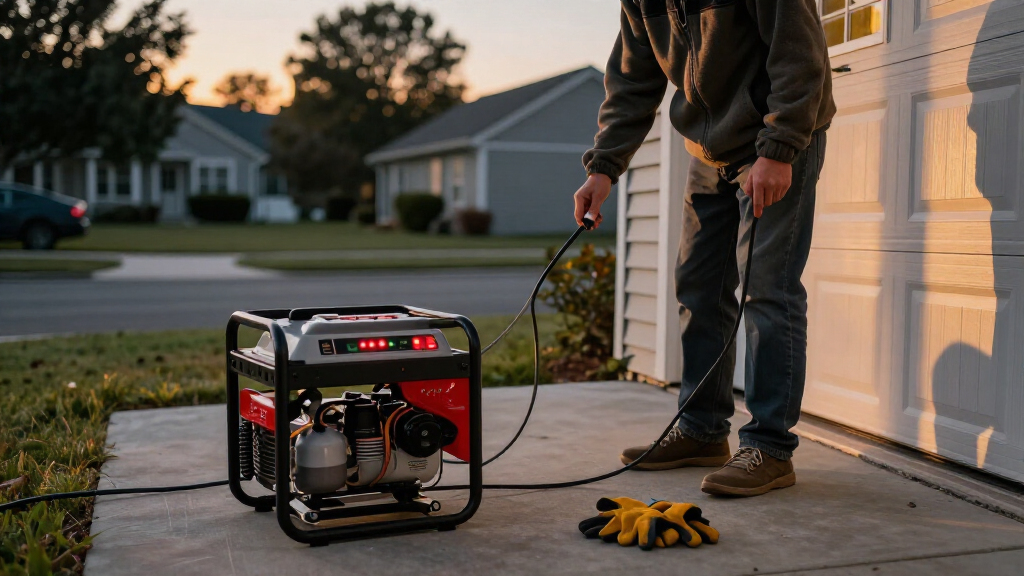

Shopping for home backup generators comes down to one core decision: how much of your house do you want to keep running, and for how long? The Generac 22kW Whole Home Standby Generator earns my best overall pick because it is the only option here that can power an entire house automatically, the moment the grid fails. If a permanent installation is out of reach, the Westinghouse 14500 Peak Watt Tri-Fuel delivers near-standby output in a portable package, while the Jackery HomePower 3600 Plus offers silent, fume-free backup for apartments and essential circuits only. The main tradeoffs in this category are convenience versus cost, fuel flexibility versus noise, and automatic transfer versus manually dragging a unit outside during a storm. Keep reading for the full breakdown of all 13 models.

Get emergency and outdoor gear delivered free with Prime
- Fast, free delivery on millions of items
- Prime Video, Amazon Music and more included
- Member-only deals all year
Complete the kit


Key Takeaways
- Standby generators (the Generac 10kW and 22kW) are the only picks that start automatically during an outage — every portable model here requires you to set it up and start it yourself, usually in bad weather.
- Tri-fuel models (Westinghouse 14500/13500 and Generac 12,500 portable) outperform dual-fuel rivals during extended outages because natural gas never runs out, removing the refueling bottleneck entirely.
- Battery stations like the Jackery HomePower 3600 Plus cannot run a whole house, but they are the only options safe to use indoors, making them the clear choice for apartments, condos, and medically essential devices.
- Wattage ratings are peak, not running — the 13,000W DuroStar and 13,500W Westinghouse both settle well below their headline numbers, so sizing your actual load matters more than the number on the box.
- The two Oxseryn 4400W inverters and the WEN DF475T occupy the entry tier: fine for fridges, lights, and a furnace fan, but undersized for well pumps, electric water heaters, or central AC.


| home backup generator | Engine |
|---|---|
| Oxseryn 4400W Portable Inverte | — |
| Jackery HomePower 3600 Plus Po | — |
| Westinghouse 14500 Peak Watt T | — |
| Generac 10kW Whole Home Standb | — |
| Oxseryn 4400-Watt Open Frame I | — |
| Westinghouse 12500 Watt Dual F | 457cc 4-Stroke OHV with cast iron sleeve |
| Westinghouse 13500 Peak Watt T | 500cc Westinghouse 4-Stroke OHV |
| Generac 22kW Whole Home Standb | — |
| WEN DF475T 4,750-Watt 120V/240 | 224cc 4-stroke OHV |
| DuroStar DS13000MX 13,000-Watt | 500cc |
| Generac 12,500/9,500-Watt Tri- | 500cc Generac OHV |
| Westinghouse WGen5300DFcv 6500 | 274cc Westinghouse 4-Stroke OHV with cast iron sleeve |
| Westinghouse 14500 Peak Watt D | 550cc 4-Stroke OHV Westinghouse |
More Details on Our Top Picks
Oxseryn 4400W Portable Inverter Generator, Gas Powered, Open Frame, Low Noise with ECO Mode, RV Ready
This Oxseryn makes the list as the lowest-cost entry point to real home backup, and its 56-lb frame is the reason. Compared with the Westinghouse 14500 Tri-Fuel, it gives up roughly 8,000 running watts, but it also skips the wheel kit, the bulk, and the fuel-switching complexity. For keeping a fridge, lights, phones, and a space heater alive during an overnight outage, 3400 running watts is enough, and the 14-hour ECO-mode runtime on a 2-gallon tank stretches fuel further than most portables this size. Inverter output also means cleaner power than a conventional open-frame unit like the WEN DF475T, so laptops and TVs are safe. The tradeoff is scale: forget running a well pump, central AC, or an electric water heater. Units may also arrive with a slight gas smell from factory testing, and the open frame offers less protection than enclosed inverters.
Pros:- Lightest serious backup option in the lineup at 56 lbs
- 14-hour runtime in ECO mode stretches a small 2-gallon tank
- Clean inverter power safe for laptops and TVs
- RV port plus two 120V outlets covers most small loads
Cons:- 3400 running watts can’t handle large appliances like well pumps or AC
- Open frame offers less protection than fully enclosed inverter units
Best for: Renters, apartment-adjacent dwellers, and homeowners who need an affordable, carryable unit for essentials during short outages
Not ideal for: Households with well pumps, electric dryers, or central air — 3400 running watts won’t cover them
Our verdict“Buy this if you want grab-and-go backup for the basics and skip it if your outage plan includes large appliances.”
Jackery HomePower 3600 Plus Power Station, 3584Wh, 3600W AC Output
Unlike every gasoline unit in this roundup, the Jackery HomePower 3600 Plus runs entirely indoors with zero fumes, fuel, or maintenance — that alone makes it a category of one here. Its 3584Wh capacity with 3600W output covers refrigeration, lights, and Wi-Fi through a day-plus of outage, and expansion to 43kWh can stretch that to weeks. Compared with the Oxseryn 4400W, it trades unlimited refueling for a hard energy ceiling: once the battery is empty and the sun is gone, you’re done. But the LFP cells rated for 6,000 cycles and a 10-year lifespan mean no carburetor cleanings, no stale fuel, no winter starting headaches — a real advantage over the Westinghouse 14500, which demands ongoing engine care. Note that 240V output requires a parallel second unit, and whole-home integration through an MTS adds real cost. It’s also useless for heavy 240V loads on its own.
Pros:- No fuel, fumes, or engine maintenance — usable indoors during storms
- Expandable from 3584Wh up to 43kWh for extended outages
- 2-hour hybrid recharge gets you back to full fast
- 10-year LFP battery lifespan outlasts most portable generators
Cons:- 240V output only works with a second unit in parallel
- Fixed energy ceiling — no refueling once depleted at night
Best for: Suburban homeowners who want silent, indoor-safe backup for essentials and hate the maintenance that comes with gas engines
Not ideal for: Rural properties with long outages and 240V well pumps — a single unit can’t supply 240V and will eventually run dry
Our verdict“This is the pick for silent, maintenance-free indoor backup, provided you accept its finite capacity and 240V limitations.”
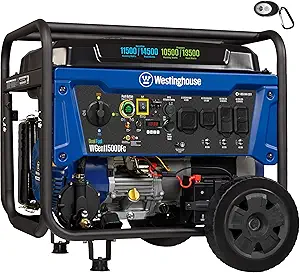
Westinghouse 14500 Peak Watt Tri-Fuel Home Backup Portable Generator
If I had to point to one portable in this lineup that genuinely earns the ‘home backup’ label, it’s this Westinghouse. With 11,500 running watts on gasoline, it can run a well pump, fridge, furnace blower, and more simultaneously — something neither the Oxseryn 4400W nor the Jackery 3600 Plus can approach. The tri-fuel flexibility is the real differentiator: hook it to a natural gas line and you get unlimited runtime without touching a gas can, something the dual-fuel WEN DF475T and DuroStar DS13000MX can’t do. Low THD output protects electronics, the remote electric start beats pulling a cord in the rain, and a 19-hour runtime on the 9.5-gallon tank means fewer midnight refuels. The cost is physical: this unit is heavy and bulky, and you’ll want a transfer switch installed to use it safely at full capability. Expect possible residual oil odor from factory testing on arrival.
Pros:- Tri-fuel operation means you can run on a permanent natural gas line for unlimited runtime
- 11,500 running watts handles large appliances and well pumps
- 19-hour runtime on a full gasoline tank
- Remote electric start and low-THD output safe for electronics
Cons:- Heavy and bulky — plan for two people or a permanent pad
- Needs a transfer switch installation to safely power household circuits
Best for: Homeowners with larger houses or well pumps who want maximum portable power and the option of a natural gas hookup
Not ideal for: Anyone without help moving 200+ lbs of machinery, or those wanting a set-and-forget solution — this still requires manual setup each outage
Our verdict“The most capable portable backup here — buy it if you need whole-house-class power without a standby install.”
Generac 10kW Whole Home Standby Generator with Transfer Switch & Cellular Connectivity
This Generac represents a fundamentally different approach from every other pick: it’s installed, permanent, and fully automatic. When the grid drops, power restores within seconds without you touching anything — even if you’re on vacation. That’s the core advantage over the Westinghouse 14500 Tri-Fuel, which still needs to be rolled out, connected, and started manually in a storm. Running on your existing LP or natural gas supply, it never needs refueling, and the included transfer switch plus cellular Mobile Link monitoring lets you check status from your phone. The 10kW output won’t run everything at once in a large home — the Generac 22kW model covers that — but for essential circuits it’s the right size at a lower installed cost. Be clear-eyed about the tradeoffs: professional installation is mandatory, full monitoring features require a premium subscription, and the total investment dwarfs any portable here.
Pros:- Automatic outage detection and restoration within seconds
- Runs on permanent LP or natural gas — no refueling ever
- Remote monitoring via cellular Mobile Link app
- 5-year warranty with 24/7 support from a nationwide dealer network
Cons:- Requires professional installation, adding significant cost
- Premium subscription needed for full remote monitoring features
Best for: Homeowners who travel or simply want outages handled automatically with zero effort, in small-to-mid-size homes
Not ideal for: Renters, budget-limited buyers, or those in large homes with two AC systems — installation costs and 10kW capacity both become limiting
Our verdict“The set-and-forget choice — buy it if hands-free, always-ready backup matters more than upfront cost.”
Oxseryn 4400-Watt Open Frame Inverter Generator, Gas Powered, RV Ready 30A Outlet
This Oxseryn earns its spot as the roundup’s best two-in-one: a generator that serves weekend RV duty but stays on standby for home emergencies. It’s essentially the sibling of the Oxseryn 4400W ECO-Mode model, sharing the same 4400 peak / 3400 running watts, 56-lb weight, and 14-hour runtime — but this version emphasizes the 30A RV outlet as its headline feature, plus the same low-oil shutdown and overload protection. Compared with a larger dual-fuel option like the Westinghouse WGen5300DFcv, you give up raw wattage and propane capability, but you gain portability that makes it genuinely useful beyond outage day. The safety suite (low oil shutdown, overload protection, cold start tech) means less babysitting during long runs. The honest limit is the same as its twin: 3400 running watts caps you at essentials, and 240V appliances are entirely out of reach. Factory testing may also leave a slight gas smell in the box.
Pros:- 30A RV outlet makes it a true dual-purpose generator for camping and home
- 14-hour runtime at quarter load minimizes refueling
- 56-lb weight makes it easy to move and store
- Low oil shutdown and overload protection reduce failure risk
Cons:- Only 3400 running watts — limited to essentials at home
- No 240V output for well pumps or 240V appliances
Best for: RV owners who want one lightweight unit that pulls double duty as an emergency home backup for essentials
Not ideal for: Homeowners whose priority is whole-house backup — the low wattage and 120V-only output rule out major appliances
Our verdict“Pick this over its twin if RV camping is part of the plan; skip it if home backup means more than the basics.”
Westinghouse 12500 Watt Dual Fuel Home Backup Portable Generator
This model earns its spot by hitting a sweet spot between output and usability. With 9,500 running watts on gasoline and a transfer-switch-ready L14-30R outlet, it can run a refrigerator, sump pump, and lights through a single cord hookup — something the smaller WEN DF475T simply can’t manage with its 3,800 running watts. The remote key fob start means no trudging outside in a storm to pull a cord, and dual fuel flexibility lets you store propane long-term without worrying about gasoline going stale. Compared with the DuroStar DS13000MX, the Westinghouse gives up a bit of peak wattage but adds GFCI protection on household outlets and a detailed VFT data display. The tradeoffs are real, though: 12 hours of runtime is shorter than tri-fuel rivals, and at over 200 pounds it’s portable in name only.
Pros:- Transfer-switch-ready 30A outlet enables clean single-cord whole-panel backup
- Remote key fob start plus electric and recoil backup covers every scenario
- Dual fuel operation lets you stockpile propane that never goes stale
- GFCI outlets with rubber covers and automatic low oil shutdown add safety layers
Cons:- 6.6-gallon tank limits runtime to about 12 hours, requiring mid-outage refueling
- Very heavy and awkward to move despite wheels and handle
- Propane operation drops output to 8,500 running watts
Best for: Homeowners who want a single-cord transfer switch connection for essential circuits without paying for a full standby installation
Not ideal for: Anyone wanting to run a whole house including central air — 9,500 running watts will overload quickly with large HVAC loads
- Running Watts (Gasoline):9,500 W
- Peak Watts (Gasoline):12,500 W
- Running Watts (Propane):8,500 W
- Engine:457cc 4-Stroke OHV with cast iron sleeve
- Fuel Tank:6.6 gallons
- Run Time:Up to 12 hours
- Start Type:Remote key fob, electric, recoil
- Outlets:Two GFCI 120V 5-20R, 120V L14-30R, 120/240V 14-50R
- Warranty:3-year limited
Our verdict“This is the pick for buyers who want true transfer-switch home backup from a portable generator at a mid-range wattage.”
Westinghouse 13500 Peak Watt Tri-Fuel Portable Generator with Remote Electric Start
The standout feature here isn’t wattage — it’s the tri-fuel capability. Running on natural gas means you can connect to your home’s gas line and effectively eliminate refueling stops during a multi-day outage, something no dual-fuel model in this lineup can do. Compared with the Westinghouse 12500 Watt Dual Fuel, you gain roughly 1,000 running watts on gasoline, a bigger 9.5-gallon tank stretching runtime to 19 hours, and a CO shutdown sensor the dual-fuel model lacks. Against the Generac 22kW standby, this costs far less and needs no professional install, but you give up automatic outage detection — you’ll be starting it yourself. The catch is output on natural gas drops to 8,500 running watts, so big simultaneous loads like central AC plus a well pump may push past its limits. It’s also a beast to move, so plan a permanent spot in the garage or shed.
Pros:- Natural gas capability allows unlimited runtime from a home gas line
- 19-hour runtime on a 9.5-gallon tank outlasts most portables
- CO shutdown sensor adds an automated safety layer
- Remote key fob start spares you going outside in bad weather
Cons:- Output drops to 8,500 running watts on natural gas
- Extremely heavy and bulky — expect two people to place it
- Requires professional gas-line connection for the natural gas option
Best for: Homeowners with an existing natural gas line who want essentially unlimited fuel during extended outages
Not ideal for: Renters or anyone without a natural gas hookup — the tri-fuel advantage disappears and lighter dual-fuel models make more sense
- Peak Watts (Gasoline):13,500 W
- Running Watts (Gasoline):10,500 W
- Running Watts (Natural Gas):8,500 W
- Engine:500cc Westinghouse 4-Stroke OHV
- Fuel Tank:9.5 gallons
- Run Time:Up to 19 hours
- Fuel Types:Gasoline, propane, natural gas
- Warranty:3-year limited
Our verdict“This is the strongest choice for homeowners who can tap a natural gas line and want multi-day outage coverage without a standby generator install.”
Generac 22kW Whole Home Standby Generator with Cellular Connectivity
If the portable generators in this roundup are about managing an outage, this one is about ignoring it. The Generac sits permanently outside your home, detects outages automatically, and restores power within seconds — no extension cords, no refueling runs, no key fob. At 22kW it comfortably covers central air, well pumps, and everything else at once, where even the Westinghouse 13500 tri-fuel would have to make compromises. The cellular-based Mobile Link monitoring lets you check status from vacation. But the tradeoffs are substantial: professional installation and fuel hookup are mandatory and push total cost well beyond the sticker, and full remote-monitoring features sit behind a premium subscription. Compared with the Generac 10kW standby also in this guide, this model covers whole-house loads rather than just essentials — worth it only if your panel genuinely needs the headroom.
Pros:- Automatic outage detection restores power with zero user action
- 22kW output handles whole-house loads including central HVAC
- Cellular remote monitoring works from anywhere via Mobile Link
- Weather-resistant build and cold-start optimization for harsh climates
- 5-year limited warranty with 24/7 customer support
Cons:- Professional installation and fuel hookup add significant cost
- Full remote-monitoring features require a premium subscription
- Permanent fixture — no portability or jobsite/RV versatility
Best for: Homeowners in outage-prone or cold-climate regions who want fully automatic, whole-house coverage and never want to think about it
Not ideal for: Budget-conscious buyers or renters — installation costs and permanence make it impractical unless you own and plan to stay in your home
- Power Output:22kW
- Type:Whole home standby generator
- Automatic Outage Detection:Yes
- Connectivity:Built-in cellular (Mobile Link app)
- Cold Start Support:Yes
- Weather Protection:Sloped roof and rear intake design
- Warranty:5-year limited
Our verdict“This is the choice for buyers who want outage recovery to be invisible and can absorb the installation investment.”
WEN DF475T 4,750-Watt 120V/240V Dual Fuel Portable Generator
Not everyone needs to run their whole house — and that’s exactly where this model fits. With 3,800 running watts on gasoline, the WEN covers the essentials: a refrigerator, a few lights, a furnace fan, and phone chargers. The 240V twist-lock outlet means it can still connect to a transfer switch like its bigger siblings, just for a smaller subpanel of circuits. Where the Westinghouse 12500 Dual Fuel offers more than double the output, the WEN counters with genuine practicality — a dial-based fuel switch, an included wheel kit, and an 11-hour half-load runtime that gets most homeowners through a typical outage on one tank. The electric key start removes pull-cord frustration entirely. Real limitations: propane mode drops you to 3,500 running watts, there’s no remote start, and the surge capacity won’t handle a well pump plus fridge starting simultaneously. It’s an essentials machine, not a whole-house solution.
Pros:- 240V twist-lock outlet supports transfer switch connection despite the small size
- Simple dial switching between gasoline and propane
- Electric key start avoids pull-cord struggles
- 11-hour half-load runtime on a single 4-gallon tank
Cons:- 3,800 running watts limits you to a handful of essential circuits
- No remote start, unlike larger Westinghouse models
- Propane mode further reduces output to 3,500 running watts
Best for: Budget-minded homeowners and first-time generator buyers who only need to keep a fridge, lights, and a furnace running
Not ideal for: Households with well pumps, central air, or medical equipment — the wattage ceiling arrives fast under those loads
- Running Watts (Gasoline):3,800 W
- Surge Watts (Gasoline):4,750 W
- Running Watts (Propane):3,500 W
- Engine:224cc 4-stroke OHV
- Fuel Tank:4 gallons
- Run Time:Up to 11 hours at half load
- Start Type:Electric key start
- Outlets:Two 120V GFCI, 120/240V 30A twist-lock, 12V DC
- Warranty:2 years
Our verdict“The most sensible entry point for buyers who want real home backup capability without paying for wattage they’ll never use.”
DuroStar DS13000MX 13,000-Watt 500cc Dual Fuel Portable Generator
This is the brute-force option in the lineup. At 13,000 watts peak with a 500cc engine, the DuroStar goes toe-to-toe with the Westinghouse 13500 tri-fuel on output but skips the natural gas option, which keeps things simpler if you’ll never use it. The 50-amp transfer-switch-ready outlet is the key spec here — it’s the same connection standard the Westinghouse 12500 offers, but with enough headroom to start a 3-ton AC unit or a well pump without tripping. The CO Alert auto-shutdown matches modern safety standards across this category. Where it trails the Westinghouse units is refinement: no GFCI household outlets, no data display, and the open-frame 500cc engine is loud enough that neighbors will know it’s running. Build quality is solid thanks to the all-metal steel frame, but plan for a permanent storage spot — moving this alone is not realistic.
Pros:- 13,000-watt peak output handles large motor starting loads
- 50-amp transfer switch ready outlet supports higher-capacity panels
- CO Alert detection with automatic shutdown for safety
- Rugged all-metal steel frame built for rough handling
Cons:- 500cc engine is loud during operation
- No natural gas option unlike the Westinghouse tri-fuel
- Very large and heavy, with limited real portability
Best for: Buyers who prioritize maximum wattage for large starting loads like AC compressors and well pumps on a portable budget
Not ideal for: Suburban homes with close neighbors or anyone sensitive to noise — this engine is loud under load
- Peak Wattage:13,000 W
- Engine:500cc
- Fuel Type:Gasoline / Propane (Dual Fuel)
- Start Type:Push-button electric / remote start
- Key Outlet:50-Amp transfer switch ready
- Safety:CO Alert detection with auto shutdown
- Construction:All-metal steel frame
Our verdict“The pick when sheer wattage per dollar matters more than refinements like quiet operation or fuel flexibility.”
Generac 12,500/9,500-Watt Tri-Fuel Portable Generator with Electric Start
What separates the Generac Tri-Fuel from nearly every portable in this roundup is its ability to run on natural gas alongside gasoline and propane. If your home already has a gas line, that means virtually unlimited runtime during an extended outage — something the Westinghouse WGen5300DFcv, limited to gasoline and propane, simply can’t match. The 12,500 starting watts give it enough surge headroom to start a central air conditioner or a heavy sump pump, and the push-button electric start spares you the arm workout a smaller unit like the WEN DF475T demands. The tradeoffs are real: at 219 lbs, you’ll want to park it where it lives, and tapping natural gas requires a dedicated gas line installation by a professional. Compared with the Westinghouse 14500 Peak Watt model, you give up some raw wattage but gain a third fuel option that outlasts any tank.
Pros:- Tri-fuel flexibility with simple dial switching between gasoline, propane, and natural gas
- High surge capacity handles air conditioners, sump pumps, and power tools
- COsense carbon monoxide detection with automatic shutdown
- Push-button electric start with battery included
Cons:- At 219 lbs, relocation is difficult even with never-flat wheels
- First oil change required at only 20 hours of use
- Natural gas hookup requires a professionally installed dedicated gas line
Best for: Homeowners with an existing natural gas line who want essentially unlimited runtime during extended outages without refueling
Not ideal for: Renters or anyone without access to a natural gas connection — the third fuel option goes unused and you’re carrying 219 lbs for nothing
- Starting Watts:12,500
- Running Watts:9,500
- Engine:500cc Generac OHV
- Fuel Types:Gasoline, Liquid Propane, Natural Gas
- Fuel Tank Capacity:7.5 gallons
- Runtime:Up to 9.5 hours at 50% load (gasoline)
- Start Type:Electric start with included 12V battery
- Weight:219 lbs
- Warranty:3-year residential / 2-year commercial limited
Our verdict“This is the pick for homeowners whose natural gas service makes refueling a non-issue during multi-day outages.”
Westinghouse WGen5300DFcv 6500 Peak Watt Dual Fuel Portable Generator with CO Sensor
Not everyone needs to power an entire house, and the WGen5300DFcv is built for that buyer — the one who wants to keep a fridge, furnace blower, some lights, and a few chargers running through an outage. Its 5,300 running watts won’t start a central air unit like the Generac 12,500-watt tri-fuel can, but that’s the point: you’re trading whole-house muscle for a machine that’s easier to store, move, and afford. The 14.5-hour runtime from its 4.7-gallon tank actually beats larger units at partial load, meaning fewer midnight refueling trips. With both an RV-ready TT-30R and a transfer-switch-ready L14-30R outlet, it doubles as a travel companion in a way the heavier home-focused models here can’t. Be aware that output drops to 4,800 running watts on propane, so size your essentials around the lower number.
Pros:- Dual fuel capability with versatile gasoline or propane operation
- Up to 14.5 hours of runtime with a built-in fuel gauge
- Both RV-ready and transfer-switch-ready 30A outlets
- Includes CO sensor, low-oil shutdown, wheel kit, and plug-and-play accessories
Cons:- Minimal assembly required out of the box
- Propane output drops to 4,800 running watts — noticeably less than gasoline
- May arrive with residual oil or fuel odor from factory testing
Best for: Budget-conscious homeowners who only need to back up essentials — fridge, furnace, lights — and want a generator that doubles for RV trips
Not ideal for: Households that need to run a central air conditioner or well pump — the surge capacity isn’t there
- Gasoline Output:5,300 running / 6,500 peak watts
- Propane Output:4,800 running / 5,800 peak watts
- Engine:274cc Westinghouse 4-Stroke OHV with cast iron sleeve
- Fuel Type:Dual Fuel (Gasoline / Propane)
- Fuel Tank Capacity:4.7 gallons
- Run Time:Up to 14.5 hours
- Outlets:5-20R duplex, TT-30R RV-ready, L14-30R transfer switch ready
- Warranty:3-year limited with lifetime technical support
Our verdict“The smart entry point for essential-circuit backup without paying for wattage you’ll never use.”
Westinghouse 14500 Peak Watt Dual Fuel Home Backup Portable Generator, Remote Electric Start, Transfer Switch Ready
When the Westinghouse 14500 sits at the top of the portable heap in this roundup, with 11,500 running watts on gasoline — enough to run most of a mid-size home simultaneously rather than juggling circuits. Compared with the Generac tri-fuel, it trades the natural gas option for more raw wattage and a remote electric start, which means you can fire it up from inside the house during a storm. The low THD output is the quiet differentiator against brute-force units like the DuroStar DS13000MX: it’s safe for phones, laptops, and TVs without a separate inverter. Runtime is a standout too — up to 19 hours on gasoline, stretching refueling intervals through the night. The compromises are predictable: it’s large and heavy enough that portability is theoretical, and propane runtime drops to just 7 hours on a standard 20 lb. tank.
Pros:- 11,500 running watts covers most household loads at once
- Low THD output protects sensitive electronics like computers and TVs
- Remote electric start and transfer-switch-ready design simplify home integration
- Up to 19 hours of gasoline runtime with built-in fuel gauge
Cons:- Large and heavy, limiting real-world portability
- Propane runtime drops sharply to about 7 hours on a 20 lb. tank
Best for: Owners of larger homes who want near-standby-generator coverage from a portable unit, including sensitive electronics
Not ideal for: Campers or anyone who plans to move the generator regularly — its size and weight make it a semi-permanent installation
- Peak Wattage (Gasoline):14,500W
- Running Wattage (Gasoline):11,500W
- Peak Wattage (Propane):13,500W
- Engine:550cc 4-Stroke OHV Westinghouse
- Fuel Tank Capacity:9.5 gallons with fuel gauge
- Runtime (Gasoline):Up to 19 hours
- Start Type:Remote electric start
- Key Features:Transfer switch ready, low THD, copper windings, cast iron sleeve
Our verdict“The closest a portable gets to whole-house backup — ideal if you want standby-level power without a permanent installation.”

How We Picked
I ranked these generators against the realities of a power outage, not spec sheets. The first filter was power delivery: whether a unit could actually run essential household loads — a refrigerator, furnace fan, well pump, and some lighting — or whether it belonged in the camping-and-tailgating tier. The second was fuel strategy, where tri-fuel capability scored highest because natural gas eliminates refueling runs, followed by dual fuel, then gasoline-only. Third, I weighed startup and transfer convenience: automatic standby units with transfer switches sit at the top, remote electric start comes next, and pull-start portables rank last for a reason nobody appreciates until they are standing in the rain.
From there, I factored in noise, safety features (CO sensors, low-oil shutoff), and total cost of ownership, including installation for standbys and fuel storage demands for portables. The ranking order reflects a simple philosophy: the best home backup generator is the one that delivers power when you need it with the fewest failure points and the least effort. That is why automatic standbys lead, tri-fuel portables follow, and small inverters and battery stations fill specific niches rather than pretending to be whole-house solutions.
Factors to Consider When Choosing Home Backup Generators
Before you commit to any of the 13 models above, step back and think about your outage profile. The most common mistake buyers make is purchasing based on headline wattage instead of how they will actually use the machine.Sizing: Running Watts, Not Peak Watts
Manufacturers advertise peak wattage because it is the bigger number, but your appliances live on running watts, and the gap between the two can be 20 to 30 percent. Worse, motors — well pumps, furnace blowers, refrigerators — draw a startup surge that can briefly double their running load, and an undersized generator will trip or stall when two surges overlap. A realistic approach is to list every circuit you genuinely need during an outage, add up running watts, then layer in surge headroom of at least 25 percent. Many buyers who choose a mid-tier portable based on the box number end up doing an unplanned load-shedding dance every time the fridge compressor kicks on. Whole-home standbys sidestep the math because they are sized to the house, which is part of what you are paying for.
Fuel Type and the Refueling Problem
Gasoline is easy to buy beforehand and miserable to store: it degrades within months, and gas stations need electricity to pump, so a regional outage can cut off your supply exactly when you need it. Propane stores indefinitely and burns cleaner, but delivers roughly 10 percent less power than gasoline on most dual-fuel engines. Natural gas from a utility line is the gold standard for long outages because it never needs refueling — the reason tri-fuel models and standby generators rank so highly here. If you go the gasoline route, plan on fuel stabilizer, rotation, and a safe storage plan; a generator without fuel is a very heavy paperweight. Also verify your propane tank size: a large portable on propane can drain a standard 20-pound BBQ cylinder in under a day at half load.
Portable Versus Standby: The Convenience Gap
A portable generator is a tool you operate; a standby generator is a system that operates itself. Standbys start automatically within seconds of an outage, transfer power through a dedicated switch, and exercise themselves weekly — but they require professional installation, a concrete pad or mounting, and a gas line connection, all of which add real cost beyond the sticker price. Portables cost far less and can serve double duty at job sites or campgrounds, but during an actual storm you are the transfer switch: wheeling it out, running cords or connecting a manual transfer switch, and refueling it every 8 to 12 hours. If your region sees frequent short outages, that manual routine gets old fast. If outages are rare, the portable’s flexibility often wins the value argument.
Transfer Switches and Safe Connection
Back-feeding a generator into a wall outlet is dangerous and illegal — it can electrocute utility workers and burn down your house. The safe options are a manual transfer switch wired into your panel (which several picks here are explicitly designed for), a generlock/interlock kit on your breaker panel, or plain heavy-duty extension cords for small loads. Transfer-switch-ready models simplify installation and let you power hardwired circuits like a furnace, which no extension cord can reach. Budget for the electrician when comparing prices: a transfer switch installation can cost as much as a decent portable generator itself. Skipping this step is the single most dangerous shortcut in generator ownership.
Noise, Emissions, and Where You Can Run It
Open-frame portables run loud enough to annoy a neighborhood and can violate local noise ordinances during overnight hours; inverter models like the Oxseryn units are dramatically quieter, which matters when the generator sits 15 feet from bedroom windows. Carbon monoxide is the other constraint: engine generators must always run outdoors, at least 20 feet from any opening in the house, and never under a covered porch. CO-sensor-equipped models add a genuine safety margin, especially if family members might help operate the unit. Battery stations are the exception — silent and emission-free, they can run indoors, which is why they dominate for apartments and medical equipment despite their limited capacity. Check your local ordinances before buying; some HOAs and municipalities restrict permanently installed generators or require permits.
Maintenance and Long-Term Reliability
A generator you have not maintained is a generator that will not start, and the failure usually reveals itself during the first outage. Gasoline engines need oil changes, spark plugs, and fuel system care on a schedule, while standby units automate some of this with weekly self-exercise runs but still need annual service. Propane and natural gas engines sidestep the fuel-degradation problem entirely, which is one more reason fuel flexibility ranks so heavily in my ordering. Battery stations flip the maintenance equation: nearly zero upkeep, but the battery chemistry ages whether you use it or not, typically losing capacity over a decade. Whichever type you choose, run it under load a few times a year so problems surface on a sunny Saturday instead of during an ice storm.
Frequently Asked Questions
Can a portable generator actually power my whole house, or do I need a standby?
Most portables in this lineup, even the 14,500-watt Westinghouse models, can cover the majority of household circuits — furnace, refrigerator, well pump, lights, and electronics — but not everything simultaneously, especially if you have central air conditioning or an electric dryer. A 22kW standby like the Generac exists precisely because it can carry the entire panel, including heavy 240-volt loads, without thinking about load management. If you are willing to be deliberate about what you run and when, a large portable plus a transfer switch handles most real outages for a fraction of a standby’s installed cost. The honest answer is that a portable powers a well-managed house, while a standby powers a house you never have to think about.
Is propane or gasoline better for backup power?
For pure power output, gasoline wins slightly — dual-fuel engines typically produce about 10 percent more wattage on gasoline than propane. But for backup specifically, propane is usually the smarter choice because it stores indefinitely without stabilizer, does not gum up the carburetor during the months between outages, and is safer to stockpile. Gasoline’s fatal weakness is availability: stations need electricity to pump, so a widespread outage can strand you with whatever is in your shed. That is why my highest-ranked portables are tri-fuel — with a natural gas hookup, refueling stops being your problem entirely.
Do I legally need a transfer switch, or can I just use extension cords?
Extension cords are legal and work fine for a small inverter running a fridge and some lamps, provided the cords are heavy-duty outdoor-rated ones sized for the load. The legal line you cannot cross is back-feeding a generator into a household outlet, which is both illegal in most jurisdictions and genuinely lethal to utility line workers. Once you want to power hardwired circuits — a furnace, sump pump, or well pump — a transfer switch or interlock kit becomes necessary, and an electrician should install it. Several models here are labeled transfer-switch-ready for exactly this reason, and the installation cost should be part of your total budget comparison.
Are battery power stations like the Jackery a real substitute for a generator?
For short outages and limited loads, yes — a 3.6kWh station will run a refrigerator for roughly a day, keep phones and laptops charged for a week, and do it all silently with zero fumes, which no engine generator can match. The limits appear in two places: total capacity runs out with no way to refill it unless you have solar panels or grid power returns, and 3,600 watts of output cannot start heavy motor loads like a well pump or central AC. For an apartment dweller, someone with medical devices, or a suburban homeowner who just needs bridge power for a few hours, a battery station is genuinely the better tool. For multi-day rural outages, it is a complement to a generator, not a replacement.
What size generator do I need to run a refrigerator, furnace, and a few lights?
That basic essentials package typically calls for 3,000 to 5,000 running watts, which is exactly the territory of the Oxseryn inverters and the WEN DF475T. The refrigerator needs roughly 700 watts with a startup surge near 1,200, a gas furnace blower draws 400 to 800 watts with a motor surge of its own, and LED lighting is almost negligible. Add a margin of 25 percent or more for surge overlap so the unit does not trip when the fridge and furnace start simultaneously. Where buyers get caught is the extras — a sump pump, microwave, or coffee maker can each add 1,000-plus watts, so list your real must-haves before settling on a small unit.
Conclusion
For most homeowners serious about outage protection, the Generac 22kW Whole Home Standby is the best overall choice — it is the only model here that removes you from the equation entirely, restoring power before you have found a flashlight. The best value pick is the Westinghouse 12500 Watt Dual Fuel, which covers nearly all essential circuits and connects to a transfer switch for far less than a standby with installation. If money is no object and whole-house comfort is the goal, the Generac 10kW with cellular monitoring (or the 22kW) represents the premium tier, with the Generac 12,500 Tri-Fuel portable as the premium pick for those who want standby-class power without permanent installation.
For beginners, the WEN DF475T is the gentlest entry point — simple, forgiving, and enough for the essentials without overwhelming you with load management. Apartment dwellers and anyone with medical or home-office needs should go straight to the Jackery HomePower 3600 Plus, the only indoor-safe option in this lineup. And if your priority is maximum flexibility during long outages, the tri-fuel Westinghouse 14500 is the strongest all-around portable, because natural gas means you never make a refueling run in a storm. Match the machine to your outage reality, budget for the transfer switch, and whichever of these 13 you choose will earn its keep the next time the lights go out.