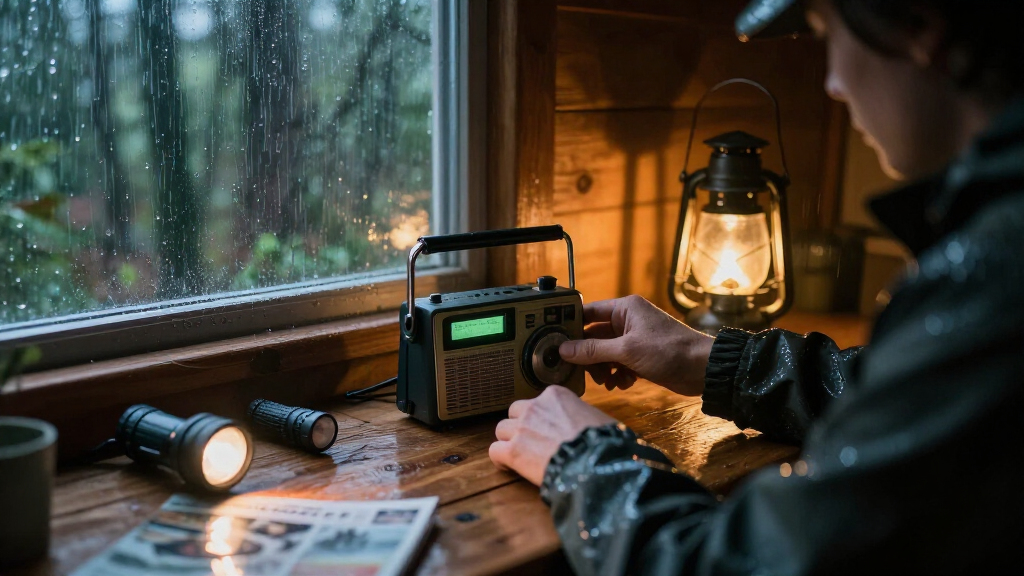

Hand crank emergency radios can keep weather alerts and basic lighting within reach when the power goes out, but they vary in battery capacity, charging options, and ease of use. I rank the Midland ER310 as the best overall choice for buyers who want a dedicated emergency radio, while the Leaton 10,000mAh and FosPower solar-and-crank radio stand out for their backup-power features and practical charging mix. Larger batteries may offer more phone-charging reserve, while simpler or smaller radios can be easier to store and operate. No hand crank should be treated as a quick replacement for a wall charger, so the right pick depends on how you expect to use it. Read on for the full comparison, buying advice, and recommendations by need.

Get emergency and outdoor gear delivered free with Prime
- Fast, free delivery on millions of items
- Prime Video, Amazon Music and more included
- Member-only deals all year
Key Takeaways
- The Midland ER310 earns the lead as the dedicated-radio pick; battery-heavy alternatives put more emphasis on backup power for other devices.
- 10,000mAh and 12,000mAh models offer more stated reserve for charging a phone, though battery capacity alone does not reveal how efficiently a radio converts stored power into usable phone charge.
- Solar and hand-crank charging recur across the lineup, but both are best treated as backup methods; a charged battery and a separate charging plan matter for longer outages.
- Compact emergency models such as the Esky trade some battery capacity for a smaller, simpler package, while feature-rich options add lights, alarms, or phone charging that may take more space.
- NOAA reception and alert access deserve priority over extra accessories: a siren or reading lamp cannot replace the value of receiving local weather information when severe conditions develop.
| FosPower NOAA Emergency Weather Radio with Solar Panel and Hand Crank |  | Best for Everyday Emergency Kits | Radio reception: NOAA, AM, and FM | Power bank capacity: 7400mWh (2000mAh) | Power sources: Hand crank, solar panel, AAA batteries | VIEW LATEST PRICE | See Our Full Breakdown |
| Leaton Hand Crank Emergency Weather Radio with 10,000mAh Battery |  | Best for Wet-Weather Kits | Battery capacity: 10,000mAh | Radio bands: AM 520–1710kHz, FM 87–108MHz, NOAA 162.400–162.550MHz | Charging methods: USB-C, solar panel, hand crank | VIEW LATEST PRICE | See Our Full Breakdown |
| Emergency Weather Radio with Hand Crank, Solar Charging, and 10,000mAh Battery |  | Best for Weather Scanning | Battery capacity: 10,000mAh / 37,000mWh | Charging methods: Hand crank, solar panel, internal lithium-ion battery | Weather channels: 7 NOAA weather band channels | VIEW LATEST PRICE | See Our Full Breakdown |
| Solar Emergency Radio with 12,000mAh Battery, Hand Crank, and NOAA/AM/FM Reception |  | Best for Multiple Backup Power Sources | Battery capacity: 12,000mAh lithium battery | Radio bands: NOAA, FM, AM | Power sources: Solar panel, hand crank, lithium battery, USB-C input, 3 AAA batteries | VIEW LATEST PRICE | See Our Full Breakdown |
| Emgykit Hand-Crank Emergency Radio with AM/FM/NOAA Weather Band |  | Best Compact Pick | Radio bands: AM/FM/NOAA | Power sources: Hand crank, solar, USB-C | Battery capacity: 2,000mAh | VIEW LATEST PRICE | See Our Full Breakdown |
| Midland ER310 Emergency Crank Weather AM/FM Radio |  | Best for Alert-Focused Preparedness | Radio bands: AM/FM | Weather features: NOAA weather scan and alerts | Power sources: Solar, hand crank, and six AA batteries | VIEW LATEST PRICE | See Our Full Breakdown |
| Portable NOAA Weather Radio with Solar, Hand Crank, AM/FM, and 7400 mWh Battery |  | Best Compact Multi-Power Pick | NOAA channels: 7 preset channels | AM frequency range: 520–1710 kHz | FM frequency range: 87.5–108 MHz | VIEW LATEST PRICE | See Our Full Breakdown |
| Emergency Weather Radio with Large Solar Panel and Hand Crank |  | Best for Wet Outdoor Use | Battery capacity: 12,000 mAh | Solar panel: 8500 mm² monocrystalline | Charging methods: 5 | VIEW LATEST PRICE | See Our Full Breakdown |
| Raynic Solar Hand Crank Emergency Weather Radio, 5000mAh |  | Best for Broader Radio Reception | Tuner: AM/FM/SW/NOAA | NOAA channels: 7 preset channels | Battery capacity: 5000 mAh | VIEW LATEST PRICE | See Our Full Breakdown |
| Hand Crank Emergency Radio with 7400mWh Battery |  | Best for Charging Multiple Phone Types | Battery capacity: 7400 mWh (2000 mAh) | Power sources: USB-C, hand crank, solar panel, and AAA batteries | Built-in charging cables: Lightning, USB-C, and Micro USB | VIEW LATEST PRICE | See Our Full Breakdown |
| WVL Emergency Weather Radio with Solar Charging, Hand Crank, Flashlight, Reading Lamp, Phone Charger, and SOS Siren |  | Best Compact Multi-Function Pick | Radio bands: AM, FM, NOAA weather | Battery capacity: 7400 mWh | Power sources: Hand crank, solar panel, built-in rechargeable Li-ion battery | VIEW LATEST PRICE | See Our Full Breakdown |
| Raynic Emergency Weather Radio with Solar and Hand-Crank Charging |  | Best for Weather Monitoring | Radio bands: AM, FM, SW, NOAA | Battery capacity: 5000 mAh / 18,500 mWh | Charging options: Rechargeable battery, AC adapter, USB input, hand crank, solar panel, 3 AAA batteries (not included) | VIEW LATEST PRICE | See Our Full Breakdown |
| Esky Emergency Hand Crank Weather Radio with 2000mAh Battery, 3-LED Flashlight, and SOS Alarm |  | Best for Simple Camping Kits | Radio bands: AM, FM, NOAA | Battery capacity: 2000 mAh | Charging methods: USB-C, solar panel, hand crank | VIEW LATEST PRICE | See Our Full Breakdown |
| RunningSnail Hand Crank Emergency Weather Radio with Flashlight |  | Best Basic Grab-and-Go Pick | Radio bands: AM, FM, NOAA | Battery capacity: 2000 mAh / 7400 mWh | Power sources: Hand crank, solar, rechargeable battery | VIEW LATEST PRICE | See Our Full Breakdown |
| 12000mAh Emergency Weather Radio with Hand Crank and Solar Charging |  | Best for Extended Outages | Battery capacity: 12,000 mAh / 44,400 mWh | Radio bands: AM, FM, 7 NOAA weather channels | Speaker: 57 mm, 5 W | VIEW LATEST PRICE | See Our Full Breakdown |
| hand crank emergency radio | Battery capacity | Power sources | Radio bands | Dimensions |
|---|---|---|---|---|
| FosPower NOAA Emergency Weathe | — | Hand crank, solar panel, AAA batteries | — | — |
| Leaton Hand Crank Emergency We | 10,000mAh | — | AM 520–1710kHz, FM 87–108MHz, NOAA 162.400–162.550MHz | 6.3 × 3.5 × 3.1 in |
| Emergency Weather Radio with H | 10,000mAh / 37,000mWh | — | — | — |
| Solar Emergency Radio with 12, | 12,000mAh lithium battery | Solar panel, hand crank, lithium battery, USB-C input, 3 AAA batteries | NOAA, FM, AM | 6.8 × 4.7 × 2.9 inches |
| Emgykit Hand-Crank Emergency R | 2,000mAh | Hand crank, solar, USB-C | AM/FM/NOAA | 5.1 × 2.1 × 2.4 inches |
| Midland ER310 Emergency Crank | — | Solar, hand crank, and six AA batteries | AM/FM | 9.61 × 2.95 × 6.85 inches |
| Portable NOAA Weather Radio wi | 7400 mWh (2000 mAh) | Solar, hand crank, USB-C, built-in battery, and AAA batteries | — | 6 × 3 × 1.6 inches |
| Emergency Weather Radio with L | 12,000 mAh | — | — | — |
| Raynic Solar Hand Crank Emerge | 5000 mAh | Hand crank, solar, rechargeable battery, 3 AAA batteries, and AC power | — | Listed as 6.8 × 3.7 × 2.9 inches; description also states 7.5 × 3.5 × 4.7 inches |
| Hand Crank Emergency Radio wit | 7400 mWh (2000 mAh) | USB-C, hand crank, solar panel, and AAA batteries | NOAA weather and AM/FM | — |
| WVL Emergency Weather Radio wi | 7400 mWh | Hand crank, solar panel, built-in rechargeable Li-ion battery | AM, FM, NOAA weather | 130 × 50 × 60 mm |
| Raynic Emergency Weather Radio | 5000 mAh / 18,500 mWh | — | AM, FM, SW, NOAA | — |
| Esky Emergency Hand Crank Weat | 2000 mAh | — | AM, FM, NOAA | — |
| RunningSnail Hand Crank Emerge | 2000 mAh / 7400 mWh | Hand crank, solar, rechargeable battery | AM, FM, NOAA | — |
| 12000mAh Emergency Weather Rad | 12,000 mAh / 44,400 mWh | Rechargeable battery, solar, hand crank, USB, 3 AAA batteries | AM, FM, 7 NOAA weather channels | 6.8 × 2.9 × 4.7 in |
More Details on Our Top Picks
FosPower NOAA Emergency Weather Radio with Solar Panel and Hand Crank
For a home emergency kit that needs a radio and basic lighting in one unit, the FosPower pairs NOAA, AM, and FM reception with a flashlight, reading light, and SOS alarm. Its three power options let you switch between hand cranking, solar charging, and AAA batteries, which gives it more fallback choices than the USB-C-equipped Leaton when charging from a cable is preferred. The built-in power bank can top up a phone or other small device, but its 2,000mAh capacity is modest, so I would treat that as backup power rather than a full recharge. Unlike the 10,000mAh models in this lineup, it offers less stored energy; in return, its straightforward mix of functions suits a general household kit. Buyers should keep AAA batteries available for periods without useful sun or enough time to crank.
Pros:- Receives NOAA weather broadcasts as well as AM and FM stations
- Hand crank, solar panel, and AAA batteries provide three ways to power the radio
- Combines a flashlight, reading light, and SOS alarm
- Limited lifetime warranty
Cons:- The 2,000mAh power bank is suited to small emergency top-ups, not repeated phone charging
- AAA batteries are needed when crank and solar power are unavailable
Best for: Households assembling a basic outage kit that want NOAA reception, multiple power sources, lights, and a small-device backup charger in one radio.
Not ideal for: Campers who need a larger phone-charging reserve or prefer USB-C charging, since its listed power bank is only 2,000mAh and USB-C is not listed.
- Radio reception:NOAA, AM, and FM
- Power bank capacity:7400mWh (2000mAh)
- Power sources:Hand crank, solar panel, AAA batteries
- Reading light:4-LED
- Flashlight:1W
- Additional feature:SOS alarm
- Warranty:Limited lifetime
Our verdict“Choose the FosPower for a straightforward household emergency kit with flexible power and useful lighting, and look to a 10,000mAh model if phone charging capacity matters more.”
Leaton Hand Crank Emergency Weather Radio with 10,000mAh Battery
The Leaton stands out for buyers who expect rain, splashes, or spray: its IPX6 water resistance is a clearer protection rating than the unspecified water-resistant construction listed for the 12,000mAh radio in this roundup. A 10,000mAh battery and USB output also give it more phone-charging reserve than the FosPower, while USB-C, solar, and hand-crank inputs offer several ways to replenish it. At about 1.1 pounds and 6.3 inches long, it is a practical size for a vehicle or backpack kit. Its main weather-radio compromise is operational: NOAA broadcasts need manual tuning, and there are no automatic or location-based alerts. That makes it less suitable for someone who wants the radio to warn them without active listening. The IPX6 rating protects against strong water jets, but the product is not for immersion.
Pros:- 10,000mAh battery with 5V/1A USB output for emergency phone charging
- USB-C, solar, and hand-crank charging options
- IPX6 water resistance for exposure to splashes and spray
- Compact 1.1-pound design includes a compass, flashlight, and reading lamp
Cons:- NOAA broadcasts require manual tuning; automatic and location-based alerts are not supported
- Water resistance does not cover immersion
- No headphone jack
Best for: Backpackers and drivers who want a portable radio with a defined splash and spray resistance rating plus a comparatively large battery for emergency phone charging.
Not ideal for: People who need automatic severe-weather alerts or hands-free monitoring, since NOAA stations must be tuned manually and alerts are not supported.
- Battery capacity:10,000mAh
- Radio bands:AM 520–1710kHz, FM 87–108MHz, NOAA 162.400–162.550MHz
- Charging methods:USB-C, solar panel, hand crank
- USB output:5V/1A
- Water resistance:IPX6
- Dimensions:6.3 × 3.5 × 3.1 in
- Weight:About 1.1 lbs (500g)
- NOAA alerts:Manual tuning; no automatic or location-based alerts
Our verdict“Pick the Leaton for a portable, spray-resistant kit with substantial battery capacity, provided you are comfortable tuning NOAA channels yourself.”
Emergency Weather Radio with Hand Crank, Solar Charging, and 10,000mAh Battery
Among these picks, this model is the one to favor when finding a NOAA broadcast quickly matters: it automatically scans seven weather channels, avoiding the Leaton’s requirement to tune NOAA manually. Its 10,000mAh battery, hand crank, and solar charging add useful flexibility, while the flashlight and SOS alarm cover basic signaling and visibility. The package also includes a thermal blanket and a survival bracelet with a compass, blade, whistle, and fire starter, giving it more trail-oriented extras than the FosPower. Those accessories broaden its appeal, but the product data do not list dimensions, weight, runtime, or charging performance. That leaves buyers with less information about how easily it fits a pack and how long it can run. I would choose it for channel scanning and emergency extras, not for a documented runtime or size.
Pros:- Automatically scans seven NOAA weather channels
- 10,000mAh battery with hand-crank and solar charging
- Includes a flashlight, SOS alarm, USB port, and headphone jack
- Thermal blanket and survival bracelet add emergency supplies
Cons:- Dimensions and weight are not specified
- Battery runtime and charging performance are not stated
- The included accessories may matter less to buyers seeking a simple, compact radio
Best for: Hikers and preparedness-minded buyers who value automatic NOAA channel scanning and want a radio bundled with basic survival accessories.
Not ideal for: Buyers who need to compare pack size, weight, or expected runtime before choosing, since those details are not provided.
- Battery capacity:10,000mAh / 37,000mWh
- Charging methods:Hand crank, solar panel, internal lithium-ion battery
- Weather channels:7 NOAA weather band channels
- Additional features:Flashlight, SOS alarm with flashing red light, USB port, headphone jack
- Thermal blanket weight:55g
- Survival bracelet:10ft paracord, compass, blade, whistle, magnesium fire rod
Our verdict“Choose this model if automatic NOAA scanning and bundled survival gear matter more to you than having published size and runtime details.”
Solar Emergency Radio with 12,000mAh Battery, Hand Crank, and NOAA/AM/FM Reception
For buyers who want several ways to keep a radio available through a long outage, this model offers an unusually broad set: USB-C, solar, hand crank, a 12,000mAh lithium battery, and three AAA batteries. That combination makes it more adaptable than the FosPower, which has a smaller listed power bank and no USB-C input. Its NOAA, AM, and FM reception, two-level flashlight and reading lamp, and SOS alarm also cover the core emergency tasks. The tradeoff is bulk: at 1.6 pounds and 6.8 inches long, it is heavier than the Leaton, so it fits a home or car kit better than a weight-conscious backpack. The analog display keeps controls simple, but there is no detail about alert behavior or a specific water-resistance rating. Treat its water-resistant description as limited guidance rather than a precise protection level.
Pros:- 12,000mAh battery with five listed power sources, including USB-C and AAA batteries
- NOAA, AM, and FM reception
- Flashlight and reading lamp each offer two brightness levels
- Includes phone charging and an SOS alarm
Cons:- At 1.6 pounds, it is heavier than the Leaton for backpack carry
- Water resistance is not described with a specific rating
- NOAA alert behavior is not specified
Best for: Households and vehicle-kit owners who want a high-capacity radio with several alternate power sources and integrated lighting.
Not ideal for: Ultralight hikers who prioritize low pack weight, or buyers who require a stated IP rating or automatic NOAA alert details.
- Battery capacity:12,000mAh lithium battery
- Radio bands:NOAA, FM, AM
- Power sources:Solar panel, hand crank, lithium battery, USB-C input, 3 AAA batteries
- USB-C input:5V/2A
- Dimensions:6.8 × 4.7 × 2.9 inches
- Weight:1.6 pounds
- Maximum speaker output:5 watts
- Display:Analog
- Additional features:Emergency cellphone charger, SOS alarm
Our verdict“Choose this radio for a home or car kit where broad power redundancy and battery capacity outweigh the extra carry weight.”
Emgykit Hand-Crank Emergency Radio with AM/FM/NOAA Weather Band
The Emgykit is the smallest, lightest option among these five by its listed measurements: 5.1 inches long and 0.51 pound. That makes it easier to tuck into a daypack or glove compartment than the 1.6-pound, 12,000mAh radio, though its 2,000mAh battery provides less phone-charging reserve than the Leaton or the other 10,000mAh choices. It still covers the basics with AM, FM, and NOAA reception, plus hand-crank, solar, and USB-C charging. The 140-lumen flashlight and SOS alarm add practical visibility and signaling. Its plastic enclosure and 1-watt maximum speaker output point to a simpler, lower-capacity tool rather than a powerful all-in-one station. I would choose it for compact carry, but not when extended phone charging or strong speaker output is a priority.
Pros:- Lightweight at 0.51 pound and compact enough for a small kit
- Hand-crank, solar, and USB-C charging
- Receives AM, FM, and NOAA weather broadcasts
- 140-lumen flashlight and SOS alarm
Cons:- 2,000mAh battery offers less phone-charging reserve than the 10,000mAh Leaton
- Maximum speaker output is listed as 1 watt
- Plastic enclosure may not suit buyers seeking a more rugged-feeling unit
Best for: Day hikers, commuters, and drivers who want a light emergency radio with NOAA reception and a few basic charging options.
Not ideal for: People building a long-duration outage kit who expect repeated phone charging or want higher speaker output, since capacity is 2,000mAh and output is listed at 1 watt.
- Radio bands:AM/FM/NOAA
- Power sources:Hand crank, solar, USB-C
- Battery capacity:2,000mAh
- Flashlight:3 LED beads, 140 lumens
- SOS alarm:Over 80 dB
- Dimensions:5.1 × 2.1 × 2.4 inches
- Weight:0.51 lb
- Maximum speaker output:1 watt
Our verdict“Pick the Emgykit for compact carry and basic emergency functions, and choose a larger-capacity radio if phone charging is a central need.”
Midland ER310 Emergency Crank Weather AM/FM Radio
The Midland ER310 is a strong fit for buyers who want a recognizable emergency-radio setup centered on NOAA weather scanning and alerts. Its AM/FM tuning, multiple power options, flashlight, SOS signal, and USB connection cover the basics for a home kit or car stash. Compared with the Raynic Solar Hand Crank Emergency Weather Radio, it keeps the reception lineup simpler, without shortwave, but adds an ultrasonic dog whistle for a distinct emergency feature. The tradeoff is practical: it is not water resistant, and battery operation calls for six AA cells. Its listed specs also do not give a battery capacity or runtime, so I would choose it for alert access and familiar controls rather than as a proven long-duration power bank.
Pros:- NOAA weather scan and alerts support weather monitoring during emergencies.
- Multiple power sources give buyers alternatives if one charging method is unavailable.
- Built-in flashlight and SOS signal add basic emergency utility.
- USB connectivity can support device charging or connection.
Cons:- No water-resistance rating, limiting confidence in wet outdoor conditions.
- Battery operation requires six AA batteries.
- The provided specifications do not state battery capacity or runtime.
Best for: Households building an emergency kit that prioritize NOAA alerts, AM/FM reception, and several backup power options.
Not ideal for: Campers or outdoor workers who need water resistance, or buyers who want shortwave reception and a stated rechargeable battery capacity.
- Radio bands:AM/FM
- Weather features:NOAA weather scan and alerts
- Power sources:Solar, hand crank, and six AA batteries
- Lighting and signals:Built-in flashlight, SOS signal, and ultrasonic dog whistle
- Connectivity:USB
- Display:LED
- Dimensions:9.61 × 2.95 × 6.85 inches
- Weight:16 ounces
- Water resistance:Not water resistant
Our verdict“Choose the Midland ER310 if NOAA alerts and a familiar AM/FM emergency setup matter more than water resistance or shortwave reception.”
Portable NOAA Weather Radio with Solar, Hand Crank, AM/FM, and 7400 mWh Battery
At 6 × 3 × 1.6 inches, this radio suits a go-bag where bulk matters, while its five power options—including USB-C, hand crank, solar, built-in battery, and AAA cells—make it more adaptable than the Midland ER310, which uses six AA batteries for battery power. Seven NOAA channels and automatic severe-weather alerts make the compact size useful rather than just convenient. The reading lamp, headphone jack, and carrying strap add everyday practicality. Its 2000 mAh battery is modest beside the 12,000 mAh unit in the Emergency Weather Radio with Large Solar Panel and Hand Crank, and the listing gives no water-resistance rating. I would pick it for portable preparedness, not as the lineup’s main high-capacity charging station.
Pros:- Five power options include USB-C, hand crank, solar, built-in battery, and AAA batteries.
- Automatic alerts across seven NOAA channels reduce the need to monitor broadcasts continuously.
- Compact body and carrying strap suit a packed go-bag.
- Reading lamp, headphone jack, and SOS alarm add useful functions in a small unit.
Cons:- The 2000 mAh battery is smaller than the 12,000 mAh capacity listed for the Emergency Weather Radio with Large Solar Panel and Hand Crank.
- AAA batteries are not specified as included.
- No water-resistance rating is provided.
Best for: Hikers and commuters who want a compact radio with several fallback power sources and automatic NOAA alerts.
Not ideal for: Buyers who need a high-capacity phone-charging reserve or documented water protection for exposed outdoor use.
- NOAA channels:7 preset channels
- AM frequency range:520–1710 kHz
- FM frequency range:87.5–108 MHz
- NOAA frequency range:162.400–162.550 MHz
- Battery capacity:7400 mWh (2000 mAh)
- Power sources:Solar, hand crank, USB-C, built-in battery, and AAA batteries
- SOS alarm:120 dB
- Dimensions:6 × 3 × 1.6 inches
- Additional features:3.5 mm headphone jack, backlit LCD, flashlight, reading lamp, and carrying strap
Our verdict“Choose this model for a compact go-bag radio with flexible power and alerts, and skip it if battery capacity or water protection is your priority.”
Emergency Weather Radio with Large Solar Panel and Hand Crank
The defining reason to choose this model is IPX6 water resistance, a meaningful advantage for outdoor emergency kits and storm-prone settings. Its 12,000 mAh battery also gives it a larger stated reserve than the 2000 mAh Portable NOAA Weather Radio with Solar, Hand Crank, AM/FM, and 7400 mWh Battery. A large monocrystalline solar panel, hand crank, NOAA alerts, adjustable flashlight, and reading lamp make it useful beyond a single role. The tradeoff is that the listing provides no runtime or charging-speed figures, so the battery capacity alone cannot tell me how long lights or radio use will last. Crank charging also takes manual effort, and the supplied details do not specify radio bands or dimensions. It suits weather exposure better than a compact, low-capacity option.
Pros:- IPX6 water-resistance rating fits wetter outdoor conditions.
- 12,000 mAh battery has greater stated capacity than the 2000 mAh compact NOAA model in this batch.
- Large 8500 mm² monocrystalline solar panel provides a substantial solar surface.
- Flashlight, reading lamp, NOAA alerts, and SOS alarm cover several emergency needs.
Cons:- No charging-speed or runtime figures are provided.
- Hand-crank charging requires sustained manual effort.
- The provided product data does not specify radio bands or dimensions.
Best for: Campers and households in storm-prone areas who want water resistance, a large stated battery, and solar plus hand-crank backup.
Not ideal for: Buyers who need documented runtime, charging speed, or detailed radio-band specifications before choosing a radio.
- Battery capacity:12,000 mAh
- Solar panel:8500 mm² monocrystalline
- Charging methods:5
- Water resistance:IPX6
- Emergency alerts:NOAA alerts with 9-second alarm
- Flashlight:5 W adjustable beam
- Reading lamp:12 LEDs
- Power generation:Solar panel and hand crank
Our verdict“Choose this radio for a water-resistant outdoor kit with a large stated battery, while buyers who need verified runtime details should look elsewhere.”
Raynic Solar Hand Crank Emergency Weather Radio, 5000mAh
The Raynic earns its place for buyers who want more than local weather and FM broadcasts: its tuner covers AM, FM, shortwave, and NOAA. That broader reception sets it apart from the AM/FM-only Midland ER310. It also offers a 5000 mAh rechargeable battery, solar, hand crank, AC power, and AAA backup, plus a flashlight, reading lamp, compass, SOS siren, and USB charging. The cost of that flexibility is a less tidy spec picture: the listing gives two different dimension and weight figures, and the AAA cells are not included. NOAA alerts also require the radio to be on and manually tuned to a local station, unlike the automatic alerts described for the compact Portable NOAA Weather Radio. Its IPX3 rating offers limited splash protection, not the IPX6 rating of the large-panel model.
Pros:- AM/FM/SW/NOAA tuning adds shortwave reception beyond the Midland ER310’s AM/FM lineup.
- Hand crank, solar, rechargeable battery, AAA cells, and AC power offer varied backup options.
- USB charging, flashlight, reading lamp, compass, and SOS siren broaden its emergency utility.
- Seven preset NOAA channels support access to local weather broadcasts.
Cons:- NOAA alerts require the radio to be powered on and manually tuned to a local weather station.
- AAA batteries are not included.
- The product data lists conflicting dimensions and weight.
Best for: Preparedness-minded listeners who want shortwave alongside NOAA, AM, and FM, with multiple backup power choices.
Not ideal for: Buyers who need automatic NOAA alerts while the radio is off, strong water protection, or consistent published size specifications.
- Tuner:AM/FM/SW/NOAA
- NOAA channels:7 preset channels
- Battery capacity:5000 mAh
- Power sources:Hand crank, solar, rechargeable battery, 3 AAA batteries, and AC power
- Water resistance:IPX3
- Lighting:3 W flashlight and 2.5 W reading lamp
- Connectivity:USB and 3.5 mm audio jack
- Dimensions:Listed as 6.8 × 3.7 × 2.9 inches; description also states 7.5 × 3.5 × 4.7 inches
- Weight:Listed as 16 oz; description also states 1.2 lb
Our verdict“Choose the Raynic if shortwave reception and varied power sources matter more than automatic alerts and clear, consistent specifications.”
Hand Crank Emergency Radio with 7400mWh Battery
This radio is built around a useful detail for mixed-device households: built-in Lightning, USB-C, and Micro USB cables mean there is less need to find the right lead during an outage. It combines those with USB-C, hand-crank, solar, and AAA power, plus NOAA and AM/FM reception, a three-mode flashlight, reading lights, and an SOS alarm. Compared with the Raynic Solar Hand Crank Emergency Weather Radio, it lists ready-to-use cables for three connector types; Raynic instead adds shortwave reception and a compass. The 7400 mWh (2000 mAh) battery is a limited reserve beside the 12,000 mAh large-panel radio, and the listing gives no runtime or charge-time figures. AAA batteries are not specified as included, so I would treat them as a backup to source separately.
Pros:- Built-in Lightning, USB-C, and Micro USB cables suit several common device connectors.
- USB-C, hand crank, solar, and AAA power provide multiple ways to keep the radio running.
- NOAA weather and AM/FM reception cover alerts and local broadcasts.
- Three-mode flashlight, six LED reading lights, and SOS alarm add emergency functions.
Cons:- The 2000 mAh battery is smaller than the 12,000 mAh capacity listed for the large-panel emergency radio.
- AAA batteries are not listed as included.
- No runtime or charging-time details are provided.
Best for: Households with a mix of Lightning, USB-C, and Micro USB devices who want emergency charging cables built into the radio.
Not ideal for: Buyers who prioritize shortwave reception, a high-capacity battery reserve, or published runtime and charging-time details.
- Battery capacity:7400 mWh (2000 mAh)
- Power sources:USB-C, hand crank, solar panel, and AAA batteries
- Built-in charging cables:Lightning, USB-C, and Micro USB
- Radio bands:NOAA weather and AM/FM
- Lighting:Three-mode flashlight and six LED reading lights
- Emergency signal:SOS alarm
- Included items:Radio, user manual, and lanyard
Our verdict“Choose this model if built-in cables for several phone types are your priority, and choose a higher-capacity radio for a longer charging reserve.”
WVL Emergency Weather Radio with Solar Charging, Hand Crank, Flashlight, Reading Lamp, Phone Charger, and SOS Siren
The WVL makes the most sense when a small kit needs several emergency tools in one place: it receives AM, FM, and NOAA weather broadcasts, and adds a flashlight, motion-sensor reading lamp, phone output, and SOS siren. At 231 g, it is easier to tuck into a day bag than the larger Raynic, though the Raynic offers shortwave reception, automatic weather alerts, and a more fully specified set of charging inputs. WVL’s hand crank, solar panel, and rechargeable battery provide useful fallback options, but its 2000 mAh phone output is better treated as a small reserve than a dependable recharge. The product data gives no runtime or charging-rate details, so I’d choose it for compact, occasional preparedness rather than extended power outages.
Pros:- Receives AM, FM, and NOAA weather broadcasts
- Hand-crank, solar, and rechargeable battery power offer several backup paths
- Lightweight 231 g body with flashlight and motion-sensor reading lamp
- SOS siren and USB phone output add emergency utility
Cons:- The 2000 mAh phone output offers limited backup for a modern phone
- No runtime or hand-crank and solar charging performance details are provided
Best for: Day hikers and apartment dwellers who want a lightweight radio with basic lighting and signaling in a compact kit
Not ideal for: People preparing for multi-day outages who need documented runtimes or substantial phone charging capacity
- Radio bands:AM, FM, NOAA weather
- Battery capacity:7400 mWh
- Power sources:Hand crank, solar panel, built-in rechargeable Li-ion battery
- Phone charger capacity:2000 mAh
- Flashlight:1.5 W LED
- Additional lighting:Motion-sensor reading lamp
- Dimensions:130 × 50 × 60 mm
- Weight:231 g
Our verdict“Choose the WVL for a lightweight, feature-packed emergency radio in a small kit, but pick a higher-capacity option for longer outages.”
Raynic Emergency Weather Radio with Solar and Hand-Crank Charging
The Raynic earns its place for buyers who want more than a basic AM/FM emergency set: it adds shortwave reception and automatic alerts for severe weather, giving it a broader listening and warning role than the Esky. Its LCD, 3.5 mm headphone jack, and several power inputs also make it a more flexible home preparedness radio. The tradeoff is a heavier 1.2 lb body and only IPX3 water resistance, which offers limited protection outdoors. The included rechargeable battery is joined by AC, USB, hand-crank, solar, and optional AAA power, but the AAA cells are not included. I’d favor it over the lighter WVL when alerts and band coverage matter more than minimizing pack weight; its USB output remains a backup source, not a substitute for a dedicated power bank.
Pros:- Automatic NOAA severe-weather alerts can warn while the radio is unattended
- AM, FM, shortwave, and NOAA reception cover more listening options than basic models
- AC, USB, hand crank, solar, rechargeable battery, and optional AAA power provide flexibility
- LCD, headphone jack, flashlight, reading lamp, and SOS alarm support varied use
Cons:- At 1.2 lb, it is heavier than compact options such as the WVL
- IPX3 offers limited water protection
- Three AAA backup batteries are not included
Best for: Households that want automatic severe-weather alerts, shortwave reception, and multiple ways to power a radio kept at home
Not ideal for: Ultralight hikers or people who need a radio suited to heavy rain or immersion
- Radio bands:AM, FM, SW, NOAA
- Battery capacity:5000 mAh / 18,500 mWh
- Charging options:Rechargeable battery, AC adapter, USB input, hand crank, solar panel, 3 AAA batteries (not included)
- Flashlight power:3 W
- Reading lamp power:2.5 W
- Display and headphone jack:LCD; 3.5 mm
- Water resistance:IPX3
- Dimensions and weight:6.8 × 3.7 × 2.9 in; 1.2 lb
Our verdict“Pick the Raynic if weather alerts and broader radio reception matter more than low weight and stronger water protection.”
Esky Emergency Hand Crank Weather Radio with 2000mAh Battery, 3-LED Flashlight, and SOS Alarm
The Esky is a straightforward choice for someone who wants a radio, usable flashlight, and SOS alarm without the larger battery and extra controls found on the Raynic. Its reported 20-hour flashlight and 9-hour radio runtimes give buyers more concrete expectations than the WVL listing, although those figures do not explain how long the radio can run from crank or solar charging. USB-C joins the solar panel and hand crank, which helps with routine charging as well as emergencies. The 2000 mAh battery keeps the package simple and portable, but it leaves less reserve for phone charging or extended use than the 5000 mAh Raynic. I’d choose it for a compact camping or car kit where lighting matters; buyers seeking automatic weather alerts or shortwave should look to the Raynic instead.
Pros:- USB-C, solar, and hand-crank charging offer three replenishment options
- 140-lumen flashlight and SOS alarm add practical emergency functions
- Reported runtimes of up to 20 hours for the flashlight and 9 hours for the radio
- AM, FM, and NOAA weather reception covers core broadcast needs
Cons:- The 2000 mAh battery provides less reserve than the Raynic’s 5000 mAh battery
- No runtime or charging-rate details are given for solar or hand-crank use
Best for: Campers and drivers who want a compact AM/FM/NOAA radio with a bright flashlight and stated device runtimes
Not ideal for: People who need automatic weather alerts, shortwave reception, or a larger battery for extended outages
- Radio bands:AM, FM, NOAA
- Battery capacity:2000 mAh
- Charging methods:USB-C, solar panel, hand crank
- Flashlight:3 LEDs, 140 lumens
- Flashlight runtime:Approximately 20 hours
- Radio runtime:Approximately 9 hours
- Alarm:SOS
Our verdict“Choose the Esky for a simple camping or car kit with stated radio and flashlight runtimes, and skip it if alerts or longer reserve are priorities.”
RunningSnail Hand Crank Emergency Weather Radio with Flashlight
The RunningSnail keeps its brief focused on the essentials: AM/FM/NOAA reception, a 1 W flashlight, USB output, and three power options. Its 0.5 lb weight and compact dimensions make it an easy fit for a glove box or small emergency bag, while the retractable antenna is intended to help reception when conditions are less favorable. Compared with the Esky, it lists a similar 2000 mAh battery but does not provide the Esky’s stated radio and flashlight runtimes or its 140-lumen figure. That makes the RunningSnail harder to judge for sustained use. Its water resistance is only described as “water repellent,” so I would keep it sheltered during wet weather. This is a sensible basic carry option, but buyers who need clearer performance claims should consider the Esky or the alert-focused Raynic.
Pros:- Hand crank, solar, and rechargeable battery provide three power options
- AM, FM, and NOAA weather reception cover core broadcast needs
- Compact 0.5 lb body suits a glove box or small emergency bag
- USB output can provide limited phone backup
Cons:- The 2000 mAh battery may offer only limited phone charging
- Water resistance is described only as water repellent
- No radio or flashlight runtime details are provided
Best for: Drivers and casual campers who want a lightweight radio with a flashlight and USB phone output for short emergencies
Not ideal for: People who need specified runtimes, robust rain protection, or a radio for prolonged remote use
- Radio bands:AM, FM, NOAA
- Battery capacity:2000 mAh / 7400 mWh
- Power sources:Hand crank, solar, rechargeable battery
- Flashlight:1 W LED
- Dimensions and weight:5 × 1.8 × 2.4 in; 0.5 lb
- Connectivity:USB
- Water resistance:Water repellent
- Maximum speaker output:3 W
Our verdict“Choose the RunningSnail as a lightweight basic radio for short emergencies, but favor models with clearer runtime or weather-protection details for harsher conditions.”
12000mAh Emergency Weather Radio with Hand Crank and Solar Charging
This radio is the capacity pick in this group: its 12,000 mAh battery and claimed playback time of up to 60 hours offer a larger reserve than the 5000 mAh Raynic or the 2000 mAh Esky. It also combines AM/FM with seven NOAA weather channels, a 5 W speaker, flashlight, reading lamp, SOS siren, and USB power-bank output. Five power paths—including USB, solar, hand crank, and three AAA batteries—make it adaptable when one source is unavailable. The tradeoff is that crank and solar charging can be slow, and the listing does not state whether AAA cells are included. Its dimensions also make it less compact than the Esky. I’d choose it for a home outage kit where battery reserve matters most, while treating the 60-hour figure as a claim rather than a guaranteed runtime in every use mode.
Pros:- 12,000 mAh battery is the largest stated capacity among these five options
- Five power sources include rechargeable battery, solar, hand crank, USB, and AAA cells
- Seven NOAA channels, AM/FM, and a 5 W speaker support weather listening
- Flashlight, 12-LED reading lamp, SOS siren, and USB power-bank output add useful functions
Cons:- Solar and hand-crank charging may be slower than USB charging
- The listing does not say whether the three AAA batteries are included
- Its dimensions are larger than the compact Esky
Best for: Households preparing for longer outages who want a large battery reserve, multiple backup power sources, and built-in lighting
Not ideal for: Ultralight travelers or buyers who need a compact radio with documented hand-crank charging times
- Battery capacity:12,000 mAh / 44,400 mWh
- Radio bands:AM, FM, 7 NOAA weather channels
- Speaker:57 mm, 5 W
- Power sources:Rechargeable battery, solar, hand crank, USB, 3 AAA batteries
- Hand-crank output:650 mA
- Playback time:Up to 60 hours
- Lighting:5 W flashlight and 12-LED reading lamp
- Dimensions:6.8 × 2.9 × 4.7 in
Our verdict“Pick this model for its larger stated battery reserve and broad emergency features, provided portability and fast crank charging are not your main priorities.”

How We Picked
I compared these radios by how well their stated features serve the main emergency jobs: receiving weather information, staying usable without grid power, and providing practical light. The ranking gives priority to clear weather-band purpose and a useful mix of power options, then considers stated battery capacity, phone-charging support, portability, and added lighting or alert features. Where product names do not provide details such as runtime, alert behavior, or crank output, I avoid treating those capabilities as proven.
The order reflects distinct buyer priorities. The Midland ER310 leads as a dedicated emergency radio; models with 10,000mAh or 12,000mAh batteries rank well for buyers who also want a reserve for a phone. Smaller radios make more sense when storage and straightforward operation matter more than capacity. Extra lamps and alarms can help, but they do not outrank dependable access to weather broadcasts or a realistic plan for keeping the unit charged.
Factors to Consider When Choosing Hand Crank Emergency Radios
I would choose a hand crank emergency radio around the information and power jobs it must handle during an outage. Before comparing accessories, decide how you will receive local alerts, where the radio will live, and which devices you may need to charge.
Prioritize Local Alert Access
Start by checking that a radio covers the weather broadcasts used in your area and learn how it tunes to them. A listed weather band does not by itself tell you whether alerts sound automatically, require manual tuning, or depend on a separate setting. Buyers in storm-prone areas should favor clear alert instructions over a long accessory list. Think about reception where the radio will be stored, since basements and interior rooms can weaken broadcasts. If warnings are the main reason for buying, keep a second alert source available when practical. The radio is most useful when everyone at home knows how to find the local station before an emergency.
Treat Hand Cranking as an Emergency Reserve
A hand crank is useful when stored power runs low, but it usually takes sustained effort to add a modest amount of operating time. Do not plan on cranking a drained unit into a full phone charge during a short outage. Use the crank to extend radio or light use, and keep the internal battery topped up whenever power is available. A solar panel can contribute in daylight, though its performance depends on sun exposure and panel size. For longer outages, a charged power bank or vehicle charging option can carry more of the load. The practical question is how each charging method fits into a routine, not how many methods appear on the box.
Match Battery Capacity to the Devices You Need
Capacity labels help compare models, but they are not a direct promise of phone charges. Conversion losses, cable compatibility, battery age, and the phone’s own battery size all affect the result. A radio with 10,000mAh or 12,000mAh stated capacity may suit someone who expects to top up a phone, while a smaller unit may be enough for alerts and a flashlight. Check whether the radio’s output works with your devices and whether it can run the radio while charging another device. Keep emergency communication needs ahead of casual phone use. If you depend on a phone for medical, work, or family contact, plan a separate charging source too.
Choose a Size You Will Keep Accessible
Large batteries and broad solar panels can add bulk, while compact radios are easier to place in a car kit, bedside drawer, or evacuation bag. The best location is one where you can reach the radio quickly and where its controls are understandable in low light. Consider who will operate it: a crowded control panel may be less convenient for someone unfamiliar with the device. A carry handle, readable tuning display, and simple buttons can matter more than a small difference in battery capacity. Check dimensions and weight in the full product details rather than guessing from photos. A radio left packed away is less useful than one stored where the household can find it.
Separate Useful Lighting from Extra Features
A flashlight can help with movement, and a reading lamp can make a room more comfortable during an outage. An SOS siren may be useful if someone needs to attract attention, but it is not a substitute for a phone or dedicated signaling plan. More features also mean more controls to learn and more functions competing for stored power. Decide which tasks the radio should cover and which are better handled by a separate flashlight or lantern. This helps avoid paying for functions that will rarely be used while overlooking a missing feature you need. Test the lights and alarm at home so you know how they work before an emergency.
Check Maintenance and Readiness Before You Need It
Emergency electronics need occasional checks, especially if they sit untouched for months. Read the manual for battery charging and storage guidance, then set a recurring reminder to confirm the radio still powers on. Test tuning, the flashlight, charging ports, and any alert or alarm controls under calm conditions. Keep compatible cables with the radio and label the storage spot for other household members. Solar and crank functions can extend readiness, but they do not remove the need to inspect the unit. Replacing a stored battery or cable before an outage is easier than discovering a problem during one.
Frequently Asked Questions
Can I rely on a hand crank to charge my phone during a long outage?
I would treat the crank as a way to stretch the radio’s stored power rather than a primary phone-charging method. Cranking takes time and effort, and the product names here do not establish how much phone charge each model can provide per minute of cranking. A high-capacity internal battery gives you a more useful reserve if it is charged before the outage. For critical calls, keep a separate power bank or vehicle charging plan when possible. Check the radio’s output and cable compatibility with your phone before relying on it.
Is a 10,000mAh or 12,000mAh model always the better choice?
No: those stated capacities suggest a larger reserve, but they do not describe the whole radio. The device may be heavier or larger, and the usable power reaching a phone depends on conversion losses and the phone itself. If your main goal is weather updates and occasional light, a more compact radio may be easier to store and carry. If charging a phone is a meaningful part of your outage plan, the larger-capacity models deserve a closer look. Compare output details, weight, and charging instructions along with the capacity figure.
Should I choose NOAA reception or extra lights and an SOS alarm?
For most emergency-radio buyers, access to local weather broadcasts should come first because it provides information that a lamp or siren cannot. Extra lights can still be valuable if the radio will serve as a household backup for moving around or reading. An SOS alarm is more specialized and makes sense when signaling is part of your plan. Think about the conditions you expect and which tools you already own. If you have a dependable flashlight and alarm, spend more attention on radio operation and power readiness.
Will the solar panel keep the radio charged while it sits in storage?
It may add charge when exposed to suitable sunlight, but the product names alone do not establish panel output or how quickly a battery will refill. Indoor storage, cloudy weather, shade, and window placement can all limit solar input. Do not assume a radio stored in a drawer will remain ready because it has a panel. Charge it from a reliable source before storing it, then follow the maker’s maintenance guidance. Use solar as a supplemental option and check the charge state periodically.
Which type is better for a car kit or evacuation bag?
For a kit where space and weight matter, a compact, straightforward model such as the Esky may be a better fit than a large-capacity radio with several extra features. For a vehicle kit where phone charging is a priority, a larger-battery option could be worth its added bulk. Check dimensions, weight, storage temperature guidance, and whether the controls are easy to use without a long setup. Keep a cable that matches your phone in the same kit. If the radio may stay in a vehicle, follow its manual on battery care and storage conditions.
Conclusion
For the best overall dedicated emergency-radio choice, I recommend the Midland ER310. Buyers focused on battery reserve should compare the Leaton 10,000mAh and the listed 12,000mAh radios, while those seeking a simpler, smaller kit option can start with the Esky. The lineup does not provide enough verified detail to name a clear premium pick based on build or performance, so I would choose a feature-rich model only after checking its full specifications and manual. Beginners should favor easy-to-understand controls and clear alert instructions over extra accessories. For households that need more lighting or signaling functions, the WVL model’s listed lamp, flashlight, phone charging, and SOS siren address those needs; match that feature set against size and charging priorities before deciding.