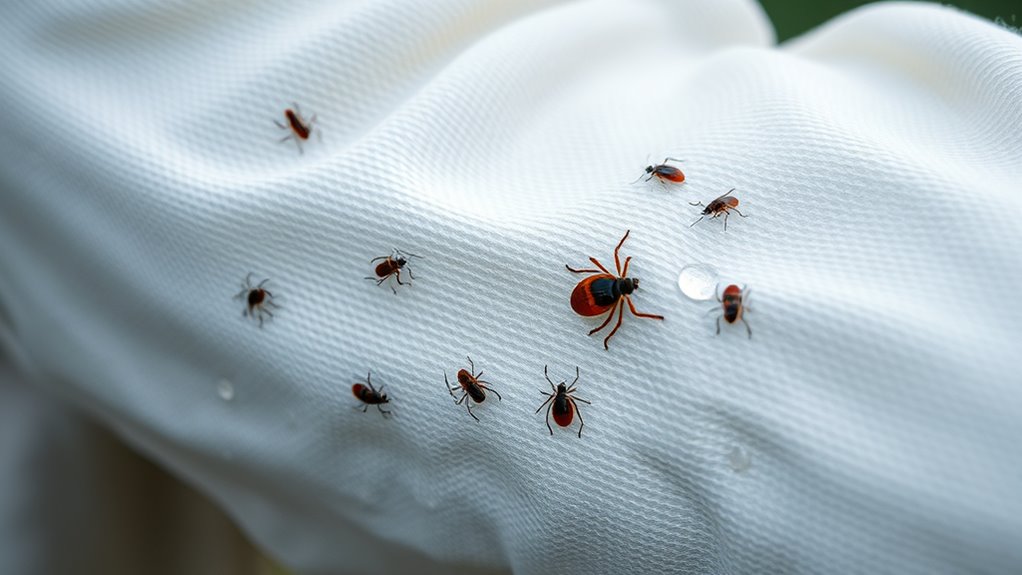

To defend against ticks, mosquitoes, and disease, wear long-sleeved shirts, long pants tucked into socks, and closed-toe shoes to cover most skin. Choose light-colored, tightly woven fabrics and treat your clothing with permethrin for extra protection. Use EPA-approved repellents on exposed skin, especially during dawn and dusk when pests are active. Combining these clothing strategies with repellents can greatly reduce your risk—stay with us to learn more about effective protective measures.
Key Takeaways
- Wear long-sleeved shirts and long pants, tucking pants into socks to minimize skin exposure.
- Treat clothing with permethrin and apply EPA-approved repellents on exposed skin for extended protection.
- Use lightweight, tightly woven fabrics like nylon or polyester to prevent pest penetration.
- Cover head, neck, and ears with a wide-brimmed hat and avoid loose or porous clothing.
- Be especially vigilant during dawn and dusk when mosquitoes are most active, combining clothing with repellents.

Have you ever wondered how tiny pests like ticks and mosquitoes can pose serious health threats? These small creatures might seem insignificant, but they can carry dangerous diseases that affect millions worldwide. The key to protecting yourself is not just about avoiding bites but also about dressing smartly to minimize your risk. Proper defensive clothing acts as a physical barrier, making it harder for pests to reach your skin and transmit illnesses. It’s a simple, effective strategy that can considerably lower your chances of infection during outdoor activities.
Tiny pests like ticks and mosquitoes can carry deadly diseases—dress smartly to protect yourself outdoors.
When you head into areas where ticks and mosquitoes are common, start by choosing long-sleeved shirts and long pants. Light-colored clothing is preferable because it allows you to spot pests more easily before they latch onto you. Tucking your pants into your socks creates a tight seal that prevents ticks from crawling up your legs. Similarly, wearing closed-toe shoes instead of sandals reduces the exposed skin that pests could target. Think of your clothing as the first line of defense—covering as much skin as possible without sacrificing comfort or mobility.
In addition to coverage, treat your clothing with permethrin, a proven insect-repellent that binds to fabric and repels or kills ticks and mosquitoes on contact. This treatment remains effective through multiple washes, offering extended protection. You can also apply EPA-approved insect repellents containing DEET, picaridin, or IR3535 directly to your exposed skin. These repellents create a protective barrier that deters pests from landing or biting, especially during peak activity times like dawn and dusk when mosquitoes are most active.
Choosing the right fabric also matters. Lightweight, tightly woven materials like nylon or polyester are better at preventing pests from penetrating. Avoid loose or porous fabrics that pests can easily crawl through. Wearing a wide-brimmed hat offers additional protection, shielding your head, neck, and ears from bites. When possible, wear clothing with built-in insect-repellent properties or treat your gear beforehand for extra assurance.

Tough Outfitters Mosquito Suit – Mosquito Repellent Clothing Men Women – Insect Bug Proof Net Mesh Clothing for Gardening
Bug Jacket & Pants Set: Our lightweight, breathable mosquito net suit is perfect for camping, hiking, or outdoors….
As an affiliate, we earn on qualifying purchases.
As an affiliate, we earn on qualifying purchases.
Frequently Asked Questions
Are There Specific Fabrics That Repel Ticks and Mosquitoes Better?
Yes, some fabrics repel ticks and mosquitoes better. Lightweight, tightly woven materials like nylon, polyester, and certain treated fabrics create a physical barrier that bugs find hard to penetrate. Look for clothing infused with permethrin, an insect-repellent chemical, which considerably boosts protection. Avoid loose or porous fabrics, as they’re easier for pests to get through. Wearing these fabrics can help keep you safer during outdoor activities in bug-prone areas.
Can Daily Clothing Changes Reduce the Risk of Tick or Mosquito Bites?
Imagine a shield that you carry with you every day; yes, daily clothing changes can reduce your risk of tick or mosquito bites. By regularly changing and laundering your clothes, you remove any insects that might be clinging on, and you prevent them from settling in for a meal. This simple act keeps your skin less accessible, making it harder for these pests to find a place on you.
Are There Natural or Homemade Repellents That Are Effective?
Yes, natural repellents can be effective. You can try applying citronella oil, lemon eucalyptus oil, or neem oil to your skin or clothing. These natural options may help deter mosquitoes and ticks, especially when used consistently. Keep in mind, their effectiveness varies, so reapply often, especially after swimming or sweating. Combining these repellents with protective clothing enhances your defense against bites naturally.
How Often Should I Wash or Treat My Clothing for Optimal Protection?
You should wash your clothing after each outdoor activity to remove any lingering insects or eggs. Treat your clothing with permethrin every 6 weeks or after several washes, as it remains effective for multiple washes. Always follow product instructions for safe use. Regularly inspecting and re-treating your gear guarantees maximum protection against ticks and mosquitoes. Consistent care keeps your clothing effective and helps prevent bites.
Do Different Colors of Clothing Influence the Likelihood of Bites?
Dark clothing, especially navy or black, can reduce your chances of bites by up to 70%. Mosquitoes and ticks are visually attracted to bright colors and contrast, making you more noticeable. To stay protected, opt for neutral or darker shades when venturing into high-risk areas. Wearing long sleeves and pants in these colors, along with insect repellent, markedly lowers your risk of bites and disease transmission.

Insect Shield Men's UPF Wicking Long Sleeve Pocket T-Shirt
Repels mosquitoes, ticks, ants, flies, chiggers and midges
As an affiliate, we earn on qualifying purchases.
As an affiliate, we earn on qualifying purchases.
Conclusion
By dressing smartly, you’re building a suit of armor against ticks and mosquitoes, turning yourself into an unappealing target. Think of your clothing as a fortress, blocking bites and keeping diseases at bay. Stay vigilant, wear protective gear, and check yourself regularly—because prevention is your best defense. With these simple steps, you can outsmart these tiny invaders and enjoy your time outdoors safely, like a warrior ready for battle against nature’s smallest foes.

Sawyer Products SP564 Premium Insect Repellent with 20% Picaridin, Lotion, 4-Ounce
Non-greasy, fragrance free, odorless; dries quickly and won't damage plastics or synthetic coatings — safe for use on…
As an affiliate, we earn on qualifying purchases.
As an affiliate, we earn on qualifying purchases.

2 Pack Mosquito Head Net Mesh for Hiking & Outdoors,Bug Netting over Hat Adults Insect Gnat Fly Protection Face Cover Mask Hood Midge Clothing Jacket
KEEPS THE INSECTS OUT OF YOUR EYES NOSE EARS FACE NECK AND SHOULDERS!!:The black fly head net over…
As an affiliate, we earn on qualifying purchases.
As an affiliate, we earn on qualifying purchases.