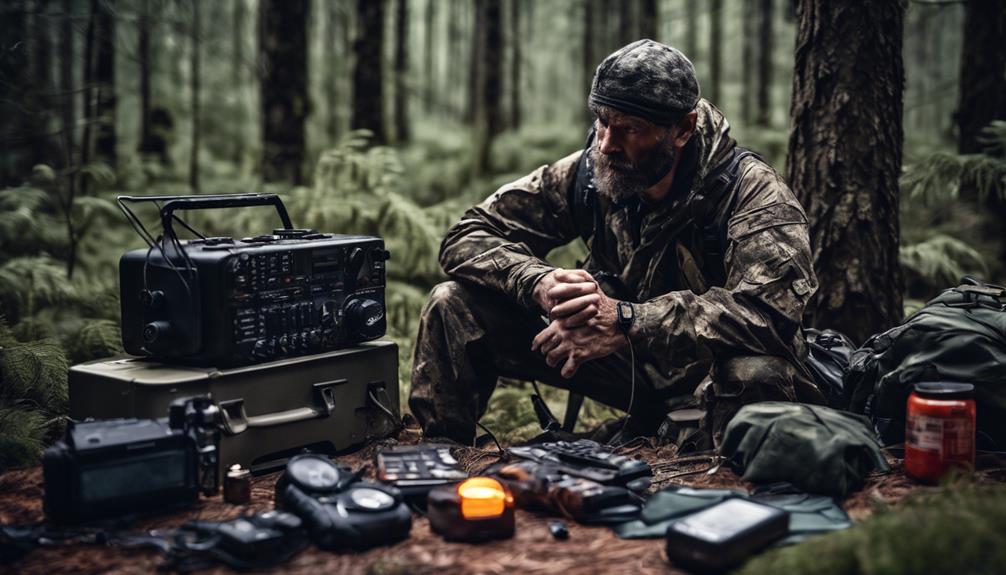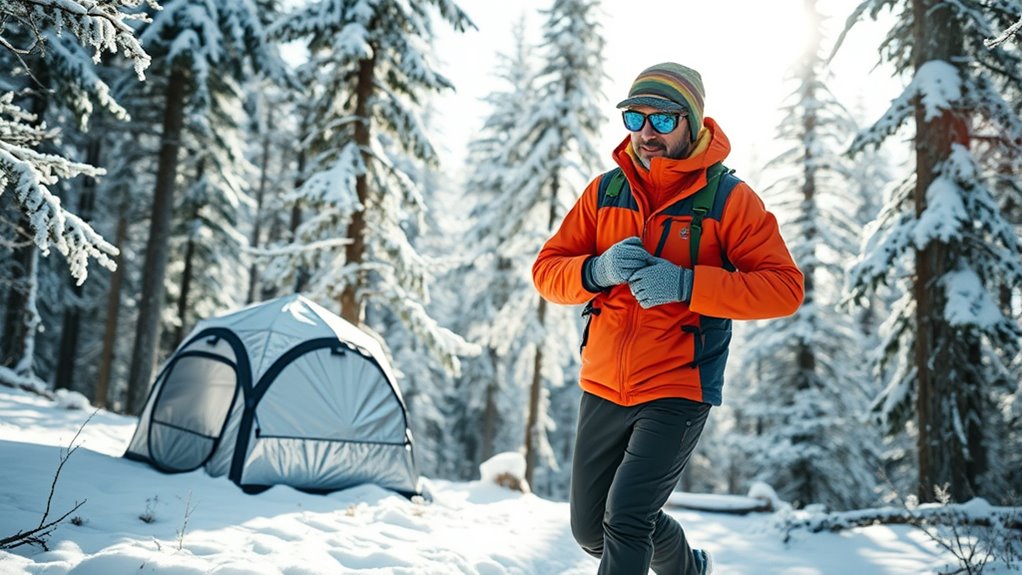

To avoid hypothermia, start with proper layering: wear moisture-wicking base layers, insulating mid-layers, and waterproof outer shells to stay dry and warm. Keep moving to generate heat, but avoid sweating excessively. Build micro-shelters like tarps or bivvy bags to block wind and retain body heat, insulating from the ground. Mastering these strategies helps you stay warm longer, and understanding more can give you even better tools to protect yourself.
Key Takeaways
- Use proper clothing layers: moisture-wicking base, insulating mid-layer, and waterproof outer shell to retain heat and stay dry.
- Maintain steady movement to generate body heat and improve circulation, adjusting activity to avoid sweating.
- Manage moisture effectively by changing into dry clothing and avoiding overexertion that causes excessive sweating.
- Build micro-shelters with tarps or space blankets to block wind and moisture, conserving body heat.
- Insulate from the ground and create a protected micro-environment to prevent heat loss and reduce hypothermia risk.

When spending time outdoors in cold weather, it’s essential to take steps to avoid hypothermia, a dangerous condition caused by your body losing heat faster than it can produce it. The key to staying safe lies in effective layering, staying active, and creating micro-shelters when needed. Proper clothing layers act as your first line of defense. Start with a moisture-wicking base layer that pulls sweat away from your skin, helping you stay dry and prevent heat loss. Over that, add an insulating layer—fleece, wool, or down—that traps body heat. Finally, wear a waterproof, windproof outer layer to shield you from wind, rain, or snow. Combining these layers ensures you retain as much heat as possible while remaining dry, which is crucial because damp clothing accelerates heat loss.
Your movement plays a vital role in maintaining your body temperature. When you’re active, your muscles generate heat, helping you stay warm. But you need to find a balance—overexertion can cause sweating, which, if not managed, can lead to chill once you stop moving, increasing hypothermia risk. Keep moving at a steady pace, adjusting your activity level to match the conditions. If you begin to feel cold or notice shivering, increase your activity slightly to generate more heat. Conversely, if you start sweating heavily, take brief breaks to cool down and change into dry clothing if possible. Staying physically engaged keeps your blood flowing, distributing warmth throughout your body and preventing cold spots that can become dangerous. Incorporating layering strategies with appropriate clothing helps optimize heat retention and moisture management.
When you’re in remote or exposed areas, micro-shelters can be lifesavers. These are simple, makeshift covers—like a tarp, bivvy bag, or even a space blanket—that help conserve your body heat. If you’re caught outside unexpectedly, quickly constructing a micro-shelter around or over you can create a barrier against wind and moisture, which are primary culprits in heat loss. Make sure the shelter is insulated from the ground with leaves, pine needles, or a foam pad to prevent heat from escaping downward. Even a small space enclosed on all sides can substantially reduce heat loss, especially during the night or in windy conditions. The goal is to create a micro-environment that minimizes exposure and keeps your body temperature stable.
moisture-wicking base layer shirt
As an affiliate, we earn on qualifying purchases.
As an affiliate, we earn on qualifying purchases.
Frequently Asked Questions
How Can I Recognize Early Signs of Hypothermia?
You can recognize early signs of hypothermia by paying attention to symptoms like shivering, which is your body’s way of trying to generate heat. You might also feel numbness, dizziness, or confusion. Your speech could become slurred, and your coordination might decline. If you notice these signs, get warm immediately, remove wet clothing, and seek shelter. Acting quickly can prevent the condition from worsening.
What Materials Are Best for Building Micro-Shelters?
You should use insulating and waterproof materials like thick tarps, emergency blankets, and natural resources such as branches, leaves, and snow. Combine these with sturdy, windproof fabrics to keep the warmth in. Use lightweight, reflective materials to maximize heat retention. Make sure your shelter is insulated from the ground and protected from wind. Quick-to-build options like debris huts or lean-tos work well in emergencies, keeping you warm and dry.
How Often Should I Check My Clothing Layers?
You should check your clothing layers at least every 30 minutes, especially if conditions change or you notice discomfort. Imagine your layers as a loyal guard—if they get soaked or compressed, they lose their fight against cold. Ironically, the more you move or sweat, the more often you need to assess, ensuring your layers stay dry and effective. Regular checks keep hypothermia at bay, even when you’re too busy to notice it creeping in.
Can Certain Foods Help Prevent Hypothermia?
Certain foods can help prevent hypothermia by providing your body with essential energy and warmth. You should focus on high-calorie, carbohydrate-rich foods like nuts, dried fruits, and energy bars, which release energy slowly and keep your core temperature stable. Warm beverages like tea or broth also help maintain warmth from the inside. Stay hydrated and eat regularly to support your body’s ability to generate heat in cold conditions.
What Are Emergency Signaling Methods in Cold Environments?
You can signal for help in cold environments using signals like mirrors, whistles, or bright clothing to catch attention. If you have a cellphone with service, call emergency services. Use signals that are loud or visually distinct to increase your chances of being noticed, especially in remote areas. Remember, staying visible and making noise are vital, so utilize any reflective or bright items you have to improve your chances of rescue.
Conclusion
Stay warm by layering like a cozy onion, moving to generate your own heat, and seeking micro-shelters that act as your personal fortress against the cold. Think of your body as a flickering flame—keep it protected so it doesn’t dwindle into darkness. With these simple steps, you’ll be the hero of your own winter story, turning the icy wilderness into a manageable adventure rather than a battle against the cold. Stay vigilant, stay warm.