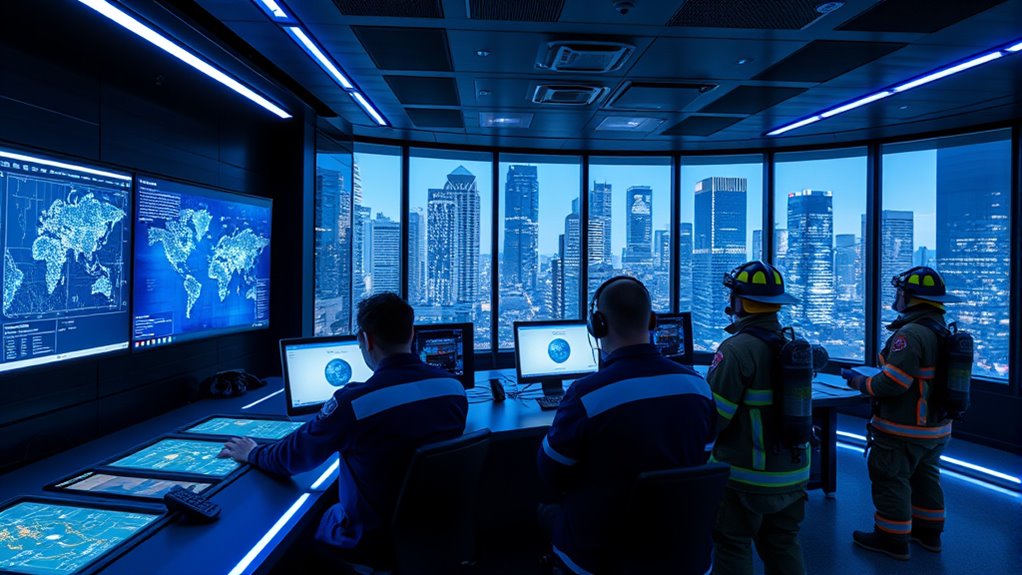

Tech firms are partnering with emergency services to develop innovative tools that improve response times, coordination, and situational awareness during crises. These collaborations leverage AI, real-time data feeds, and machine learning to create seamless information sharing across platforms, enhancing the speed and accuracy of emergency responses. They also focus on protecting data privacy while building resilient, interoperable systems. To discover how these partnerships are shaping the future of public safety, explore further.
Key Takeaways
- Tech firms collaborate with emergency services to enhance response times, communication, and situational awareness during crises.
- These partnerships integrate AI, real-time data, and IoT devices to improve incident management and resource deployment.
- Data privacy and security are prioritized to protect sensitive information shared across emergency response platforms.
- Standardization and interoperability among systems ensure seamless data sharing and coordination among responders.
- Such collaborations aim to increase public safety, enable quicker responses, and build trust through secure, efficient technology integration.
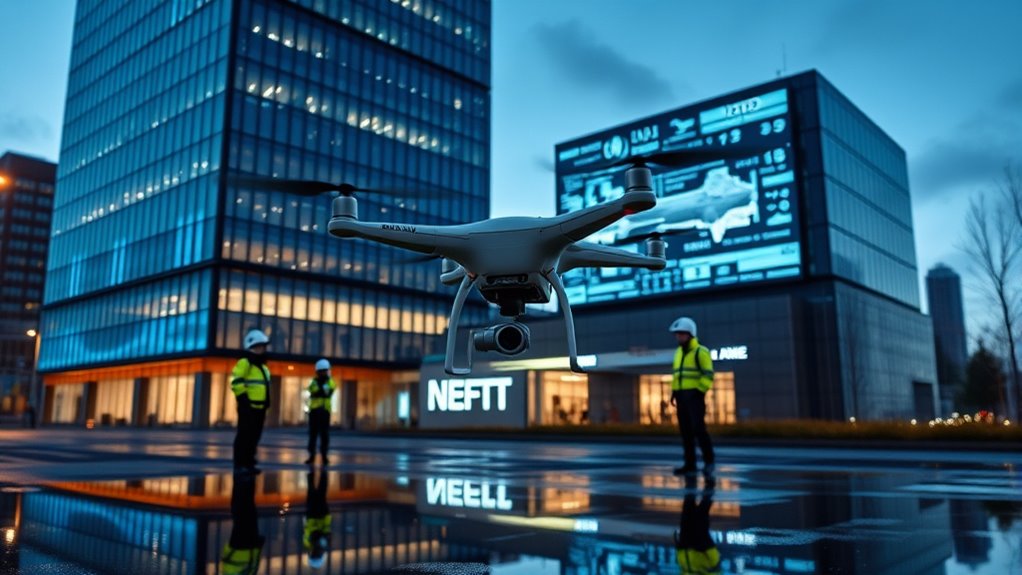
As technology continues to advance, many tech firms are actively partnering with emergency services to improve response times and save lives. These collaborations leverage innovative tools to enhance communication, coordination, and situational awareness during crises. However, as you become more aware of these developments, it’s important to think about the challenges that come with integrating new technologies into emergency response systems. One of the most critical concerns is data privacy. When sensitive information—such as personal health data, location details, or incident reports—is shared across platforms, it must be protected against breaches and misuse. Tech companies are investing heavily in secure data handling protocols to safeguard this information, ensuring that privacy laws are upheld and public trust remains intact. This focus on data privacy is essential because it reassures the public that their information won’t be exploited or exposed during emergencies, which could undermine response efforts.
Tech firms prioritize data privacy to protect sensitive information and maintain public trust during emergency collaborations.
At the same time, technological integration is transforming the way emergency services operate. Advanced systems now combine artificial intelligence, real-time data feeds, and machine learning algorithms to predict and respond to incidents more effectively. For example, emergency dispatch centers can now receive live updates from multiple sources—social media, surveillance cameras, IoT devices—and process that information instantaneously. This integration allows responders to better assess situations, allocate resources efficiently, and reach those in need faster. The seamless flow of data across different platforms and devices enhances coordination among first responders, hospitals, and command centers, creating a unified network that acts swiftly and accurately. Embracing such high-resolution data capabilities enables emergency services to improve their response precision and effectiveness.
As you look at these advancements, you’ll see that technological integration isn’t just about adding new gadgets; it’s about creating a cohesive ecosystem where data flows securely and efficiently. Tech firms are working to guarantee compatibility between various systems, which involves standardization and interoperability to avoid silos of information. This integration facilitates a more proactive approach—identifying risks before they escalate and deploying resources preemptively. Yet, as much as these innovations boost efficiency, they also demand rigorous security measures. Protecting data privacy remains a top priority, especially as cyber threats become more sophisticated.
Ultimately, the partnership between tech firms and emergency services is reshaping public safety. While the benefits are significant—quicker responses, better resource management, and lifesaving innovations—they come with responsibilities. Ensuring data privacy and seamless technological integration is crucial for building trust and making these systems resilient. As you witness these changes, remember that behind every improved response is a commitment to safeguarding your information and enhancing emergency preparedness through smart, integrated technology.
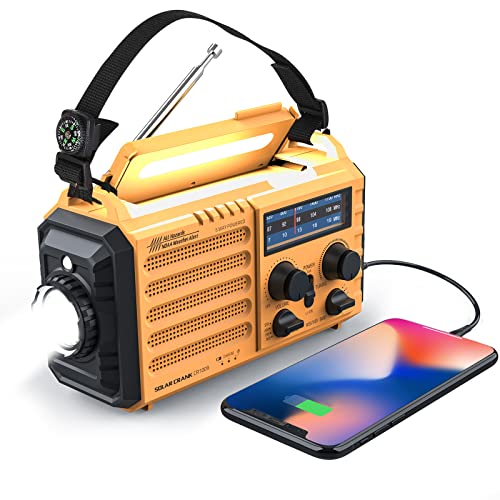
Raynic Weather Radio, 5000mAh/18500mWh NOAA Weather Radio, Solar Hand Crank Emergency Radio with AM/FM/SW/NOAA Weather Alert, Flashlight, Reading Lamp, Cell Phone Charger and SOS Siren
5-WAY POWER SOURCES - The weather radios with multiple power backup options are the best choice.5 power sources...
As an affiliate, we earn on qualifying purchases.
Frequently Asked Questions
How Do Data Privacy Concerns Impact These Partnerships?
Data privacy concerns impact these partnerships by making you focus on data security and consent protocols. You need to guarantee sensitive information is protected and that individuals give clear consent before sharing their data. Without strict data security measures and transparent consent protocols, trust can break down, and legal issues may arise. These concerns push you to prioritize privacy, balancing emergency response needs with protecting people’s personal information.
What Funding Models Support These Collaborations?
You can support these collaborations through a mix of public funding and private investment. Public funding often comes from government grants and emergency response budgets, providing essential resources. Private investment, including venture capital and corporate sponsorships, fuels innovation and technological development. By combining these funding models, you create a sustainable approach that enhances emergency services while fostering technological advancements, ensuring communities receive timely and effective aid.
How Are Technological Failures Managed During Emergencies?
When technological failures happen, you need to keep your eye on public safety and system reliability. You should have backup plans, like redundant systems and emergency protocols, ready to activate. Regular testing and swift communication are key to minimizing risks. Think of it as having a safety net—if one part fails, others catch the slack, ensuring emergency services stay operational and public safety remains a top priority.
What Training Is Provided to Emergency Personnel?
You receive thorough training protocols that focus on skill development in emergency scenarios. These programs include hands-on simulations, technological tool usage, and decision-making exercises to prepare you for various situations. You learn how to effectively operate new devices and adapt to evolving tech solutions. This ongoing training guarantees you’re confident in managing emergencies, minimizing failures, and leveraging technology to improve response times and save lives.
How Do Partnerships Adapt to Evolving Technology Standards?
You adapt partnerships by continuously updating AI integration and ensuring interoperability standards meet the latest technology advances. As new tools emerge, you work closely with tech firms to incorporate AI-driven solutions that enhance emergency response efficiency. You also prioritize interoperability to guarantee seamless communication across systems. Regular training sessions and collaborative testing help you stay ahead, ensuring your emergency services effectively leverage evolving technology standards for better public safety outcomes.

Emergency Weather Radio with Large Solar Panel, Efficient Hand Crank & Real 12000mAh Battery | AM/FM/NOAA Bands, LED Flashlight, Reading Lamp, SOS Alarm & Phone Charger for Camping, Blackout, Survival
【Enhanced Solar Performance】Equipped with a large 8500mm² monocrystalline panel, this emergency radio captures more sunlight and converts it...
As an affiliate, we earn on qualifying purchases.
Conclusion
As you see these partnerships, it’s clear technology isn’t just supporting emergency services—it’s transforming them. Some might wonder if relying on tech risks losing human touch, but history shows innovation often enhances human effort rather than replacing it. When you embrace these collaborations, you’re not just adopting new tools; you’re shaping a future where quick responses and smarter solutions can save more lives. Ultimately, trust in progress can turn uncertainty into hope.

Leaton Hand Crank Emergency Radio, NOAA Weather Radio AM/FM,10000mAh
10000mAh Battery That Lasts – 3 Ways to Recharge Built around a genuine 10000mAh rechargeable lithium polymer battery,...
As an affiliate, we earn on qualifying purchases.
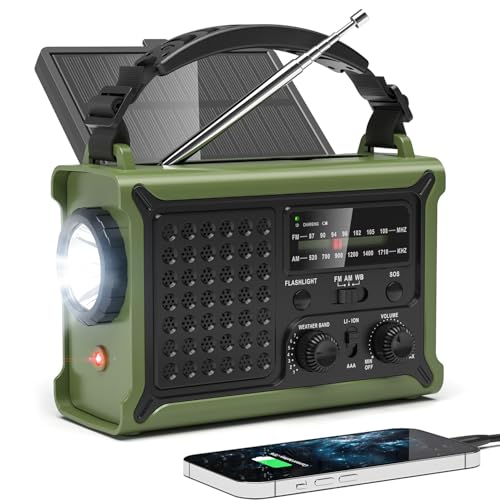
12000mAh/44400mWh Emergency Radio-NOAA Approved Weather Radio with AM/FM Portable Solar Panel/Hand Crank/AC Input Rechargeable Battery and Flashlight SOS Siren Lamp for Indoor/Outdoor Emergencies
【NOAA Weather Band Reception & Strong Signal】This NOAA emergency weather radio is designed to receive 7 NOAA weather...
As an affiliate, we earn on qualifying purchases.