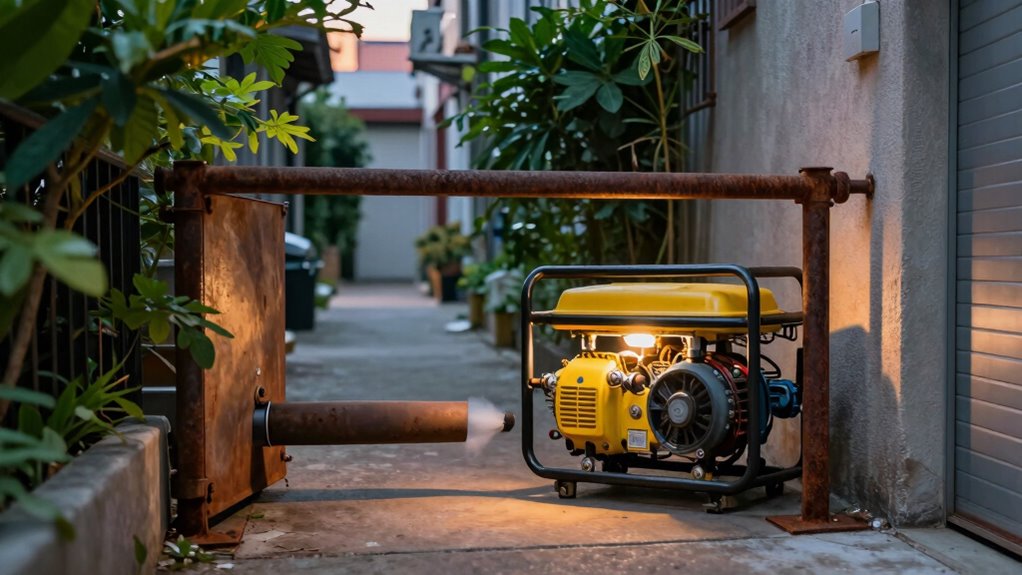

To guarantee your quiet generator keeps you safe, always place it outdoors at least 20 feet away from your home, windows, doors, and vents. Avoid enclosed spaces like garages or patios that can trap toxic carbon monoxide fumes. Use level, stable surfaces and clear the area of debris to promote good airflow. Proper placement reduces CO risk and keeps noise levels down. Keep these tips in mind to protect yourself and loved ones—more essential safety guidelines await you.

Get emergency and outdoor gear delivered free — and shop member deals
- Fast, free delivery on millions of items
- Access to Prime Big Deal Days deals on October 6–7
- Prime Video, Amazon Music and more included
Key Takeaways
- Always place generators at least 20 feet away from windows, doors, and vents to prevent CO fumes from entering indoor spaces.
- Position generators outdoors on level, stable surfaces in open areas to facilitate proper ventilation and airflow.
- Keep generators away from enclosed patios, garages, or tight spaces where fumes can accumulate and pose health risks.
- Ensure proper clearance around the generator for ventilation, and avoid placing it near open windows or vents.
- Use CO detectors and maintain clear, unobstructed airflow to detect hazards early and enhance safety during operation.
As an affiliate, we earn on qualifying purchases.
What Are the Carbon Monoxide Risks From Portable Generators?

Portable generators produce carbon monoxide (CO), a colorless, odorless gas that can be deadly if inhaled in high concentrations. As part of generator safety, understanding carbon monoxide hazards is essential. When operated improperly or kept too close to your home or enclosed spaces, CO can quickly build up, risking poisoning. Inhaling high levels of this gas can cause symptoms like dizziness, headaches, or even death. You might not notice the danger until it’s too late, which is why awareness is critical. Always remember that portable generators should be used outdoors, far from windows, vents, or doors. Proper placement minimizes carbon monoxide risks, especially in enclosed spaces, and considering generator placement rules can significantly reduce danger. Additionally, using CO detectors near your living areas provides an extra layer of safety. Maintaining adequate ventilation during generator operation helps prevent dangerous CO buildup. Regularly inspecting your generator and following manufacturer guidelines also play a vital role in preventing accidents, helping you stay safe. Staying alert about generator safety helps avoid dangerous CO buildup.
Why Proper Placement Prevents Carbon Monoxide Poisoning
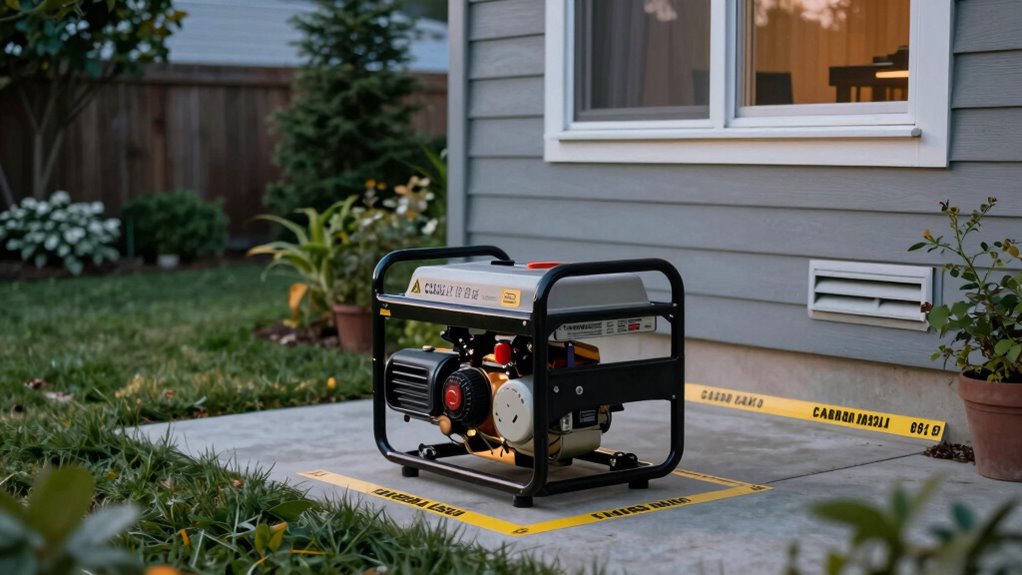
Proper placement of your generator guarantees good ventilation, which is essential for safety. When you position it correctly, carbon monoxide can’t build up around your home. This simple step can prevent dangerous poisoning risks. Additionally, ensuring the generator is placed on a well-ventilated surface reduces the chance of harmful fumes accumulating. Proper placement also involves keeping the generator away from indoor spaces and enclosed areas to prevent fumes from entering indoor air. Using proper placement techniques can further enhance safety by minimizing the risk of accidental exposure. Incorporating appropriate ventilation strategies can also significantly improve airflow and dispersal of fumes, further reducing health hazards. Understanding air circulation principles can help optimize the dispersion of fumes around your generator setup.
Proper Ventilation Is Crucial
Since carbon monoxide is a colorless, odorless gas that can quickly cause harm, guaranteeing your generator is well-ventilated is essential for safety. Proper ventilation not only prevents dangerous CO buildup but also improves fuel efficiency by allowing the engine to operate more effectively. When your generator has adequate airflow, it doesn’t have to work as hard, reducing fuel consumption and saving you money. Additionally, good ventilation helps lower noise levels, making your generator quieter and less disruptive. Proper placement and airflow management are crucial to avoid placing the generator in enclosed or poorly ventilated areas, as this increases health risks and reduces performance. Ensuring proper ventilation practices is vital to prevent carbon monoxide poisoning and maintain safe operation. Using correct placement techniques can also help optimize airflow and further reduce risks associated with CO exposure. Selecting the right extension cord standards and ensuring proper tool power protection can further reduce risks associated with power equipment. Prioritizing proper ventilation ensures safer operation, prolongs your generator’s lifespan, and keeps your environment safe from deadly CO exposure.
Correct Placement Prevents CO
To prevent deadly carbon monoxide buildup, you need to place your generator in a location where exhaust fumes can safely disperse. Proper generator placement is essential for safety precautions. If you position your generator too close to your home or in enclosed spaces, CO can accumulate and pose serious health risks. To ensure safe operation, consider these key points:
- Keep your generator at least 20 feet away from windows, doors, and vents.
- Choose a well-ventilated outdoor area to allow exhaust fumes to disperse quickly.
- Never operate your generator indoors or in garages, even if doors are open.
- Understanding proper placement techniques can significantly reduce the risk of carbon monoxide poisoning.
- Regularly inspect your generator and exhaust system to ensure there are no blockages or leaks that could lead to dangerous CO buildup. Proper ventilation is crucial for dispersing fumes effectively.
- Being aware of generator safety guidelines can help prevent accidents and ensure your home remains safe during power outages.
- Familiarizing yourself with CO detection devices can provide an additional layer of safety by alerting you to dangerous fumes before they accumulate.
Where Should You Place Your Generator for Safety?
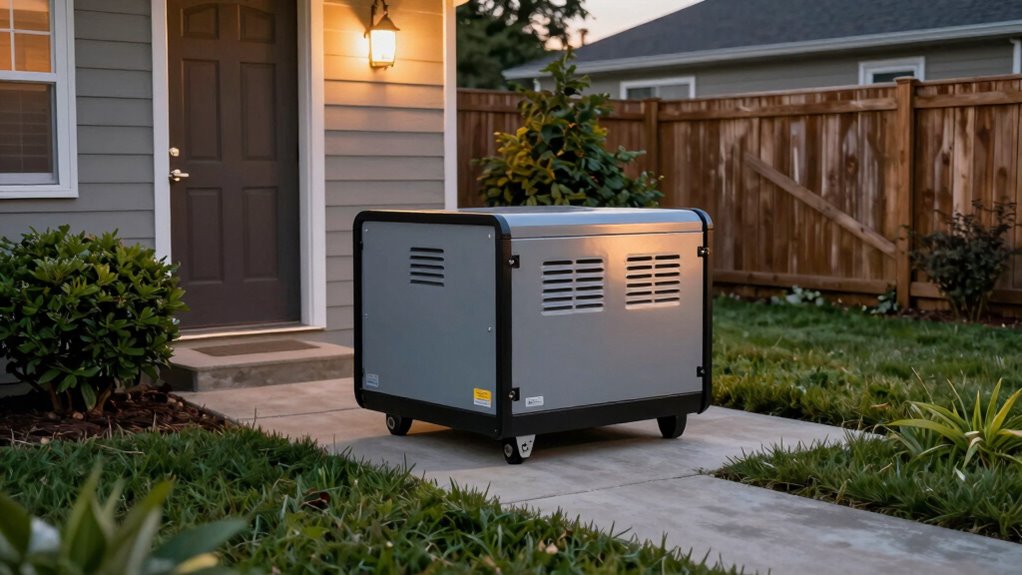
You should place your generator at a safe distance from your home to prevent carbon monoxide buildup. Choose a well-ventilated area where fumes can disperse easily. Keeping these points in mind helps guarantee your safety during generator use. Additionally, ensuring proper smart thermostat setup can optimize your energy use and reduce risks associated with generator operation. Proper placement also helps maintain security and compliance with safety standards, and considering generator ventilation is essential for safe operation.
Maintain Proper Distance
Placing your generator at the right distance is vital for safety and efficient operation. Proper generator placement ensures exhaust fumes stay away from you and your home, reducing health risks. Follow these safety guidelines to maintain proper distance:
- Keep the generator at least 20 feet away from your home, windows, and vents to prevent carbon monoxide buildup.
- Position it on a stable, level surface to prevent movement and minimize noise transfer.
- Avoid placing the generator near open windows or doors, even if it’s outdoors, to prevent fumes from entering your living space.
Adhering to these safety guidelines is indispensable to protect yourself and others. Proper generator placement minimizes risks and ensures your generator operates safely and efficiently.
Use Well-Ventilated Areas
Choosing a well-ventilated area for your generator guarantees fumes disperse safely and don’t accumulate around your home. Proper ventilation diminishes the risk of dangerous carbon monoxide buildup, keeping everyone safe. Additionally, placing your generator outdoors helps minimize generator noise and sound mitigation issues, preventing noise from disturbing your household or neighbors. Avoid enclosed or poorly ventilated spaces, as these trap fumes and increase health risks. Position the generator on a flat surface, away from windows, vents, and doorways to prevent fumes from entering your home. Good airflow also reduces the need for excessive sound mitigation measures, making operation quieter and more comfortable. Prioritize outdoor, open spaces to ensure safety, comfort, and compliance with recommended placement practices.
Avoid These Common Placement Mistakes
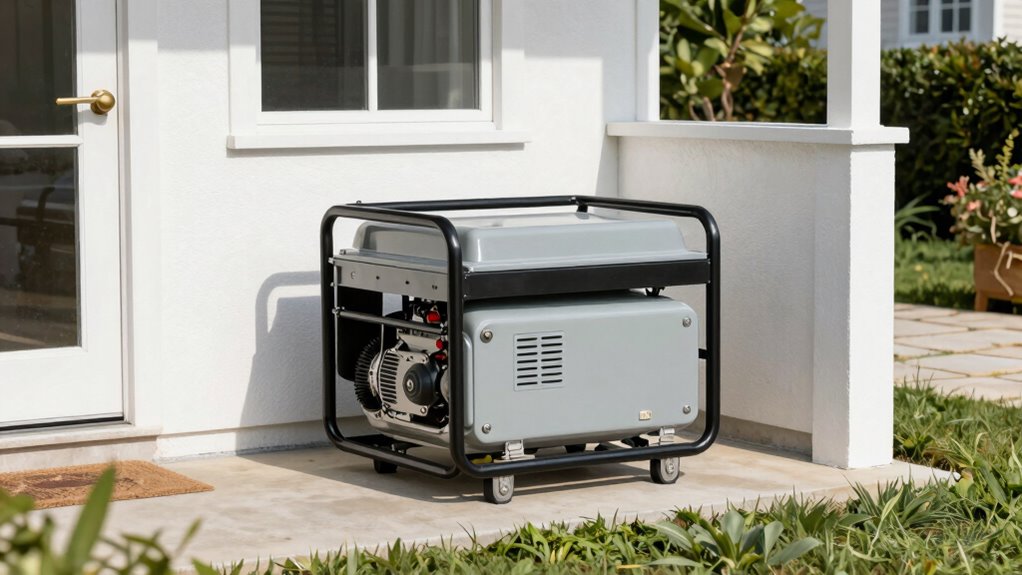
One of the most common mistakes is positioning the generator too close to your home or outdoor living spaces, which can lead to excessive noise and potential safety hazards. Proper generator placement is vital for safety considerations and effective operation. To avoid this, keep these points in mind:
- Maintain adequate distance from windows, vents, and doors to prevent exhaust fumes from entering your home.
- Choose a flat, stable surface to prevent the generator from tipping or shifting during operation.
- Ensure proper ventilation around the generator to avoid overheating and to meet safety considerations.
How to Place Your Generator Safely: A Step-by-Step Guide

To guarantee your generator operates safely and quietly, follow a clear, step-by-step placement process. First, choose a level, well-ventilated outdoor spot away from windows and doors to minimize generator noise inside your home. Ascertain there’s sufficient clearance on all sides for proper airflow, which boosts fuel efficiency and prevents overheating. Keep the generator at least 20 feet from your living space to avoid exhaust fumes and noise disturbance. Avoid enclosed or tight spaces, as they can trap fumes and reduce fuel efficiency. Use a stable, solid surface to prevent vibrations and noise. Regularly check that the placement remains clear of debris and obstructions to maintain safety, noise control, and ideal fuel efficiency during operation.
Extra Safety Tips for Using Your Quiet Generator
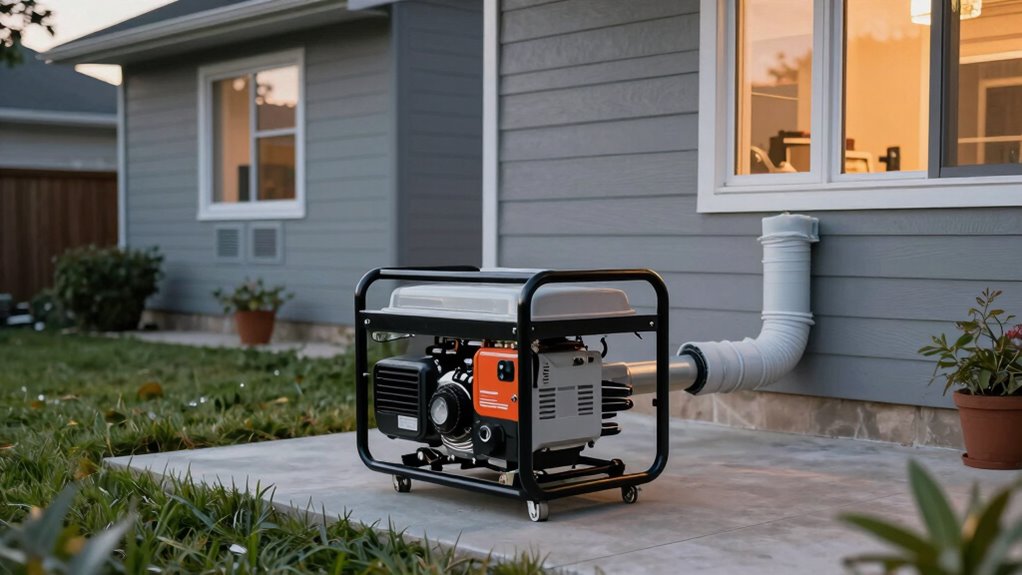
Even when your generator is designed to operate quietly, safety should always come first. Proper generator maintenance guarantees it runs smoothly and reduces unnecessary noise, enhancing safety. Use noise reduction techniques like installing mufflers or soundproof enclosures to minimize disturbance and keep your environment safe. To maximize safety, consider these tips:
Safety first: maintain your generator and use noise reduction techniques to ensure smooth, quiet, and safe operation.
- Regularly inspect and maintain your generator, checking for loose parts or leaks.
- Keep exhaust systems clean and well-maintained to prevent harmful emissions.
- Position your generator on a stable, level surface away from windows and vents to reduce noise impact and ensure safe operation.
Following these safety tips helps prevent accidents and prolongs your generator’s lifespan, giving you peace of mind during power outages.
What Are the Signs of Carbon Monoxide Poisoning?
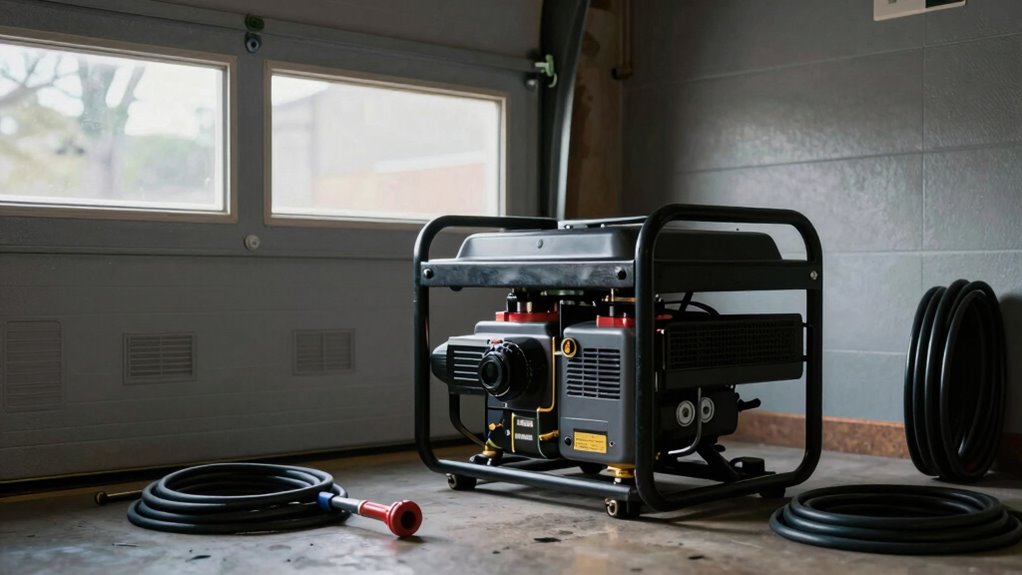
Have you ever wondered how to recognize if you’re experiencing carbon monoxide poisoning? Symptom recognition is key because CO is silent and deadly. Common signs include headache, dizziness, weakness, nausea, and confusion. You might also notice shortness of breath or chest pain. If multiple people in your home experience these symptoms simultaneously, it’s a serious warning. Don’t ignore these clues—immediate emergency response is critical. Get outside to fresh air and call 911 or emergency services right away. While waiting, don’t try to diagnose or fix the problem yourself. Using a carbon monoxide detector can help you detect danger early. Remember, quick action can save lives, so stay alert to these signs and respond promptly to protect yourself and your loved ones.
Frequently Asked Questions
How Often Should I Check My Generator’s Placement During Use?
You should check your generator’s placement and condition every time you plan to use it. Regular generator maintenance includes inspecting for proper placement according to placement guidelines, ensuring it’s on a flat, dry surface away from vents and windows. Keep an eye out for any signs of damage or shifting during use. Frequent checks help prevent accidents, improve safety, and make certain your generator operates efficiently in emergencies.
Can I Use a Generator Indoors if Windows Are Open?
Using a generator indoors is like inviting a storm inside—you shouldn’t do it. Even if you open windows for indoor ventilation, generator fumes can still accumulate and pose serious health risks. No matter how much you think airflow helps, it’s unsafe. Always place your generator outdoors, away from windows and vents, to guarantee proper ventilation and keep everyone safe from dangerous fumes.
What Safety Gear Is Recommended When Operating a Generator Outdoors?
When operating a generator outdoors, you should wear ear protection to prevent hearing damage and gloves to protect your hands. Always use a carbon monoxide detector nearby to avoid dangerous buildup. Keep fire hazards in mind by keeping the generator away from flammable materials and never refueling while it’s hot. Proper safety gear helps you stay safe from carbon monoxide poisoning and reduces the risk of fire hazards.
How Long Can a Generator Safely Run Continuously?
You can typically run a generator continuously for 8 to 12 hours, but it’s crucial to monitor fuel efficiency and follow a regular maintenance schedule. This guarantees peak performance and safety. Check the manufacturer’s guidelines for your specific model, and allow the generator to cool down before refueling to prevent hazards. Proper maintenance and understanding of fuel use help you avoid overloads and keep your generator running safely longer.
Are There Specific Locations to Avoid Placing a Generator Near Pets or Children?
You should avoid placing generators near pet safety and child protection zones, as carbon monoxide from exhaust can be deadly within 20 feet. Statistically, accidental poisoning causes hundreds of injuries annually. To keep everyone safe, position your generator outdoors, away from windows, vents, and areas where children and pets play. Always guarantee proper ventilation, and never operate a generator inside garages or enclosed spaces to prevent dangerous CO buildup.
Conclusion
Remember, a quiet generator can save lives with proper placement. While it runs silently nearby, carbon monoxide silently invades your home if placed incorrectly. The peace of a powered home shouldn’t come at the cost of safety. So, keep it outside, away from windows, and follow safety steps. Because in the end, it’s not just about avoiding noise—it’s about protecting your family from unseen dangers lurking nearby.
Fall Picks
fall essentials
As an affiliate, we earn on qualifying purchases.