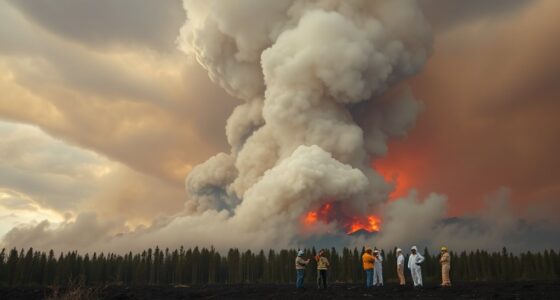
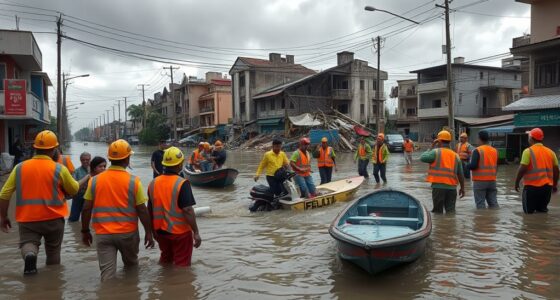
Community drills are crucial because they help you understand how to respond quickly and effectively during emergencies. They familiarize you with evacuation routes, safety procedures, and communication methods, reducing chaos and saving lives. Regular practice builds confidence and encourages teamwork, ensuring everyone knows their role. Incorporating modern tools and consistent drills keeps you prepared for unexpected events. If you want to see how these practices can strengthen your community, keep exploring this important topic.
Key Takeaways
- Community drills improve emergency response skills, ensuring quick and coordinated action during crises.
- Regular practice helps identify and fix safety hazards in evacuation procedures.
- Drills enhance communication channels, enabling accurate and timely information sharing.
- They promote teamwork and shared responsibility among community members for effective response.
- Incorporating modern tools and frequent drills build community resilience and preparedness.
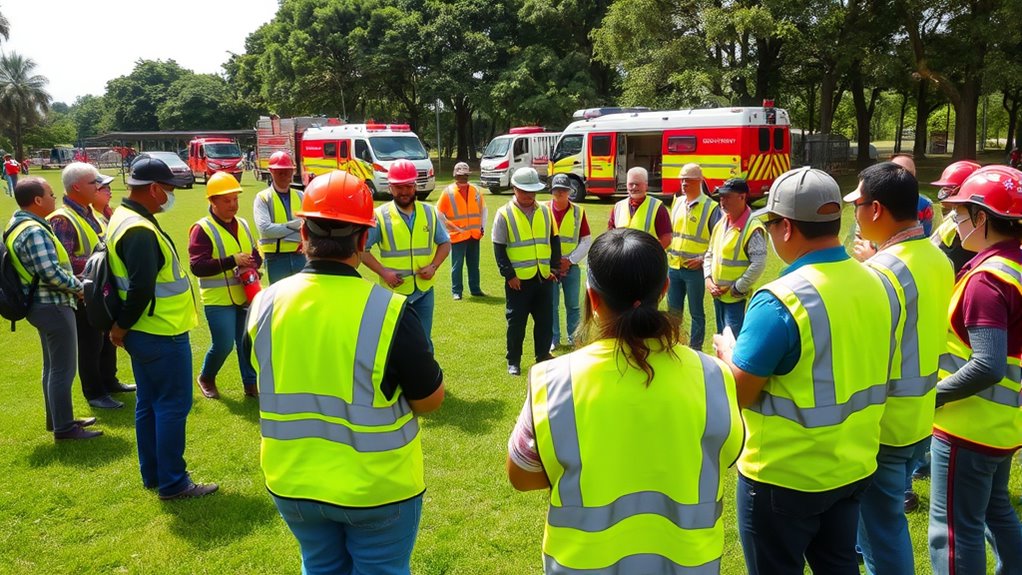
Community drills are indispensable for ensuring everyone knows how to respond effectively during emergencies. When a disaster strikes—be it a fire, earthquake, or other crisis—quick, coordinated action can save lives. Participating in community drills helps you understand the proper evacuation procedures and supports efficient emergency communication. These drills aren’t just about following instructions; they’re about building confidence and guaranteeing that everyone in your community is prepared to act swiftly and safely.
Community drills build confidence and ensure swift, coordinated emergency responses for safer communities.
During a drill, you learn exactly how to evacuate your building or neighborhood. You get familiar with designated escape routes, assembly points, and safe zones. These procedures might seem straightforward in theory, but practicing them makes a significant difference. You’ll discover potential hazards or bottlenecks, like blocked exits or crowded hallways, that could slow your escape during a real emergency. When everyone practices these evacuation procedures regularly, they become second nature, reducing the chaos and confusion when it’s truly needed.
Another essential aspect of community drills is emergency communication. In a crisis, reliable communication channels are critical to keep everyone informed and coordinated. During drills, you practice how to receive alerts, whether through sirens, text messages, or public address systems. You also learn how to relay information quickly and accurately, which helps authorities and community members stay updated about the situation. Effective emergency communication prevents misinformation, reduces panic, and guarantees that everyone knows what action to take and where to go.
Community drills also foster a sense of teamwork and shared responsibility. When you participate, you realize that emergency preparedness isn’t just about individual actions but about working together smoothly. You’ll see how clear communication, adherence to evacuation procedures, and mutual cooperation make the whole process more efficient. This collective effort builds trust among neighbors, encouraging everyone to stay alert and proactive.
Furthermore, these drills serve as a reminder that emergencies can happen unexpectedly. They highlight the importance of staying prepared and maintaining readiness at all times. The more often you practice, the less likely you are to panic or make mistakes during a real incident. Community drills reinforce the importance of emergency communication, guaranteeing everyone understands how crucial it is to stay connected and informed when it matters most. Additionally, integrating modern security systems and communication tools can enhance the effectiveness of these drills and actual emergency responses.
In essence, community drills are your opportunity to prepare thoroughly for emergencies. They help you familiarize yourself with evacuation procedures and establish reliable lines of emergency communication. By actively participating, you contribute to a safer, more resilient community where everyone knows what to do and can act confidently in any crisis.
Top picks for "importance community drill"
Open Amazon search results for this keyword.
As an affiliate, we earn on qualifying purchases.
Frequently Asked Questions
How Often Should Community Drills Be Conducted?
You should conduct community drills at least twice a year to maintain effective preparedness. Regular training frequency guarantees that volunteer participation stays high and everyone remains familiar with emergency procedures. Frequent drills help identify gaps, improve response times, and build confidence among volunteers. By scheduling these exercises consistently, you ensure your community remains ready to respond swiftly and effectively during actual emergencies.
Who Should Lead Community Drill Exercises?
You should have a community leader take charge of drill exercises to guarantee clear coordination. They can guide volunteers effectively, making sure everyone knows their roles. A community leader with experience in volunteer coordination helps streamline communication and logistics, creating a more realistic and productive drill. By leading these exercises, they foster teamwork and preparedness, ensuring your community is ready for emergencies and that volunteers are confident in their responsibilities.
What Equipment Is Necessary for Effective Drills?
Think of your community drill as a well-oiled machine; it needs the right tools to run smoothly. You’ll want safety gear like helmets and gloves to protect everyone, along with communication devices such as radios or walkie-talkies to keep everyone connected. These essentials act as the backbone of your exercise, ensuring clear coordination and safety. With the right equipment, your drill becomes a powerful force for preparedness and resilience.
How Do Community Drills Impact Emergency Response Times?
Community drills substantially improve emergency response times by fostering community engagement and enhancing preparedness education. When you participate, you become familiar with response procedures, reducing hesitation during real emergencies. These drills build teamwork, identify weaknesses, and streamline communication, ensuring everyone acts swiftly. As a result, your community is better prepared, and emergency responders can deliver aid more efficiently, ultimately saving lives and minimizing damage during actual crises.
Can Community Drills Be Adapted for Different Hazards?
Did you know that tailored community drills can boost emergency preparedness by up to 50%? You can adapt these drills for different hazards by implementing hazard-specific strategies and providing customized training. This approach guarantees your community responds effectively to various emergencies, whether it’s floods, earthquakes, or fires. By customizing drills, you help residents understand specific actions needed, improving overall safety and resilience during real incidents.
Conclusion
By participating in community drills, you become a crucial part of a well-oiled safety machine. Imagine the streets alive with confident voices and synchronized actions, a shield of preparedness around you. When chaos looms, your practiced steps guide others, turning fear into calm. These drills transform uncertainty into readiness, creating a safer neighborhood where everyone’s efforts shine like stars guiding the way. Together, you build a resilient community ready to face anything that comes.