
Understanding your emergency alerts helps you respond quickly and stay safe. Alerts come in various types like warnings, advisories, and updates, each indicating different levels of urgency. Recognizing words like “warning” or “advisory” tells you how serious the situation is and what actions to take. Always verify alerts through trusted sources and follow instructions promptly. To guarantee you’re prepared and know what these signals mean, keep exploring the details below.

Get emergency and outdoor gear delivered free with Prime
- Fast, free delivery on millions of items
- Prime Video, Amazon Music and more included
- Member-only deals all year
Key Takeaways
- Understand different alert types like warnings, advisories, and watches to gauge their urgency.
- Recognize standardized language and phrases that indicate specific actions or threats.
- Verify alerts through official sources before responding to avoid false alarms.
- Follow instructions promptly, such as evacuate immediately or stay indoors, based on alert severity.
- Stay familiar with alert formats and symbols to quickly interpret the message’s importance during emergencies.
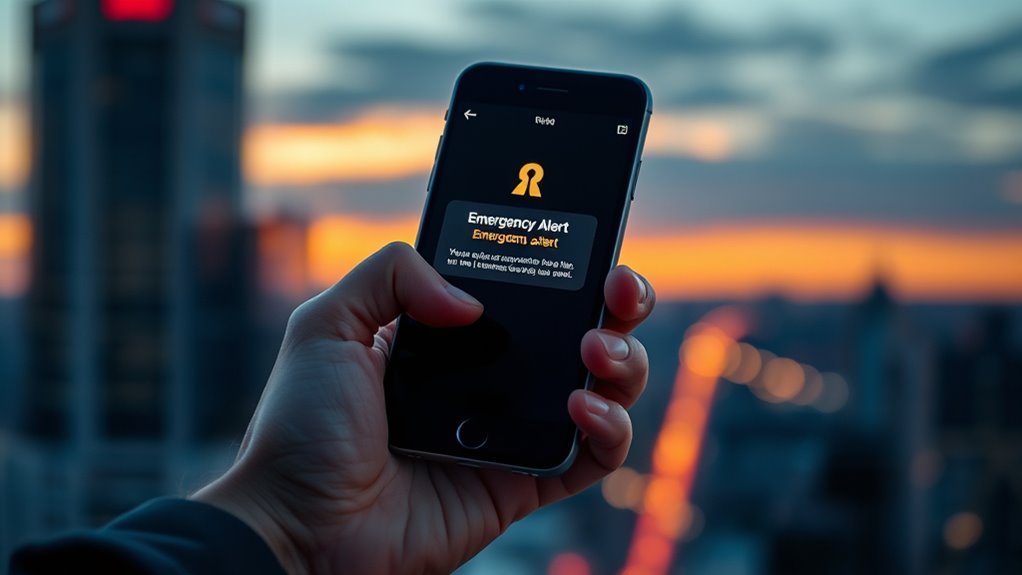
Have you ever overlooked an important alert because you didn’t understand what it meant? It’s easy to ignore notifications when their message isn’t clear or seems unnecessary at first glance. But in emergency situations, missing critical alerts can have serious consequences. That’s why it’s essential to understand what these alerts are trying to tell you. Emergency notifications are designed to quickly inform you of imminent dangers, such as severe weather, natural disasters, or safety threats. They come in various forms—text messages, app alerts, sirens, or even phone calls—and each has a specific purpose. Recognizing these signals and knowing what action to take can save lives, including your own.
Most alerts follow standardized formats, but they can still be confusing if you’re unfamiliar with them. For example, a message starting with “Severe Weather Warning” indicates a dangerous weather event like a tornado or hurricane in your area. These warnings are serious and often require immediate action, such as seeking shelter or evacuating. Conversely, an “Advisory” might suggest less urgent conditions, like minor flooding or air quality issues, prompting you to stay informed and prepare but not panic. It’s vital to pay attention to the language used—words like “warning,” “advisory,” or “alert” help you gauge the severity.
Understand alert language: warnings demand quick action, advisories suggest caution but less urgency.
Many alerts include specific instructions, and understanding these can make a difference. For instance, if you receive a notification instructing you to “evacuate immediately,” don’t delay. If it says “stay indoors and monitor local news,” that’s your cue to remain cautious but not necessarily in panic mode. The tone and wording are carefully crafted to guide your response. It’s also important to recognize the source of the alert. Official alerts from government agencies or trusted weather services are reliable. Be cautious of false alarms or spam messages that may mimic official alerts but aren’t legitimate. Always verify alerts through trusted channels, like official government websites or emergency apps.
Knowing what these alerts mean isn’t just about understanding the message; it’s about taking appropriate action. When you get a warning, don’t dismiss it or wait for more details. Act swiftly based on the instructions provided. Keep your phone charged and your emergency plans updated, so you’re ready when an alert arrives. With a basic understanding of these notifications, you’ll be better prepared to respond effectively, reducing your risk and helping keep yourself and your loved ones safe. Remember, the key isn’t just receiving alerts but truly understanding them and acting accordingly.
Additionally, understanding the standardized formats used in alerts can help you quickly interpret their significance and respond appropriately.
emergency alert notification app
As an affiliate, we earn on qualifying purchases.
As an affiliate, we earn on qualifying purchases.
Frequently Asked Questions
How Are Emergency Alerts Prioritized During Multiple Simultaneous Events?
When multiple emergencies happen at once, authorities prioritize alerts based on severity and potential impact. You’ll see the most urgent threats, like natural disasters or safety hazards, get sent out first. Less critical alerts follow afterward. Trust that emergency systems are designed to focus on the most immediate danger, so you get critical updates first. Stay alert and follow official instructions to stay safe during these situations.
Can I Customize Which Alerts I Receive on My Device?
Yes, you can customize which alerts you receive on your device. Most smartphones allow you to manage alert settings through your device’s notification or emergency alert menu. You can choose to turn on or off specific types of alerts, like weather warnings or community alerts. Check your device’s settings to personalize your notifications, ensuring you only receive the alerts that matter most to you and your safety.
Are There Differences in Alerts Across Various Regions or States?
Think of emergency alerts like regional weather reports—you get different updates based on where you are. Yes, alerts vary across states and regions because authorities tailor messages to local hazards. For example, tornado warnings are common in the Midwest, while hurricane alerts are more frequent along the Gulf Coast. Your device automatically receives relevant alerts, ensuring you stay informed about the specific risks in your area.
How Accurate Are the Location-Based Alerts I Receive?
Your location-based alerts are generally accurate, thanks to GPS technology and cell tower triangulation. However, they can sometimes be off due to signal interference or outdated data. To guarantee you get the most precise information, keep your device’s location services enabled and update your apps regularly. Remember, while these alerts are reliable, they might occasionally have minor discrepancies depending on your surroundings.
What Should I Do if I Receive a False or Outdated Alert?
If you get a false or outdated alert, don’t ignore it—take action. First, verify the info on official sources like local authorities or trusted news sites. Contact your emergency alert system provider to report the issue; they might fix it quickly. Meanwhile, stay cautious and follow existing safety guidelines. Think of it as a modern-day pager gone rogue—stay calm, stay informed, and act accordingly to keep yourself safe.
Conclusion
Understanding emergency alerts is like learning the secret language of safety—each message a essential Morse code guiding you through chaos. When you decode these signals, you’re arming yourself with a shield of knowledge, turning uncertainty into clarity. So, stay alert and informed; these notifications are your compass in the storm, steering you away from danger and toward safety’s calm harbor. Master their meaning, and you hold the power to protect yourself and others when it matters most.
Halloween Picks
halloween
As an affiliate, we earn on qualifying purchases.