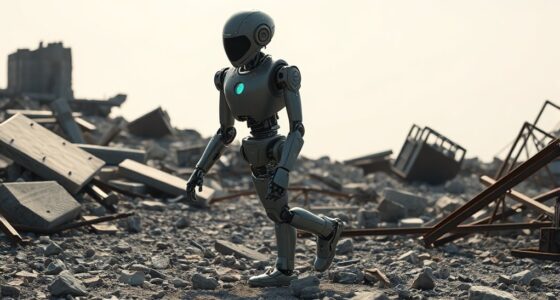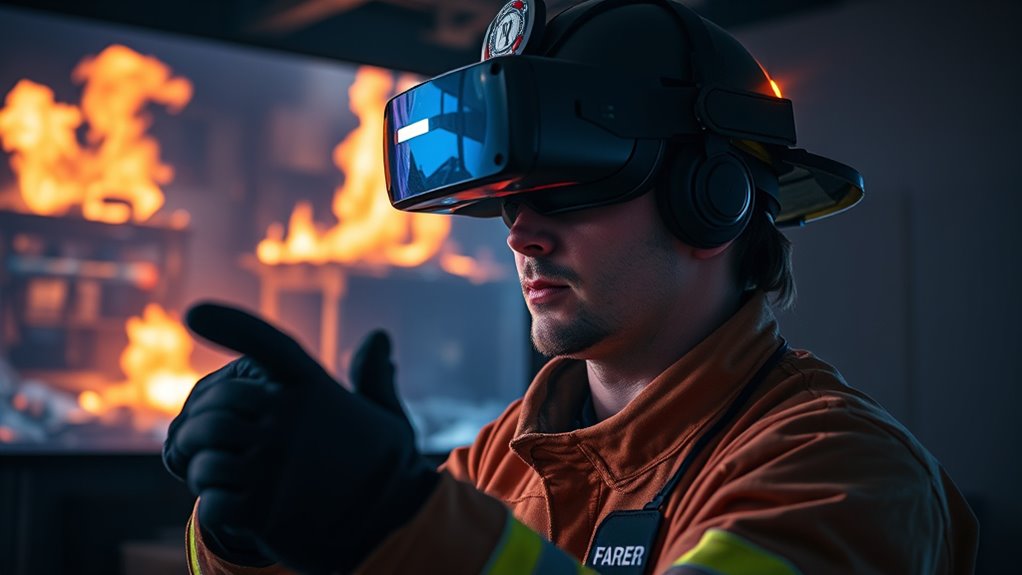

Virtual reality training simulations help disaster responders practice critical skills in realistic, immersive environments without real risks. They allow you to repeatedly experience different scenarios like fires, earthquakes, or chemical spills, boosting decision-making and coordination. While VR offers safe, hands-on practice, be aware that some systems might lack full sensory engagement and could cause emotional fatigue. To discover how ongoing tech improvements enhance these simulations, explore further details below.
Key Takeaways
- VR disaster response simulations provide immersive, realistic environments for practicing critical skills safely and repeatedly.
- They enhance decision-making, coordination, and confidence among emergency response teams.
- Current limitations include incomplete sensory feedback and hardware constraints that affect immersion.
- Repeated exposure can lead to emotional fatigue, emphasizing the need for psychological support and debriefings.
- Ongoing technological advancements aim to create more realistic scenarios with improved sensory engagement.
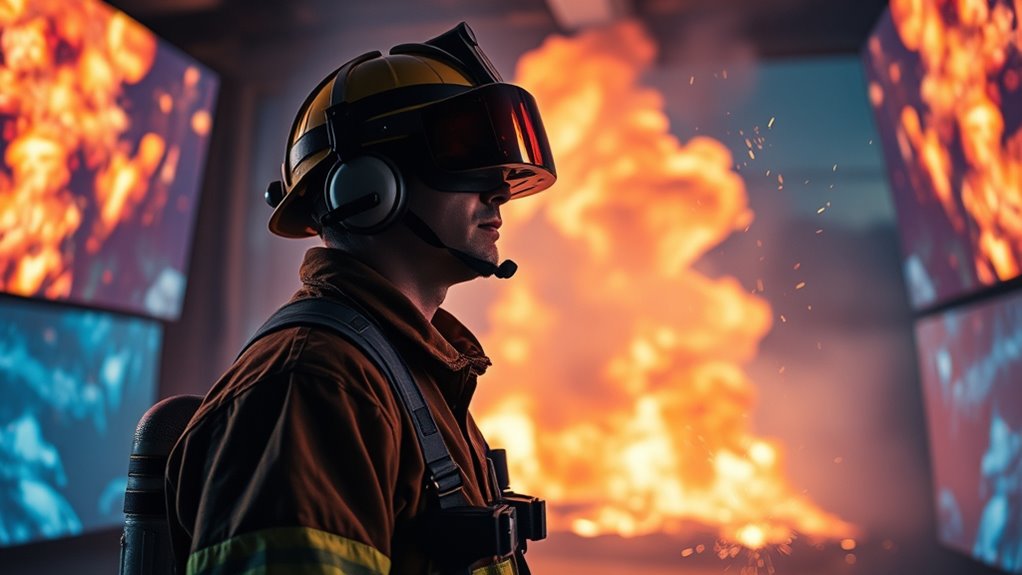
Virtual reality (VR) disaster response simulations are transforming the way emergency teams prepare for real-world emergencies. These immersive experiences allow responders to practice critical skills in a controlled, yet realistic environment. As you engage with VR scenarios, you gain valuable hands-on experience that traditional training methods can’t fully replicate. However, it’s important to recognize that VR training can also have psychological impacts. Repeated exposure to intense, high-stress disaster scenes may cause emotional fatigue or anxiety if not managed properly. While VR aims to build confidence and resilience, you might sometimes find yourself overwhelmed by the realism, especially during complex or traumatic scenarios. This emotional toll is a factor that trainers need to monitor, ensuring that participants can process their experiences without long-term psychological harm.
VR disaster simulations build skills but require psychological support to prevent emotional fatigue.
Another challenge lies in the technological limitations of current VR systems. Despite rapid advancements, some simulations still lack the full sensory engagement required to mimic real disaster environments accurately. You might notice that visuals, sounds, or haptic feedback aren’t always perfectly synchronized, which can affect immersion and the effectiveness of the training. These limitations can sometimes lead to a less authentic experience, making it harder to translate virtual lessons into real-world actions. additionally, hardware constraints—such as limited field of view, resolution issues, or the need for bulky equipment—may restrict mobility and comfort during training sessions. These technological gaps can hinder your ability to fully immerse yourself in the scenario, potentially impacting the training’s overall impact. Moreover, the cybersecurity vulnerabilities associated with connected VR systems pose additional risks, emphasizing the importance of secure technology in training environments.
Despite these challenges, VR disaster response simulations remain a powerful tool. They allow you to experience a wide range of disaster scenarios—from fires and earthquakes to chemical spills—without the risks associated with live training exercises. You can repeatedly practice responses, refine decision-making skills, and improve coordination with team members. As technology continues to evolve, these simulations will become more realistic, with better graphics, more nuanced interactions, and enhanced sensory feedback. Trainers are also increasingly aware of the psychological effects, implementing debriefings and support systems to help responders process their experiences safely.
In the end, while VR training isn’t perfect, its benefits in preparing you for real emergencies are undeniable. It offers a safe space to learn, make mistakes, and build confidence, all while pushing the boundaries of traditional emergency response training. As you participate, understanding both its potential and its limitations will help you maximize the value of this innovative approach.
Top picks for "virtual reality train"
Open Amazon search results for this keyword.
As an affiliate, we earn on qualifying purchases.
Frequently Asked Questions
How Cost-Effective Are VR Disaster Response Training Programs?
VR disaster response training programs are highly cost-effective when you do a thorough cost analysis. They reduce expenses related to travel, equipment, and physical setups, fitting well within your budget considerations. You can simulate diverse disaster scenarios without risking safety or incurring high costs. Over time, these programs save money by providing repeated, realistic training, making them a smart investment for your organization’s preparedness efforts.
Can VR Simulations Adapt to Real-Time Disaster Scenarios?
Think of VR simulations as a chameleon, changing colors to match their surroundings. Yes, they can adapt to real-time disaster scenarios by incorporating adaptive scenarios and real-time feedback. This allows responders to experience dynamic situations, making training more realistic. As the scenario evolves, the system adjusts accordingly, helping you develop quick decision-making skills and better prepare for actual emergencies.
What Are the Limitations of VR Technology in Training?
You might find that VR technology has some limitations, like hardware restrictions that can limit realism or responsiveness. User comfort is also a concern, as prolonged use can cause discomfort or fatigue. These factors can affect your training effectiveness and immersion. Despite advances, current VR systems may still struggle with high-fidelity graphics or seamless interactions, which can hinder the overall training experience.
How Do VR Simulations Improve Response Times?
VR simulations improve your response times by offering scenario customization that closely mirrors real emergencies, helping you practice relevant skills efficiently. The realism enhancement immerses you in authentic environments, allowing you to react instinctively under pressure. This targeted practice sharpens your decision-making and reflexes, so you’re better prepared for actual disasters. As a result, your response times become quicker and more accurate, ultimately saving lives during real-world emergencies.
Are There Any Psychological Effects of Immersive VR Training?
You might experience some psychological effects from immersive VR training, like cyber sickness or emotional impact. Cyber sickness can cause nausea or dizziness, but it usually subsides quickly. The emotional impact might be intense, as you face realistic disaster scenarios, which can lead to stress or anxiety. However, these effects are generally manageable with proper breaks and support, helping you build resilience and confidence for real-life responses.
Conclusion
By immersing yourself in virtual reality disaster response simulations, you prepare yourself to act swiftly, to think clearly, and to respond confidently. These simulations sharpen your skills, enhance your decision-making, and strengthen your resilience. As you face virtual challenges, you build real-world readiness. Ultimately, it’s about more than just practice—it’s about transforming knowledge into action, hesitation into confidence, and training into life-saving impact. Prepare yourself today to protect lives tomorrow.