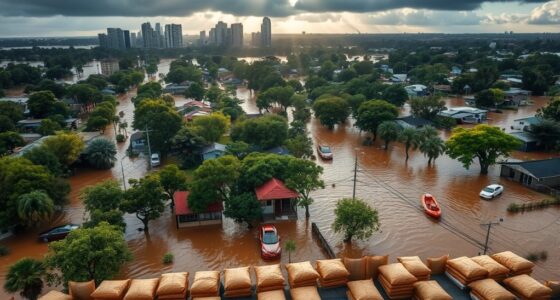
The 2021 Texas power grid collapse shows you the importance of modernizing energy infrastructure and diversifying sources. The crisis revealed how reliance on fossil fuels and outdated systems leaves you vulnerable during extreme weather. Incorporating renewables, upgrading grid technology, and investing in storage can boost resilience. If you want to understand how Texas can build a smarter, more reliable energy future, there’s more to uncover beyond this overview.
Key Takeaways
- The 2021 Texas power grid collapse exposed vulnerabilities in infrastructure, emphasizing the need for modernization and climate resilience.
- Heavy reliance on fossil fuels limited the grid’s ability to withstand extreme winter weather conditions.
- Integrating renewable energy sources, with storage and smart controls, enhances grid flexibility and reduces outage risks.
- Upgrading transmission systems and implementing real-time monitoring are critical for quick response during crises.
- Future resilience depends on diversified energy sources, infrastructure investments, and policies promoting grid adaptability.
In February 2021, Texas experienced a devastating power grid collapse that left millions in the dark and cold. The crisis exposed vulnerabilities in the state’s energy system, highlighting the urgent need for grid modernization and the integration of renewable energy sources. As someone interested in energy resilience, you realize that Texas’s heavy reliance on a fragile, fossil-fuel-dominated grid made it ill-prepared for extreme weather events. The failure wasn’t just about the cold; it was about outdated infrastructure struggling to handle the surge in demand and the unpredictable nature of severe winter storms.
One key lesson from this disaster is the importance of renewable integration. Texas has abundant wind and solar resources, yet these renewables played a surprisingly limited role during the crisis. You understand that increasing their share in the energy mix isn’t just about sustainability; it’s about creating a more resilient grid. When renewables are integrated smartly, they can diversify energy sources, reduce dependency on a few centralized power plants, and help buffer against outages caused by extreme weather. As you follow ongoing discussions, you see that modernizing the grid to better accommodate renewable energy involves installing advanced forecasting tools, flexible storage solutions, and smarter grid controls. These innovations can help balance supply and demand, even during cold snaps, ensuring that renewables contribute effectively when the grid needs them most.
Grid modernization, in your view, is vital for Texas to withstand future weather challenges. You note that the old infrastructure was not designed for today’s demands or climate realities. Upgrading transmission lines, enhancing grid automation, and implementing real-time monitoring systems are essential steps. These improvements allow operators to respond swiftly to disturbances, reroute power seamlessly, and prevent cascading failures. You also recognize that investment in grid resilience must be paired with policies encouraging renewable integration, such as incentives for distributed generation and energy storage. When these elements work together, the grid becomes more adaptable and less susceptible to catastrophic failures. Additionally, embracing energy storage technologies can help bridge the gap during periods of low renewable output, further boosting resilience.
In essence, the Texas power grid collapse taught you that energy resilience hinges on modern infrastructure and diversified energy sources. Embracing renewable integration and upgrading the grid isn’t just an environmental choice—it’s a strategic necessity. As you look ahead, you see a future where Texas’s power system is more flexible, reliable, and prepared for whatever weather Mother Nature throws its way. The lessons from 2021 serve as a wake-up call to prioritize investments that make the grid smarter, greener, and more resilient for generations to come.
Frequently Asked Questions
What Specific Policies Contributed to the Grid Failure?
You should know that regulatory failures and infrastructure neglect substantially contributed to the grid failure. Policies that didn’t enforce strict weather preparedness left the grid vulnerable, while inadequate maintenance and investment in infrastructure worsened the problem. These shortcomings prevented timely upgrades and emergency response improvements, making the system unable to handle extreme conditions. As a result, the lack of proactive policies and oversight led to widespread outages and lasting impacts.
How Has Texas Improved Grid Resilience Since 2021?
Since 2021, Texas has improved grid resilience by embracing microgrid innovation and expanding demand response programs. You’ll notice more localized microgrids that can operate independently during outages, reducing overall system stress. Additionally, demand response encourages you to shift your energy use during peak times, helping prevent blackouts. These strategies work together to make the grid more reliable, flexible, and better prepared for extreme weather events.
Were There Any Overlooked Warning Signs Before the Collapse?
You might have overlooked early warning signs like increasing structural vulnerabilities that hinted at the potential for failure. These signs, such as aging infrastructure and insufficient winterization, could have alerted you to the risk beforehand. Recognizing these vulnerabilities early on is vital, as they serve as indicators of underlying issues that, if ignored, can lead to catastrophic failures. Addressing them proactively could have helped prevent the collapse.
How Did the Collapse Impact Texas’ Economy Long-Term?
The collapse slowed Texas’ economic recovery and underscored the need for business diversification. You might notice that some industries faced setbacks, prompting businesses to rethink their strategies. This event pushed you to support policies that strengthen energy resilience and diversify the economy. Over the long term, Texas’s economy has become more resilient as entrepreneurs and policymakers work together to prevent future crises and foster a more stable, adaptable business environment.
What Role Did Renewable Energy Sources Play in the Crisis?
You might think renewable energy was a hero, but during the crisis, it struggled to keep up. Renewables like wind and solar faced setbacks, revealing how fragile energy diversification can be under extreme conditions. Their limited integration left Texas vulnerable, showing that relying solely on renewables isn’t enough. This crisis underscores the need for stronger renewable integration and a balanced mix to weather future storms and keep the lights on.
Conclusion
The Texas power grid collapse in 2021 teaches you that resilience isn’t just about infrastructure but also about foresight. As you reflect on the lessons learned, remember that ignoring warnings is like building on shifting sands—fragile and doomed to fall. By investing in diversified energy sources and preparedness, you can turn a potential disaster into a demonstration of strength. Don’t wait for the storm; build your resilience now before it’s too late.