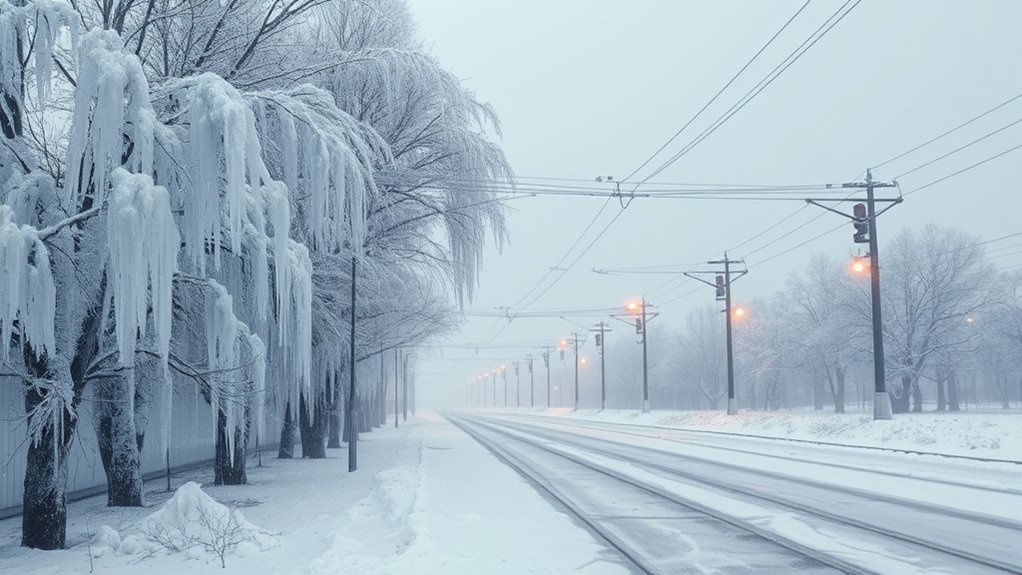

Ice storms threaten your infrastructure by causing extensive damage to power lines, utility poles, and roads. Heavy ice accumulation adds weight that can snap lines and disable equipment, leading to widespread power outages that impact heating, communication, and emergency services. Roads become slick and dangerous, disrupting travel and delaying response efforts. These disruptions can also slow supply chains and strain community resources. To learn more about how ice storms can affect your infrastructure and what you can do, keep exploring.
Key Takeaways
- Ice accumulation weakens power lines and utility poles, leading to widespread outages and prolonged disruptions.
- Infrastructure damage from ice storms hampers essential services like heating, communication, and healthcare.
- Roads become hazardous, increasing accidents and delaying emergency response and transportation efforts.
- Supply chains are disrupted, causing delays in goods delivery, food shortages, and economic impacts.
- Enhancing infrastructure resilience and preparedness reduces vulnerability and speeds recovery during ice storm events.
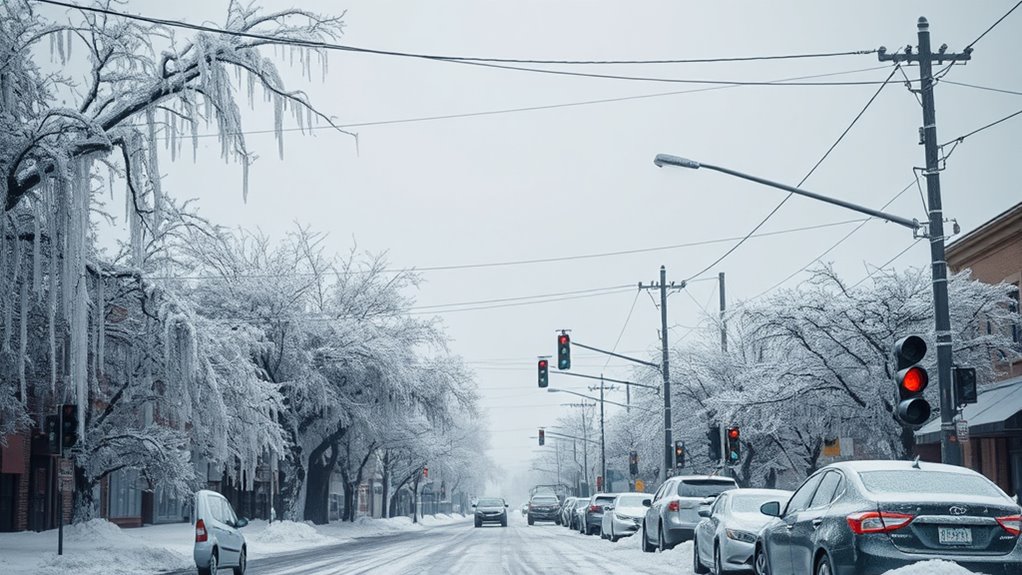
Ice storms can cause severe damage to infrastructure, disrupting daily life and safety. When these icy conditions set in, they expose the vulnerabilities in your community’s power grid, often leading to widespread outages. Heavy ice accumulation on power lines and utility poles adds immense weight, causing lines to snap or equipment to fail. These power grid vulnerabilities mean that entire neighborhoods can lose electricity for days, affecting heating, communication, and essential services. Without power, homes become frigid, and people are left without the means to cook, stay warm, or even access emergency assistance. The ripple effect hampers hospitals, businesses, and schools, making recovery more complex and stressful. Strengthening infrastructure resilience is crucial to mitigate these impacts and ensure quicker recovery.
Transportation disruptions are another critical issue during ice storms. Roads become slick and treacherous as ice coats over pavement, making travel hazardous. Your daily commute turns into a dangerous ordeal, with accidents increasing as vehicles lose traction. Public transportation services may halt altogether, stranding commuters and emergency responders trying to reach those in need. Snowplows and salt trucks struggle against the icy buildup, delaying clearance efforts and prolonging the period of unsafe travel. For emergency services, these transportation disruptions mean slower response times, which could be the difference between life and death in critical situations. Commercial deliveries get delayed, food supplies dwindle, and the economy takes a hit as goods remain stuck in transit.
The vulnerabilities of your infrastructure during an ice storm are stark reminders of how unprepared systems can be in the face of extreme weather. Power grid vulnerabilities become glaring when entire regions face prolonged outages, forcing residents to find alternative heating sources or rely on backup generators, which might not be sufficient or safe. Transportation disruptions compound the problem by hindering aid and recovery efforts, leaving communities isolated and vulnerable. The combination of these issues underscores the importance of resilient infrastructure designed to withstand such harsh conditions. Being aware of these vulnerabilities helps you prepare better—whether that means stocking up on supplies, ensuring your home has backup power options, or staying informed about road conditions. Additionally, understanding how to manage infrastructure risks can make a significant difference in community safety and resilience during future storms.
Frequently Asked Questions
How Do Ice Storms Form Over Urban Areas?
You experience ice storms over urban areas when weather patterns bring cold air and moisture, which then freezes upon contact with surfaces. Urban heat islands can influence local temperatures, sometimes delaying or intensifying ice formation. As you observe, these storms often start with freezing rain, causing dangerous conditions. The combination of cold air, moisture, and the city’s heat effects creates the perfect environment for ice storms to develop over urban areas.
What Immediate Steps Should Residents Take During a Power Outage?
Your world might feel like it’s collapsing, but stay calm. First, grab your emergency kit and make sure your phone is charged. Use your communication plan to stay in touch with loved ones and listen to official updates. Avoid opening refrigerator doors to preserve cold. Stay indoors, dress warmly, and conserve battery life. These quick actions can keep you safe until power is restored.
Are There Long-Term Environmental Impacts From Infrastructure Damage?
Long-term environmental impacts from infrastructure damage can worsen climate change and cause ecological disruption. When infrastructure like power lines and transportation systems break down, it often leads to increased emissions due to repair activities and reliance on less sustainable energy sources. You might also see habitat loss and pollution, which threaten local ecosystems. To protect the environment, prioritize sustainable rebuilding efforts and support policies aimed at reducing climate change effects.
How Do Insurance Policies Cover Storm-Related Infrastructure Repairs?
Think of insurance policies as your shield, much like Athena’s armor, when storm-related infrastructure repairs strike. Your coverage determines how much you’ll pay and what’s included. You need to comprehend the claim process, which involves reporting damages promptly and providing documentation. By staying informed and proactive, you guarantee your insurance coverage works for you, helping you recover faster from storm-related damages and get your infrastructure back on track.
What Role Do Local Governments Play in Storm Preparedness?
You play a crucial role in storm preparedness by participating in local government efforts. They lead community outreach programs to educate residents and develop emergency planning strategies. Your involvement helps guarantee everyone understands safety protocols and knows how to respond during storms. Local governments coordinate resources, communicate alerts, and organize drills, making sure the community is well-prepared. Your engagement strengthens these initiatives, reducing risks and enhancing overall resilience during severe weather events.
Conclusion
While ice storms may seem like nature’s gentle reminder to pause, they subtly test our resilience and adaptability. Behind the quiet beauty lies a message: prepare wisely and stay connected. Sometimes, life’s quiet challenges hint at the importance of foresight and community. Embrace these moments as opportunities to strengthen bonds and build a safer future. After all, it’s in the calm after the storm that true strength quietly reveals itself.