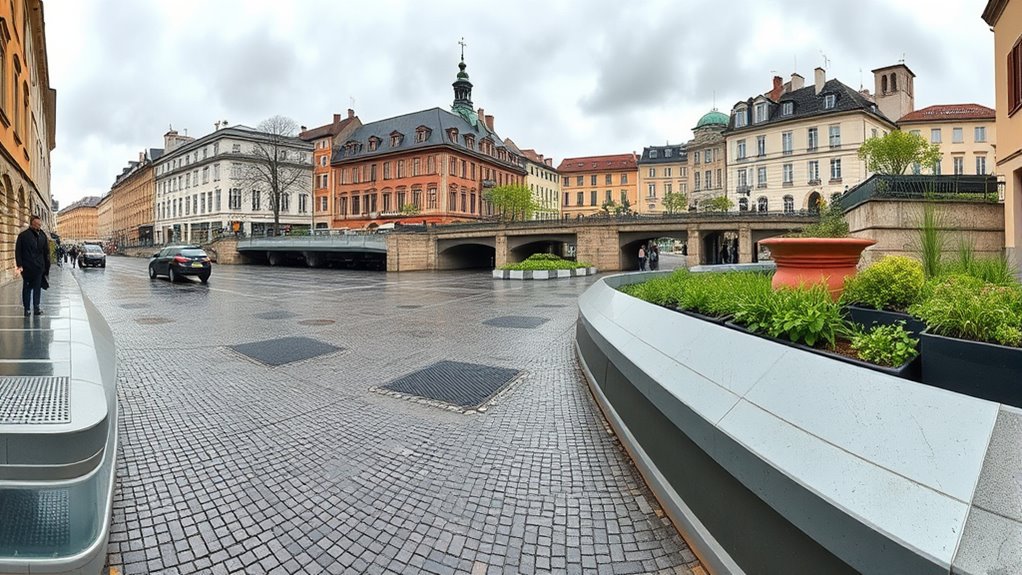

Europe responds to increasing flooding by developing a mix of adaptation strategies, including expanding green infrastructure like parks, green roofs, and permeable surfaces to absorb heavy rains. They also upgrade flood defenses with levees, dams, and natural floodplain restoration to better manage rising water levels. Combining natural and engineered solutions builds resilience. If you explore further, you’ll discover how these integrated efforts aim to protect communities and make cities more flood-smart.
Key Takeaways
- Europe is increasing investment in green infrastructure like urban green spaces and permeable surfaces to absorb floodwaters.
- Natural floodplain restoration and reconnecting rivers help distribute floodwaters and reduce urban flooding.
- Combined use of traditional infrastructure (levees, dams) with ecological solutions enhances flood resilience.
- Climate adaptation strategies focus on innovative, flexible designs to address evolving flood risks due to climate change.
- Public awareness campaigns and community engagement are promoted to encourage flood-resilient practices and collective action.

As flooding events become more frequent and severe across Europe, governments and communities are stepping up their efforts to combat and adapt to these rising risks. One of the key strategies involves enhancing urban green spaces, which serve as natural flood absorbers. Parks, green roofs, and permeable surfaces are increasingly integrated into city planning to reduce runoff and ease pressure on drainage systems. By creating more green areas, you help slow down water flow during heavy rains, allowing it to soak into the ground instead of overwhelming urban sewer systems. These spaces also provide additional benefits such as improving air quality, supporting biodiversity, and offering recreational opportunities, making cities more resilient and livable.
Alongside expanding green spaces, you’ll find that investing in flood management infrastructure plays an essential role in Europe’s adaptation efforts. This includes constructing and upgrading levees, dams, and flood barriers designed to protect vulnerable communities from extreme water levels. Modern infrastructure projects often incorporate innovative design features, like movable gates or inflatable barriers, that can be deployed quickly during flood events. You should also consider the importance of restoring natural floodplains, which act as buffers by absorbing excess water. Reconnecting these areas to rivers helps distribute floodwaters more evenly and prevents urban areas from becoming overwhelmed.
Investing in flood barriers, levees, and restoring floodplains enhances urban resilience against rising water levels.
Furthermore, city planners and engineers are integrating nature-based solutions with traditional infrastructure. For example, you might see the development of retention basins and wetlands that temporarily hold floodwaters, reducing the risk of downstream flooding. These features not only serve functional purposes but also enhance the aesthetic and ecological value of urban landscapes. As you observe these measures, it’s clear that a combination of engineered structures and natural solutions creates a more holistic flood defense system. Additionally, advancing climate resilience strategies ensures that cities can better withstand the increasing impacts of climate change on flooding patterns.
Public awareness and community participation are also fundamental. Governments are promoting education campaigns to encourage residents to utilize green spaces and adopt flood-resilient practices. When you’re involved in local initiatives, such as community-led restoration projects or sustainable drainage schemes, you contribute to building a resilient urban environment. Ultimately, these adaptive strategies demonstrate that tackling increasing flood risks requires a well-rounded approach—one that balances infrastructure improvements with ecological solutions and active community engagement to safeguard Europe’s cities now and in the future.
As an affiliate, we earn on qualifying purchases.
Frequently Asked Questions
What Are the Long-Term Economic Impacts of Flood Adaptation?
The long-term economic impacts of flood adaptation include boosting economic growth through resilient infrastructure investments, which create jobs and attract investments. However, you may face increased insurance costs as risks rise, potentially straining budgets. While upfront expenses can be high, effective adaptation reduces future flood damages, saving money in the long run. Overall, proactive measures strengthen your economy and community resilience against future flooding challenges.
How Do Flood Strategies Vary Across Different European Countries?
Imagine Europe’s landscape as a patchwork quilt, each piece uniquely stitched with flood strategies. You’ll see countries like the Netherlands investing heavily in advanced infrastructure, like dikes and pumps, while others focus on urban planning to manage water flow. In southern Europe, strategies emphasize natural flood defenses. Your approach varies based on geography and resources, but all aim to strengthen communities against rising waters through tailored infrastructure investments and smart planning.
What Role Does Community Engagement Play in Flood Resilience?
Community engagement plays a vital role in flood resilience by boosting community awareness and encouraging local participation. When you get involved, you help spread essential information about flood risks and safety measures. Your participation in local planning and preparedness efforts strengthens the entire community’s ability to respond effectively. By working together, you create a more resilient environment that can better withstand and recover from flooding events.
Are There New Technologies Being Developed for Flood Prediction?
You might think flood prediction is outdated, but new tech is changing that. Artificial intelligence now analyzes vast data sets, while remote sensing offers real-time insights from satellites. These innovations improve accuracy and speed, helping you prepare better. Despite challenges, such as data integration, these advancements make flood forecasting more reliable, ensuring communities can act swiftly. Embracing this technology could be your best defense against rising flood risks.
How Does Climate Change Influence Future Flood Risk Planning?
Climate change considerably impacts future flood risk planning by making it essential for you to rely on accurate climate modeling. You need to incorporate these models into your policies to guarantee effective adaptation strategies. By integrating climate projections into planning, you can better anticipate flood events, allocate resources efficiently, and develop resilient infrastructure. This proactive approach helps you mitigate risks and protect communities from escalating flood hazards caused by climate change.
Conclusion
While some might think adapting to increased flooding is too costly or complicated, the truth is, proactive strategies safeguard both lives and property. By investing in resilient infrastructure and sustainable practices now, you can reduce future risks and save money in the long run. Don’t wait for disasters to strike—embrace these solutions today. Your efforts not only safeguard your community but also ensure a more secure, flood-resilient Europe for generations to come.