
Japan’s approach to earthquake preparedness blends innovative technology like seismic early warning systems with a strong culture of community and individual responsibility. You’ll find regular drills in schools, workplaces, and neighborhoods that build muscle memory for quick reactions. Many households keep emergency kits and conduct mini drills, ensuring everyone is ready. Government campaigns promote awareness and education, fostering a shared sense of safety. Stay with us to discover more about how Japan’s holistic strategy keeps people safe during quakes.
Key Takeaways
- Japan integrates advanced seismic early warning systems with community drills to enhance rapid response and minimize earthquake impact.
- Cultural emphasis on regular earthquake education and preparedness fosters a nationwide mindset of safety and resilience.
- Households are encouraged to maintain emergency kits and conduct mini drills, reinforcing individual and family readiness.
- Government initiatives promote continuous innovation in seismic sensor technology and public awareness campaigns.
- Japan’s holistic approach combines technology, education, and community involvement, serving as a global model for earthquake preparedness.

Have you ever wondered how Japan consistently manages to stay prepared for earthquakes? The answer lies in a combination of cultural practices and cutting-edge technology. Central to this preparedness is the seismic early warning system, which plays a essential role in providing critical seconds of notice before the shaking begins. When an earthquake originates underground, sensors detect the initial seismic waves. These signals are processed quickly, and alerts are sent out through various channels, including mobile phones, public address systems, and broadcast media. This early warning allows individuals and institutions to take immediate protective actions, such as dropping to the ground, taking cover, and holding on—sometimes even seconds before the strongest tremors arrive. This rapid response can make a substantial difference, reducing injuries and saving lives.
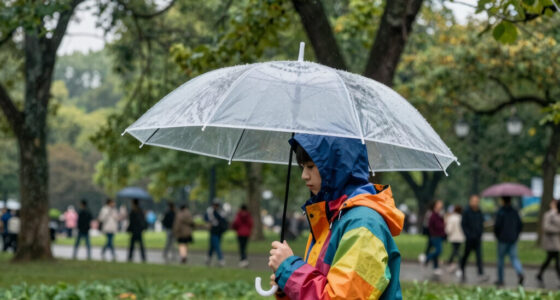
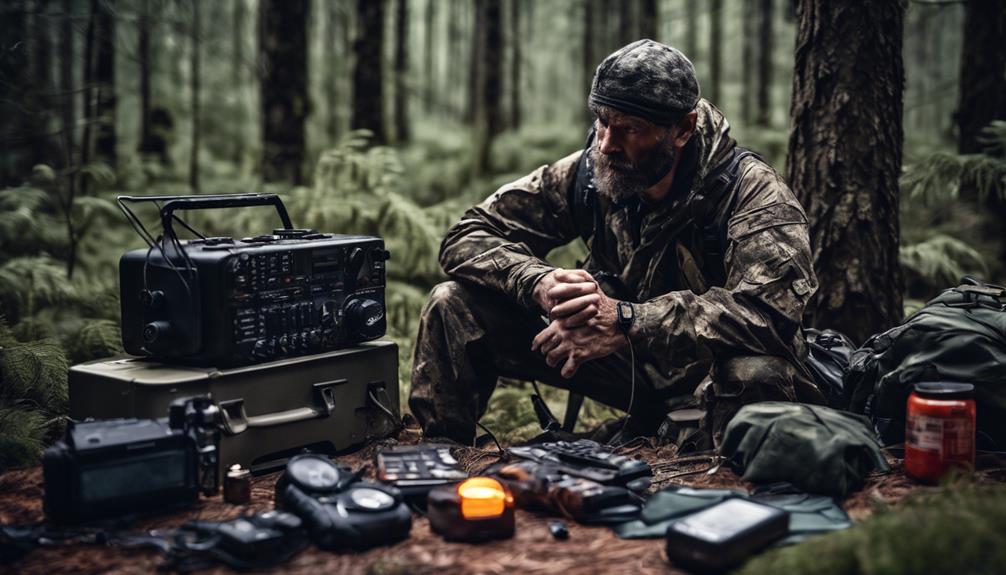
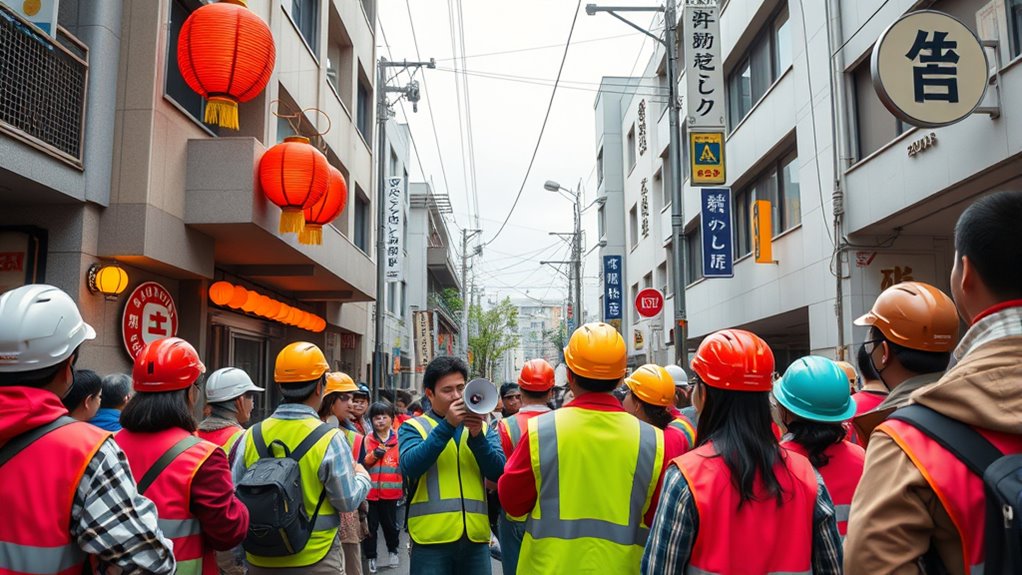
However, technology alone isn’t enough. Japan also emphasizes traditional earthquake drills, which remain a cornerstone of its preparedness culture. Schools, workplaces, and communities regularly participate in these drills, fostering muscle memory and guaranteeing everyone knows how to react swiftly during an actual quake. These drills simulate real-life scenarios, guiding people on how to evacuate, find safe spots, and assist others. Over time, this practice becomes ingrained, so when an earthquake strikes, panic is minimized, and effective action becomes second nature. Many Japanese households keep emergency kits stocked and conduct their own mini drills at home, further ingraining preparedness into daily routines.
The combination of high-tech solutions and community-based training reflects Japan’s holistic approach to earthquake readiness. It’s not just about having the latest gadgets but also about cultivating a culture where everyone understands the importance of being prepared. Schools incorporate earthquake education into their curriculum, emphasizing safety measures and encouraging children to participate in drills. Public awareness campaigns, frequent updates on seismic activity, and government support reinforce this culture of preparedness. As a result, Japanese citizens are more confident in their ability to respond effectively when an earthquake occurs.
Ultimately, Japan’s success in earthquake preparedness hinges on this blend of innovation and cultural commitment. The seismic early warning system offers essential seconds of notice, while traditional earthquake drills ensure that millions are ready to act calmly and decisively. This proactive stance transforms fear into resilience, making Japan a world leader in earthquake readiness. It’s a model rooted in technology, education, and a shared sense of responsibility—an approach anyone living in a seismic zone can learn from and adapt. Additionally, advancements in seismic sensor technology continue to enhance the accuracy and speed of early warnings, further strengthening Japan’s preparedness measures.
As an affiliate, we earn on qualifying purchases.
Frequently Asked Questions
How Does Japan’s Earthquake Insurance System Work?
You can get earthquake insurance coverage through private insurers or government programs, which helps with damages to your property. Japan’s system is designed for risk management, encouraging homeowners to buy coverage to reduce financial impact after a quake. You should understand policy details, coverage limits, and premiums. This proactive approach guarantees you’re protected financially, and it supports broader efforts to manage earthquake risks effectively across the country.
What Role Do Schools Play in Earthquake Education?
Imagine schools as anchors in a storm, steady and prepared. You see, they run regular earthquake drills that act like shields, reinforcing safety habits. These drills symbolize hope and resilience, helping students stay calm and aware during real quakes. By fostering student awareness through hands-on practice and education, schools become the lighthouse guiding everyone safely through the turbulent waters of disaster, ensuring preparedness is rooted deep within the community.
Are There Any Traditional Japanese Practices for Earthquake Safety?
Yes, there are traditional Japanese practices for earthquake safety. You might participate in seismic rituals, which are ceremonial acts to honor safety and resilience. Additionally, traditional drills, known as “hinan” exercises, help prepare communities for emergencies. These practices reinforce cultural values of preparedness, encouraging you to stay calm and follow safety protocols during an actual quake, blending tradition with modern safety measures effectively.
How Does Technology Enhance Early Warning Systems?
Imagine you’re living in a sci-fi movie—technology now enhances early warning systems. Seismic sensors detect tremors seconds before they hit, and alert technology instantly notifies you through your devices. This rapid exchange of data allows people to take cover or evacuate, minimizing damage. By integrating advanced seismic sensors and alert technology, Japan’s earthquake preparedness becomes smarter, more responsive, and ultimately, life-saving.
What Community Initiatives Support Earthquake Resilience?
You can participate in community drills that simulate earthquake scenarios, helping you and your neighbors practice safe responses. These initiatives boost public awareness about earthquake risks and preparedness strategies. Local governments often organize these drills regularly, making sure everyone knows what to do before, during, and after an earthquake. By engaging in these activities, you bolster your community’s resilience and ensure you’re better equipped to handle real emergencies effectively.
Conclusion
By embracing a culture of innovation and preparedness, you’re never caught off guard when earthquakes strike. Japan’s approach shows that staying ahead of the game isn’t just about technology; it’s about mindset. Remember, being prepared isn’t a matter of if, but when. So, take lessons from Japan’s playbook—stay vigilant, adapt quickly, and turn challenge into an opportunity to stay safe. After all, a stitch in time saves nine.