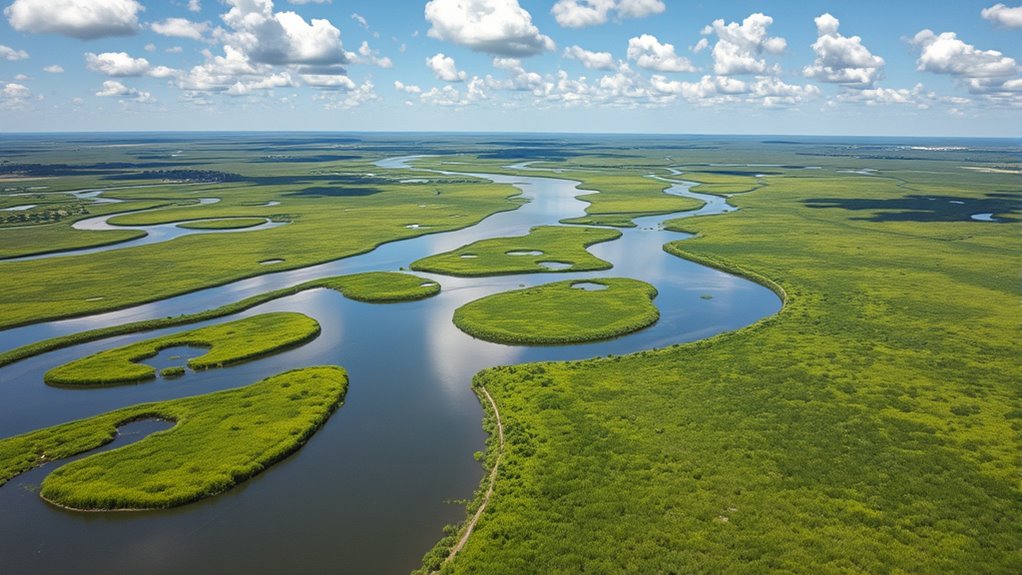

Floodplain management along the Mississippi River involves designing effective levees, using flood risk maps, and adopting adaptive strategies to protect communities and ecosystems from floods. It’s important to take into account future climate changes, sediment buildup, and erosion when planning. Incorporating advanced technology and community involvement helps ensure long-term resilience. If you want to understand how these elements work together to reduce flood risks and improve safety, keep exploring the key strategies behind this process.
Key Takeaways
- Implementing comprehensive flood risk mapping to identify vulnerable areas and inform levee placement along the Mississippi River.
- Designing resilient levees with proper height, slope stability, and adaptable features to withstand flood events and future climate conditions.
- Integrating GIS technology and layered defense strategies for improved hazard assessment and community protection.
- Promoting sustainable floodplain management practices that balance infrastructure development with natural ecosystem preservation.
- Encouraging active community involvement and continuous monitoring to adapt strategies and enhance flood resilience over time.
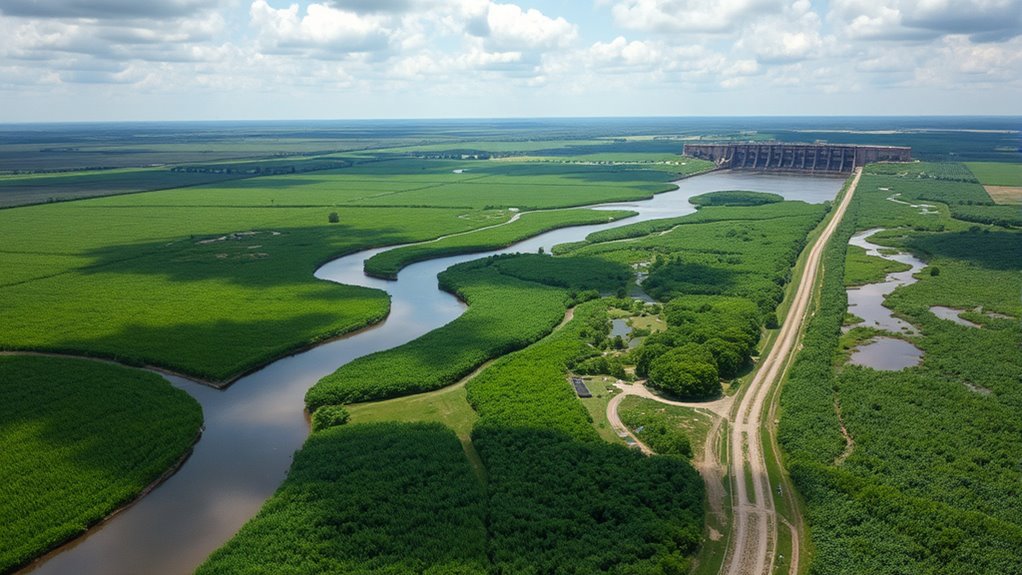
Floodplain management along the Mississippi River is fundamental for protecting communities, ecosystems, and farmland from flooding risks. One of the most effective strategies you can implement involves careful levee design. Designing levees isn’t just about building earthen walls; it’s about creating structures that can withstand the unpredictable forces of floodwaters. Proper levee design considers factors like height, slope stability, and materials used, ensuring they hold back water during high flows. You need to account for future climate conditions, sediment buildup, and potential erosion to make sure these barriers remain dependable over time. An improperly designed levee can give a false sense of security, leading to complacency and increased vulnerability during a flood event.
Careful levee design is essential for reliable flood protection along the Mississippi River.
In addition to levee design, flood risk mapping plays a pivotal role in floodplain management. Flood risk maps help you visualize which areas are most susceptible to flooding, allowing you to prioritize investments and develop targeted mitigation measures. These maps incorporate historical flood data, hydraulic modeling, and topographical information to identify zones at risk. With accurate flood risk mapping, you can make informed decisions about where to restrict development or enforce building codes that promote resilience. It also enables emergency planners to prepare evacuation routes and allocate resources efficiently. As flood risks change over time—due to urban development, climate change, or changing river dynamics—updating flood risk maps becomes essential. Keeping these maps current ensures you’re not relying on outdated information that could underestimate current dangers.
You should also consider integrating flood risk mapping with other tools, like GIS technology, to get a broad view of flood hazards. This approach helps you identify vulnerable populations and critical infrastructure, guiding smarter land use policies. When combined with well-planned levee design, flood risk mapping creates a layered defense system that minimizes flood damage. These efforts help protect people’s homes, businesses, and agricultural land, while also safeguarding the natural ecosystems that depend on the river’s health. Additionally, understanding the importance of contrast ratio in floodplain areas can aid in designing effective flood-resistant structures with proper visibility and safety features.
Ultimately, effective floodplain management along the Mississippi River hinges on a combination of engineering expertise and data-driven planning. By focusing on sound levee design and leveraging detailed flood risk mapping, you can build resilience against flood threats. The goal is not just to prevent flooding but to do so in a way that prepares your community for future challenges, preserves essential ecosystems, and sustains the region’s economy. It’s a continuous process of assessment, adaptation, and improvement—one that requires your active involvement and commitment to long-term flood resilience.

ZOCWJK Flood Protection Barrier, Flood Levee System for Flood Diversion and Sealing Type L ABS Flood Barrier (Red-2pcs
- Material: Durable ABS with UV coating
- Design: L-shaped flood barrier for stability
- Functionality: Blocks water flow effectively
As an affiliate, we earn on qualifying purchases.
As an affiliate, we earn on qualifying purchases.
Frequently Asked Questions
How Do Local Communities Participate in Floodplain Planning?
You participate in floodplain planning by engaging with your community through meetings and outreach programs. Your input helps shape policies that protect everyone from flooding risks. Local authorities often involve residents in decision-making processes, ensuring policies reflect community needs. By staying informed and voicing your concerns, you help develop effective floodplain management strategies, strengthening resilience and safeguarding properties. Active community engagement is essential for creating sustainable, inclusive floodplain policies.
What Are the Long-Term Economic Impacts of Floodplain Restrictions?
Have you considered how floodplain restrictions impact your long-term finances? These policies can lower property valuation and reduce insurance premiums, saving you money over time. However, they might also limit property development or resale value, which could hinder economic growth. Do you think the benefits of reduced flood risk outweigh these potential drawbacks? Ultimately, understanding these impacts helps you make informed decisions about living or investing in flood-prone areas.
How Do Climate Change Projections Influence Floodplain Management?
Climate change projections substantially influence floodplain management by prompting you to incorporate climate adaptation strategies and update flood risk modeling. As projections show increased flood risks, you need to reassess current floodplain boundaries, enhance infrastructure resilience, and develop adaptive policies. This proactive approach helps you mitigate future flood damages, protect communities, and ensure sustainable land use, aligning your floodplain management practices with evolving climate realities.
What Technologies Are Used for Flood Monitoring Along the Mississippi?
You rely on remote sensing technologies and sensor networks for flood monitoring along the Mississippi River. Remote sensing uses satellites and aerial imagery to track water levels and flood extents in real-time. Sensor networks, with ground-based devices, provide continuous data on rainfall, river flow, and water height. Together, these tools give you timely, accurate information to make informed decisions and improve flood response efforts.
How Can Residents Access Flood Insurance Programs?
You can access flood insurance programs by visiting the National Flood Insurance Program (NFIP) website or talking to your local insurance agent. As a resident, you should make certain your property is mapped within the floodplain to qualify for flood insurance. Register for coverage early, especially before flood seasons, to protect your home and belongings. Keep in mind, resident access to flood insurance is essential for financial security during flood events.
Conclusion
Just like a skilled captain navigates rough waters, effective floodplain management keeps communities safe along the Mississippi River. By implementing thoughtful planning and sustainable practices, you can help prevent devastating floods and protect your home and environment. Remember, your actions are the steering wheel in this ongoing effort. Together, you can guarantee the river’s flow remains a source of life rather than destruction, safeguarding the region now and for generations to come.