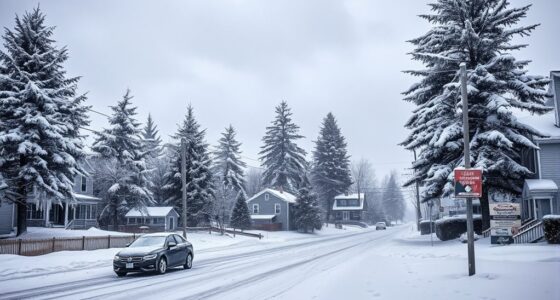
To survive cold weather in Northern Europe, dress in proper thermal clothing with moisture-wicking base layers, insulating mid-layers, and windproof outer shells. Protect exposed skin like your face, hands, and neck with masks, gloves, and gaiters. Build emergency shelters using natural features or tarps and insulate from the ground. Always carry a survival kit with blankets, extra clothes, and tools. Mastering these essentials can make all the difference—keep going to discover even more tips to stay safe.
Key Takeaways
- Wear layered, moisture-wicking, insulating, and waterproof clothing to maintain body heat and protect against harsh weather.
- Cover exposed skin with scarves, masks, gloves, and thermal gear to prevent frostbite and hypothermia.
- Use natural shelters or construct insulated emergency refuges to shield from wind, snow, and cold elements.
- Carry a comprehensive survival kit including thermal blankets, extra clothing, and emergency shelters for unforeseen situations.
- Regularly adjust clothing layers to stay dry and retain warmth, avoiding sweating that can lead to rapid heat loss.

Have you ever wondered how to survive the harsh cold of Northern Europe? If you find yourself caught in these frigid conditions, your first priority is to stay warm and protected. Proper thermal clothing is essential; it acts as a barrier against the cold and helps maintain your body heat. Layering is key—start with moisture-wicking base layers that keep sweat away from your skin, then add insulating layers like fleece or wool, and finally a windproof, waterproof outer shell. This combination ensures you stay warm even in freezing temperatures. Keep in mind that exposed skin can quickly freeze, so covering your face, hands, and neck with appropriate gear is vital. Investing in high-quality thermal clothing can make the difference between life and death in emergency situations, especially if you’re stranded without access to shelter.
In situations where you’re unable to find proper shelter, knowing how to create or utilize emergency shelters can save your life. Emergency shelters, such as bivouacs, tents, or even makeshift constructions from available materials, provide critical protection from wind, snow, and cold. If you’re caught outdoors, look for natural formations like caves, overhangs, or dense tree cover that can shield you from the elements. When constructing an emergency shelter, prioritize insulating yourself from the ground with leaves, pine bines, or any available debris to prevent heat loss. Using a tarp or a sturdy piece of cloth over your shelter can add an extra layer of protection against wind and snow. Remember, the goal is to create a barrier that retains your body heat and keeps out the cold. Regularly checking and maintaining your shelter and gear can significantly improve your chances of survival.
If you’re in an unfamiliar area, always carry a basic emergency kit that includes thermal blankets, extra clothing, and a compact emergency shelter or tarp. This kit can be your saving grace if you get lost or stranded. Staying dry is equally important as staying warm; moisture can sap your body heat quickly. Avoid sweating by adjusting your layers if you engage in physical activity, and remove any damp clothing promptly. In extreme cold, your body can lose heat faster than you realize, so securing your shelter and clothing is a top priority. With the right gear, smart planning, and quick thinking, you can survive the brutal cold of Northern Europe and make it through even the toughest conditions. Being aware of air purifier maintenance and ensuring your environment remains breathable can also help in prolonged outdoor survival scenarios.

WaterPrepared Stackable Plastic Drinking Water Storage Tank with Spigots, 55 Gallon, Blue - Portable Emergency Hydration Container for Survival or Disaster Preparedness
Large 55-Gallon Capacity: Store a reliable emergency water supply for your home, cabin, or survival kit with this...
As an affiliate, we earn on qualifying purchases.
Frequently Asked Questions
What Are the Best Local Plants for Emergency Food in Winter?
In winter, you can rely on local plants like edible berries such as lingonberries and cranberries, which often persist through the cold. Wild herbs like winter savory and some hardy greens may also be available if you know where to look. For emergency food, focus on these resilient options, and always guarantee proper identification before consuming any wild plants. These resources can help sustain you during harsh winter conditions.
How Can I Prevent Frostbite During Prolonged Exposure?
Imagine you’re a knight braving icy winds, shielding yourself from frostbite. To prevent it, you need to layer insulation by wearing multiple warm clothing layers, especially on your extremities. Use sturdy gloves or hand protection to keep your hands warm and dry. Keep moving to generate body heat, and stay dry to avoid moisture that accelerates frostbite risk. These steps help you stay resilient against the cold’s biting grip.
What Are Common Signs of Hypothermia to Watch For?
You need to recognize signs of hypothermia early to stay safe. Symptoms to recognize include shivering, confusion, exhaustion, and slurred speech. As hypothermia worsens, you might notice slow or irregular heartbeat, drowsiness, and loss of coordination. If you see these signs in yourself or others, act quickly by moving to a warmer place, removing wet clothing, and providing warm drinks. Immediate action can prevent serious health risks.
Which Clothing Materials Are Most Effective in Cold Conditions?
You should wear clothing made from thermal insulation and moisture-wicking fabrics. These materials help keep you warm by trapping body heat and pulling sweat away from your skin. Look for layers like wool or synthetic fibers that retain heat even when damp. Avoid cotton, which absorbs moisture and cools you down. Combining these materials guarantees you stay dry, warm, and protected against the cold, especially in harsh conditions.
How Do I Find Shelter Quickly in Remote Snowy Areas?
To find shelter quickly in remote snowy areas, look for natural formations like caves or dense tree cover for immediate protection. If none are available, construct a shelter using available materials such as branches and snow, ensuring it blocks wind and insulates you. Use emergency signaling techniques like a signal fire or reflective objects to attract help. Prioritize building a sturdy shelter and signaling for rescue to stay safe until help arrives.

Ice Cooler with Wheels and Handle - 65qt Clear Sky, Wheeled Cooler, Insulated Ice Chest with Wheels and Handle for Fishing and Camping with Dry Storage, Bottle Openers, and Cupholders
【COOLER WITH WHEELS】 Hogg rotomolded coolers with wheels and handles are made with durable double wall insulation and...
As an affiliate, we earn on qualifying purchases.
Conclusion
Now that you know the essentials for surviving cold weather in Northern Europe, you’re better prepared to face the chill head-on. Keep your wits about you, pack smart, and stay alert to changing conditions. Remember, when the going gets tough, it’s all about staying warm and keeping your head. With these tips, you’ll be able to weather any storm—just don’t forget, a stitch in time saves nine. Stay safe out there!

Canyon Cooler Outfitter V2 75qt Cooler Sandstone
A big cooler, perfect for extended trips or group sizes
As an affiliate, we earn on qualifying purchases.

EchoSmile 25/30/35/40/60/75 Quart Rotomolded Cooler, Built to Stand up to The Rigors of The Journey
QUALITY MATERIALS: Crafted with seamless LLDPE using rotomolding technology, our coolers feature UV-resistant exteriors and food-safe interiors. The...
As an affiliate, we earn on qualifying purchases.