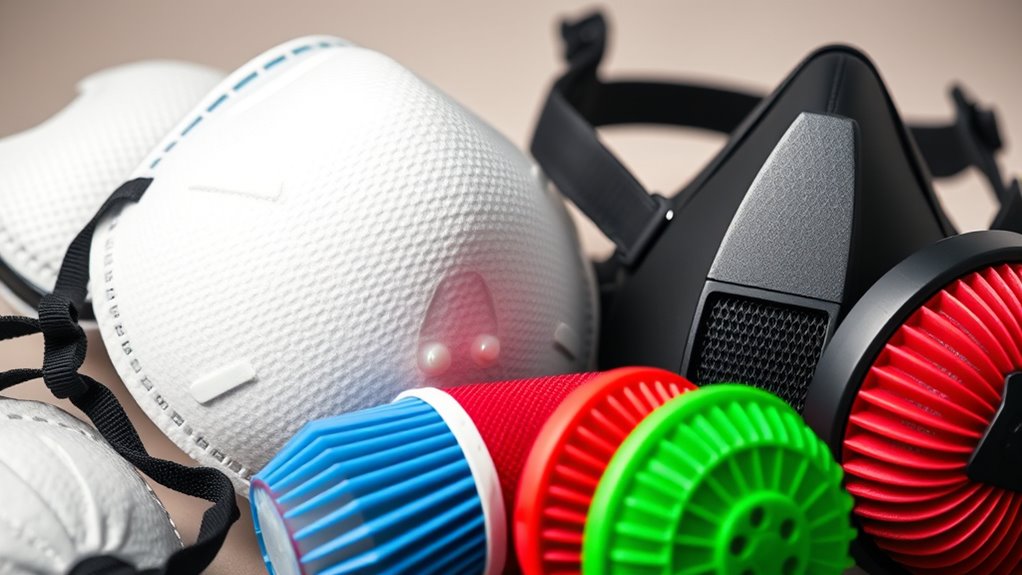

When choosing respiratory protection, understanding the differences between N95s, half-masks, and filters is key. N95 masks are disposable, tight-fitting respirators that block at least 95% of airborne particles, great for quick protection. Half-masks are reusable devices with replaceable filters, suitable for ongoing hazards like dust and fumes. Filters can trap particles or chemicals, depending on the type. Keep in mind proper fit and filter maintenance to stay safe—if you’re enthusiastic to learn more, we’ll explore each option further.
Key Takeaways
- N95 respirators provide at least 95% filtration of airborne particles but require proper fit-testing for maximum effectiveness.
- Half-masks are reusable respirators with replaceable filters, suitable for industrial use and long-term protection.
- N95 masks are disposable and best for single use, whereas half-masks can be customized with different filters for various hazards.
- Filters come in particulate, gas, vapor, or combination types; choosing the right filter depends on the specific airborne hazard.
- Proper maintenance, correct fitting, and timely filter replacements are essential for ensuring optimal respiratory protection.
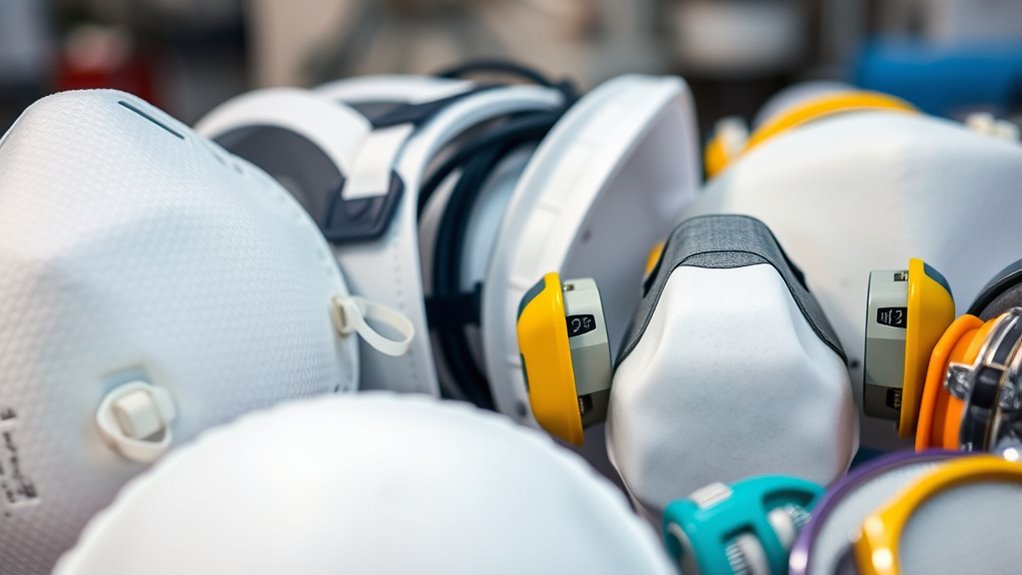
Have you ever wondered how to protect yourself from hazardous airborne particles and chemicals? If you work in environments where dust, fumes, or pathogens are present, understanding your options for respiratory protection is essential. Respirators like N95 masks, half-masks, and filters are designed to keep you safe by filtering out dangerous particles before they reach your lungs. Knowing which type suits your needs can make a real difference in maintaining your health and safety.
Protect yourself from airborne hazards with the right respirator for your environment and safety needs.
N95 respirators are among the most common and effective personal protective equipment. They are designed to filter at least 95% of airborne particles, including many bacteria and viruses. These masks are tight-fitting and form a seal around your nose and mouth, ensuring that air passes through the filter rather than gaps around the edges. They’re especially useful during outbreaks of infectious diseases or in industries with high dust levels, like construction or healthcare. When wearing an N95, it’s important to fit-test it properly to ensure maximum protection; a poorly fitted mask won’t provide the full filtration benefits. Additionally, high-performance filters are crucial for maintaining effective respiratory protection in demanding environments.
Half-masks, often called half-face respirators, are reusable devices equipped with replaceable filters or cartridges. Unlike disposable N95s, they cover your nose and mouth but can be adjusted for a tight fit. These respirators are versatile, allowing you to swap out filters depending on the specific hazard—be it dust, fumes, or chemical vapors. They often feature multiple filter options, providing broader protection than standard masks. Because they are reusable, proper cleaning and maintenance are essential to guarantee continued effectiveness. When selecting a half-mask, you need to think about the type of filter it uses, confirming it’s rated for the specific hazards you face. Half-masks are favored in industrial settings or situations where long-term use is necessary, as they can be more economical over time.
Filters are another fundamental component of respiratory protection. They come in various forms—such as particulate filters, gas and vapor cartridges, or combination filters—designed to target specific hazards. Particulate filters are used with half-masks or full-face respirators to block dust, smoke, or biological particles. Gas and vapor filters are essential when dealing with chemicals or fumes, trapping or neutralizing harmful substances before they reach your respiratory system. Selecting the right filter depends on understanding the specific contaminants in your environment. Regular replacement is necessary because filters can become saturated or clogged, reducing their effectiveness and potentially increasing your exposure risk. Properly rated and compatible filters are vital for ensuring safety and optimal performance of your respiratory protection system.

3M 8511 Drywall Sanding N95 Cool Flow Valved Disposable Respirator, 10-Pack
- Filtration Efficiency: NIOSH-approved N95 for 95%+ filtration
- Intended Use: Suitable for sanding, cutting, sweeping, and more
- Breathability: Enhanced electrostatic media for easy breathing
As an affiliate, we earn on qualifying purchases.
As an affiliate, we earn on qualifying purchases.
Frequently Asked Questions
Can N95 Masks Be Reused Safely?
You can reuse N95 masks, but you need to do so carefully. Make sure to store them in a clean, breathable container between uses. Avoid touching the inside of the mask and wash your hands before and after handling it. If the mask becomes damaged, soiled, or lose its shape, it’s time to replace it. Reusing masks is safe only if they maintain their fit and filtration efficiency.
How Do I Properly Fit-Test a Half-Mask?
You strap on the mask like a pro, then perform a quick seal check—cover the filter and breathe in. If the mask pulls inward, you’ve got a perfect fit; if not, adjust the straps and try again. Remember, a proper fit-test isn’t just a formality—it’s your first line of defense. So, take your time, stay focused, and guarantee your half-mask forms a tight seal every time.
Are Filters Compatible Across Different Mask Brands?
Filters are generally not compatible across different mask brands because each brand designs their filters to fit specific models and seal mechanisms. Using incompatible filters can compromise your protection and cause leaks. Always check the manufacturer’s guidelines to make certain the filter you choose fits your mask properly. If in doubt, consult the mask’s user manual or contact the manufacturer to confirm compatibility before use.
What Are the Signs of Mask Filter Saturation?
You might notice increased breathing resistance or difficulty inhaling when your mask filter becomes saturated. Fogging of your eyewear, a lingering smell, or a drop in filtration efficiency are also signs. If you feel short of breath sooner than usual or notice particles passing through, it’s time to substitute the filter. Staying alert to these cues keeps you protected and ensures your mask functions effectively.
How Long Can a Filter Effectively Last?
You can typically expect your filter to last between one to three days of continuous use, but it depends on the environment and the level of contaminants. If you notice increased breathing resistance or a decrease in airflow, it’s time to replace it. Regularly check the filter’s condition and follow manufacturer guidelines to guarantee maximum protection. Don’t wait for signs of saturation—change the filter proactively to stay safe.
Conclusion
Remember, wearing the right respiratory protection can considerably reduce your risk of airborne hazards. For example, N95 masks filter out at least 95% of airborne particles, making them highly effective. Did you know that in healthcare settings alone, proper mask use has helped prevent thousands of infections annually? By understanding masks, filters, and proper fit, you’re taking essential steps to protect yourself and others. Stay informed, stay safe, and always choose the right mask for the job.