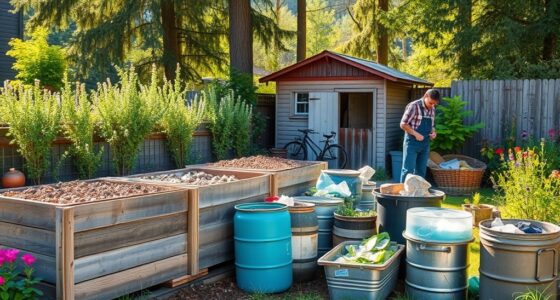
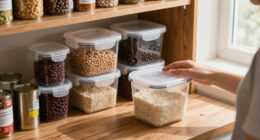
Emergency food storage presents a practical choice: buy bulk staples in food-grade buckets and package them yourself, or pay more for commercially sealed cans and pouches that are ready to store. Both can support a household reserve, but they suit different budgets, skills, and meal plans. Buckets are usually the economical choice for large quantities of dry staples, provided you use suitable liners, oxygen absorbers where appropriate, and sound storage conditions. Sealed cans and pouches reduce setup work and make it easier to open only what you need. Choose buckets if low cost per serving and bulk capacity matter most; choose packaged products if convenience, portion control, and simpler handling justify the added cost.

Get emergency and outdoor gear delivered free with Prime
- Fast, free delivery on millions of items
- Prime Video, Amazon Music and more included
- Member-only deals all year

ePackageSupply 5-Gallon Food-Grade Buckets with Lids, BPA-Free, 6-Pack, White
- ✔ Pack size: 6 buckets
- ✔ Capacity: 5 gallons per bucket
- ✔ Material: 90 mil HDPE plastic

EconoHome 5-Gallon Food-Grade White Buckets with Lids, Metal Handles, 6-Pack
- ✔ Pack size: 6 buckets
- ✔ Capacity: 5 gallons each
- ✔ Material: BPA-free food-grade plastic

Dealusy 24 oz Reusable Meal Prep Containers with Lids, 50 Pack
- ✔ Pack size: 50 containers with 50 lids
- ✔ Capacity: 24 fl oz each
- ✔ Material: Plastic; BPA-free
At a Glance
| Criteria | Food-grade buckets with oxygen absorbers | Commercially sealed cans and pouches | Winner |
|---|---|---|---|
| Upfront cost per serving | Usually lower for bulk dry staples, with packaging materials added | Usually higher per serving, with packaging and preparation included | A |
| Packaging work | Requires food-grade containers, suitable liners, sealing, labeling, and careful handling | Ready to store; no home sealing setup | B |
| Storage protection | Depends on packaging quality, correct oxygen absorber use, dry food, and cool storage | Commercial packaging is sealed for storage according to the product’s instructions | B |
| Portioning after opening | Large quantities can be inconvenient for a small household to use quickly | Smaller packages make it easier to open only a portion | B |
| Food variety | Best suited to staples; other foods require separate storage methods | Often sold in meal assortments and varied ingredients | B |
| Space and handling | Large buckets can be heavy and awkward to stack or move | Package sizes vary; cans can be bulky, while pouches may pack more compactly | Depends |
| Inventory management | Requires clear labels, dates, and a plan for rotation | Product labels and package dates simplify tracking | B |
ePackageSupply 5-Gallon Food-Grade Buckets with Lids, BPA-Free, 6-Pack, White
For buyers building a reserve of dry staples or other bulk supplies, ePackageSupply’s six 5-gallon buckets offer the most clearly described storage system in this comparison. The listing identifies 90 mil HDPE plastic and says the buckets are BPA-free and FDA-compliant for food contact. That detail gives us a firmer basis for choosing them for food storage than the EconoHome listing, whose description calls the plastic food-grade but does not specify the same compliance information.The gasketed tear-strip lids are intended to close tightly around the bucket opening. For an emergency pantry, a seal can help keep stored contents contained during handling and reduce exposure when the bucket is closed. The tear-strip design may be less convenient if we expect to open and reseal the same container repeatedly, so these buckets make more sense for supplies accessed occasionally or transferred into smaller working containers. Their reinforced stacking rings and metal handles add practical value when organizing multiple buckets, though a full 5-gallon load is still substantial to lift and carry.Compared with Dealusy’s portion-sized containers, these buckets prioritize reserve capacity over serving convenience. The listed freezer-safe limit of -5°F gives some temperature information, but it does not mean every food should be stored frozen in them. We should also note that the supplied listing gives differing height information, so buyers with close-fitting shelves should confirm dimensions before committing. This is the strongest all-around bulk pick here, provided its tear-strip closure and large size fit our storage routine.
Pros:
- BPA-free and FDA-compliant food-contact information is stated.
- Gasketed tear-strip lids are designed for a tight bulk-storage closure.
- Reinforced stacking rings support more orderly storage of multiple buckets.
- Metal handles with plastic grips help when moving empty or partially filled buckets.
Cons:
- The tear-strip lid format may be less convenient for repeated opening and resealing.
- The listed height information differs, which complicates shelf-fit planning.
- A filled 5-gallon bucket can be cumbersome to move.
Best for: Households storing bulk dry staples or supplies that will be opened infrequently and transferred into smaller containers for regular use.
Not ideal for: Buyers who need frequent access to one container, precise serving portions, or a confirmed fit beneath low shelves.
Bottom line: We recommend this as the clearest bulk-storage choice in the lineup, as long as its large capacity and tear-strip lids suit how often we access the stored food.
“We recommend this as the clearest bulk-storage choice in the lineup, as long as its large capacity and tear-strip lids suit how often we access the stored food.”
EconoHome 5-Gallon Food-Grade White Buckets with Lids, Metal Handles, 6-Pack
EconoHome’s six-pack of 5-gallon buckets is a straightforward alternative for buyers who want large containers with metal carrying handles and a stackable shape. Its description says the plastic is BPA-free and food-grade, and ribbed sides are intended to support orderly stacking. The listed dimensions are slightly shorter in height than the ePackageSupply dimensions provided, which may help when checking a shelf or storage corner; because the measurements differ between listings, we should still verify the actual fit for our space.The deciding drawback is a basic but important one: although the product title says “with lids,” the description supplied here does not specify whether lids are included. That uncertainty makes this a less complete choice than ePackageSupply, whose listing describes gasketed tear-strip lids. Before relying on EconoHome for emergency food storage, we should confirm the delivered package includes suitable closures. The product information also does not give the same specific HDPE thickness or FDA-compliance statement, so buyers who prioritize detailed material specifications may prefer the top-ranked option.These buckets are best viewed as a capacity-first choice for pantry reserves, liquids, powders, or non-food supplies where the confirmed package details meet our needs. Like the ePackageSupply buckets, they are not convenient meal containers: once filled, their five-gallon capacity makes them awkward to relocate and slow to access in small portions. Dealusy is far easier for serving prepared food, but it cannot match the volume of a bucket. EconoHome therefore suits shoppers who value a reusable bulk format and are willing to resolve the lid question before purchase.
Pros:
- BPA-free, food-grade plastic is specified in the description.
- Six containers provide substantial storage capacity for bulk supplies.
- Metal handles with plastic grips support carrying.
- Ribbed sides are designed to help with stacking and storage.
Cons:
- The product description does not clearly confirm whether lids are included.
- Material details are less specific than the HDPE and compliance information listed for ePackageSupply.
- Five-gallon containers are cumbersome when filled.
Best for: Buyers seeking a six-bucket bulk-storage format who can confirm the included lid arrangement and want to compare the listed dimensions with their storage area.
Not ideal for: Shoppers who need complete, specific closure information up front or want containers designed for serving individual meals.
Bottom line: We would choose EconoHome for bulk capacity only after confirming the lid contents and checking that the dimensions work in our storage space.
“We would choose EconoHome for bulk capacity only after confirming the lid contents and checking that the dimensions work in our storage space.”
Dealusy 24 oz Reusable Meal Prep Containers with Lids, 50 Pack
When emergency prep includes meals that are already portioned or leftovers that need to be easy to serve, Dealusy’s 24-ounce containers solve a different problem from the two bucket sets. The pack includes 50 containers and snap lids, with each container holding a modest meal-sized portion. That makes it easier to separate servings and stack prepared food than using a five-gallon bucket, which requires a separate scoop or transfer container for each meal.The listing describes the containers as BPA-free, leakproof, stackable, and suitable for microwave, freezer, and top-rack dishwasher use. These features give us more flexibility for prepared food and short-cycle storage than either bucket option. The stated temperature range is -4°F to 248°F, so we should stay within those limits and follow the specified top-rack dishwasher guidance. The supplied information also advises hand washing or top-rack cleaning, which is less convenient than containers with broader care instructions.Dealusy ranks below the buckets for emergency reserves because small portions do not provide a consolidated, high-capacity home for bulk staples. Its snap lids also serve a different closure role from ePackageSupply’s gasketed bucket lids: they are geared toward individual portions and takeaway meals, not a large reserve container. We should treat the reusable claim as a practical option rather than assume unlimited reuse, and inspect closures as part of normal food-storage upkeep. Choose this set when quick access and portion control matter more than long-term bulk organization; skip it if the main task is storing large quantities compactly.
Pros:
- Fifty 24-ounce containers support portioning and meal organization.
- Snap lids are designed to help contain spills and stack neatly.
- Microwave and freezer use are specified within a stated temperature range.
- Top-rack dishwasher cleaning is listed as an option.
Cons:
- Small individual capacities are not suited to consolidating bulk staples.
- Cleaning guidance is limited to hand washing or top-rack dishwasher use.
- The stated temperature range is limited to -4°F to 248°F.
Best for: Households preparing individual meal portions, storing leftovers, or organizing ready-to-serve food in a freezer or refrigerator.
Not ideal for: Buyers building a bulk pantry reserve or seeking containers with a specified large-capacity gasketed closure.
Bottom line: We recommend Dealusy as a useful portioning companion for prepared food, rather than as the foundation of a bulk emergency pantry.
“We recommend Dealusy as a useful portioning companion for prepared food, rather than as the foundation of a bulk emergency pantry.”
As an Amazon Associate we earn from qualifying purchases.
Key Differences
The central tradeoff is labor and control versus convenience. Buckets can bring the cost of rice, beans, oats, and similar staples down, especially when bought in quantity. But the buyer takes responsibility for choosing food-grade packaging, keeping food dry, using oxygen absorbers correctly when the food and packaging call for them, sealing containers, and labeling contents and dates. A bucket is not a preservation method by itself, and poor preparation can undermine the savings.
Commercially sealed cans and pouches cost more, but they arrive packaged and portioned for storage. That makes them easier to distribute across a pantry or emergency kit, and easier to open gradually. They can also offer more variety, though prepared meals and specialty products may be less economical than basic ingredients. For most households, a mixed reserve is sensible: bulk-store familiar staples that you already cook, then use packaged products for variety, smaller portions, or situations where cooking time and equipment may be limited.
Detailed Comparison
Upfront cost per serving (Food-grade buckets with oxygen absorbers wins — major)
Winner: A, usually by a moderate to major margin for staple foods. Bulk rice, beans, and grains generally cost less per serving than comparable products sold in long-term storage packaging. That advantage shrinks once buckets, liners, absorbers, and other supplies are included, and it depends on buying foods your household will actually eat. Packaged meals bundle convenience and sealing into the price. For a large reserve built around everyday staples, buckets usually stretch a budget further; for a small reserve, the extra packaging cost may be reasonable.
Packaging work (Commercially sealed cans and pouches wins — major)
Winner: B; the gap is major for people who want a simple setup. Commercial cans and pouches are ready to store according to their labels. Bucket storage takes planning and hands-on work: choose food-grade containers, prepare the food and packaging correctly, seal them, and record what is inside. That work gives the buyer control over quantities and contents, but an incomplete or careless process can compromise the reserve. Choose buckets only if you are prepared to follow reliable, food-specific storage guidance.
Storage protection (Commercially sealed cans and pouches wins — moderate)
Winner: B for simplicity; the difference is moderate. Sealed commercial products arrive in packaging intended by the manufacturer for that product’s storage. Their shelf life and storage conditions still vary, so follow package instructions and inspect stock. Buckets can protect dry goods well when paired with appropriate food-safe packaging and correctly selected preservation methods, but the result depends on the buyer’s choices and storage environment. A bucket alone does not make food shelf-stable for a specified number of years.
Portioning after opening (Commercially sealed cans and pouches wins — moderate)
Winner: B, by a moderate margin. Smaller cans and pouches let a household open food in amounts closer to one meal or one use. A bucket commonly contains many servings, which can be inconvenient once opened, especially in warm or humid conditions or when there is no way to reseal it effectively. Larger households that use a staple frequently may finish a bucket quickly and favor its lower cost. Smaller households and emergency kits usually benefit from the portion sizes of packaged products.
Food variety (Commercially sealed cans and pouches wins — moderate)
Winner: B, by a moderate margin. Buckets are most straightforward for dry staples and ingredients that fit a bulk-storage plan. A varied diet still needs other foods and ingredients, so a bucket-heavy reserve can become repetitive unless it is supplemented. Commercial suppliers often package different ingredients and complete meals in smaller units. Check ingredients and preparation requirements before buying; variety is useful only if the food suits dietary needs and can be prepared with available water, fuel, and equipment.
Space and handling (minor difference)
Winner: Depends; the gap is minor and depends on the product and storage space. Buckets stack into sturdy units but become heavy when full, which can make moving or accessing them difficult. Cans can also be heavy and take up more room than expected, while pouches may be easier to fit into irregular spaces. Compare the actual package dimensions and filled weight with your shelves, storage area, and ability to lift items. A theoretically compact reserve is less useful if it blocks access or cannot be moved safely.
Inventory management (Commercially sealed cans and pouches wins — minor)
Winner: B, by a minor to moderate margin. Commercial packages normally display product names, lot or date information, and storage directions, making them easier to identify and rotate. Buckets need clear, durable labels that include the contents and packing date; otherwise, closed containers can turn into guesswork. A simple inventory of foods, quantities, and dates helps either system. The packaged option makes the first step easier, but consistent household tracking matters more than packaging type.
Food-grade buckets with oxygen absorbers: Pros and Cons
Pros:
- Lower cost per serving for many bulk dry staples
- Lets buyers select familiar foods and set their own quantities
- Can form the economical base of a large household reserve
Cons:
- Requires packaging supplies and careful preparation
- Large containers are heavy and hold many servings at once
- Storage results depend on suitable packaging, food condition, and storage environment
Commercially sealed cans and pouches: Pros and Cons
Pros:
- Ready to store with manufacturer packaging and instructions
- Smaller packages make portioning and distribution easier
- Often offers more meal and ingredient variety
Cons:
- Usually costs more per serving, especially for staple calories
- Product shelf life and preparation requirements vary
- Cans and meal assortments can take up substantial storage space
Who Should Choose What
Choose Food-grade buckets with oxygen absorbers if:
- You are building a large reserve of staples such as rice, beans, or oats and want to reduce cost per serving.
- You already cook with the foods you plan to store and can follow food-specific packaging guidance.
- You have room for heavy containers and a clear labeling and rotation system.
Choose Commercially sealed cans and pouches if:
- You want food that arrives packaged and can be stored with little setup.
- You need smaller portions for a small household, emergency kit, or gradual use.
- You value meal variety or convenience enough to pay more than bulk staple prices.
Skip both if: Neither approach fits if you lack suitable, dry storage or are choosing foods your household cannot prepare or will not eat. Start with a smaller reserve of familiar shelf-stable foods and the water, cooking method, and basic supplies needed to use them.
Value for Money
Paying more for cans and pouches is worth it when the price buys a practical benefit you will use: less preparation, smaller portions, more variety, or simpler storage instructions. It is a poor value to pay a premium for meals that do not fit your diet or require water and cooking fuel you cannot count on. Buckets offer better value for many households when they hold familiar dry staples that will be eaten and rotated, and when the buyer accounts for packaging costs and handles the process correctly. A useful value comparison is cost per serving of food your household can prepare, rather than the purchase price of the container or the size of a storage bundle.
Final Verdict
For a budget-conscious household building a substantial reserve around familiar dry staples, choose food-grade buckets with suitable packaging: they generally deliver more servings for the money, provided you are willing to prepare, label, and manage them properly. Choose commercially sealed cans and pouches if your priority is easy setup, meal variety, and manageable portions, or if you are storing a smaller emergency supply. The deciding factor is whether your savings from bulk storage are worth the preparation and larger package size. For many homes, the strongest fit is a combination: bulk-store the staples you regularly use and add sealed, portioned foods for convenience and variety.
Frequently Asked Questions
Are buckets or commercially sealed packages cheaper for emergency food storage?
Buckets usually cost less per serving for bulk dry staples, even after packaging supplies are counted. Commercially sealed products cost more but include ready-to-store packaging and often smaller portions or prepared meals. Compare the cost of food your household will use, not just the initial package price.
Can I store emergency food in any plastic bucket?
No. Use containers intended for food contact, and follow reliable guidance for the specific food and packaging method. A bucket by itself does not determine shelf life; food moisture, liners or other barriers, sealing, temperature, and storage conditions all matter.
Are commercially sealed cans and pouches good for a small household?
They can be a better fit because smaller packages let you open only what you need. Check serving sizes, package directions, and whether the food requires water or cooking. Some bulk products can still work for small households if they are used regularly after opening and stored appropriately.
Should I store only freeze-dried meals for emergencies?
No single product type fits every emergency plan. Freeze-dried meals can be convenient, but they may cost much more per serving and commonly need water. Familiar shelf-stable staples, canned foods, and packaged meals can complement one another, depending on storage space, cooking options, dietary needs, and budget.