
To identify and avoid poisonous plants in the wild, learn key features of dangerous species like poison ivy, oak, sumac, deadly nightshade, and toxic mushrooms. Recognize their distinctive leaves, berries, and growth habits, and always handle unknown plants with gloves, avoiding ingestion or skin contact. Stay on established trails, carry a field guide, and pay attention to warning signs like vibrant colors or unusual patterns. Keep exploring to discover more tips for staying safe during outdoor adventures.

Get emergency and outdoor gear delivered free — and shop member deals
- Fast, free delivery on millions of items
- Access to Prime Big Deal Days deals on October 6–7
- Prime Video, Amazon Music and more included
Key Takeaways
- Learn to recognize key features of toxic plants like poison ivy, poison oak, and deadly nightshade to prevent accidental contact.
- Use reliable field guides or apps to accurately identify plants before handling or consuming them.
- Always wear gloves and avoid tasting or ingesting unknown plants to reduce poisoning risk.
- Be cautious of visual clues such as bright colors, unusual patterns, prominent spines, or milky sap indicating toxicity.
- Stay on established trails, keep children and pets close, and avoid foraging unless positively sure of plant safety.
As an affiliate, we earn on qualifying purchases.
Recognizing Poison Ivy, Poison Oak, and Poison Sumac

Have you ever wondered how to tell poison ivy, poison oak, and poison sumac apart? Mastering poison ivy identification is key to avoiding skin irritation. Poison ivy usually has three leaflets with a glossy surface and irregular edges, often growing as a vine or shrub. Poison oak awareness helps you recognize its oak-like leaves, which also come in groups of three but tend to be more lobed or oak-shaped. Poison sumac is different; it has smooth-edged, compound leaves with 7-13 leaflets arranged in pairs along a central stem. It grows as a tall shrub or small tree near wetlands. Knowing these distinctive features helps you stay safe and avoid accidental contact. Proper plant identification is your best defense in the wild, and understanding plant morphology can aid in accurate recognition.
Identifying Deadly Nightshade and Other Toxic Nightshades

To identify deadly nightshade and other toxic nightshades, you need to recognize their key plant features, like dark purple berries and shiny, pointed leaves. Be cautious when spotting these plants, especially since their toxic fruits can look appealing but are extremely dangerous. Always follow safe handling tips to avoid accidental poisoning and verify you’re correctly identifying these hazardous nightshades. Familiarity with plant identification techniques can significantly reduce the risk of mistaking edible plants for toxic ones. Additionally, understanding the toxicity signs of these plants can help you stay alert while in the wild. Recognizing the distinctive fruit appearance is crucial, as many poisonous nightshades produce berries that resemble edible ones. Monitoring plant growth habits can also aid in distinguishing between safe and toxic species.
Nightshade Plant Features
What makes certain nightshades deadly is their distinctive features, which can help you identify them in the wild. Key nightshade plant features include dark, shiny berries that often grow in clusters and distinctive purple or black hues. When identifying toxic berries, look for smooth-skinned, round fruits that resemble cherries or blueberries but are usually more toxic. The plant itself often has oval or lance-shaped leaves with a glossy surface and may have purple or greenish stems. Some deadly nightshades, like deadly nightshade, also feature bell-shaped, purple flowers with five petals. Recognizing these signs can help prevent accidental poisoning. Additionally, plant identification methods can help distinguish toxic nightshades from safe edible plants. Being familiar with security features of plant identification can enhance your safety during outdoor exploration. Knowing the types of headphone jacks can be useful when sourcing audio equipment for outdoor use, including portable speakers or headphones for fieldwork. Always exercise caution around plants with these characteristics, especially if you’re unsure whether they’re safe to handle or consume. Paying close attention to plant habitat can further aid in identification and safety measures.
Recognizing Toxic Fruits
How can you quickly identify toxic nightshade fruits in the wild? Focus on their appearance and color. Poisonous berries like deadly nightshade have shiny, dark purple or black fruits that resemble edible berries but are deadly if ingested. Recognizing these toxic nightshades is vital for safe foraging. Use this table for quick poison berry recognition:
| Toxic Nightshade Fruit | Edible Counterpart |
|---|---|
| Shiny, dark purple/black | Bright red berries |
| Small, round, clustered | Larger, softer fruits |
| Glossy surface, no stem | Matte finish, attached stem |
Additionally, visual cues such as the lack of a stem or the glossy surface can help distinguish toxic berries from safe ones. Color patterns are often inconsistent in poisonous varieties, making it essential to observe multiple features. Always practice edible fruit identification carefully. Balanced nutrition is essential for overall health, and misidentifying berries can have serious consequences. It is also helpful to understand the plant features that distinguish toxic from safe varieties. If you’re unsure, it’s better to avoid the fruit altogether. Poisonous berry recognition can save lives, so stay cautious when encountering unfamiliar berries in the wild.
Safe Handling Tips
When handling wild nightshades, always assume the plant is toxic until positively identified as safe. Many poisonous plant myths suggest that touching or cooking them neutralizes the danger, but this is false—many toxins can be absorbed through skin or cause poisoning if ingested. Avoid herbal remedy misconceptions that certain plants, like deadly nightshade, are safe because of traditional use; misidentification or improper preparation can be deadly. Use gloves and tools when handling nightshades, and never taste or ingest parts unless confirmed safe by a reliable expert. Remember, visual identification alone isn’t enough—consult field guides or professionals. Proper identification methods are essential for safely distinguishing between toxic and non-toxic plants. Conducting toxic plant testing can help confirm a plant’s safety before handling or consumption. The toxicity levels of different nightshade species can vary significantly, making proper identification crucial. Precaution is key, as even experienced foragers can make mistakes. Protect yourself by respecting the plant’s toxic potential and following safe handling practices. Additionally, understanding the contrast ratio of a plant’s toxicity can help distinguish between harmless and dangerous species. Recognizing toxic plant features can aid in early identification and prevent accidental poisoning.
Spotting Poison Hemlock and Other Dangerous Umbellifers
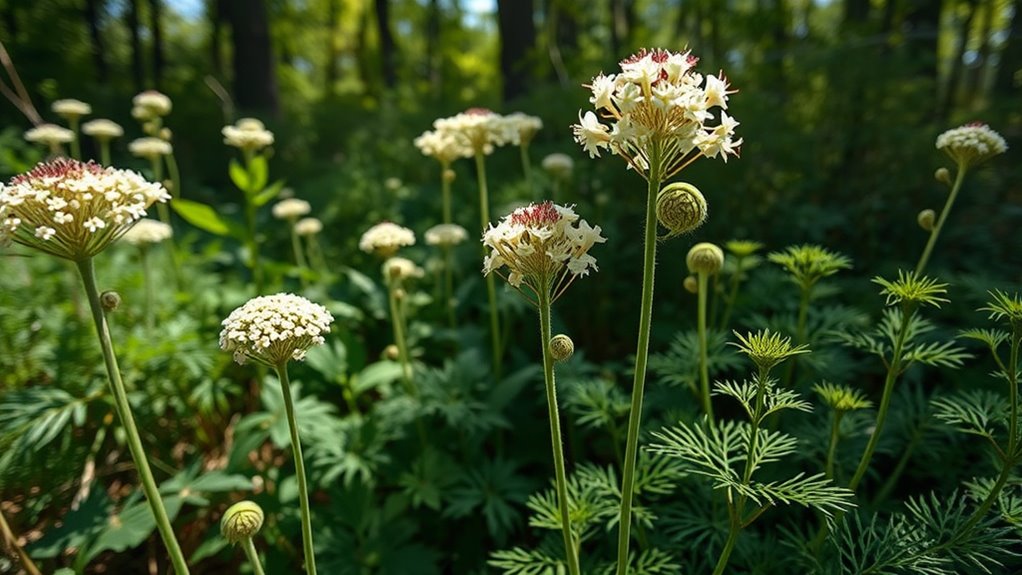
Poison hemlock and other dangerous umbellifers can be challenging to identify because they often resemble harmless plants. To master poison hemlock identification, focus on its dangerous umbellifer features. Look for tall, smooth stems with purple or reddish streaks, and note the hollow, hairless stalks that feel moist. The leaves are finely divided, fern-like, and alternate along the stem. The plant produces umbrella-shaped flower clusters with small white flowers. Be cautious during late spring and early summer when the plant is in bloom. Remember, many harmless plants mimic these features, so always double-check by examining multiple plant parts. Recognizing these key dangerous umbellifer features helps you avoid accidental contact with poison hemlock and other toxic relatives. Additionally, understanding the vibrational energy associated with identifying these plants can enhance your awareness and safety in the wild. Paying attention to plant features can significantly improve your ability to distinguish between toxic and safe species in nature. Developing an understanding of plant symbolism can also deepen your awareness and help you recognize warning signs in nature. Cultivating a mindful creative practice while observing plants can strengthen your connection to nature and improve your identification skills. Being aware of the plant habitat can also guide you toward safer plant identification in different environments.
Distinguishing Castor Bean Plants and Ricin-Producing Species
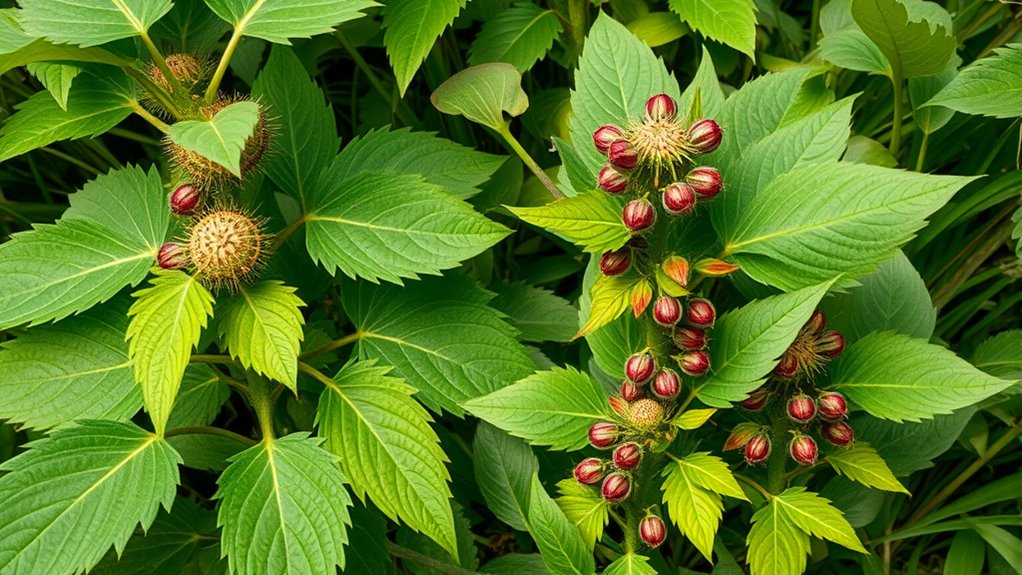
While identifying dangerous umbellifers like poison hemlock is important, it’s equally essential to distinguish castor bean plants and ricin-producing species, which pose serious health risks. The castor plant has large, lobed leaves and spiny seed capsules, with seeds that are shiny and mottled. Unlike other toxic plants, the castor bean plant’s seeds contain ricin toxin, a potent poison. Ricin is deadly if ingested, inhaled, or injected. Be cautious around this plant, especially during seed maturity when it produces conspicuous seeds. Avoid touching or handling the seeds or pods. Recognizing the castor plant‘s characteristic features helps prevent accidental poisoning. Remember, the presence of the castor bean plant in an area signals a potential danger due to the ricin toxin it contains.
Understanding the Risks of Poisonous Mushrooms and Fungi
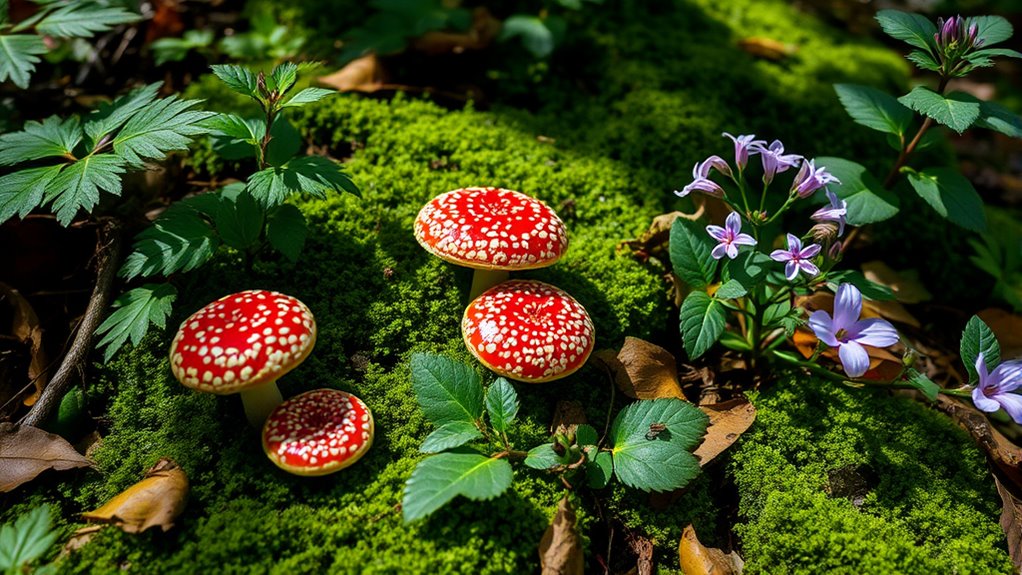
Many wild mushrooms and fungi are toxic and can cause serious health issues if ingested. Understanding mushroom identification is essential to avoid dangerous fungi hazards. Many poisonous varieties resemble edible ones, making visual cues critical. Look for features like color, shape, and gill structure, but remember that fungi hazards can be tricky—some deadly species mimic safe mushrooms. Consuming even small amounts of a poisonous mushroom can lead to nausea, vomiting, organ failure, or death. Never rely solely on taste or assumptions; if you’re unsure, it’s best to avoid collecting or eating wild fungi. Educating yourself about common poisonous species and consulting reliable field guides can help you identify safe options. Staying cautious is key to preventing dangerous encounters with toxic mushrooms and fungi in the wild.
Key Features of Poisonous Succulents and Cacti
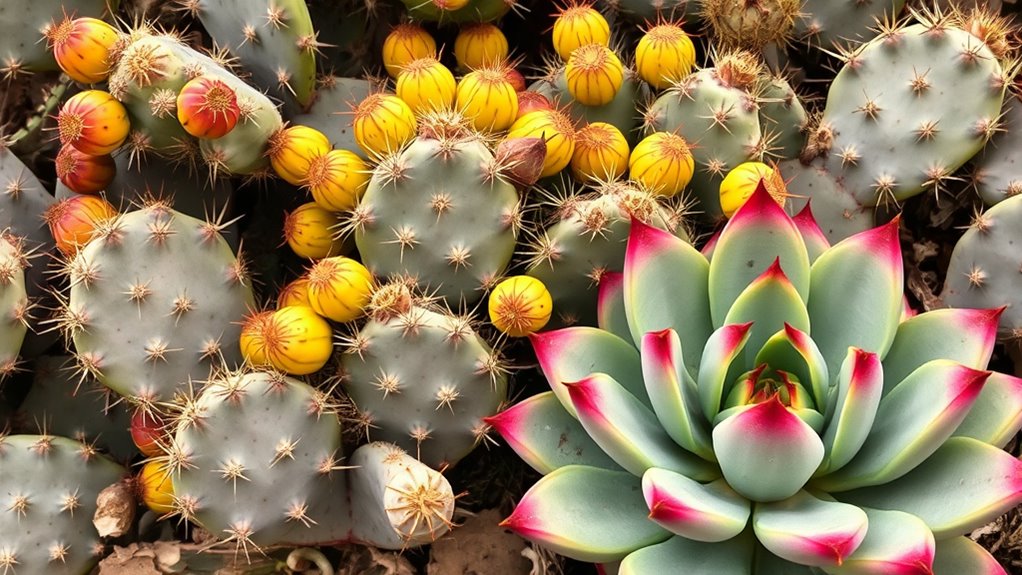
Recognizing poisonous succulents and cacti is crucial because their striking appearances can be deceiving. Many have thick, fleshy leaves or stems that store water, an adaptation known as succulent adaptations. Poisonous varieties often feature vibrant colors, unusual patterns, or spines that stand out. Look for bright, glossy surfaces or unusual growth shapes—these can be warning signs. Some toxic succulents may produce milky sap or have sharp, prominent spines. Cacti cultivation tips include noting that some species with bright fruit or unusual markings could be harmful if ingested or touched. By observing these key features, you can distinguish potentially dangerous plants from safe ones. Always exercise caution around unfamiliar succulents and cacti, especially when traveling in wild or natural areas.
Avoiding Contact With Poisonous Snakes and Reptiles in Vegetation

Poisonous snakes and reptiles often blend seamlessly into their surroundings, making it easy to accidentally come into contact with them when exploring vegetation. To avoid snake bites, stay alert and watch where you step or reach. Stick to well-trodden paths and avoid tall grass, dense brush, or logs where reptiles may hide. Be cautious around rock piles, fallen leaves, and thick shrubs, which are common reptile habitats. Wear sturdy boots and long pants for added protection. Move slowly and deliberately, giving snakes a chance to avoid you. If you see a snake or reptile, keep your distance and do not attempt to handle it. Recognizing their typical hiding spots helps prevent dangerous encounters and keeps you safe while enjoying the outdoors.
Recognizing the Signs of Plant-Induced Skin Irritation and Allergies
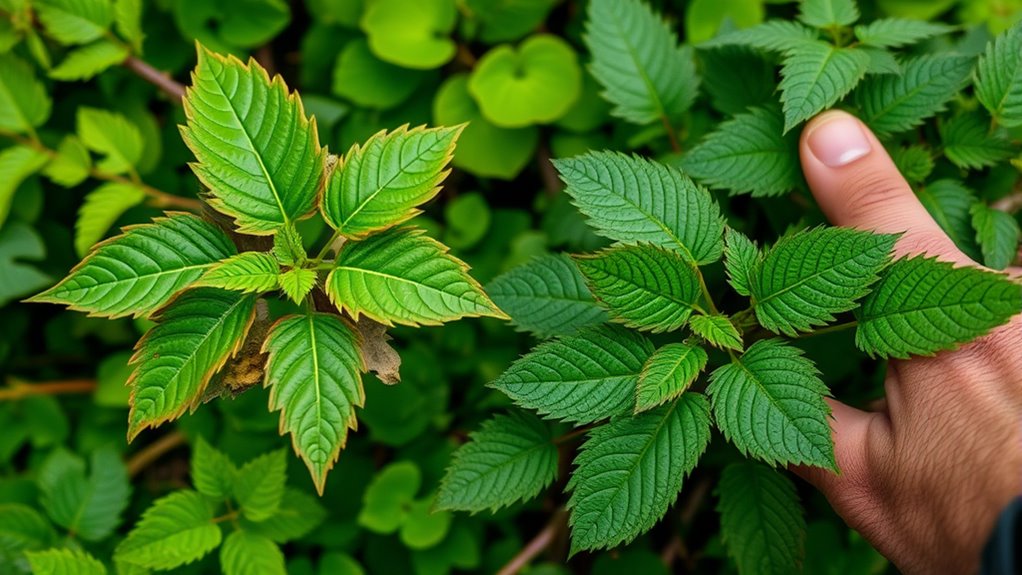
When you come into contact with certain plants, you might notice redness, itching, or blistering on your skin. Learning to distinguish these reactions from other irritations helps you identify poisonous plants quickly. Knowing the immediate steps to take can prevent further discomfort or more serious allergic responses.
Common Symptoms and Reactions
Many people mistakenly assume that plant-induced skin reactions are always obvious, but symptoms can vary widely. You might notice redness, swelling, or blisters, or sometimes only mild itching. Recognizing these signs is key to avoiding serious plant toxicity or allergic reactions. Here’s a quick guide:
| Symptom | Description | Common Plants |
|---|---|---|
| Redness and rash | Skin turns red, inflamed, itchy | Poison ivy, poison oak |
| Blisters | Fluid-filled bumps on skin | Poison sumac, giant hogweed |
| Swelling | Puffiness around affected area | Wild parsnip |
| Itching | Persistent skin irritation | Various poisonous plants |
| Hives | Raised, itchy welts | Allergic reactions |
Stay alert to these reactions to protect yourself from plant toxicity and allergic responses.
Differentiating Poisonous Plants
Recognizing the differences between plant-induced skin reactions and allergic responses can help you identify the responsible plant more accurately. Poisonous plants often cause redness, blistering, or swelling, while allergies may lead to itching and rash spreading beyond the contact area. To differentiate, consider these key signs:
- Location and pattern: Skin irritation from a poisonous plant usually appears where you touched the plant, often in patches. Allergies can cause more widespread itching.
- Plant habitat: Poisonous plants grow in specific environments; for example, poison ivy thrives near water, while edible mushrooms appear in damp, shaded areas.
- Plant characteristics: Recognize the plant or its habitat—avoid touching plants with milky sap or textured leaves. Remember, some edible mushrooms grow near certain plants but can be mistaken for toxic varieties.
Immediate Response Actions
Have you noticed redness, swelling, or blistering after touching a plant? These are signs of skin irritation or allergic reactions caused by toxic plants. First, wash the affected area immediately with soap and water to remove any plant residue. Avoid scratching, as it can worsen the irritation or cause infection. If symptoms persist or worsen, seek medical attention promptly. Don’t fall for toxic plant myths or poisonous plant myths that downplay the danger; some plants pose serious health risks. Staying calm and taking swift action is essential. Keep a record of the plant if possible, and inform others nearby. Remember, quick response can prevent more severe reactions and help you recover faster.
Tips for Safe Foraging and Wild Plant Identification

When foraging for wild plants, it’s essential to prioritize safety by learning how to accurately identify edible species and distinguish them from poisonous ones. Follow these tips to guarantee safe foraging and enhance your wild plant cultivation skills:
- Study reliable guides and plant identification apps to learn edible plant tips and key features.
- Examine plants carefully, noting leaf shape, color, smell, and growth habits before harvesting.
- Start with common, beginner-friendly species and avoid unfamiliar plants unless you’re confident in your identification.
Safety Precautions When Navigating Wild Plant-Rich Areas

Navigating wild plant-rich areas requires vigilance to stay safe from potential hazards. Always be aware of plant toxicity signs and avoid touching unfamiliar plants. Wear long sleeves and gloves to reduce skin contact, which can cause allergic reactions or poisonings. Carry a reliable field guide or app for quick identification, ensuring you can distinguish safe plants from poisonous ones. Stay on established trails to minimize accidental encounters with harmful plants and avoid trampling sensitive areas. Keep children and pets close, as they may unknowingly ingest toxic plants. Practice foraging safety by only harvesting plants you can positively identify and never eat raw plants unless you’re certain of their safety. These precautions help protect you from potential dangers and ensure a safe, enjoyable experience in the wild.
Frequently Asked Questions
How Can I Differentiate Between Edible and Poisonous Wild Berries?
To differentiate between edible and poisonous wild berries, focus on berry identification and edible plant cues. Look for berries with bright, uniform colors and smooth skins, as they’re often safe. Avoid berries with dull colors, white or milky sap, or those that stain your hands. Check the plant’s leaves and stems for familiar edible cues. When in doubt, don’t consume berries unless you’re 100% sure they’re safe.
What Are the Common Symptoms of Poisoning From Wild Plants?
Did you know that nearly 10,000 cases of plant poisoning are reported each year? When it comes to plant symptom recognition, common signs include nausea, vomiting, abdominal pain, dizziness, and skin irritation. Recognizing these symptoms early helps with poisoning prevention strategies, like removing yourself from the source and seeking medical help promptly. Always stay cautious, as wild plants can be more dangerous than they look, and quick action can save your life.
Are There Any Safe Methods to Test Plants for Toxicity?
You might wonder if there are safe ways to test plants for toxicity. While chemical testing can determine a plant’s toxic compounds, it requires lab analysis and isn’t practical in the wild. Visual assessment helps identify dangerous plants based on their features, but it’s not foolproof. The safest approach is to avoid eating unknown plants altogether and consult reliable field guides or experts before any use.
How Do Weather Conditions Affect Plant Toxicity Levels?
Weather conditions are the wild card in plant toxicity levels. Just like a rollercoaster, weather impact can cause toxicity variation, making plants more or less dangerous. High temperatures and drought stress can increase toxin production, while cooler, wetter conditions might dilute or reduce toxins. You should stay alert, as fluctuating weather can turn a seemingly safe plant into a hidden threat, so always consider current weather when evaluating plant safety.
Can Animals Help in Identifying Poisonous Plants in the Wild?
Animals can indeed help in identifying poisonous plants through their behavior and plant scent detection. When you observe animals, like goats or deer, avoiding certain plants, it signals potential toxicity. Their keen senses allow them to detect harmful plant scents, alerting you to steer clear. By paying attention to their reactions, you can better identify dangerous flora in the wild and stay safe during your outdoor adventures.
Conclusion
As you wander through lush, green wilderness, stay alert for the vibrant leaves and glossy berries that hide danger. Picture a peaceful moment shattered by a sting or rash—avoid that by knowing what to look for. With careful eyes and respect for nature’s hidden threats, you’ll navigate these wild landscapes confidently. Trust your knowledge, stay cautious, and enjoy the beauty without risking a harmful surprise lurking just beneath the foliage.
Fall Picks
fall essentials
As an affiliate, we earn on qualifying purchases.