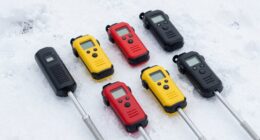
To keep your chest freezer food safe during a blackout, develop a plan to minimize opening the lid, use ice or frozen gel packs to sustain cold temperatures, and insulate the freezer with blankets or foam boards. Regularly check the temperature with a reliable thermometer and discard any items above 40°F. Reorganize and clean your freezer once power returns, and stay prepared with supplies and a clear emergency plan—learn more to guarantee your food remains safe and panic-free.
Key Takeaways
- Keep the freezer door closed to preserve cold temperatures and prevent spoilage during power outages.
- Use ice packs or frozen bottles to maintain low temperatures and extend food safety window.
- Monitor internal temperature with a reliable thermometer, discarding foods above 40°F to ensure safety.
- Limit opening the freezer; plan to check contents quickly to minimize cold loss.
- Once power is restored, reorganize, inspect, and discard any spoiled items to prevent foodborne illness.

2 Pack Refrigerator Thermometer, 30-30°C/20-80°F, Classic Fridge Thermometer Large Dial with Red Indicator Thermometer for Freezer Refrigerator Cooler
Convenient and practical: Our refrigerator thermometer is suitable for traditional refrigerators, freezers, insulated boxes, etc. It has a…
As an affiliate, we earn on qualifying purchases.
As an affiliate, we earn on qualifying purchases.
Why You Need a Chest Freezer Blackout Plan
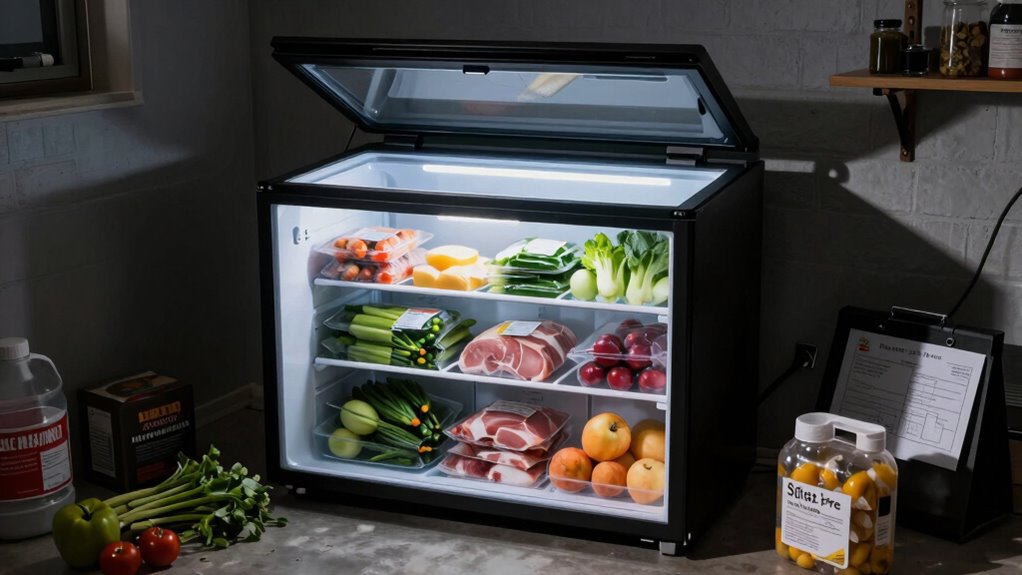
Have you considered what would happen to your stored food if the power suddenly goes out? Without a plan, your food storage could quickly become compromised, risking spoilage and waste. A blackout plan helps you act swiftly, preserving your food and avoiding financial loss. Proper freezer maintenance is essential to ensure your freezer runs efficiently and can maintain cold temperatures longer during outages. Regularly checking the door seals, defrosting when needed, and keeping the temperature consistent are simple steps that make a big difference. Knowing how to respond during a power failure prevents panic and keeps your food safe. Without this plan, you might lose valuable supplies or face uncertainty about how long your food will stay frozen. That’s why having a blackout strategy is crucial for responsible food storage. Additionally, incorporating backup power solutions can provide extra security during extended outages. Maintaining Proper freezer maintenance can also help your freezer perform better during emergencies, especially when paired with an understanding of contrast ratio and other features that can optimize performance. Regularly monitoring the freezer temperature can further help in safeguarding your food during unexpected outages. Implementing power surge protection measures can prevent damage to your freezer and other appliances during electrical disturbances.

Dry Ice Packs for Shipping – Long Lasting ice Packs – 24+ Hour Freeze Power – BPA Free – 12 Pack Bulk 3 lb – Hielo Seco – Reusable Gel Bricks for Food
PERFECT FOR SHIPPING PERISHABLES & FROZEN ITEMS – Trusted by small businesses, sellers, and food pros. Ideal order…
As an affiliate, we earn on qualifying purchases.
As an affiliate, we earn on qualifying purchases.
How to Evaluate Your Freezer’s Capacity for Power Outages
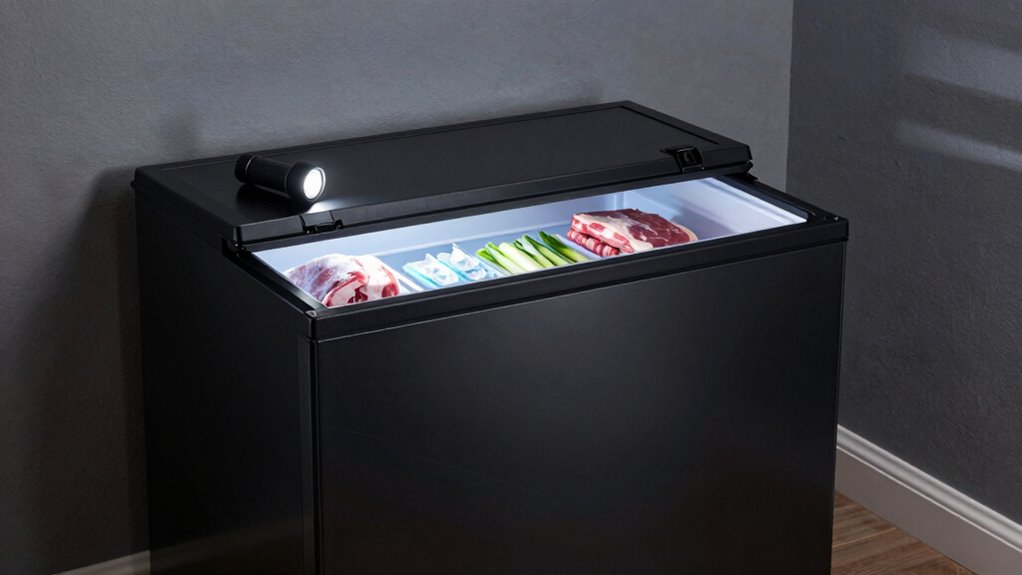
To determine how long your freezer can keep food safe during a power outage, start by checking its size and volume. Next, review the manufacturer’s power specifications to understand its energy needs. These factors, along with proper insulation, help you gauge your freezer’s capacity to withstand unexpected outages effectively. Additionally, considering the filtration efficiency of your freezer can also influence how well it maintains temperature during an outage. Incorporating temperature stability features can further support your efforts to preserve food quality during extended power interruptions. Understanding energy consumption patterns can also help you plan for potential outages and optimize your freezer’s performance. Evaluating these aspects carefully will enable you to develop a comprehensive power outage plan for your freezer.
Assess Freezer Size and Volume
Evaluating your freezer’s size and volume is essential for planning an effective blackout strategy. Knowing your freezer capacity helps you determine how much food you can store and how long it will stay frozen during a power outage. To do a volume assessment, measure the interior dimensions—height, width, and depth—and calculate the total cubic footage. This gives you a clear idea of how much food fits inside. Larger freezers with more capacity tend to retain cold longer, while smaller units may require additional planning. Understanding your freezer’s size helps you prioritize what to keep frozen and how to optimize storage. Additionally, proper storage techniques can further enhance the freezer’s ability to maintain temperature during outages. Knowing the thermal mass of your freezer contents can help you better predict how long the food will stay frozen during an outage. Properly arranging items to maximize air circulation within the freezer can also improve its efficiency during power interruptions. Being aware of insulation quality can help you understand how well your freezer resists temperature changes during outages. Accurate volume assessment guarantees you’re prepared to keep your food safe without panic during a blackout. Additionally, familiarizing yourself with food safety guidelines ensures you know when to discard perishable items after an extended outage.
Check Manufacturer’s Power Specs
Checking your freezer’s manufacturer specifications is a crucial step in understanding its power needs during a blackout. Review the power specifications listed on the label or in the user manual to determine the voltage and wattage requirements. This information helps you assess the freezer’s electrical compatibility with backup power sources like generators or inverters. Make sure your backup power system can handle the freezer’s peak power demands without overloading. Some freezers may have surge requirements during startup, so it’s important to verify if your backup system can meet these needs. Knowing your freezer’s power specifications ensures you select an appropriate backup solution, keeping your food safe and preventing electrical issues during an outage. Additionally, understanding regional flavors and energy-efficient appliances can help you choose a freezer model that minimizes power consumption during outages. Being aware of power ratings and surge requirements allows for more accurate planning and can prevent potential damage to your backup system. Considering power management strategies can further optimize your setup during extended outages. For example, using energy-efficient appliances can reduce overall power draw and extend backup runtime during prolonged outages.

MAGICLULU Freezer Insulated Cover: Thermal Insulation Blanket for Refrigerators Chest Freezer Beverage Coolers – Waterproof and Insulated Top Cover for Outdoor Use
Enhanced cooling performance: insulation technology helps maintain optimal cooling efficiency, reducing energy consumption and improving functionality
As an affiliate, we earn on qualifying purchases.
As an affiliate, we earn on qualifying purchases.
How to Keep Your Food Cold Without Power

When the power goes out, keeping your food cold becomes a top priority to prevent spoilage. To maximize food preservation during an outage, consider these strategies:
- Use ice packs or frozen gel packs in your freezer to maintain low temperatures.
- Fill empty spaces with bags of ice or frozen bottles of water to slow temperature rise.
- Keep the freezer door closed as much as possible to retain cold air.
- Wrap perishable items in blankets or insulating materials to provide extra insulation.
- Store foods in a cool, shaded area away from direct sunlight.
- Monitoring indoor air quality can help ensure that mold and bacteria do not proliferate if humidity levels rise due to the blackout.
- Understanding time-sensitive food safety guidelines can assist in determining how long your food remains safe during a power outage.
- Additionally, knowing how to assess food freshness can help you decide which items are still safe to consume after the outage.
- Regularly checking your temperature-sensitive foods can help prevent consuming unsafe items that may have warmed beyond safe limits during the blackout.
These simple measures are essential for emergency preparedness, helping you preserve food safely without power. Acting quickly and efficiently can make the difference in avoiding food waste and ensuring safety during a blackout.

Power Failure Alarm, Freezer Power Outage Alarm 7 Sirens, Freezer Alarm with 0-110dB Adjustable LED Indicator 12H Alert, Power Loss Alarm Monitor for Refrigerator, Sump Pumps, Aquarium
POWER FAILURE ALARM: When a power outage is detected for furnace, fridge, deep freeze, aquarium, sump pump etc…
As an affiliate, we earn on qualifying purchases.
As an affiliate, we earn on qualifying purchases.
Essential Tools and Supplies for Freezer Food Safety

Having the right tools and supplies on hand is essential for maintaining freezer food safety during power outages. You’ll want emergency supplies like a reliable thermometer to monitor freezer temperature, ensuring it stays at or below 0°F. Stock up on sturdy, insulated coolers or ice chests to help preserve frozen foods if the power is out longer than expected. Keep extra freezer bags, plastic wrap, and aluminum foil for wrapping and protecting your food. A supply of ice or reusable cold packs can help extend the safety window for frozen items. Additionally, having a flashlight, batteries, and a portable power bank ensures you can check on your supplies and maintain food safety even if the lights go out. These tools help you stay prepared and prevent food spoilage.
Using Cold Packs and Insulation to Extend Frozen Food Safety
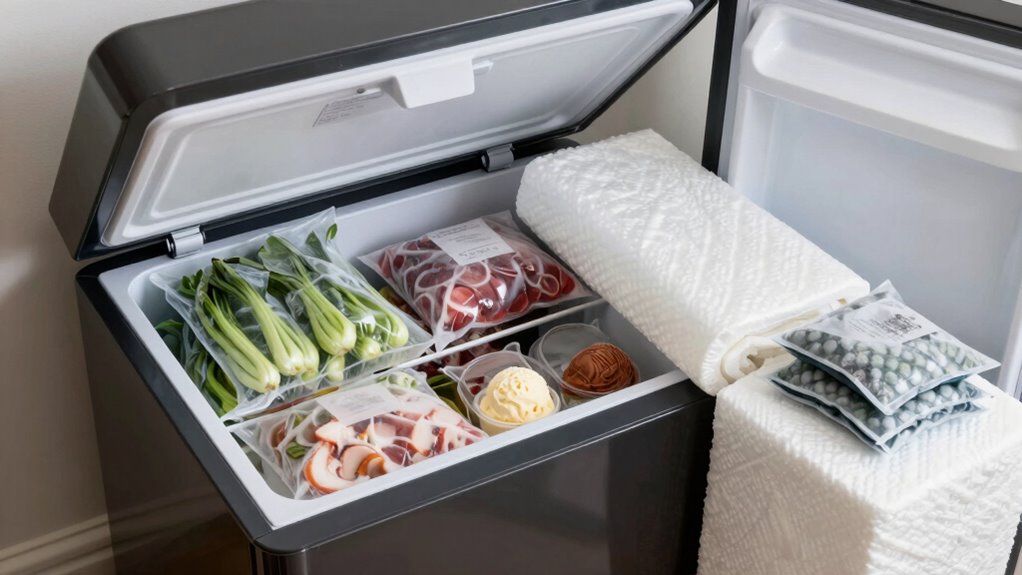
Using cold packs and insulation effectively can considerably extend the safety of your frozen foods during a power outage. Cold packs absorb heat, helping to keep the freezer’s interior cold longer. Proper insulation minimizes heat transfer, maintaining a low temperature inside your chest freezer. To maximize their benefits, place cold packs strategically around the frozen items and line the freezer with insulation materials like blankets or foam boards. This combination slows thawing and preserves food safety.
Using cold packs and insulation can significantly prolong frozen food safety during outages.
- Use multiple cold packs for even cooling
- Wrap items with additional insulation layers
- Place cold packs at the top and sides of the freezer
- Cover the freezer with blankets or thermal blankets
- Keep the lid closed as much as possible to retain cold
How to Create a Simple Power Outage Action Plan

Creating a simple power outage action plan guarantees you’re prepared to protect your frozen foods and stay safe. Start by identifying your household’s critical contacts and supplies. Map out a clear step-by-step process to follow during a blackout. This ensures quick decisions, minimizing food spoilage and maintaining household safety. Use the table below as a guide:
| Step | Action |
|---|---|
| Check power status | Confirm outage and estimate duration |
| Preserve cold temperature | Keep freezer door closed to retain cold |
| Communicate | Alert family members and plan next steps |
Having this plan in place improves emergency preparedness and helps you act calmly. Regularly review and update your plan, ensuring everyone knows their roles. Preparation minimizes panic and keeps your household safe during a blackout.
When and How to Safely Thaw or Use Frozen Foods During a Blackout

When a blackout occurs, knowing when and how to safely thaw or use frozen foods can prevent foodborne illnesses and reduce waste. If your freezer loses power, assess how long the power has been out. Foods that have stayed below 40°F are generally safe to cook or refreeze. For foods that have begun to thaw but are still cold, plan to cook them promptly to maintain food safety. Avoid refreezing foods that have been above 40°F for more than two hours. Follow proper thawing procedures, such as using the refrigerator, cold water, or microwave, only if power is restored. Always prioritize safety by inspecting food for spoilage or unusual odors before use.
During a blackout, assess food safety by monitoring temperature and proper thawing methods to prevent spoilage and foodborne illness.
- Keep food below 40°F during the blackout
- Use refrigerator or cold water thawing methods if power returns
- Cook thawed foods immediately if beyond safe temperature
- Do not refreeze foods above 40°F for over two hours
- Check for signs of spoilage before consuming
Reorganizing and Cleaning Your Freezer After Power Is Restored
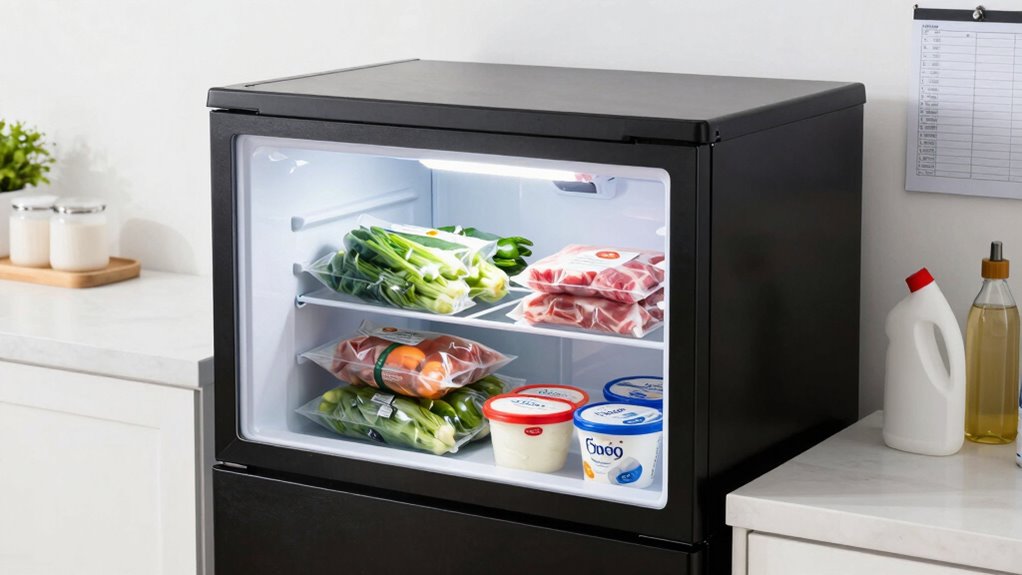
Once power is back on, start by carefully inspecting your freezer items for signs of spoilage. Next, remove any frost and ice buildup to improve efficiency. Finally, reorganize your food to guarantee easy access and proper storage.
Inspect Freezer Items Carefully
After the power is restored, you should carefully examine all the items in your freezer before deciding what to keep or discard. This is a pivotal step in maintaining proper freezer organization and ensuring food safety. Check each package for signs of spoilage, such as bad odors, discoloration, or thawed and refrozen spots. Items that are warm or have been above freezing for more than 48 hours should be discarded. For better freezer organization, separate the good from the questionable and label what remains. Proper food inspection helps prevent foodborne illnesses and minimizes waste. Be thorough and methodical during this process to quickly identify unsafe items and restore your freezer’s efficiency.
- Discard any thawed or spoiled items
- Keep food that remains frozen solid
- Label items with the date of inspection
- Separate meats, vegetables, and leftovers
- Remove any items with ice crystals or frost
Remove Frost and Ice Build-Up
With the inspection complete and spoiled items discarded, it’s time to address frost and ice buildup that may have accumulated during the blackout. If your freezer doesn’t have an auto defrost feature, frost buildup can hinder efficiency and reduce storage space. Start by unplugging the freezer and opening the door. Allow the ice to melt naturally or speed up the process with warm towels placed on the frost. Use a plastic scraper to gently loosen stubborn ice, but avoid metal tools that can damage the surface. Once the frost is melted, wipe down the interior with a clean cloth. Removing this ice buildup restores proper airflow and ensures your freezer runs efficiently. Regularly defrosting prevents excessive frost accumulation during future outages.
Organize Food for Access
When power is restored, take the opportunity to reorganize and clean your freezer to guarantee easy access and peak performance. Remove any spoiled or questionable items and wipe down shelves with warm, soapy water. Use clear storage containers and label them with food labeling to keep things organized. Group similar items together, such as meats, vegetables, or leftovers, for quick retrieval. Arrange items in a way that allows air circulation and prevents overcrowding. Place frequently used foods toward the front for easy access. Consider using stackable storage containers to maximize space. Regularly check expiration dates and discard expired items. Proper organization not only saves time but also helps you monitor your food supply efficiently during future power outages.
Common Mistakes to Avoid During a Freezer Blackout

During a freezer blackout, it’s easy to make mistakes that can compromise your stored food. One common error is opening the freezer unnecessarily, which lets cold air escape and shortens the safe storage time. Avoid rushing to check the contents repeatedly; instead, rely on your organization and labels to identify items. Neglecting proper emergency preparedness can lead to panic and poor decisions, risking food safety. Don’t ignore the importance of keeping the freezer door closed as much as possible. Also, don’t attempt to refreeze partially thawed food without evaluating its safety—refreezing spoiled items can cause health issues. By staying calm, avoiding unnecessary door openings, and following safety guidelines, you protect your food and ensure you’re prepared for any blackout situation.
How to Prepare Your Household for Unexpected Power Failures
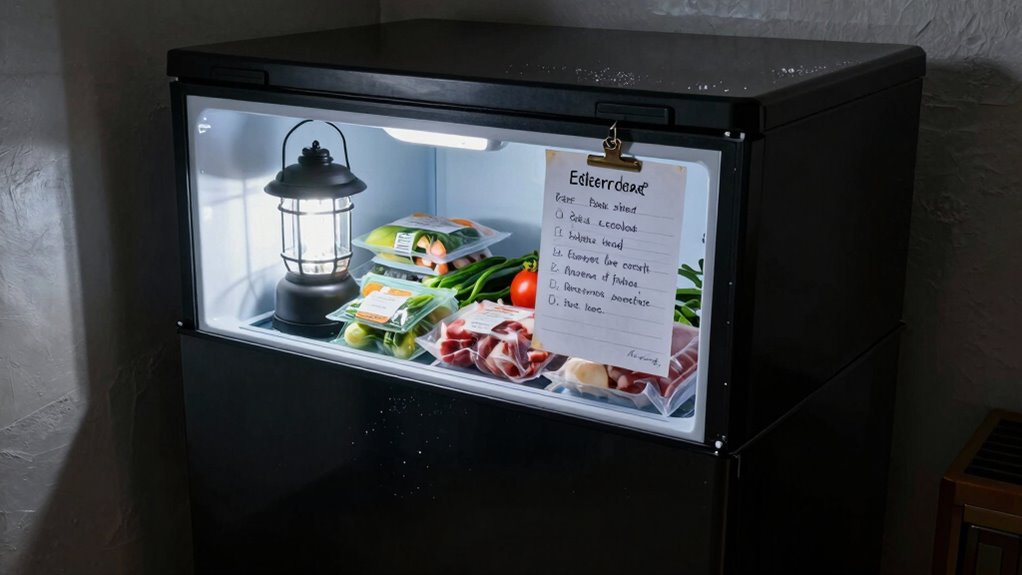
Preparing your household for unexpected power failures starts with proactive planning. You need to build household resilience by anticipating potential outages and having a plan in place. This means assembling emergency supplies, knowing how to keep food safe, and establishing clear communication strategies. Being prepared helps you stay calm and organized during an outage, reducing panic. Consider your freezer’s contents, and plan how to preserve or distribute food if power is lost. Familiarize everyone in your household with the blackout plan, so everyone knows what to do. Regularly check and update your emergency preparedness kit. Practice your blackout procedures to ensure quick, effective action when needed. These steps will help you protect your food and maintain safety during unexpected power failures.
- Store extra ice or frozen gel packs
- Keep a battery-powered or hand-crank radio
- Have a supply of bottled water and non-perishables
- Create a communication plan with neighbors and family
- Maintain a list of emergency contacts and resources
Frequently Asked Questions
How Long Can a Chest Freezer Safely Keep Food During a Blackout?
During a blackout, your chest freezer can keep food safe for about 48 hours if unopened, thanks to its insulation. To guarantee food safety, avoid opening it unnecessarily, and plan your emergency accordingly. Keep a thermometer inside to monitor temperature, and consider using ice packs or dry ice if power remains out longer. Proper emergency planning helps prevent food spoilage and reduces waste during unexpected outages.
What Signs Indicate Frozen Food Should Be Discarded After a Blackout?
You should discard frozen food if it’s been above 40°F for over two hours, as this jeopardizes food safety. Check for thawed or warm spots, water seepage, or any sign of spoilage like foul odor or discoloration. Use proper storage tips, such as labeling and maintaining consistent freezer temperatures, to prevent spoilage during outages. When in doubt, it’s safer to throw out questionable items to avoid foodborne illness.
Can You Refreeze Thawed Food Safely if Power Returns Later?
Yes, you can refreeze thawed food if it still contains ice crystals or is at 40°F or below, following refreezing guidelines and food safety considerations. Verify the food hasn’t been at unsafe temperatures for over two hours, and inspect for spoilage or off smells before refreezing. If in doubt, discard perishable items to prevent foodborne illness. Always prioritize safety to avoid health risks.
How Often Should You Check Your Freezer’s Temperature During an Outage?
You should check your freezer’s temperature at least every four hours during an outage. Regular temperature monitoring is vital for emergency preparedness because it helps you assess if the food remains safe. Use a reliable thermometer to make certain the freezer stays at or below 0°F (-18°C). If the temperature rises above this, consider taking action to protect your food, like using coolers or relocating items to a working freezer.
Are There Specific Foods That Spoil Faster During a Power Outage?
Surprisingly, your perishable items like dairy, seafood, and cooked leftovers spoil fastest during a power outage. Ironically, these foods, which seem sturdy, lose their shelf life quickly without proper refrigeration. You might think they last a while, but without consistent cold, bacteria thrive, shortening their safe window. Keep track of your perishables, and remember, their spoilage rate accelerates when the power’s out—so act fast to keep your food safe.
Conclusion
Preparing a chest freezer blackout plan keeps your food safe and reduces stress during outages. Did you know that a full freezer can keep food frozen for about 48 hours without power? By staying organized and having the right supplies, you can prevent spoilage and save money. Take action now to safeguard your food, and you’ll be ready for any unexpected blackout, giving you peace of mind and protecting your household.