
To prepare for long-term emergencies, you should focus on proper preservation methods like dehydration, canning, vacuum sealing, and freezing to extend food shelf life. Use suitable, airtight containers such as food-grade plastic or glass stored in cool, dark, dry places. Regularly check your supplies for pests, moisture, and spoilage, and rotate stock to keep everything fresh. If you keep these strategies in mind, you’ll find more helpful tips to build a reliable food storage plan.
Key Takeaways
- Use airtight, food-grade containers like mylar bags with oxygen absorbers to maximize shelf life.
- Store preserved foods in cool, dark, dry environments to prevent spoilage and maintain quality.
- Combine preservation methods such as dehydration, canning, and freezing to diversify and extend storage options.
- Regularly rotate stock, monitor for pests, and label items with purchase or preservation dates.
- Plan storage space efficiently with stackable containers and maintain consistent conditions for long-term safety.

Effective food storage is crucial for ensuring you have supplies when you need them most. When preparing for long-term emergencies, understanding how to properly preserve and store your food becomes essential. Preservation methods are key to extending the shelf life of your supplies, so you should familiarize yourself with options like dehydration, canning, vacuum sealing, and freezing. Each method has its advantages depending on the type of food and your available resources. For instance, dehydration reduces moisture content, preventing bacterial growth, while canning uses heat to kill pathogens and seal food in jars for years of storage. Vacuum sealing removes air from packaging, slowing oxidation and spoilage, making it easier to store items like grains, dried fruits, and jerky. Freezing, although more energy-dependent, is excellent for preserving fresh produce, meats, and dairy for short to medium periods. Combining different preservation methods allows you to diversify your food supply and optimize shelf life.
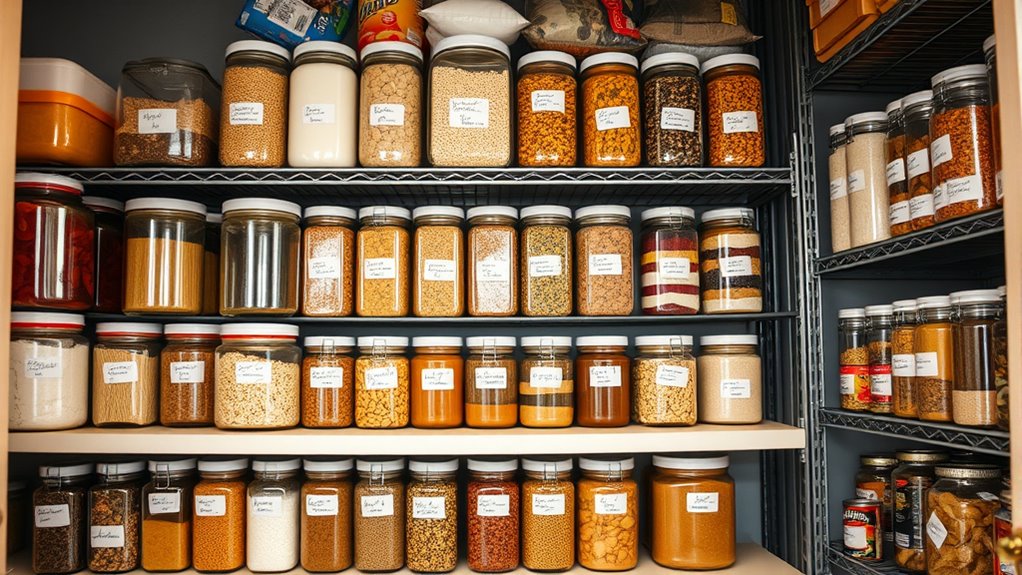
Once you’ve chosen your preservation techniques, selecting the right storage container options is equally important. The containers you use can profoundly impact how long your food stays safe and nutritious. For dry goods, airtight containers such as plastic bins, glass jars with secure lids, or mylar bags with oxygen absorbers work well to keep out moisture, pests, and air. For canned or vacuum-sealed foods, store them in a cool, dark, and dry environment to prevent light and heat from degrading the contents. If you’re storing foods in bulk, consider stackable containers that maximize space and maintain organization. Also, invest in food-grade storage options—avoid containers made from materials that could leach chemicals into your food over time. Proper sealing is crucial; even the most carefully preserved food can spoil if exposed to air or moisture. Using oxygen absorbers inside sealed packages can further extend longevity by removing residual oxygen, which bacteria and mold need to grow. Additionally, understanding food storage sustainability helps ensure your supplies remain effective over time without harming the environment.
In addition to choosing appropriate containers, it’s important to keep your storage area consistent and monitor it regularly. Check for signs of pests, moisture, or spoilage, and rotate your stock so older items get used before newer ones. Label everything clearly, noting purchase or preservation dates, so you always know what you have and when it needs to be replaced. By combining effective preservation methods with suitable storage container options, you create a reliable system that guarantees your emergency supplies remain safe, nutritious, and ready when you need them most. Proper planning now means less stress later, giving you peace of mind in uncertain times.

Survival Kit, 262Pcs Survival Gear and Supplies with First Aid Kit Pouch and Crossbody Bag, Emergency Kit with Tent, Camping Axe Hammer, Survival Shovel w/Pick, Bug Out Bag Gifts for Men Women
- Family Emergency Preparedness: Designed for 72-hour disaster survival
- First Aid Supplies: Includes comprehensive first aid kit in red pouch
- Survival Gear Included: Contains tools for food, water, warmth, and light
As an affiliate, we earn on qualifying purchases.
Frequently Asked Questions
How Do I Rotate Stored Food to Ensure Freshness?
To keep your stored food fresh, regularly practice food rotation by using the oldest items first. Check expiration dates and replace expired products promptly. When adding new supplies, place them behind older stock to maintain a consistent rotation cycle. This method helps you sustain freshness and prevents waste. Consistent food rotation ensures your emergency supplies stay safe, nutritious, and ready when you need them most.
What Are the Best Packaging Options for Long-Term Storage?
Did you know that properly packaged food can last up to 25 years? For long-term storage, vacuum sealing is highly effective because it removes air and prevents spoilage. Mylar bags are also excellent—they block light, moisture, and oxygen, extending shelf life considerably. Combining vacuum sealing with Mylar bags offers ideal protection, ensuring your food stays fresh and safe for years, making it your best choice for emergency preparedness.
How Can I Prevent Pests From Contaminating Stored Food?
To prevent pests from contaminating your stored food, use pest-proof containers like sealed plastic or metal bins. Keep these containers in cool, dry, and airtight environments. Incorporate natural repellents such as bay leaves or cloves around your storage area to deter insects. Regularly check your supplies for signs of pests, and promptly discard any contaminated items. This proactive approach helps guarantee your food stays safe and pest-free for the long term.
What Are the Signs of Food Spoilage in Stored Supplies?
You’ll notice signs of food spoilage in your stored supplies through unpleasant odors, discoloration, or mold, indicating food decomposition. Slimy textures or gas bubbles also signal spoilage. Keep an eye out for storage contamination, such as pest droppings or pests themselves, which can accelerate food decomposition. Regularly inspect your supplies, discard any suspect items, and guarantee proper storage to prevent spoilage and contamination.
How Do I Store Food Safely in Extreme Temperatures?
Think of your food storage like a delicate dance—each step carefully planned. In extreme temperatures, you need to master climate control by keeping storage areas cool and dry. Use reliable temperature monitoring devices to track fluctuations, preventing your supplies from turning into a spoilage storm. Insulate and place items away from direct sunlight or heat sources. With vigilant climate control, your stored food stays fresh, ready to serve when you need it most.
Conclusion
By implementing these food storage strategies, you turn uncertainty into preparedness, transforming a potential storm into a calm harbor. Think of your supplies as a fortress—each carefully stored item strengthening your resilience. Remember, the true power lies in your planning and foresight; don’t let unforeseen events catch you unprepared. Stay vigilant, stay ready, and let your food storage be the steady anchor that keeps you afloat amid life’s unpredictable tides.