Adding a roof cargo box can increase wind noise and reduce your fuel efficiency by disrupting airflow and creating turbulence. The penalty varies based on the box’s size, shape, and how well it’s installed, with MPG drops of up to 10-25% possible. To minimize these effects, choose aerodynamic designs, mount the box properly, and use wind deflectors. If you want to learn more about balancing storage benefits with noise and fuel costs, keep exploring these tips.
Open a free Amazon Business account
Business pricing, bulk buying and tax-exempt orders.
As an affiliate, we earn on qualifying purchases.
Key Takeaways
- Roof cargo boxes increase wind resistance and turbulence, leading to higher wind noise and reduced driving comfort.
- Larger, poorly streamlined boxes significantly raise aerodynamic drag, decreasing fuel efficiency by up to 10-25%.
- Proper installation, such as close mounting and aerodynamic accessories, can minimize wind noise and MPG loss.
- Using low-profile, aerodynamic cargo boxes and wind deflectors helps reduce wind resistance and noise.
- Removing the cargo box when not in use is the most effective way to prevent unnecessary MPG penalties.
As an affiliate, we earn on qualifying purchases.
How Do Roof Cargo Boxes Increase Wind Noise During Your Drive?
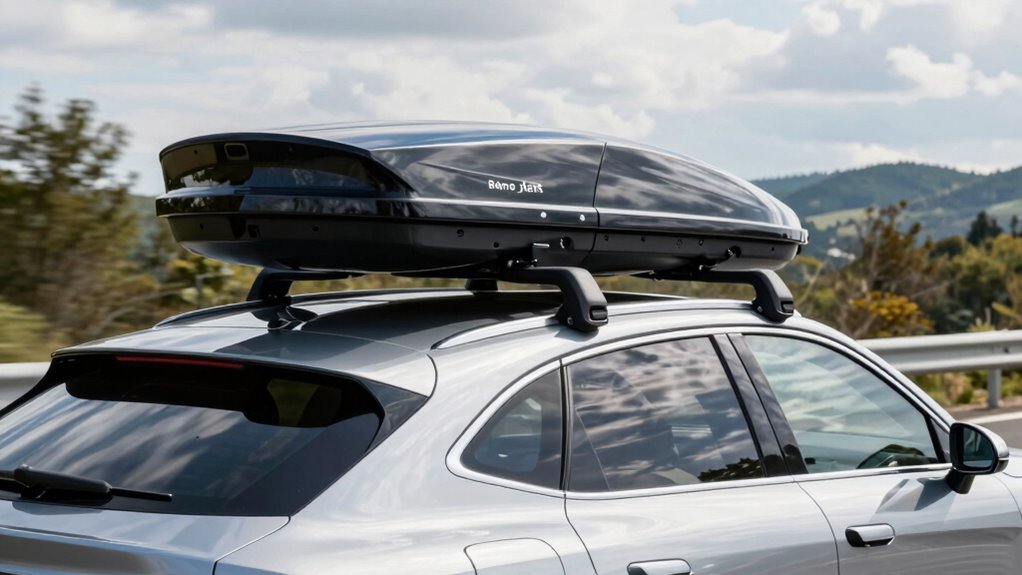
When you install a roof cargo box, it can create additional wind resistance that leads to increased noise while driving. This noise results from disruptions in your vehicle’s aerodynamics caused by the box’s design. The shape and size of your roof box influence how air flows over your vehicle, often creating turbulent air pockets and whistle sounds. Poorly streamlined roof design can amplify these effects, making your drive noisier. As air hits the box, it causes vibrations and whistling sounds that travel through the vehicle’s roof and windows. To minimize this, choose a roof cargo box with a sleek, aerodynamic shape. This helps maintain better vehicle aerodynamics, reducing wind noise and making your driving experience more comfortable. Additionally, aerodynamic design principles can significantly improve noise reduction and fuel efficiency.
How Much Does a Roof Cargo Box Lower Your MPG?

Adding a roof cargo box increases aerodynamic drag, which forces your engine to work harder. This extra effort can cause your fuel economy to drop by a few miles per gallon. Understanding how much your MPG is affected helps you decide if the convenience is worth the cost. Proper aerodynamic considerations can help mitigate some of these effects and improve overall efficiency. Additionally, choosing a low-profile cargo box designed with aerodynamics in mind can significantly reduce wind noise and MPG loss. Recognizing vehicle wind resistance factors can further assist in selecting the most efficient cargo solution. Being aware of the impact of drag on fuel consumption allows for better planning and selection of accessories to minimize efficiency loss. Awareness of aerodynamic efficiency can guide you in making the most economical choice for your vehicle.
Aerodynamic Drag Increase
A roof cargo box considerably increases a vehicle’s aerodynamic drag, which can lead to a noticeable drop in your miles per gallon (MPG). This added drag hampers aerodynamic optimization, forcing your engine to work harder and consume more fuel. The box disrupts smooth airflow over your vehicle, creating turbulence that reduces efficiency. Additionally, a roof box can worsen crosswind challenges, making your vehicle harder to handle and increasing wind resistance. Even small changes in airflow can profoundly impact fuel economy over long trips. The size, shape, and placement of the cargo box influence how much drag it produces. To minimize the MPG penalty, choose a streamlined design and keep your cargo box as low and flush with the roof as possible. Understanding aerodynamic drag and its effects can help you make smarter choices about cargo box selection and placement. Proper cargo box placement can further reduce wind resistance and improve fuel efficiency during travel. Being aware of vehicle aerodynamics can also guide you in selecting accessories that optimize overall efficiency. Recognizing drag coefficient variations in different cargo box models can help you select the most efficient option for your vehicle. Additionally, maintaining proper vehicle maintenance can help mitigate some of the efficiency losses caused by added aerodynamic drag.
Fuel Economy Impact
Installing a roof cargo box can noticeably reduce your vehicle’s fuel economy, often by several miles per gallon. The added weight increases your vehicle’s overall weight, which means your engine has to work harder, lowering efficiency. Additionally, the aerodynamic drag caused by the box disrupts airflow, making your engine consume more fuel. If your vehicle has solar panels, the extra weight and drag can further decrease their effectiveness, reducing any energy they generate. The combined effects of increased vehicle weight and aerodynamic resistance can lower your MPG by 10-25%, depending on the box’s size and shape. To minimize the impact, remove the cargo box when not in use and choose a lightweight, aerodynamic design.
What Factors Make Wind Noise and Fuel Efficiency Worse?

Wind noise and reduced fuel efficiency mainly result from the design and fit of your roof cargo box. Poor material choices can increase turbulence, creating more noise and drag. Aerodynamic shapes help streamline airflow, reducing both wind noise and fuel loss. To improve performance, consider these factors:
Optimizing roof cargo box design and fit reduces wind noise and improves fuel efficiency.
- Material choices: Thicker or rigid materials may cause more wind resistance.
- Aerodynamic shapes: Smooth, tapered designs cut through air more efficiently.
- Fit and installation: An ill-fitting box creates gaps that increase turbulence and noise.
- Proper installation techniques can further minimize wind resistance and noise, ensuring optimal performance. Additionally, selecting high-quality materials designed specifically for aerodynamics can make a noticeable difference in reducing drag and noise.
How Can You Minimize Wind Noise When Using a Roof Cargo Box?

To reduce wind noise from your roof cargo box, start by ensuring it’s mounted properly, with even spacing and secure fittings. Adding wind deflectors can also help streamline airflow and cut down on noise. Implementing these techniques can make your drives quieter and more comfortable. Additionally, choosing a free floating cargo box design can minimize contact points that contribute to turbulence and noise. Paying attention to the aerodynamic shape of your cargo box can further decrease wind resistance and reduce overall noise during drives. Incorporating sound-absorbing materials into the design or installation process can also help dampen noise caused by vibrations. For optimal performance, regularly inspecting the mounting hardware ensures your setup remains secure and minimizes unnecessary vibrations. Properly managing heat buildup around your cargo box can also prevent material warping and deterioration that might increase noise over time.
Proper Mounting Techniques
Proper mounting techniques are essential for minimizing wind noise when using a roof cargo box. Guaranteeing mounting stability prevents vibrations that increase noise and reduces drag. First, verify roof rack compatibility to ensure your rack securely supports the cargo box. Second, evenly distribute the weight and tighten all straps and clamps to prevent movement. Third, position the cargo box as close to the roof as possible, aligning it with the rack’s crossbars to reduce wind turbulence. Take your time checking all connections for firm fit. Properly mounted, your cargo box stays stable at highway speeds, cutting down on wind noise and MPG penalties. Additionally, Mad Tasting offers tips on choosing the right cargo box for your vehicle to ensure optimal performance. Ensuring proper installation techniques not only minimizes wind noise but also enhances safety and fuel efficiency, especially when considering security zone info for added peace of mind during travel. Being aware of roof rack compatibility can further optimize your setup and reduce unwanted noise and drag.
Use Wind Deflectors
Using wind deflectors is an effective way to reduce noise generated by a roof cargo box at highway speeds. These deflectors are designed with aerodynamic principles that help streamline airflow over your vehicle, minimizing turbulence and wind resistance. By guiding the air smoothly around the cargo box, they markedly improve noise reduction and lessen wind buffeting. Installing wind deflectors on the front or sides of your roof rack creates a more aerodynamic design, which not only cuts down on wind noise but can also improve your fuel efficiency. Make sure to choose deflectors compatible with your vehicle and cargo box, and ensure proper installation for maximum noise reduction. This simple addition can make your highway drives quieter and more comfortable. Additionally, considering Youngster Choice can help you select the most suitable accessories for your needs.
What Are the Best Strategies to Reduce MPG Losses With a Roof Cargo Box?
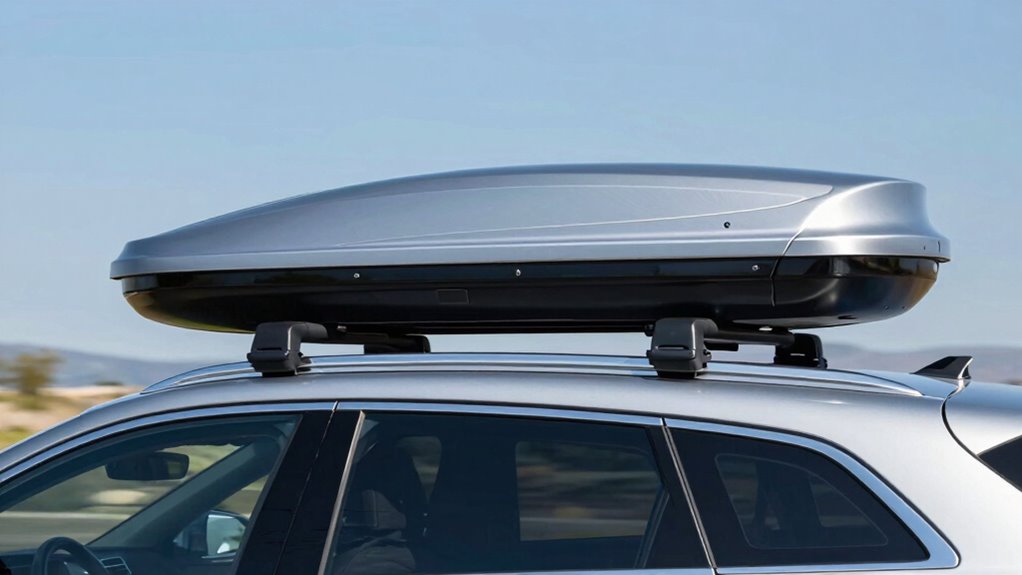
Reducing MPG losses caused by a roof cargo box starts with careful selection and placement. To minimize drag, focus on aerodynamic improvements and vehicle modifications. First, choose a low-profile, streamlined cargo box that cuts through the air more efficiently. Second, ensure the box is mounted as close to the roof as possible to reduce wind turbulence. Third, consider adding aerodynamic accessories like roof fairings or deflectors to redirect airflow smoothly over the vehicle. These modifications can considerably cut down on wind resistance. Additionally, removing the cargo box when not in use and maintaining your vehicle’s overall condition—like proper tire inflation—can further improve fuel efficiency. Implementing these strategies helps you enjoy extra storage without sacrificing too much MPG.
How to Choose the Right Roof Cargo Box for Storage and Fuel Efficiency?

Choosing the right roof cargo box involves balancing your storage needs with the goal of maintaining good fuel efficiency. To do this, consider aerodynamic principles: a sleek, low-profile design reduces wind resistance and noise. Look for a box with smooth contours and a streamlined shape that complements your vehicle’s profile. Material durability is equally important—select a sturdy, weather-resistant material that withstands harsh conditions without adding unnecessary weight. Lightweight materials can help minimize MPG loss, while durable construction ensures longevity. Measure your vehicle’s roof dimensions to avoid overhangs that increase drag. By prioritizing aerodynamic design and durable, lightweight materials, you can find a cargo box that maximizes storage without compromising fuel efficiency.
Are Roof Cargo Boxes Worth It? Weighing Storage Benefits Against Noise and Fuel Costs
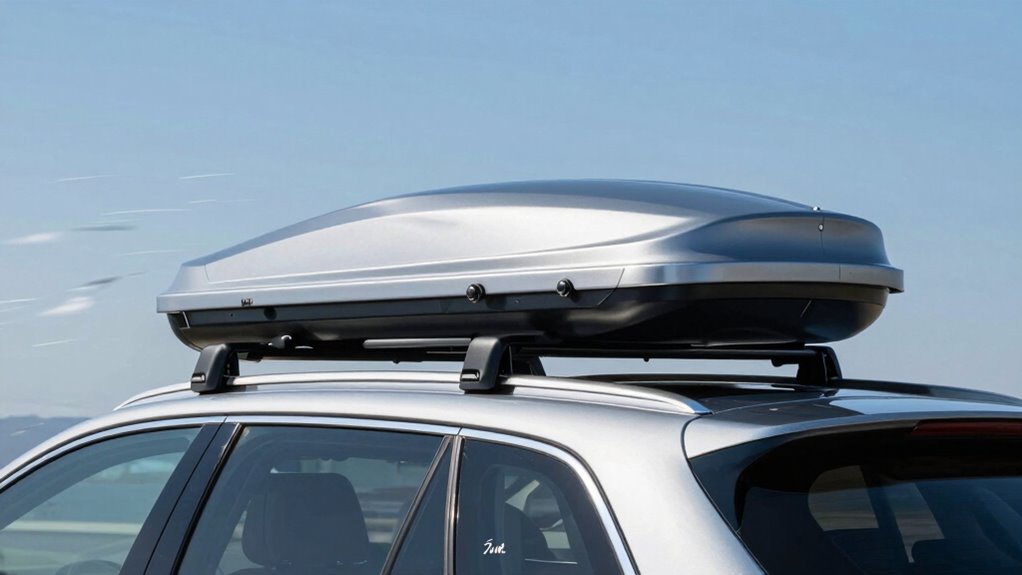
Roof cargo boxes can considerably expand your vehicle’s storage capacity, making trips with gear, luggage, or outdoor equipment much easier. However, you should weigh the benefits against the potential downsides like increased wind noise and reduced fuel efficiency. When considering if a roof box is worth it, look at these factors:
- Roof box design: Streamlined designs minimize drag, reducing noise and MPG loss.
- Vehicle aerodynamics: A well-designed roof box maintains better airflow, lessening the impact on fuel consumption.
- Usage frequency: If you often need extra storage, the convenience outweighs the noise and MPG penalties.
Ultimately, the decision depends on your storage needs versus how much you’re willing to sacrifice in fuel economy and comfort during drives.
Frequently Asked Questions
Are There Specific Roof Box Designs That Produce Less Wind Noise?
Yes, some roof box designs incorporate aerodynamic improvements and noise reduction techniques that help minimize wind noise. Look for boxes with streamlined shapes, smooth surfaces, and tapered edges, which reduce air turbulence. Brands that focus on aerodynamics often include features like low-profile designs or integrated deflectors. Choosing a well-designed roof box can markedly cut down wind noise and mitigate the MPG penalty, making your ride quieter and more efficient.
How Does the Shape of My Vehicle Affect Wind Noise With a Roof Box?
Your vehicle’s aerodynamics greatly influence wind noise with a roof box. Sleek, streamlined cars typically experience less turbulence, reducing noise, while box compatibility and fit matter too. If your vehicle has a box that matches its shape, it cuts down on drag and noise. Consider choosing a roof box designed for your vehicle’s aerodynamics to minimize wind noise and improve fuel efficiency on your trips.
Do Different Materials for Roof Boxes Impact Fuel Efficiency?
Choosing a roof box made from lightweight materials like ABS or polycarbonate can help boost your fuel efficiency, as they add less weight to your vehicle. In a gentle material comparison, heavier options like steel or aluminum might seem durable but can increase fuel consumption slightly. Keep weight considerations in mind; a lighter roof box reduces wind drag and saves you gas, making your journey more efficient and enjoyable.
Can Roof Box Placement Influence Wind Noise and MPG Loss?
Yes, roof box placement can influence wind noise and MPG loss. When you’re mountain driving or steering through urban traffic, positioning the box closer to the vehicle’s center minimizes drag and noise. Keep it as low and as aligned with your roofline as possible to reduce wind resistance. Proper placement helps you conserve fuel and keeps wind noise manageable, whether you’re climbing hills or cruising through city streets.
Are There Any Maintenance Tips to Keep Roof Boxes Aerodynamic?
If you want to keep your roof box aerodynamic, don’t overlook regular maintenance. You should routinely perform aerodynamic cleaning to remove dirt and debris that can disrupt airflow. Additionally, check and seal any gaps or cracks to prevent air leaks that increase drag. Staying vigilant with seal maintenance guarantees your roof box stays smooth and efficient, reducing wind noise and MPG loss—saving you money and hassle on every trip.
Conclusion
Ultimately, a roof cargo box is a double-edged sword—offering extra space but slicing into your fuel economy and adding wind noise. By choosing the right box and adopting simple strategies, you can strike a balance between convenience and efficiency. Think of it as tailoring a suit: with the right fit, you get all the benefits without the uncomfortable chafing. Weigh your needs carefully, and you’ll travel smarter, not harder.
Evergreen bestsellers Picks
bestsellers
As an affiliate, we earn on qualifying purchases.