To keep your router online during a blackout without a huge battery, use a reliable UPS or a high-capacity power bank that supports your device’s wattage. Enable power-saving settings on your router to reduce energy use, and disconnect unnecessary features like guest networks or LEDs. For sustainable backup, consider solar chargers or hand crank generators. Proper maintenance and testing guarantee your setup works when you need it most—continue exploring for more practical tips and ideas.
Key Takeaways
- Use a UPS or portable power bank with sufficient capacity to support your router during outages.
- Regularly test and recharge backup devices to ensure they function when needed.
- Enable power-saving settings and disable unnecessary features to extend router uptime.
- Combine small solar chargers or hand crank generators for sustainable, short-term power solutions.
- Keep backup equipment accessible and inspect connections regularly to prevent power loss during blackouts.
What Are Your Best Backup Power Options for Routers?
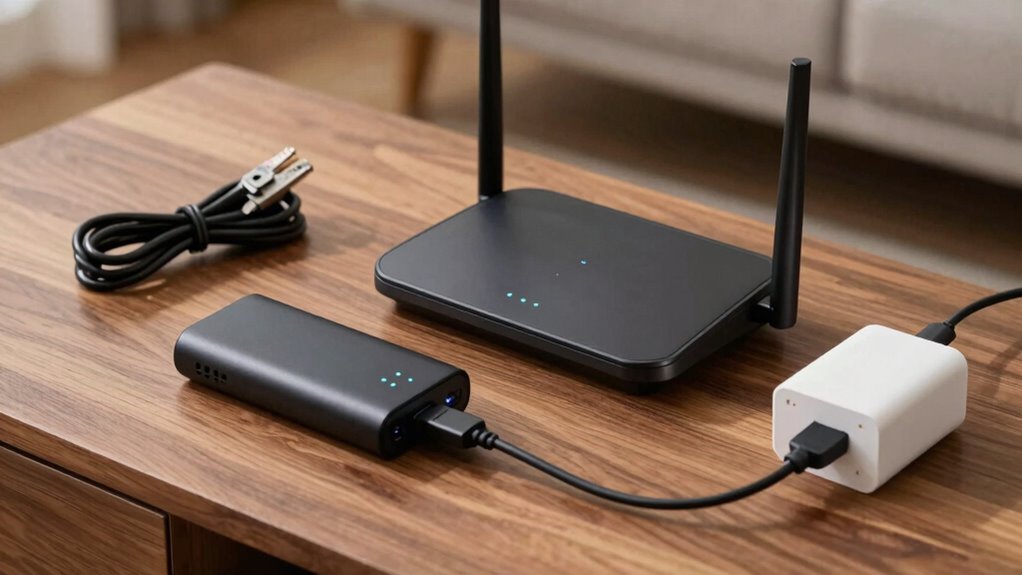
When a blackout hits, having reliable backup power options for your router can keep your internet connection alive. Internet outages often occur unexpectedly, making emergency preparedness essential. One of your best options is a UPS (Uninterruptible Power Supply), which provides immediate backup power and protects your equipment from surges. Compact and easy to set up, UPS devices are ideal for short-term outages. Alternatively, portable power banks designed for electronics can also serve as effective backups, especially if they have sufficient capacity. Both options ensure your router stays online during power interruptions, maintaining your internet access. Planning ahead with these backup solutions helps you stay connected, whether for work, emergencies, or staying in touch with loved ones. Additionally, choosing the right filter sizing/flow can prevent overloads that might exacerbate power issues during outages.
How to Use Power Banks and UPS Devices for Router Backup Power
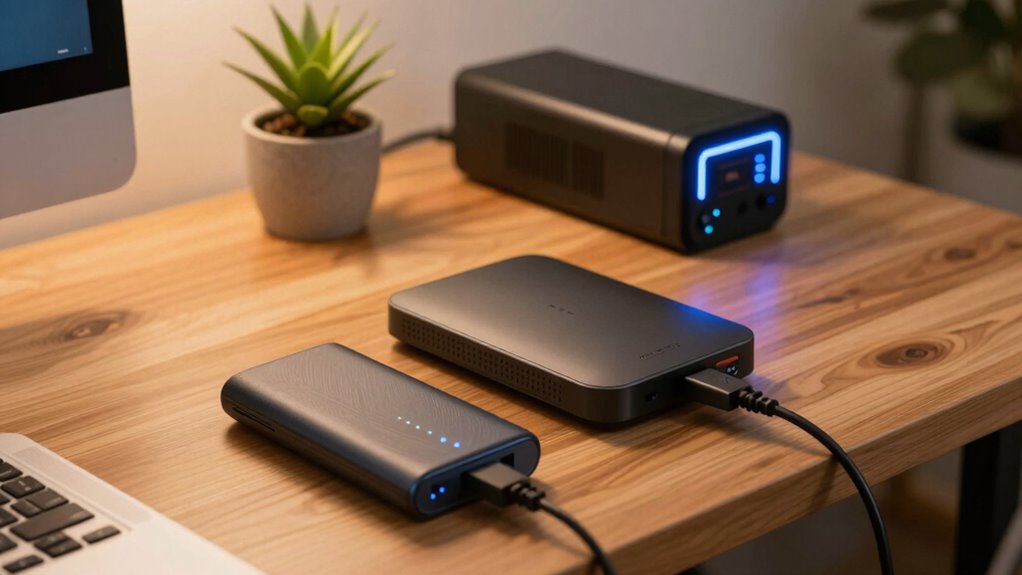
Using power banks and UPS devices to backup your router is a practical way to maintain internet access during power outages. To get the best results, consider these steps: 1. Choose a power bank or UPS with enough capacity to support your router’s wattage and ensure it can handle your wireless security devices. 2. Regularly test and recharge your backup power to keep firmware updates current and avoid unexpected failures. 3. Keep your router connected to the UPS or power bank, and check that it maintains stable power delivery to prevent interruptions that could compromise your network security. proper surge protection is essential to safeguard your equipment from power surges or fluctuations. 4. It’s also helpful to select backup systems that are compatible with Free Floating network setups to ensure consistent reliability during outages. Additionally, considering power management options can help optimize energy use and extend backup runtime during outages, which is especially important for maintaining connectivity in unpredictable blackout scenarios. Incorporating backup capacity assessments can further ensure your system remains functional for the duration of an outage.
How to Save Power by Adjusting Your Router Settings
To conserve power and extend your router’s battery life, you can optimize its settings for energy efficiency. Firmware tweaks can help reduce unnecessary processes and lower power consumption. Check if your router offers a power-saving mode or adjustable transmission power settings; lowering the signal strength can save energy without sacrificing essential coverage. Signal optimization involves disabling features you don’t need, such as guest networks, LED indicators, or Wi-Fi scheduling, which can drain power unnecessarily. Ensure your router’s firmware is up to date, as updates often include performance improvements and energy-saving features. Adjusting these settings can significantly reduce power use during outages, helping your router stay connected longer without relying on a large backup battery. Additionally, exploring energy-efficient hardware options can further enhance power savings and ensure longer operation during power outages. Understanding power management principles can also guide you in making more effective adjustments for prolonged outages. Being aware of power consumption patterns allows you to identify additional ways to optimize your device’s energy use and prolong its operational time. Incorporating advanced configuration options can help fine-tune your router’s energy profile for extended blackout periods.
Low-Cost Backup Solutions: Solar Chargers and Hand Crank Generators
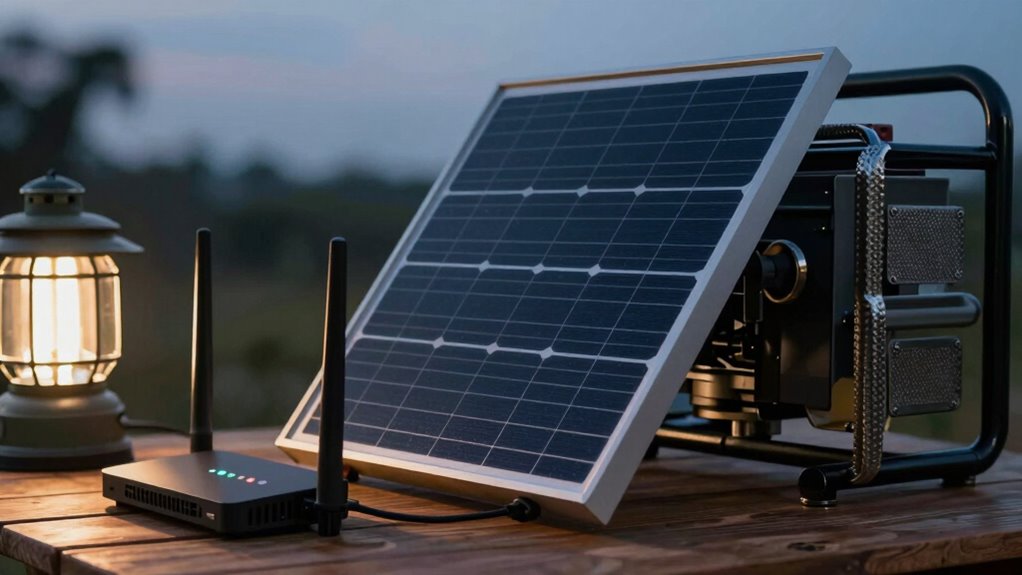
During a blackout, low-cost backup power options like solar chargers and hand crank generators can keep your router running without breaking the bank. These solutions help maintain your wireless security and internet speed during outages. To maximize effectiveness, consider these options:
During blackouts, affordable solar chargers and hand crank generators keep your router online and secure.
- Use portable solar chargers compatible with small power banks to recharge your router’s battery sustainably. Incorporating renewable energy sources can extend your backup capabilities.
- Invest in hand crank generators that can provide immediate power without relying on sunlight, ideal for short-term outages.
- Combine both methods for redundancy, ensuring continuous internet access even during prolonged blackouts.
- Remember to keep your backup equipment in a readily accessible location so you can quickly respond during an outage.
- Regularly test your backup devices to ensure they function properly when needed, which is crucial for effective emergency preparedness.
- Additionally, choosing backup solutions with scalable capacity can help adapt to different outage durations and power needs.
Troubleshooting and Maintaining Your Backup Power Setup
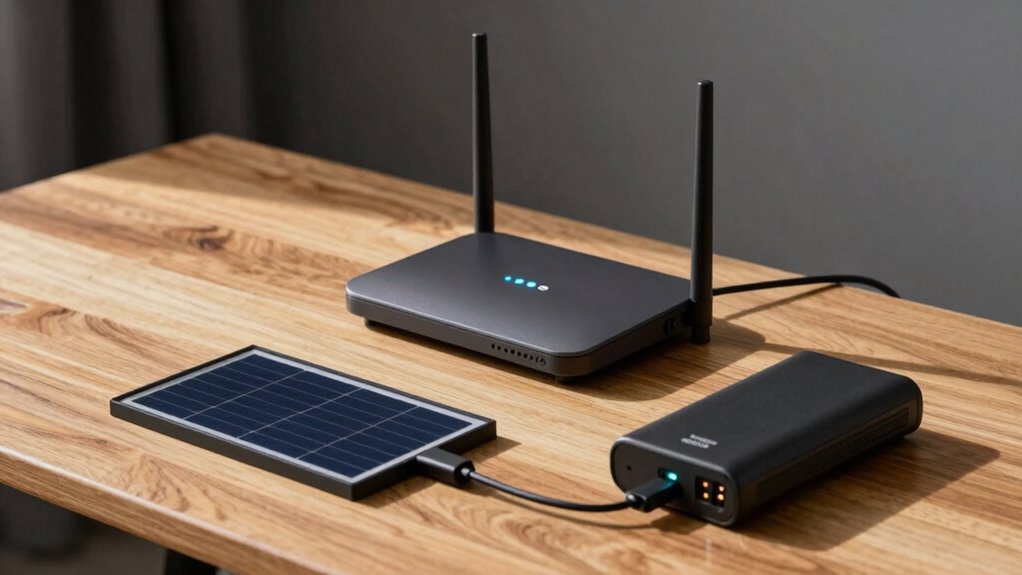
Regularly troubleshooting and maintaining your backup power setup guarantees it stays reliable when you need it most. Check connections and verify your power sources are functioning correctly. Test your system periodically to confirm your router stays powered during outages. Keep firmware updates up to date for your backup devices and router; these updates often include security patches that protect your network security. A well-maintained setup reduces the risk of failure when blackout strikes. Inspect batteries, chargers, and wiring for signs of wear or damage. Document any issues and address them promptly. Staying proactive helps you avoid surprises and ensures your backup power remains effective. Properly extension cord standards and weatherproof tool storage can also help prevent damage and ensure safe operation. Regularly reviewing your backup power capacity and adjusting it to meet your current needs can prevent power shortages during an outage. Additionally, monitoring your power quality can help identify potential issues before they cause system failures. Incorporating routine inspections into your maintenance schedule further enhances the reliability of your backup setup. Ensuring all components meet safety guidelines can prevent accidents and prolong your equipment’s lifespan. By prioritizing regular maintenance, you safeguard your network security and keep your connection stable during emergencies.
Frequently Asked Questions
Can I Use a Car Battery to Power My Router During a Blackout?
Yes, you can use a car battery to power your router during a blackout. Just make certain your router is compatible with DC power and consider adding a small inverter for AC power if needed. You might also explore solar panels or portable generators for a more sustainable solution. Be cautious with wiring and voltage compatibility to prevent damage, and always prioritize safety when connecting power sources.
How Long Can a Typical Power Bank Reliably Run a Router?
A typical power bank can reliably run a router for about 4 to 8 hours, depending on its battery capacity and your router’s power consumption. If your power bank has a higher capacity—say, 20,000mAh—it can last longer. Keep in mind, routers vary in power use, so check your device’s wattage. To maximize runtime, choose a power bank with a higher capacity and low power consumption.
Are There Specific Router Models More Energy-Efficient During Outages?
Yes, you should look for energy-efficient routers with power-saving features. These models consume less power during outages, helping your backup power last longer. Brands like TP-Link, Asus, and Netgear offer routers with eco modes that reduce energy use when activity is low. By choosing routers with these features, you guarantee your connection stays stable longer during blackouts without draining your backup power quickly.
What Safety Precautions Should I Take With DIY Backup Power Setups?
When setting up DIY backup power for your router, prioritize fire safety by avoiding overloaded circuits and using proper electrical wiring. Always test your setup carefully, keep flammable materials away from electrical components, and make certain connections are secure. Use surge protectors to prevent damage, and never modify wiring unless you’re experienced. Regularly inspect your system for wear or damage, and follow safety guidelines to prevent electrical hazards during outages.
Is It Better to Connect Multiple Backup Devices for Extended Outages?
You absolutely should connect multiple backup devices for extended outages; it’s like building a fortress of power! Power redundancy guarantees your router stays alive no matter what, while smart battery management prevents overloads. By combining different sources, you create a safety net that keeps your internet running smoothly through the longest blackouts. Don’t rely on a single backup—think big and stay connected, no matter how wild the blackout gets!
Conclusion
Keeping your router alive during a blackout is like tending a delicate flame in a storm; with the right backup power options, you can guarantee it stays lit. Whether you use a trusty UPS, a portable power bank, or harness the sun’s energy, you’re weaving a safety net that catches your connection before it’s lost. Stay vigilant, maintain your setup, and let your internet’s lifeline remain unbroken, even when darkness falls.