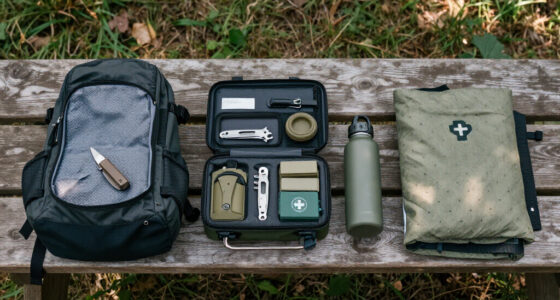
For a balanced prepper pantry, I’d start with the Augason Farms 30-Day Emergency Food Supply Kit as the best overall choice, then add Mountain House Diced Chicken for protein and Ready Harvest Potato Flakes for an easy, flexible staple. The options here range from ready-to-portion ingredients to large kits, so the main tradeoff is variety and convenience versus control over meals and servings. Freeze-dried products can offer a different mix of texture, rehydration, and storage needs than dehydrated foods, so I compare both by how they fit a practical pantry. Read on for the full breakdown and a guide to matching your supplies to your household.

Get emergency and outdoor gear delivered free with Prime
- Fast, free delivery on millions of items
- Prime Video, Amazon Music and more included
- Member-only deals all year
Key Takeaways
- The 30-Day Emergency Food Supply Kit is the strongest all-in-one option here, while the smaller ReadyWise and Ready Hour buckets suit buyers who want a more limited, portable meal reserve.
- Mountain House Diced Chicken fills a protein gap that vegetable cans and potato-based foods cannot; it works best as an ingredient alongside other pantry staples.
- Potato flakes, soup mix, and dried vegetables give buyers more control over everyday meals than a single variety kit, but they require planning to make nutritionally varied dishes.
- Sweet corn, peppers, onions, and fruit add useful variety to a stash, though individual ingredient cans need recipes and complementary foods to become meals.
- The Beginner’s Guide to Dehydrating Food supports a do-it-yourself pantry, but home-dried food takes time, equipment, and careful storage rather than replacing ready-to-eat reserves.
| Ready Harvest Dehydrated Potato Flakes, Instant Mashed Potatoes, #10 Can |  | Best Pantry Staple | Product type: Dehydrated potato flakes | Container: #10 can | Serving size: 1/2 cup (28 g) | VIEW ON AMAZON | See Our Full Breakdown |
| ReadyWise Emergency Survival Food Supply Bucket, 120 Servings |  | Best for Meal Variety in a Compact Supply | Servings: 120 | Shelf life: Up to 25 years | Meal examples: Cheesy Macaroni, Lasagna, Teriyaki Rice, Chicken Flavored Noodle Soup | VIEW ON AMAZON | See Our Full Breakdown |
| Augason Farms Breakfast and Dinner Variety Pail Emergency Food Supply |  | Best for a Broad Meal Rotation | Servings: 119 | Meal varieties: 13 | Total calories: 22,880 | VIEW ON AMAZON | See Our Full Breakdown |
| Augason Farms 30-Day Emergency Food Supply Kit |  | Best for a One-Adult Reserve | Servings: 194 | Intended duration: 30 days for one adult | Meal varieties: 11 | VIEW ON AMAZON | See Our Full Breakdown |
| Mountain House Freeze-Dried Diced Chicken, #10 Can, 14 Servings |  | Best Emergency Protein Ingredient | Product type: Freeze-dried diced chicken | Container: #10 can | Servings: 14 | VIEW ON AMAZON | See Our Full Breakdown |
| Augason Farms Creamy Potato Soup Mix |  | Best for a Simple Hot Meal | Servings: 36 | Stated shelf life: 25 years | Preparation: Add water and heat on a stove | VIEW ON AMAZON | See Our Full Breakdown |
| Ready Hour 120-Serving Freeze-Dried Entree Bucket |  | Best for Portion-by-Portion Storage | Servings: Up to 120 | Packaging: 22 resealable pouches | Shelf life: Up to 25 years | VIEW ON AMAZON | See Our Full Breakdown |
| Augason Farms Dehydrated Diced Bell Peppers |  | Best Pantry Meal Booster | Servings: 113 | Shelf life: Up to 25 years, based on storage conditions | Preparation: Soak in water to reconstitute, then cook | VIEW ON AMAZON | See Our Full Breakdown |
| Augason Farms Lunch & Dinner Variety Kit, 113 Servings |  | Best for Meal Variety | Brand: Augason Farms | Servings: 113 | Meal varieties: 13 | VIEW ON AMAZON | See Our Full Breakdown |
| Ready Harvest Freeze-Dried Sweet Potatoes, #10 Can |  | Best Quick-Rehydrating Side | Servings per can: 22 | Serving size: 1/2 cup (16 g) | Rehydration time: 1–10 minutes | VIEW ON AMAZON | See Our Full Breakdown |
| Augason Farms Freeze-Dried Sweet Corn |  | Best Ready-to-Eat Vegetable | Food type: Freeze-dried sweet corn | Servings: 30 | Shelf life: Up to 30 years, depending on storage conditions | VIEW ON AMAZON | See Our Full Breakdown |
| Augason Farms Dehydrated Chopped Onions |  | Best Cooking Staple | Form: Dehydrated chopped onions | Servings: 130 | Shelf life: 25 years | VIEW ON AMAZON | See Our Full Breakdown |
| Ready Hour Freeze-Dried Fruit and Vegetable Mix, 56 Servings |  | Best for Portion Control | Food type: Freeze-dried fruit and vegetables | Servings: 56 | Shelf life: 30 years | VIEW ON AMAZON | See Our Full Breakdown |
| The Beginner’s Guide to Dehydrating Food, 2nd Edition |  | Best for DIY Food Storage | Format: Book | Edition: 2nd Edition | Intended reader: Beginners | VIEW ON AMAZON | See Our Full Breakdown |
| Augason Farms Pasteurized Dried Whole Egg Powder |  | Best for Baking and Protein Recipes | Form: Dried whole egg powder | Ingredients: Whole eggs and anti-caking agent | Servings: 85 per can | VIEW ON AMAZON | See Our Full Breakdown |
| dehydrated food for prepper | Shelf life | Servings | Preparation | Container |
|---|---|---|---|---|
| Ready Harvest Dehydrated Potat | 30 years | — | Add 1 cup boiling water to 1/2 cup flakes; stir, let stand 1 minute, then stir again | #10 can |
| ReadyWise Emergency Survival F | Up to 25 years | 120 | Add water | Stackable bucket |
| Augason Farms Breakfast and Di | 25 years | 119 | Add water and heat on a stove | Portable, durable pail |
| Augason Farms 30-Day Emergency | 25 years | 194 | Add water and heat | — |
| Mountain House Freeze-Dried Di | Up to 25 years stated; 30-Year Taste Guarantee | 14 | Add water; ready in less than 10 minutes with hot water | #10 can |
| Augason Farms Creamy Potato So | — | 36 | Add water and heat on a stove | — |
| Ready Hour 120-Serving Freeze- | Up to 25 years | Up to 120 | — | Flood-safe with carrying handle |
| Augason Farms Dehydrated Diced | Up to 25 years, based on storage conditions | 113 | Soak in water to reconstitute, then cook | — |
| Augason Farms Lunch & Dinner V | 25 years | 113 | Add water and heat | 4-gallon bucket |
| Ready Harvest Freeze-Dried Swe | 30 years | — | — | — |
| Augason Farms Freeze-Dried Swe | Up to 30 years, depending on storage conditions | 30 | Ready to eat or reconstitute | — |
| Augason Farms Dehydrated Chopp | 25 years | 130 | Add water to rehydrate | Can |
| Ready Hour Freeze-Dried Fruit | 30 years | 56 | — | Flood-safe |
| The Beginner’s Guide to Dehydr | — | — | — | — |
| Augason Farms Pasteurized Drie | 10 years | 85 per can | Add water and cook | — |
More Details on Our Top Picks
Ready Harvest Dehydrated Potato Flakes, Instant Mashed Potatoes, #10 Can
I’d choose these Ready Harvest potato flakes when a prepper pantry needs a familiar, flexible side rather than a full meal kit. The can holds 22 servings, and the flakes can go beyond mashed potatoes into soups, casseroles, and baked dishes. Compared with the ReadyWise Emergency Survival Food Supply Bucket, this is a single ingredient, so it gives me more control over how to build meals but less variety on its own. Its stated 30-year shelf life suits long-term storage, while the lack of additives or preservatives may appeal to buyers keeping a simpler ingredient list. The tradeoff is practical: preparation calls for boiling water, and potato flakes add little meal variety without other stored ingredients. I’d pair this can with protein and vegetables rather than count on it as a complete emergency supply.
Pros:- Real potato flakes with no additives or preservatives
- Can be served as mashed potatoes or added to other recipes
- Stated 30-year shelf life supports long-term pantry storage
- Gluten-free and GMO-free
Cons:- Requires boiling water for the listed preparation
- A single ingredient offers less meal variety than a multi-meal bucket
- The 22 servings make it a supporting staple rather than a full household supply
Best for: Preppers who want a long-storing, versatile carbohydrate to use in recipes alongside other pantry staples
Not ideal for: Buyers seeking complete meals or food that can be prepared without boiling water
- Product type:Dehydrated potato flakes
- Container:#10 can
- Serving size:1/2 cup (28 g)
- Servings per can:22
- Preparation:Add 1 cup boiling water to 1/2 cup flakes; stir, let stand 1 minute, then stir again
- Shelf life:30 years
- Additives or preservatives:None
- Dietary attributes:Gluten free, GMO free
Our verdict“Choose this can for a versatile, long-storing potato staple, and pair it with other ingredients to make complete meals.”
ReadyWise Emergency Survival Food Supply Bucket, 120 Servings
The ReadyWise bucket makes more sense for someone who wants several kinds of meals in one stored package than for a buyer assembling a pantry ingredient by ingredient. Its 120 servings include Cheesy Macaroni, Lasagna, Teriyaki Rice, and Chicken Flavored Noodle Soup, giving it broader meal variety than the single-ingredient Ready Harvest potato flakes. The stackable bucket is suited to home storage, and its split lid can double as a tray when serving space is limited. ReadyWise states a shelf life of up to 25 years, a useful fit for emergency reserves that may sit unused for long stretches. I’d weigh that convenience against the sparse nutrition information supplied: the serving count alone doesn’t show how the food fits a household’s calorie or dietary needs. Every meal also needs water, which can be a serious constraint in an emergency.
Pros:- Provides 120 servings across several named meal options
- Stackable bucket keeps the supply together for storage
- Split lid can serve as a tray
- Stated shelf life of up to 25 years
Cons:- Meals require water for preparation
- The supplied details do not include nutritional information
- A fixed assortment offers less control over ingredients than separate staples such as Ready Harvest potato flakes
Best for: Households wanting multiple prepared meal options stored together for emergencies or outdoor trips
Not ideal for: Preppers who need detailed nutritional information or may lack enough water to prepare meals
- Servings:120
- Shelf life:Up to 25 years
- Meal examples:Cheesy Macaroni, Lasagna, Teriyaki Rice, Chicken Flavored Noodle Soup
- Preparation:Add water
- Container:Stackable bucket
- Lid:Split lid doubles as a tray
Our verdict“Pick this bucket for a ready-stored mix of meal types, provided you can plan for water and verify nutrition needs separately.”
Augason Farms Breakfast and Dinner Variety Pail Emergency Food Supply
For a prepper who wants breakfast, dinner, and dessert choices together, this Augason Farms pail has a wider stated rotation than the ReadyWise bucket’s four listed meal examples. It contains 119 servings across 13 varieties, with items ranging from oatmeal and creamy wheat to stroganoff, rice dishes, pudding, and a milk alternative drink. The 23 pouches make it easier to portion the supply than relying on one large ingredient can such as Ready Harvest potato flakes. Its stated 25-year shelf life and portable pail suit stored reserves or travel. The main limitation is preparation: the instructions call for water and stove heating, so this is less useful when fuel or cooking equipment is unavailable. The supplied description also gives total calories but omits serving sizes and most nutritional detail, making daily meal planning harder.
Pros:- Offers 13 varieties across 119 servings
- Includes breakfast, dinner, dessert, and a milk alternative drink
- 23 pouches allow portioned storage
- Portable pail with a stated 25-year shelf life
Cons:- Requires water and stove heating
- Serving sizes and nutritional details beyond total calories are not specified
- Less flexible as a cooking ingredient than single-item staples such as Ready Harvest potato flakes
Best for: Preppers who want varied breakfast and dinner options portioned into pouches and can store a stove and water
Not ideal for: People planning for no-cook emergencies or those who need clear per-serving nutrition data
- Servings:119
- Meal varieties:13
- Total calories:22,880
- Shelf life:25 years
- Pouches:23
- Preparation:Add water and heat on a stove
- Container:Portable, durable pail
- Included varieties:Creamy stroganoff, fettuccine alfredo, italiano marinara, creamy chicken flavored rice, macaroni and cheese, broccoli and cheese rice, creamy potato soup, vegetable chicken flavored soup, oatmeal, creamy wheat, chocolate pudding, and low fat milk alternative drink
Our verdict“Choose this pail for a varied pouch-based meal rotation if your emergency plan includes water and a way to heat food.”
Augason Farms 30-Day Emergency Food Supply Kit
This kit is the clearest fit in this group for someone building a preplanned reserve for one adult: it is described as a 30-day supply and lists daily calories and protein, details absent from the ReadyWise bucket and the breakfast-and-dinner Augason Farms pail. The stated figures are approximately 1,290 calories and 36 grams of protein per day, so I’d treat the duration as a product claim and compare those numbers with the intended adult’s actual needs before relying on it. Its 194 servings across 11 varieties offer more meal structure than the Mountain House diced chicken, which is an ingredient to add to other meals rather than a meal plan. The portable pail and 25-year stated shelf life help with storage, but water and heating are required, and the kit is explicitly sized for only one adult.
Pros:- Designed as a 30-day supply for one adult
- Lists approximately 1,290 daily calories and 36 grams of protein
- Includes 194 servings across 11 meal varieties
- Portable pail with a stated 25-year shelf life
Cons:- The stated daily calories may not match every adult’s needs
- Requires water and a heat source to prepare
- One-adult supply does not scale to a household without additional kits
Best for: A solo prepper who wants a portioned, multi-meal reserve with stated daily calorie and protein figures
Not ideal for: Families or adults whose energy needs exceed the stated daily calories, and anyone without water or a heat source
- Servings:194
- Intended duration:30 days for one adult
- Meal varieties:11
- Shelf life:25 years
- Daily calories:Approximately 1,290
- Daily protein:36 grams
- Pouches:23
- Preparation:Add water and heat
Our verdict“This kit suits a solo prepper who wants a portioned monthly reserve and has checked that its stated daily nutrition fits their needs.”
Mountain House Freeze-Dried Diced Chicken, #10 Can, 14 Servings
I’d pick the Mountain House diced chicken to add protein to stored meals, rather than as a standalone emergency menu. The #10 can holds 14 servings of freeze-dried chicken, which can make rice, soup, or other pantry staples more substantial; by comparison, the Augason Farms 30-Day Emergency Food Supply Kit is organized as a broader meal reserve. Mountain House lists hot-water preparation in under 10 minutes, while room-temperature water takes about twice as long. That flexibility can help when cooking fuel is scarce, though the chicken still needs water to rehydrate. Its up to 25-year stated shelf life and gluten-free certification suit long-term stores and specific dietary needs. The tradeoff is that this is one ingredient in a relatively small number of servings, so buyers need other foods to build complete meals.
Pros:- Can supplement other stored foods with diced chicken
- Hot-water preparation takes less than 10 minutes
- Can also be rehydrated with room-temperature water
- Certified gluten-free and made without artificial flavors, colors, or preservatives
Cons:- Requires water for rehydration
- Room-temperature water takes about twice as long
- Fourteen servings of one ingredient do not provide a complete meal plan
Best for: Preppers who want a long-storing chicken ingredient to supplement rice, soups, or other emergency staples
Not ideal for: Buyers looking for a complete multi-day meal supply or food that needs no rehydration
- Product type:Freeze-dried diced chicken
- Container:#10 can
- Servings:14
- Dietary information:Certified gluten-free
- Preparation:Add water; ready in less than 10 minutes with hot water
- Room-temperature water preparation:About twice the hot-water rehydration time
- Shelf life:Up to 25 years stated; 30-Year Taste Guarantee
- Made in:USA
Our verdict“Choose this can to add quick-rehydrating chicken to a broader emergency pantry, not as your main stored food supply.”
Augason Farms Creamy Potato Soup Mix
A familiar, filling soup can be useful in a prepper pantry when you want a straightforward meal from stored ingredients. This mix makes 36 servings, comes in a resealable can, and has a stated 25-year shelf life, so it can sit alongside longer meal kits without taking up bucket space. Preparation is simple: add water and heat on the stove. Compared with the Augason Farms Lunch & Dinner Variety Kit, it offers less choice but gives you one specific meal to keep on hand or customize with stored vegetables and meat. That flexibility depends on having those additions available. It also needs water and a heat source, and the supplied details don’t include nutrition information, so it’s harder to judge how it fits into a meal plan.
Pros:- Stated 25-year shelf life
- 36 servings in a resealable can
- Straightforward water-and-stove preparation
- Can be customized with stored vegetables or meat
Cons:- Requires added water and stove-top heating
- Nutrition details are not provided
- Offers a single soup variety rather than a range of meals
Best for: Preppers who want a long-storage soup option that can be stretched with vegetables or meat already in their pantry
Not ideal for: People planning for situations without reliable water or a way to heat food, or buyers who need nutrition details before choosing stored meals
- Servings:36
- Stated shelf life:25 years
- Preparation:Add water and heat on a stove
- Packaging:Resealable can
- Trans fat:None
- Food type:Creamy potato soup mix
Our verdict“Choose this mix if you want a simple, customizable soup to keep in a long-term pantry and can provide water and stove heat.”
Ready Hour 120-Serving Freeze-Dried Entree Bucket
Twenty-two resealable pouches make this bucket a practical choice for households that expect to open stored food at different times. It contains up to 120 servings, needs no refrigeration, and is rated for up to 25 years in a cool, dry place. The carrying handle and flood-safe container also suit a supply kept in a garage or moved between storage spots. Compared with the Augason Farms Lunch & Dinner Variety Kit, the clearest distinction in the supplied details is this kit’s individually resealable pouches, which let you save portions after opening a pouch. That convenience has a limit: resealed pouches last up to one year, and the stated long shelf life depends on suitable storage. You’ll also need to check the meal contents and preparation needs against your household’s plans.
Pros:- Up to 120 servings in 22 resealable pouches
- No refrigeration required
- Bucket is described as flood-safe and has a carrying handle
- Up to 25-year storage life in a cool, dry environment
Cons:- Resealed pouches last up to one year
- Long-term storage depends on a cool, dry environment
- The supplied details don’t specify meal varieties or preparation instructions
Best for: Households building an emergency pantry who want to open individual pouches and store the rest in a handled bucket
Not ideal for: Buyers who can’t maintain a cool, dry storage area or expect an opened pouch to remain suitable for long-term storage
- Servings:Up to 120
- Packaging:22 resealable pouches
- Shelf life:Up to 25 years
- Storage:Cool, dry environment; no refrigeration required
- Container:Flood-safe with carrying handle
- Resealed pouch storage:Up to one year
- Manufactured and packed in:Salt Lake City, Utah, USA
Our verdict“Pick this bucket if portioned pouches and a portable container matter more to your storage plan than having meal details listed upfront.”
Augason Farms Dehydrated Diced Bell Peppers
Pre-diced peppers solve a different prepper pantry problem than a bucket of complete meals: they add an ingredient that can make stored soups, rice, eggs, and chili more varied. This can provides 113 servings of dehydrated red and green bell peppers and has a stated shelf life of up to 25 years, depending on storage conditions. Compared with the Augason Farms Creamy Potato Soup Mix, it isn’t a stand-alone meal; it is better suited to improving meals you already have ingredients for. The resealable can helps with pantry use over time, but the peppers need soaking before cooking, so they still depend on water and some preparation. This is a useful supporting item, though buyers building a complete emergency menu will need to pair it with more substantial foods.
Pros:- Red and green peppers arrive pre-diced for recipe use
- Works in soups, eggs, rice, chili, and salads
- Up to 25-year shelf life based on storage conditions
- Resealable can suits ongoing pantry use
Cons:- Requires water to reconstitute
- Needs cooking as appropriate for the recipe
- Functions as an ingredient rather than a complete meal
Best for: Preppers who already store soups, rice, eggs, or chili mixes and want a long-storage vegetable to add variety
Not ideal for: Buyers seeking complete meals or food that can be eaten without rehydration and cooking
- Servings:113
- Shelf life:Up to 25 years, based on storage conditions
- Preparation:Soak in water to reconstitute, then cook
- Packaging:Resealable can
- Variety:Dehydrated red and green bell peppers
- Certification:Gluten-free
Our verdict“Add this can if your emergency pantry has meal staples that would benefit from a shelf-stable vegetable ingredient.”
Augason Farms Lunch & Dinner Variety Kit, 113 Servings
Thirteen meal varieties give this kit an advantage for preppers who want more than one emergency dinner on the shelf. Its 113 servings add up to approximately 22,940 calories, and the 4-gallon bucket is designed for storage and transport. Meals need water and heating, while the stated 25-year shelf life suits long-term planning. Compared with the Augason Farms Creamy Potato Soup Mix, this kit offers a broader menu that includes pasta, rice, soups, potatoes, a burger mix, and chocolate pudding. That range takes up more pantry volume than a single food can and still leaves preparation dependent on water and heat. The supplied data also lacks serving-specific nutrition details, so buyers can’t use it alone to assess individual meal nutrition.
Pros:- Includes 13 meal varieties
- Provides 113 servings and approximately 22,940 total calories
- Stated 25-year shelf life
- Portable 4-gallon bucket
Cons:- Requires water and a heat source
- Serving-specific nutrition details are not provided
- A multi-meal bucket needs more storage space than a single can
Best for: Households that want several lunch and dinner options in one long-storage bucket and can plan for water and heat
Not ideal for: People with limited storage room or those who need meals that can be prepared without heating
- Brand:Augason Farms
- Servings:113
- Meal varieties:13
- Total calories:Approximately 22,940
- Shelf life:25 years
- Container:4-gallon bucket
- Preparation:Add water and heat
- Cuisine:Mixed
- Included varieties:Lasagna marinara, fettuccine alfredo, creamy rice and vegetables, macaroni and cheese, stroganoff pasta, cheesy broccoli rice, Spanish rice, creamy potato soup, cheesy broccoli soup, vegetable stew, black bean burger mix, instant mashed potatoes, and chocolate pudding
Our verdict“Choose this kit if menu variety in one long-storage bucket matters more than compact storage or heat-free preparation.”
Ready Harvest Freeze-Dried Sweet Potatoes, #10 Can
Fast rehydration makes these sweet potatoes a useful side ingredient when meals need to come together with minimal prep. Each #10 can has 22 servings, and the product states a 30-year shelf life. The potatoes are described as 100% natural, gluten free, GMO free, and without preservatives. Compared with Augason Farms Dehydrated Diced Bell Peppers, this option has a stated rehydration window of just 1–10 minutes and can work as a side or in casseroles and soups; the peppers offer more recipe-specific versatility across dishes such as eggs and rice. This can is a focused ingredient rather than a meal, and even quick rehydration still calls for water. The serving count is also much lower than the pepper can’s 113, so it may suit targeted meal planning better than broad pantry coverage.
Pros:- Made with sweet potatoes and no preservatives
- Rehydrates in 1–10 minutes
- Can be served as a side or used in soups and casseroles
- Stated 30-year shelf life
Cons:- Requires water before serving
- Provides 22 servings per can
- Offers one focused ingredient rather than a complete meal
Best for: Preppers who want a simple sweet potato side or casserole ingredient with a stated long shelf life and short rehydration time
Not ideal for: Buyers seeking a high-serving-count staple or food that can be prepared without water
- Servings per can:22
- Serving size:1/2 cup (16 g)
- Rehydration time:1–10 minutes
- Shelf life:30 years
- Dietary attributes:100% natural, gluten free, GMO free
- Preservatives:None
- Packaging:#10 can
Our verdict“Choose this can for a long-storage sweet potato side that rehydrates quickly, provided its smaller serving count fits your pantry plan.”
Augason Farms Freeze-Dried Sweet Corn
Ready to snack or add to meals gives this sweet corn a useful place in an emergency pantry: I can eat it as a crunchy snack or reconstitute it for soups, chili, casseroles, and salads. Its resealable can and stated shelf life of up to 30 years suit long-term storage, though that lifespan depends on storage conditions. Compared with Augason Farms Dehydrated Chopped Onions, the corn offers a ready-to-eat option and works as a more visible ingredient, while the onions are a higher-volume cooking staple with 130 servings. This can provides 30 servings, so it is better as a flexible vegetable addition than as a core source of meal volume. I would choose it for variety and convenience, while keeping water and recipes in mind for cooked uses.
Pros:- Can be eaten without preparation as a crunchy snack
- Can be reconstituted for soups, chili, casseroles, and salads
- Resealable can supports storage between uses
- Stated shelf life of up to 30 years, depending on storage conditions
Cons:- The stated shelf life depends on storage conditions
- Needs reconstitution for use as a side dish
- Provides fewer servings than the 130-serving chopped onion can
Best for: Preppers who want a long-storing vegetable that can serve as either a crunchy snack or a recipe ingredient
Not ideal for: Households seeking a high-serving staple to build many meals, since this can contains 30 servings
- Food type:Freeze-dried sweet corn
- Servings:30
- Shelf life:Up to 30 years, depending on storage conditions
- Packaging:Resealable can
- Preparation:Ready to eat or reconstitute
- Uses:Snack, soups, chili, casseroles, and salads
Our verdict“Choose this corn for a long-storing, flexible vegetable addition; choose chopped onions when you need more servings for everyday cooking.”
Augason Farms Dehydrated Chopped Onions
Convenience in a high-use ingredient is the case for these chopped onions: they skip washing, peeling, and chopping, then rehydrate for cooking and baking. The can lists 130 servings and a 25-year shelf life, making it a more practical pantry workhorse than the 30-serving Augason Farms Freeze-Dried Sweet Corn if I am stocking ingredients for repeated meals. Unlike the corn, onions need water before cooking, and their role is mainly as a flavor base rather than a ready-to-eat snack or standalone vegetable. The supplied description also has inconsistent references to diced celery, so I would rely on the product title and stated chopped-onion form when deciding whether it fits my kit. For cooks who use onions often, this is the lineup’s utility pick.
Pros:- 130 servings make it suitable for repeated meal preparation
- No washing, peeling, or chopping is needed
- Stated 25-year shelf life supports long-term pantry storage
- Can be used in cooking and baking, as well as camping meals
Cons:- Requires water to rehydrate
- Not ready to eat as a snack or standalone ingredient
- Product description inconsistently refers to diced celery
Best for: Preppers who cook regularly and want a large supply of chopped onion without fresh-produce prep
Not ideal for: People who need ready-to-eat food or cannot spare water for rehydrating ingredients
- Form:Dehydrated chopped onions
- Servings:130
- Shelf life:25 years
- Preparation:Add water to rehydrate
- Container:Can
- Uses:Cooking, baking, camping, and emergency food supplies
Our verdict“Pick these onions for a long-term supply of a frequently used cooking ingredient, provided you can allocate water for rehydration.”
Ready Hour Freeze-Dried Fruit and Vegetable Mix, 56 Servings
Seven resealable pouches make this mix easier to portion than a single bulk can: I can open what I need and keep the rest packaged. The 56 servings provide more variety than the single-ingredient Augason Farms Freeze-Dried Sweet Corn, though the corn may be easier to assign to a specific recipe. A portable, flood-safe container with a handle is useful for moving or organizing an emergency supply, and the stated shelf life is 30 years when kept cool and dry. Once a pouch is resealed, its stated life is up to one year, so this format rewards regular rotation after opening. I would favor it for households that value mixed produce and manageable portions, while those building recipes around specific vegetables may prefer single-ingredient cans.
Pros:- Seven resealable pouches allow use by portion
- 56 servings include both fruit and vegetables
- Portable container has a handle and is described as flood-safe
- No refrigeration is required
Cons:- Storage guidance calls for a cool, dry environment
- Resealed pouches have a stated life of up to one year
- A mixed selection may be less useful than a specific ingredient for targeted recipes
Best for: Preppers who want mixed fruit and vegetables divided into pouches for flexible use and storage
Not ideal for: Buyers who need a specific vegetable for recipes or want opened food to remain stored for many years
- Food type:Freeze-dried fruit and vegetables
- Servings:56
- Shelf life:30 years
- Packaging:Seven resealable pouches in a durable container with handle
- Container:Flood-safe
- Storage:Cool, dry environment; no refrigeration required
- Resealed pouch life:Up to one year
- Made in:Salt Lake City, Utah, USA
Our verdict“Choose this mix for portioned variety and portable storage, but choose a single-ingredient product when recipe control matters more.”
The Beginner’s Guide to Dehydrating Food, 2nd Edition
A guide to preserving food at home gives this book a different role from the ready-to-store products in this roundup. It covers dehydrating vegetables, fruits, meats, and herbs, which may help a beginner build a supply around foods they already cook with. Compared with Augason Farms Dehydrated Chopped Onions, which arrives prepared for long-term storage, this book is an information resource and does not itself provide emergency food. The available product data only identifies a second edition and beginner focus, so I cannot judge its specific instructions, equipment guidance, or storage advice from the supplied details. I would choose it for someone interested in learning home dehydration; a buyer seeking immediate, shelf-stable meals should prioritize packaged food instead.
Pros:- Aimed at beginners
- Covers vegetables and fruits
- Includes meat and herbs among the food types covered
- May support a DIY approach to building preserved-food supplies
Cons:- Does not provide food for an emergency pantry
- Product data gives no details about equipment or specific techniques
- Product data gives no stated shelf-life guidance for preserved foods
Best for: Beginners who want to learn home dehydration across produce, meats, and herbs
Not ideal for: Preppers looking to add ready-to-eat or ready-to-cook food to an emergency supply immediately
- Format:Book
- Edition:2nd Edition
- Intended reader:Beginners
- Topics:Dehydrating vegetables, fruits, meats, and herbs
- ASIN:1635860245
- Additional product details:Not provided
Our verdict“Choose this book if you want to learn food dehydration at home; choose packaged staples if your priority is stocking food now.”
Augason Farms Pasteurized Dried Whole Egg Powder
Whole egg powder adds a useful cooking ingredient to a prepper pantry, especially for baking and meal preparation when refrigerated eggs are impractical. The can provides 85 servings and lists a 10-year shelf life, shorter than the 25 years stated for Augason Farms Dehydrated Chopped Onions and the up-to-30-year options in this group. That shorter storage window makes rotation more relevant, while the need to add water and cook means it is not an instant snack or no-cook ration. The product is made with whole eggs and an anti-caking agent. I would pick it to widen the recipes I can prepare from stored ingredients, but buyers focused on long-duration storage or minimal fuel use may prefer other pantry staples.
Pros:- 85 servings per can support multiple recipes
- Made with whole eggs and an anti-caking agent
- Suitable for cooking and baking
- Shelf-stable and requires no refrigeration
Cons:- Requires water for preparation
- Must be cooked before use
- Stated 10-year shelf life is shorter than the onion and 30-year products in this batch
Best for: Preppers who bake or cook regularly and want a shelf-stable egg ingredient without refrigeration
Not ideal for: Buyers seeking no-cook emergency food or the longest stated storage life in this group
- Form:Dried whole egg powder
- Ingredients:Whole eggs and anti-caking agent
- Servings:85 per can
- Shelf life:10 years
- Preparation:Add water and cook
- Storage:Shelf-stable; no refrigeration required
Our verdict“Choose this egg powder to support baking and cooked meals without refrigeration, if you can rotate it and spare water and cooking fuel.”

How We Picked
I ranked these products by how well they support a prepper pantry: usable servings, meal flexibility, ingredient role, preparation demands, and how clearly a buyer can fit each item into a broader food plan. Variety kits and the 30-day supply rank higher for shoppers seeking ready-made coverage, while single-ingredient cans rank by their usefulness as building blocks rather than as complete meals.
I also weighed the tradeoffs between dehydrated and freeze-dried formats, including the way each product is presented for preparation and storage. A product did not rank higher simply for having many servings; I considered whether those servings add variety, protein, or a practical staple. Specialty ingredients, such as dried eggs and chopped onions, earn distinct roles but are less suitable as a household’s only emergency food. The rankings reflect these differences and the needs each item serves.
Factors to Consider When Choosing Dehydrated Food For Preppers
I’d plan a prepper food supply around actual meals and household routines, then use product features to fill specific gaps. These broader checks help avoid a pantry that looks large on paper but proves awkward to prepare or rely on.
Plan Meals Before Counting Servings
A serving count does not tell you whether a kit can cover your household’s meals. Check how many meals the package represents, how serving sizes are defined, and whether the food works as a main dish or an add-in. Then sketch a simple day of meals using the foods you already own. A bucket with entrees may feel more complete than a similar count of single ingredients, but it can leave gaps in breakfast, snacks, or familiar foods. Buying by meal plan also makes it easier to spot missing staples such as protein, cooking fats, and seasonings. Keep some ordinary pantry foods in the rotation so your reserve is not made up entirely of unfamiliar dishes.
Match Preparation Needs to Your Water and Fuel
Rehydration instructions can affect a meal’s usefulness during an outage as much as the food itself. Compare required water, heating time, and whether a product needs simmering or only soaking. A meal that uses little fuel may be easier to serve during a short disruption, while a cooked ingredient can offer more recipe options when you have a working stove. Do not assume that all dehydrated and freeze-dried foods prepare alike; follow each package’s directions. If your water supply is limited, plan which foods you will use first and how much drinking water must remain available. Try the preparation method with a small quantity before building meals around it.
Choose a Mix of Ready Meals and Ingredients
Ready-to-prepare meal kits reduce planning during stressful periods, while separate ingredients give you greater control over portions and recipes. Relying only on kits can narrow your choices, and relying only on ingredients can leave you with extra cooking and decision-making. A practical mix might include a few complete meals, familiar starches, vegetables, and a protein source. Think about who will be eating: children, older adults, or people with dietary restrictions may need familiar textures or specific ingredients. Check labels for allergens and serving guidance before assuming a variety pack suits everyone. Use ordinary meals at home to learn which ingredients your household will actually want to eat.
Read Storage Directions and Package Sizes
Storage life depends on the product and its packaging, so use the manufacturer’s label rather than applying one shelf-life estimate to every item. Consider whether you can store a large can or pail in a cool, dry place and finish it within the stated period after opening. A large container can be efficient for a household that uses it regularly but inconvenient for someone preparing a small reserve. Smaller packages may be easier to portion and rotate, though package format alone does not tell you how long food remains suitable. Keep an inventory with purchase and opening dates, and protect stored food from moisture, heat, and pests. A manageable supply that you track is more useful than a larger collection you cannot monitor.
Build for Nutrition and Familiarity
Emergency food planning should account for more than calories or a full bucket count. Look for a balance across protein, carbohydrates, and vegetables, and check product labels for the nutrients and ingredients relevant to your household. Single ingredients can help fill gaps, but no one can should carry the whole nutrition plan. Familiar flavors matter too: a food your household refuses to eat adds little practical value. Include seasonings and recipe ideas, since simple additions can make repetitive meals easier to tolerate. If anyone has medical or dietary needs, verify the label details rather than relying on a product’s general description.
Decide When Home Dehydrating Fits
Home dehydrating can give you control over ingredients and help preserve foods your household already enjoys. It also calls for equipment, preparation time, suitable recipes, and careful handling after drying. A guide can help with technique, but it does not turn fresh ingredients into an immediate reserve. For a new prepper, keep ready-to-prepare food while learning the process in small batches. Compare the effort of drying and packaging food with the convenience of a sealed commercial product. Home drying is a useful addition when you want customization, not a shortcut around storage and food-safety practices.
Frequently Asked Questions
Should I buy a large emergency food kit or individual cans first?
I’d choose a kit first if you need a quick base of meals and want fewer separate decisions. Individual cans make more sense when you already have a meal plan and know which ingredients are missing. A kit’s serving count may not match the way your household eats, so check meals and portions before treating it as a complete reserve. Single ingredients also need companions, such as protein or vegetables, to form balanced meals. Many households can start with a modest kit and add targeted ingredients as they learn what they use.
Are freeze-dried foods interchangeable with dehydrated foods?
No; both formats remove moisture, but product instructions, texture, and intended use can differ. Check each package’s preparation directions and storage guidance rather than assuming one method applies across your pantry. Freeze-dried chicken, for example, serves a different pantry role from dehydrated potato flakes or chopped onions. The choice depends on whether you need a protein ingredient, a filling staple, or an add-in. Build around the specific products you plan to eat, not the format name alone.
How much emergency food should I keep for my household?
Start by choosing the disruption you want to prepare for, such as a few days without a grocery trip or a longer interruption. Count household members, meals, and dietary needs, then build a reserve in stages. Product serving labels are a starting point, but portions and appetites vary, so translate them into meals your household would actually eat. Include drinking and preparation water in your planning. Revisit the amount when household size, storage space, or food needs change.
What should I check before opening a large can or bucket?
Read the label for storage conditions, preparation steps, and instructions for the product after opening. Think through whether your household can use the contents within the stated post-opening period and how you will protect them from moisture. If the package is too large for your routine, a smaller format may be easier to rotate. Make sure you have the water and cooking setup the food requires before relying on it for a meal. Track when you open it so the remaining contents do not disappear from your inventory.
Is home-dehydrated food a good replacement for emergency kits?
Home-dried food can complement a reserve, especially when you want control over ingredients or prefer familiar produce. It takes planning, equipment, and careful handling, so it may not be a practical substitute for ready-to-prepare foods when you are building a pantry for the first time. A guide can help you learn techniques, but you still need to select appropriate recipes and storage methods. I’d keep a dependable commercial reserve while learning to dry small batches. Once you know what works for your household, home-dried items can add variety to the mix.
Conclusion
For most households assembling a ready meal reserve, I’d choose the Augason Farms 30-Day Emergency Food Supply Kit as best overall. The ReadyWise Emergency Survival Food Supply Bucket is my value-minded pick for a more compact meal supply, while Mountain House Diced Chicken is the premium choice for buyers filling a protein gap with a versatile ingredient. Beginners who want familiar, easy-to-use food can start with Ready Harvest Potato Flakes and add a small variety kit as they learn their household’s preferences. For specific needs, I’d use the dehydrated vegetables and fruit to add ingredients and variety, or choose The Beginner’s Guide to Dehydrating Food when building a home-preserved pantry is part of the plan. Match the choice to your storage space, preparation resources, and the meals you intend to make.