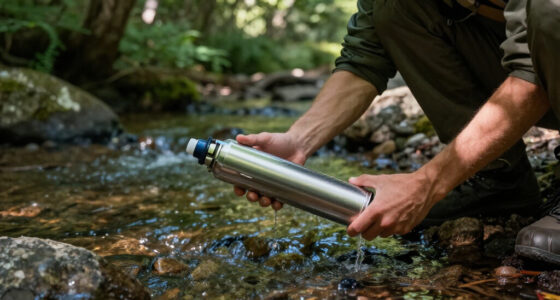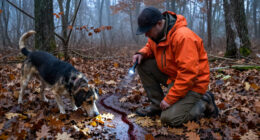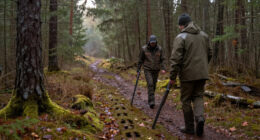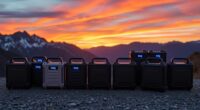
The most durable survival gear earns its keep when conditions turn hostile — gear that cracks, tears, or fails after a few uses is dead weight in a pack. My top overall pick is the Gerber Ultimate Fixed Blade Survival Knife, because a full-tang blade with an integrated ferro rod and sharpener covers more survival ground with fewer failure points than anything else on this list. Close behind are the Überleben Hexå Ferro Rod, whose hexagonal hardwood handle and thick ferrocomposite rod are built to survive thousands of strikes, and the Arcturus Insulated Thermal Survival Tarp, which pairs reinforced grommets with an insulated design that outlasts standard tarps. The big tradeoff in this category is specialized durability versus all-in-one convenience: boxed survival kits pack lots of tools into one bag, but the individual tools inside are often lighter-duty than standalone versions. Budget also matters less than you’d expect here — several of the toughest items are under twenty dollars. Read on for the full breakdown of what survived my durability-first comparison.

Get emergency and outdoor gear delivered free with Prime
- Fast, free delivery on millions of items
- Prime Video, Amazon Music and more included
- Member-only deals all year
Key Takeaways
- Standalone tools consistently beat bundled kit components on durability — the Gerber Ultimate knife and Überleben Hexå ferro rod will outlast the equivalent items inside the 262-piece survival kit by a wide margin.
- Full-tang construction was the single clearest durability marker in this roundup: the Gerber Ultimate and Pack Hatchet share the same one-piece steel philosophy, which is why both rank near the top.
- Thickness matters more than length for ferro rods — the bayite 6-inch rod throws longer-lasting sparks, but the shorter 4-inch bayite wins on packability, splitting the category between two very similar picks.
- The cheapest items (mylar blankets, emergency bivy) are intentionally disposable, so durability claims should be judged differently: puncture resistance and reusability, not decades of service.
- Electronic fire starters (the dual-arc USB lighter set) trade field repairability for convenience — they’re the least durable long-term pick despite being genuinely useful in wet conditions.
| Arcturus Insulated Thermal Survival Tarp, 60 x 82 in, Woodland Camo |  | Best Shelter Layer | Dimensions: 82 x 60 in | Weight: 12 oz | Material: Ripstop polypropylene and Mylar | VIEW ON AMAZON | See Our Full Breakdown |
| Gerber Pack Hatchet & Sheath, Mini Axe for Camping, 3.5″ Blade, Coyote Brown |  | Best Compact Chopping Tool | Blade length: 3.5 inches | Overall length: 9.46 inches | Weight: 20.8 oz | VIEW ON AMAZON | See Our Full Breakdown |
| Überleben Hexå Ferro Rod Fire Starter Survival Tool |  | Best Long-Life Fire Starter | Length: 6 inches | Thickness: 1/2 inch | Maximum strikes: Up to 20,000 | VIEW ON AMAZON | See Our Full Breakdown |
| bayite 6″ Survival Ferro Rod Flint Fire Starter and Striker Kit |  | Best Value Fire Starter | Rod length: 6 in (15.3 cm) | Rod diameter: 1/2 in (12.7 mm) | Striker material: Tool-grade HSS steel | VIEW ON AMAZON | See Our Full Breakdown |
| 262-Piece Survival Kit with First Aid Pouch, Crossbody Bag, Tent, Axe, and Shovel |  | Best All-in-One Preparedness Kit | Piece count: 262 | Axe length: 17 inches | Shovel length: 17 inches | VIEW ON AMAZON | See Our Full Breakdown |
| bayite 4-inch Survival Ferro Rod Flint Fire Starter and Striker Kit | 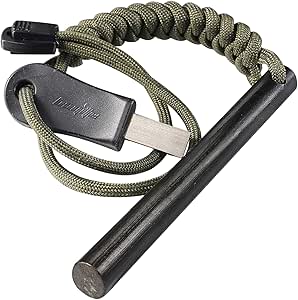 | Best Value Fire Starter | Rod Length: 4 in (10 cm) | Rod Diameter: 3/8 in (10 mm) | Striker Material: Tool grade HSS steel | VIEW ON AMAZON | See Our Full Breakdown |
| 2-Pack Waterproof Lighter Set – Dual Arc USB Rechargeable & Refillable Butane Torch Lighter |  | Best Redundant Fire Pair | Quantity: 2 lighters (1 arc, 1 butane torch) | Included: USB cable, 2 lanyards | Uses Per Charge: Up to 300 (arc lighter) | VIEW ON AMAZON | See Our Full Breakdown |
| Mylar Thermal Emergency Blankets, 4-Pack |  | Best Bulk Emergency Warmth | Material: Aluminized Mylar | Size (unfolded): 82″ x 52″ | Quantity: 4-pack | VIEW ON AMAZON | See Our Full Breakdown |
| Mylar Emergency Sleeping Bag Bivy Sack |  | Best Full-Body Emergency Shelter | Quantity: 1 sleeping bag | Material: Mylar foil | Dimensions: 84 x 36 inches | VIEW ON AMAZON | See Our Full Breakdown |
| Gerber Ultimate Fixed Blade Survival Knife with Sheath, Sharpener, and Ferro Rod |  | Best All-in-One Survival Tool | Blade Length: 4.8 inches | Overall Length: 10 inches | Weight: 11.02 oz | VIEW ON AMAZON | See Our Full Breakdown |
| most durable survival gear | Weight |
|---|---|
| Arcturus Insulated Thermal Sur | 12 oz |
| Gerber Pack Hatchet & Sheath | 20.8 oz |
| Überleben Hexå Ferro Rod Fire | — |
| bayite 6" Survival Ferro Rod F | — |
| 262-Piece Survival Kit with Fi | — |
| bayite 4-inch Survival Ferro R | — |
| 2-Pack Waterproof Lighter Set | 0.15 lb each |
| Mylar Thermal Emergency Blanke | Lightweight, compact |
| Mylar Emergency Sleeping Bag B | — |
| Gerber Ultimate Fixed Blade Su | 11.02 oz |
More Details on Our Top Picks
Arcturus Insulated Thermal Survival Tarp, 60 x 82 in, Woodland Camo
The Arcturus Insulated Thermal Survival Tarp earns its place through a reusable shelter design that combines a waterproof outer layer with reflective Mylar. That pairing can help block wind and moisture while reflecting body heat, giving it broader shelter use than the Mylar Thermal Emergency Blankets, 4-Pack, which are aimed at lightweight emergency coverage. Four reinforced grommets make it easier to rig as a windbreak or overhead cover, and the included waterproof bag helps keep it packed away between trips. At 12 ounces, it is manageable as part of a camping kit, though its 60-by-82-inch coverage is still limited for multiple people. The main upkeep tradeoff is hand washing, and repeated rough handling may be less suitable than a dedicated heavy-duty ground tarp.
Pros:- Reflective Mylar layer helps retain body heat
- Waterproof construction blocks moisture
- Four reinforced grommets support shelter and windbreak setups
- Includes a waterproof carry bag
Cons:- Hand wash only care adds maintenance
- 60-by-82-inch dimensions limit coverage for more than one person
Best for: Solo campers and emergency planners who want a reusable, riggable layer for warmth and weather protection.
Not ideal for: Groups needing broad shelter coverage or people who want a tarp that can be machine washed.
- Dimensions:82 x 60 in
- Weight:12 oz
- Material:Ripstop polypropylene and Mylar
- Water resistance:Waterproof
- Grommets:4 reinforced grommets
- Included component:Waterproof carry bag
- Care:Hand wash only
Our verdict“Choose this tarp for a compact, reusable shelter layer with more setup options than emergency blankets, provided its limited coverage fits your needs.”
Gerber Pack Hatchet & Sheath, Mini Axe for Camping, 3.5″ Blade, Coyote Brown
The Gerber Pack Hatchet is the compact cutting tool in this group, with a full tang steel build and a 3.5-inch blade for campsite jobs such as kindling and smaller branches. Its 9.46-inch overall length and packable sheath suit hikers who value carried tools over the longer reach of the 17-inch axe included in the 262-Piece Survival Kit. That compactness comes with a clear limit: it is not the better choice for sustained chopping or large wood. The black oxide coating is described as corrosion-resistant, but it does not remove the need to maintain the blade. A rubber grip with finger grooves gives the hand a defined hold, while the nylon sheath can attach to a pack or belt. This is a focused tool, not a substitute for a full-size axe.
Pros:- Full tang construction supports a sturdy compact tool
- 3.5-inch steel blade suits smaller camp tasks
- Rubber grip with finger grooves provides a secure hold
- Removable sheath mounts to a pack or belt
Cons:- Short handle limits leverage for heavier chopping
- At 20.8 oz, it is substantial for its compact size
Best for: Hikers and campers who want a packable hatchet for light wood processing and campsite tasks.
Not ideal for: People preparing for heavy chopping, large logs, or frequent wood processing who need a longer-handled axe.
- Blade length:3.5 inches
- Overall length:9.46 inches
- Weight:20.8 oz
- Blade material:Steel with black oxide coating
- Construction:Full tang
- Handle:Ergonomic rubber grip with finger grooves
- Sheath:Removable nylon; mounts to pack or belt
Our verdict“Pick the Gerber for portable light-duty chopping; choose the survival kit’s longer axe if reach and heavier wood work matter more.”
Überleben Hexå Ferro Rod Fire Starter Survival Tool
For a fire starter judged on repeated use, the Überleben Hexå stands out with a claimed capacity of up to 20,000 strikes and a thick, six-inch ferrocerium rod. Its hexagonal profile gives the hand more edges to grip than the round rod in the bayite 6″ Survival Ferro Rod Flint Fire Starter and Striker Kit, while the included six-function striker adds a tinder scraper and small utility features. Both rods are described as usable in wet conditions and at altitude; the Hexå’s stated 5,500°F spark temperature is higher than bayite’s stated 3000°C, though those figures alone do not establish how easily a user will start a fire. Its longer life claim suits frequent practice and extended trips, but rod and striker bulk add up, and reliable use still takes practice.
Pros:- Rated for up to 20,000 strikes
- Six-inch, half-inch-thick rod offers substantial ferrocerium
- Hexagonal profile gives multiple gripping edges
- Includes a six-function striker and 550 paracord lanyard
Cons:- Rod and striker add bulk compared with a basic ferro rod
- Effective use requires practice
Best for: Frequent campers and survival trainees who want a thick ferro rod with a high stated strike count and a multifunction striker.
Not ideal for: Ultralight hikers or beginners seeking a simple fire-starting tool with little technique to learn.
- Length:6 inches
- Thickness:1/2 inch
- Maximum strikes:Up to 20,000
- Spark temperature:5,500°F
- Profile:Hexagon
- Lanyard:Mil-spec 550 paracord
- Striker functions:Fire starter, tinder scraper, map scale, ruler, hex wrench, bottle opener
- Waterproof:Yes
Our verdict“Choose the Hexå for frequent use and its high stated strike capacity, if you can accommodate the extra bulk and practice needed.”
bayite 6″ Survival Ferro Rod Flint Fire Starter and Striker Kit
The bayite 6-inch Ferro Rod Kit pairs a half-inch-thick rod with a tool-grade HSS steel striker and nine feet of paracord, making it a straightforward, substantial fire-starting setup. Its stated lifespan of approximately 12,000 strikes is lower than the Überleben Hexå’s claim of up to 20,000, but the bayite still offers a long-use format for campers who want a dedicated striker and cord without the Hexå’s multifunction scraper tool. The product description says it works in any weather and at any altitude, useful when a lighter is less dependable in wet conditions. One limitation matters for people who improvise: the included striker is the intended striking surface; the maker cautions against using low-quality knife blades. The listed spark temperature is 3000°C, but the kit gives no stated weight.
Pros:- Six-inch, half-inch-diameter rod provides substantial material
- Includes a tool-grade HSS steel striker
- Nine feet of paracord is included
- Rated for approximately 12,000 strikes
Cons:- Stated lifespan is lower than the Überleben Hexå’s 20,000-strike rating
- The product cautions against using low-quality knives as strikers
Best for: Campers and preparedness kit builders who want a large ferro rod, dedicated steel striker, and included cord.
Not ideal for: People who want one compact tool to handle several tasks or expect to strike the rod with any knife blade.
- Rod length:6 in (15.3 cm)
- Rod diameter:1/2 in (12.7 mm)
- Striker material:Tool-grade HSS steel
- Cord:9 ft paracord
- Spark temperature:Up to 3000°C
- Lifespan:Approximately 12,000 strikes
Our verdict“Choose bayite for a substantial dedicated rod-and-striker kit; choose the Hexå if its higher stated strike count and multifunction striker better fit your needs.”
262-Piece Survival Kit with First Aid Pouch, Crossbody Bag, Tent, Axe, and Shovel
This 262-piece survival kit makes the list for the breadth of gear packed into one crossbody bag: first aid supplies, shelter, lighting, fire-starting items, and tools. Its included 17-inch carbon steel axe and shovel offer more reach than the Gerber Pack Hatchet, so they suit basic camp chores better than a mini tool, though the product data does not establish their long-term durability under hard use. The large piece count is not proof that every component is robust, and details such as overall kit weight are missing. That makes this a useful starting point for buyers who want varied emergency equipment together, but a poor fit for those building a carefully selected kit around known, durable tools. I would judge the individual components before relying on them for demanding trips.
Pros:- Combines first aid, shelter, lighting, and fire-starting supplies
- Includes a 17-inch carbon steel axe and shovel
- Crossbody bag has multiple compartments and MOLLE-compatible straps
- Includes tools for fishing, water storage, navigation, and signaling
Cons:- Piece count does not establish the durability of individual items
- Kit weight is not specified
- Limited component-level specifications make it difficult to assess tool quality
Best for: New preparedness buyers who want a broad assortment of emergency and camping supplies organized in one bag.
Not ideal for: Experienced backcountry users who need verified durability, known component specifications, or a lightweight kit.
- Piece count:262
- Axe length:17 inches
- Shovel length:17 inches
- Axe material:Carbon steel
- Shovel material:Carbon steel
- Bag type:Crossbody bag
- Bag features:Multiple compartments, MOLLE-compatible straps, D-rings, detachable strap
- Included gear:First aid supplies, emergency tent, blanket, flashlight, camping lamp, glow sticks, fire starter, fishing kit, collapsible water container, compass, rope
Our verdict“Choose this kit for broad, organized emergency coverage, but inspect the individual tools if durability under demanding use is your priority.”
bayite 4-inch Survival Ferro Rod Flint Fire Starter and Striker Kit
Fire is where survival durability matters most, and this 4-inch ferro rod delivers it with zero dependence on batteries or fuel. The sparks come in at 5,500°F — hot enough to ignite damp tinder when a butane lighter like the 2-Pack Waterproof Lighter Set has already run dry. Compared with the shorter rods bundled inside the Gerber Ultimate knife sheath, this standalone rod offers a longer grip and more striking surface, which means more sparks per scrape and a longer service life.
The tradeoff is technique: unlike a plasma lighter, there is no push-button convenience, and the included HSS steel striker is required — soft pocket knives simply won’t throw sparks off this rod. For buyers who want fire insurance that lasts decades rather than a charge cycle, this is the smarter spend.
Pros:- Works soaking wet, at altitude, and in any weather — no fuel or batteries to expire
- Tool-grade HSS striker with 6 striking edges throws generous sparks
- 5ft paracord lanyard keeps rod and striker attached and grippy
- Compact enough for EDC pockets, packs, and redundant kit placement
Cons:- Requires a dedicated hard striker — most pocket knife spines are too soft
- Learning curve for reliable spark transfer compared with a lighter
Best for: Budget-conscious preppers and bushcrafters who want a no-expiration fire source they can stash in multiple kits
Not ideal for: Casual day hikers who want instant flame without practicing ferro rod technique
- Rod Length:4 in (10 cm)
- Rod Diameter:3/8 in (10 mm)
- Striker Material:Tool grade HSS steel
- Striking Edges:6
- Paracord:5 ft included
- Spark Temperature:5,500°F (3,000°C)
- Waterproof:Yes
Our verdict“The most dependable fire tool in this roundup for anyone willing to trade push-button ease for a spark source that never expires.”
2-Pack Waterproof Lighter Set – Dual Arc USB Rechargeable & Refillable Butane Torch Lighter
Rather than betting on one ignition method, this set hedges: a dual-arc plasma lighter for up to 300 lights per charge, plus a refillable butane torch pushing a 2,800°F jet flame for stubborn material. The IP56-rated metal-ring seals and locking clasps are what earn it a durability slot — rain and wind that kill ordinary lighters don’t reach the ignition points here.
The honest comparison: the bayite ferro rod outlasts both of these indefinitely because it needs no charging or fuel, while this set wins on speed and ease. The arc lighter struggles with thicker tinder, which is exactly why the torch is in the box. Note the torch ships empty for safety reasons, so it needs a butane fill before the first trip — a step that trips up unprepared buyers.
Pros:- IP56 waterproof, windproof design with sealed covers and locking clasps
- Two ignition types cover both flameless lighting and heavy-burning tasks
- 300 uses per 1.5-hour charge on the arc lighter
- Featherlight at 0.15 lb each with lanyards for attachment
Cons:- Butane torch arrives empty and must be filled before first use
- Dual-arc struggles with thick branches compared with the torch
Best for: Campers and kit-builders who want two fast, weatherproof ignition methods in one purchase
Not ideal for: Long-term off-grid preppers who can’t guarantee USB charging or butane resupply
- Quantity:2 lighters (1 arc, 1 butane torch)
- Included:USB cable, 2 lanyards
- Uses Per Charge:Up to 300 (arc lighter)
- Charge Time:1.5 hours
- Flame Temperature:2,800°F torch flame
- Weight:0.15 lb each
Our verdict“The convenience pick for everyday outdoor use — just pair it with a ferro rod if your survival timeline is longer than a battery charge.”
Mylar Thermal Emergency Blankets, 4-Pack
When the criterion is durability-per-ounce, few items beat Mylar: these blankets reflect up to 90% of body heat, weigh almost nothing, and unfold to a full 82 x 52 inches — enough to wrap an adult or rig as an emergency shelter wall. The 4-pack format is the real draw; stash one per family member or scatter them across vehicles and bags, something a single Mylar Bivy Sack can’t cover.
The tradeoff is comfort and noise. Mylar crinkles loudly and feels nothing like a camping blanket — buyers wanting sleep-friendly warmth should look at the Arcturus Insulated Tarp instead, which trades packability for real insulation. These blankets also serve as ground cover, signaling surfaces, or rain gear improvisation, making them more versatile than their price suggests. Treat them as insurance, not gear you’ll enjoy using.
Pros:- Retains up to 90% of body heat for hypothermia prevention
- Packs down tiny for bug out bags, gloveboxes, and first aid kits
- Doubles as ground cover, shelter, or signaling material
- Tear-resistant enough for multiple uses across a 4-pack
Cons:- Noisy, crinkly material is unpleasant to sleep under
- Not a comfort substitute for a real camping blanket
Best for: Families and vehicle-kit builders who need multiple cheap, heat-retaining backups distributed everywhere
Not ideal for: Comfort-focused campers who want a quiet, reusable blanket for regular nights outdoors
- Material:Aluminized Mylar
- Size (unfolded):82″ x 52″
- Quantity:4-pack
- Heat Retention:Up to 90% of body heat
- Weight:Lightweight, compact
- Reusability:Reusable, tear-resistant
Our verdict“The cheapest life insurance in this roundup — buy the 4-pack and forget them until the night you can’t.”
Mylar Emergency Sleeping Bag Bivy Sack
A flat blanket reflects heat; a tube traps it. That’s the core advantage of this 84 x 36-inch Mylar bivy — it encloses the whole body, cutting convective heat loss in a way the 4-pack of Mylar blankets can’t match when temperatures drop. It’s fully waterproof, so it also functions as an improvised shelter layer against ground moisture and rain.
The honest caveat: the product information is thin on durability and reuse claims, so it’s best treated as a one-or-two-emergency item rather than reusable gear. And like all Mylar, it offers no breathability — expect condensation and crinkle noise overnight. Compared with the Arcturus Insulated Tarp, it wins on packability and body coverage but loses badly on comfort. This pick makes the most sense as the sleeping-specific layer of a minimalist survival kit, not as anyone’s regular sleeping bag.
Pros:- Full-body tube design traps heat more effectively than a flat blanket
- Waterproof against ground moisture and rain
- 84 x 36 inches fits most adults fully enclosed
- Lightweight and compact enough for any kit
Cons:- Durability and reuse details are unspecified by the manufacturer
- No breathability — condensation and crinkle noise are likely
Best for: Solo hikers and minimalists who want enclosed, full-body emergency warmth in a pocket-size package
Not ideal for: Anyone expecting a reusable, breathable sleeping solution for regular camping trips
- Quantity:1 sleeping bag
- Material:Mylar foil
- Dimensions:84 x 36 inches
- Waterproof:Yes
- Intended Use:Emergency warmth, camping, hiking
- Packability:Lightweight, compact
Our verdict“A step up from a blanket for solo emergencies, as long as you accept it as disposable insurance rather than gear.”
Gerber Ultimate Fixed Blade Survival Knife with Sheath, Sharpener, and Ferro Rod
Where the other entries here each solve one problem, the Gerber Ultimate consolidates four: a 4.8-inch half-serrated stainless blade, a sheath-mounted sharpener and ferro rod, and an emergency whistle in the lanyard hole. That consolidation is its durability argument — fewer separate items to lose, and a fixed full-tang-style build that survives batoning and pounding thanks to the hammer pommel.
The comparison is instructive: its sheath ferro rod is shorter and less generous than the standalone bayite 4-inch rod, so serious fire-starters will still want a dedicated striker. The textured rubber grip stays secure in rain where smooth scales slip, but the half-serrated edge is genuinely harder to sharpen in the field than a plain edge. This pick makes the most sense for buyers who want one bombproof platform on the belt rather than a pile of loose accessories.
Pros:- Four tools integrated into one system — blade, sharpener, ferro rod, whistle
- Stainless half-serrated blade handles both slicing and fibrous cutting
- Non-slip rubber grip holds securely in wet conditions
- Hammer pommel adds pounding capability most knives lack
Cons:- Requires carrying the sheath everywhere the knife goes
- Half-serrated edge is noticeably harder to sharpen than plain edge
Best for: Bushcrafters and campers who want a single belt-carried platform covering cutting, fire, sharpening, and signaling
Not ideal for: EDC minimalists who find a 10-inch fixed blade and sheath too much daily bulk
- Blade Length:4.8 inches
- Overall Length:10 inches
- Weight:11.02 oz
- Blade Type:Half-serrated drop point
- Blade Material:Stainless steel
- Handle:Textured rubber non-slip grip
- Includes:Sheath, sharpener, ferro rod, emergency whistle, hammer pommel
Our verdict“The best single purchase for someone building a survival loadout from scratch — just add a dedicated ferro rod for serious fire redundancy.”

How We Picked
I ranked every item on this list against one question: how many hard-use cycles can it survive before it fails? That meant favoring full-tang and one-piece steel construction over glued, folded, or multi-part designs; reinforced stress points like double-stitched grommets on tarps and paracord-wrapped handles on tools; and materials with proven longevity — ferrocomposite rods, 440C and similar blade steels, and multi-layer mylar. I also weighed redundancy and repairability: gear you can maintain in the field (a ferro rod that works when soaked, a knife you can resharpen) outranks gear that depends on a battery or a sealed component.
The ranking order follows mission-critical priority. Fire and blade tools sit at the top because a broken knife or fire starter is the fastest path to a bad night outdoors, while shelter items rank on weather resistance and the kit option lands mid-pack — convenient, but its value comes from breadth rather than toughness. Items at the bottom of the list aren’t weak products; they’re built to a different standard (single-use or battery-dependent) that trades durability for weight or cost savings.
Factors to Consider When Choosing Most Durable Survival Gear
Durable survival gear is one category where the wrong purchase can genuinely matter — a tool that fails on night two of an emergency is worse than no tool at all, because it cost you money, weight, and confidence. Before choosing from the list above, think through these factors, because they explain why seemingly similar products end up ranked very differently.Construction Method Beats Brand Name
The strongest predictor of durability isn’t the logo on the product — it’s how the tool is physically assembled. A full-tang knife, where the steel runs the entire length of the handle, can be hammered, twisted, and prying without separating at the grip, while a partial-tang blade can snap at the handle junction under batoning stress. The same logic applies to hatchets: a one-piece forged head attached with solid wedging outperforms glued or pinned heads. Check the stress points before anything else — grommets on tarps, striker attachments on ferro rods, and hinge points on multitools are where cheap gear dies first. If a product’s construction is vague in the description, that vagueness itself is a warning sign. Buyers who learn to read construction details rather than marketing copy consistently end up with gear that lasts a decade instead of a season.
Redundancy: Never Trust a Single Fire Source
Fire is the survival task where single points of failure kill, which is why this list contains four different fire-starting methods. Ferro rods are the durability champion — they work soaked, frozen, and after years of neglect — but they demand practice and dry tinder. Arc lighters are the opposite: effortless in wind and rain, but useless once the battery dies with no way to recharge in the field. The mistake most buyers make is treating these as competing options rather than complementary layers. A ferro rod on your person, a lighter in your pack, and storm-proof tinder in your kit gives you three independent paths to fire. Spend accordingly: put the bulk of your fire budget into the ferro rod, since it’s the only option guaranteed to function after five years in a glovebox.
Kits Versus Standalone Tools: The Quantity Trap
Big-count survival kits look like incredible value until you inspect the components — a 262-piece kit usually means 262 light-duty pieces rather than a handful of rugged ones. Kit knives, axes, and shovels are almost universally thinner, softer steel than their standalone equivalents, and the carrying bags themselves are often the most durable part of the package. That said, kits aren’t a bad purchase: they make sense as a car trunk or home emergency reserve, where breadth of coverage beats individual tool quality. The mistake is treating a kit as your primary field gear. A smarter approach is buying two or three rock-solid standalone tools (knife, ferro rod, shelter) and adding a budget kit behind them as a backup layer. Match the purchase strategy to where the gear will actually live.
Material Ratings and What They Actually Mean
Durability claims are only useful if you can decode them. On blade steel, look for hardness ratings around 58-60 HRC, which balances edge retention against the brittleness that comes with harder steel. On tarps and shelters, denier count and laminate construction matter more than thickness marketing — a 16 oz insulated tarp with reinforced stitching outperforms a thin “rip-stop” sheet under repeated wind load. Ferro rod quality is judged by rod diameter and ferrocomposite blend, since a 5/16-inch rod delivers far more strikes than a pencil-thin one. Mylar products should be judged on a different scale entirely: even the best emergency blanket is a limited-use item, so pay for puncture-resistant layering and sealed seams rather than expecting multi-season lifespan. Knowing which rating applies to which product category prevents paying premium prices for disposable gear.
Weight, Packability, and the Durability Tradeoff
Durability almost always costs weight, and the right tradeoff depends on how you carry your gear. A baseplate of overbuilt tools makes sense for vehicle or base-camp storage, where ounces don’t matter, but a backpacker carrying everything on their shoulders may prefer the 4-inch bayite rod over the 6-inch version precisely because shorter means lighter. Similarly, the Gerber Ultimate knife is a tank, but ultralight hikers may find a smaller fixed blade plus a separate ferro rod distributes the same capability at lower weight. The common mistake is buying maximum durability for every item, ending up with a pack too heavy to actually carry in an emergency. Decide your carry mode first — pocket, pack, or vehicle — and calibrate durability to match. Gear left behind because it’s too heavy is the least durable gear of all.
Maintenance Requirements and Field Repairability
The most durable gear is often the gear you can maintain and repair without a workbench. Carbon steel blades and hatchet heads rust without oil but can be restored with sandpaper and any lubricant; stainless options shrug off neglect but are harder to put a razor edge on in the field. Battery-powered tools are the least repairable category — when the charging port or cell fails, the tool is finished regardless of how well the housing held up. Before buying, ask what the failure mode looks like: a degraded handle can be re-wrapped with paracord, a dull blade can be stropped, but a cracked injection-molded part is dead. This is why the top-ranked items on this list skew mechanical. Choose gear whose worst-case failure is something you can fix with what’s already in your pockets.
Frequently Asked Questions
Should I buy a big survival kit or build my own setup from standalone tools?
It depends on where the gear will live. If it’s going in a vehicle trunk or home emergency bin, a comprehensive kit like the 262-piece option gives you breadth for unexpected scenarios at low cost per item. If you’ll actually carry the gear hiking or camping, standalone tools win decisively — the Gerber Ultimate knife alone is tougher than the knife, saw, and multi-tool in most budget kits combined. The hybrid approach works best for most people: two or three bombproof core items (knife, ferro rod, shelter) plus a budget kit stored separately as a reserve layer. The worst outcome is relying on a kit’s light-duty components as your only field gear and discovering their limits at the wrong moment.
Do I really need both a ferro rod and a lighter?
Yes, if fire matters to your plan — they fail in opposite conditions. A USB arc lighter handles wind and damp tinder effortlessly but is dead weight once the battery drains, and there’s no field fix for a failed cell. A ferro rod like the Überleben Hexå or bayite models works soaked, frozen, and after years of storage, but demands dry tinder and practiced technique. Carried together, one covers the other’s weakness for under forty dollars total. The mistake isn’t skipping one of these — it’s skipping both and trusting a single method. If you only buy one, make it the ferro rod, because it’s the only option with no expiration date or dependency.
How much should I spend on a survival knife if durability is my priority?
Durability in a knife comes from full-tang construction and competent heat treatment, not an unlimited budget — the Gerber Ultimate sits in a mid-range sweet spot that covers 90% of what a premium blade offers for hard-use tasks. Spending more buys finer edge retention and better steel alloys, which matters for daily carriers but rarely changes survival performance. Spending less than mid-range is where risk appears: budget knives often use partial tangs, soft steel, or brittle heat treats that fail under batoning and prying. Rather than chasing the top of the market, make sure whatever you buy is full-tang, comes with a secure sheath, and includes or accommodates a sharpener. A maintained mid-range blade outlasts a neglected expensive one every time.
Are mylar emergency blankets and bivy sacks reusable, or are they one-time items?
Treat standard mylar blankets as single-to-few-use items — once folded and creased, the reflective coating degrades and small tears spread quickly, which is why they’re sold in multi-packs rather than individually. The bivy sack format is meaningfully more durable because the tubular shape eliminates seam failures and the heavier material handles repeated packing better. Even so, neither is a replacement for a real shelter like the Arcturus tarp; mylar buys you a night of retained body heat, not weeks of protection. The smart play is keeping fresh blankets distributed across packs, vehicles, and first-aid kits, and reserving the bivy as your carried backup. Re-inspect any mylar item that’s been stored creased for years before counting on it.
Is a small hatchet worth carrying when I already have a survival knife?
A hatchet and a knife solve overlapping but distinct problems, and the Gerber Pack Hatchet is deliberately sized to complement rather than replace a blade. A knife can baton small wood, but a proper axe head splits, hammers tent stakes, and processes fuel far faster with less risk to your blade — batoning is exactly the abuse that shortens a knife’s life. The tradeoff is roughly a pound of pack weight and extra bulk on your belt or pack. If you’re vehicle-based or base-camping, the hatchet earns its spot easily; ultralight hikers can reasonably skip it and accept slower fire preparation. If your trips run long enough that wood processing is a daily chore, carrying both is the more durable strategy, because you stop using your knife as a substitute axe.
Conclusion
The right pick here comes down to how you plan to use the gear. For best overall, the Gerber Ultimate Fixed Blade Survival Knife is the anchor piece — its full-tang build, sheath, sharpener, and ferro rod deliver the most capability per ounce with the fewest failure points. For best value, the bayite ferro rod kits and the mylar multi-packs prove that critical survival capability doesn’t require a big budget — both do their jobs reliably for the cost of a coffee. For a premium hard-use setup, pair the Gerber Ultimate with the Gerber Pack Hatchet and the Arcturus tarp for a trio that shrugs off years of abuse.
Beginners should start with the 262-piece survival kit to learn what they actually use, then upgrade piece by piece with standalone tools as components wear out. For specific needs: ultralight hikers get the 4-inch bayite rod and bivy sack, wet-climate travelers should add the dual-arc lighter set, and anyone building a vehicle emergency reserve should prioritize the tarp, hatchet, and mylar multi-pack. Whatever your entry point, the pattern from this roundup holds: buy mechanical over battery-powered, full-tang over everything, and always carry a second way to make fire.
Halloween Picks
halloween
As an affiliate, we earn on qualifying purchases.