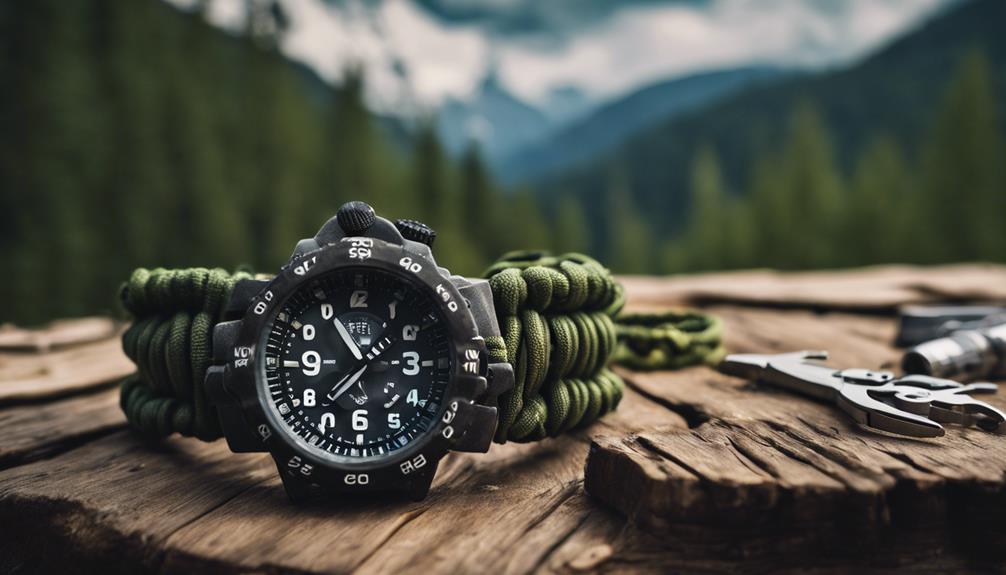

For preppers, a watch is more than a timekeeper — it needs to survive rough handling, run on replaceable or rechargeable power, and keep working when the grid does not. After comparing 15 models, the Garmin Instinct 3 Tactical Solar stands out as the best overall pick thanks to solar-assisted battery life, GPS navigation, and a tactical feature set nothing else here matches. The Casio G-Shock DW9052 is the best value for sheer indestructibility on a budget, while the Casio AE-1500WH offers the longest battery life per dollar in the lineup. The main tradeoff in this category is smart features versus long-term reliability: GPS smartwatches do far more but depend on charging, while basic digitals like the Casio W800HG can run for a decade on one battery. Read on for the full breakdown and which watch fits your preparedness plan.

Get emergency and outdoor gear delivered free with Prime
- Fast, free delivery on millions of items
- Prime Video, Amazon Music and more included
- Member-only deals all year
Key Takeaways
- Battery independence was the biggest divider in this roundup: only the Garmin Instinct 3 Tactical Solar offers solar charging, while budget Casios like the AE-1500WH and W800HG run roughly 10 years on a single coin cell — smartwatches in the $50–$100 range need charging every few days.
- G-Shock models (DW9052 and GD100) dominated the durability tier with 200m water resistance and shock-resistant construction, but neither offers sensors like a compass or altimeter — you pay more for sensors elsewhere or go without.
- The budget smartwatches (Soudorv, Tiwain, MIDDOW, Jugeman) pack impressive feature lists like GPS, flashlights, and AMOLED displays, but their batteries and long-term firmware support are weak points compared with Garmin’s proven platform.
- Compass-equipped analog options like the North Edge Apache fill a genuine navigation niche under $50, but their mineral crystals and lighter build put them a tier below G-Shock toughness.
- Classic affordable digitals (Timex Ironman, Casio W800HG, AE-1500WH) proved the best ‘buy several and stash them’ strategy — cheap enough to duplicate across bug-out bags and vehicles without duplicating risk.
| Timex Men’s Ironman Triathlon Classic 30 38mm Digital Watch |  | Best for Everyday Readiness | Case size: 38 mm | Case material: Resin | Lens: Acrylic | VIEW ON AMAZON | See Our Full Breakdown |
| Casio MDV106 Series Analog Watch |  | Best Analog Pick | Case material: Stainless steel | Band material: Resin | Display: Analog, black dial | VIEW ON AMAZON | See Our Full Breakdown |
| Casio G-Shock DW9052 Men’s Digital Watch |  | Best for Rugged Utility | Material: Resin | Water resistance: 200 m | Stopwatch: 1/100-second | VIEW ON AMAZON | See Our Full Breakdown |
| Casio G-Shock GD100-1B Men’s Tough Digital Watch |  | Best for Long Battery Life | Model: Casio G-Shock GD100-1B | Case material: Resin | Water resistance: 200 m | VIEW ON AMAZON | See Our Full Breakdown |
| SNE Digital Sports Watch for Men, Black |  | Best Basic Backup | Band material: Silicone | Item width: 45 mm | Water resistance: 50 m / 164 ft | VIEW ON AMAZON | See Our Full Breakdown |
| Garmin Instinct 3 Tactical Solar GPS Smartwatch, 45 mm, Black |  | Best for Advanced Tactical Navigation | Case size: 45 mm | Dimensions: 45 × 45 × 14.9 mm | Case material: Fiber-reinforced polymer with metal-reinforced bezel | VIEW ON AMAZON | See Our Full Breakdown |
| North Edge Apache Tactical Sports Watch for Men – Outdoor Military Watch with Compass, Green |  | Best for Built-In Outdoor Instruments | Case diameter: 50 mm | Thickness: 16 mm | Weight: 117 g | VIEW ON AMAZON | See Our Full Breakdown |
| GOLDEN HOUR Men’s Nylon Slip-Thru Strap Watch with Military Time Dial and Glowing Hands |  | Best Simple Analog Pick | Case width: 40 mm | Movement: Japanese quartz analog | Case finish: Matte black | VIEW ON AMAZON | See Our Full Breakdown |
| Casio W800HG Men’s Digital Watch |  | Best for Long Battery Life and Water Use | Case material: Resin | Water resistance: 100 m | Battery: CR2025; specified life of 10 years | VIEW ON AMAZON | See Our Full Breakdown |
| Timex Men’s Expedition Scout 40mm Watch |  | Best for Low-Light Analog Readability | Case size: 40 mm | Case material: Brass | Strap: Double-layer fabric slip-through, replaceable | VIEW ON AMAZON | See Our Full Breakdown |
| Soudorv S50 Rugged Smartwatch for Men with Bluetooth Calling |  | Best for Extended Smartwatch Battery Life | Display: 1.53-inch HD touchscreen | Battery: 1000mAh; up to 18 days daily use or 50 days standby | Charging time: 2 hours | VIEW ON AMAZON | See Our Full Breakdown |
| Tiwain Military Smartwatch with GPS and 1.43-Inch AMOLED Display |  | Best for Multi-Satellite GPS on a Budget of Battery | Display: 1.43-inch AMOLED, 360 × 360 resolution | GPS: Built-in; GPS, GLONASS, BeiDou, Galileo, NAVIC, and QZSS | Outdoor sensors: Compass, altimeter, and barometer | VIEW ON AMAZON | See Our Full Breakdown |
| MIDDOW Military-Style Smart Watch with Flashlight and Compass |  | Best for Basic Compass and Flashlight Functions | Display: 1.32-inch high-definition screen | GPS: Via connected smartphone | Compass: Built in | VIEW ON AMAZON | See Our Full Breakdown |
| Jugeman Military Smartwatch for Men with Built-In GPS and LED Flashlight |  | Best for Water Resistance with Built-In GPS | Display: 1.43-inch AMOLED touchscreen with Always-On Display | GPS: Built-in; GPS, GLONASS, BeiDou, Galileo, NAVIC, and QZSS | Water resistance: 5ATM; rated to 50 meters | VIEW ON AMAZON | See Our Full Breakdown |
| Casio AE-1500WH Digital Watch with Khaki Resin Band |  | Best Low-Maintenance Non-Smartwatch | Display: Extra-large digital display | Case and band: Resin with khaki band | Water resistance: 100 meters | VIEW ON AMAZON | See Our Full Breakdown |
| watches for prepper | Water resistance | Battery |
|---|---|---|
| Timex Men’s Ironman Triathlon | 100 m / 330 ft | — |
| Casio MDV106 Series Analog Wat | 200 m / 660 ft | — |
| Casio G-Shock DW9052 Men’s Dig | 200 m | CR2016, up to 2 years |
| Casio G-Shock GD100-1B Men’s T | 200 m | CR2025, approximately 7-year life |
| SNE Digital Sports Watch for M | 50 m / 164 ft | — |
| Garmin Instinct 3 Tactical Sol | — | — |
| North Edge Apache Tactical Spo | 50M; suitable for swimming, not diving or hot water | CR2032, up to 18 months |
| GOLDEN HOUR Men’s Nylon Slip-T | 3ATM (30 m), suitable for daily splashes | — |
| Casio W800HG Men’s Digital Wat | 100 m | CR2025; specified life of 10 years |
| Timex Men’s Expedition Scout 4 | — | — |
| Soudorv S50 Rugged Smartwatch | IP68; guidance describes rain and hand washing | 1000mAh; up to 18 days daily use or 50 days standby |
| Tiwain Military Smartwatch wit | IP68; rated to 1.5 meters | 530mAh; 7–10 days typical use, up to 30 days standby |
| MIDDOW Military-Style Smart Wa | IP68; listed depth of 1 meter | 350mAh; 5–7 days typical use, up to 30 days standby |
| Jugeman Military Smartwatch fo | 5ATM; rated to 50 meters | 520mAh; 7–10 days typical use, up to 20 days standby |
| Casio AE-1500WH Digital Watch | 100 meters | CR2032 lithium; approximately 10-year life |
More Details on Our Top Picks
Timex Men’s Ironman Triathlon Classic 30 38mm Digital Watch
The Ironman Classic 30 suits a prepper who wants practical timekeeping and reminders without a complicated interface. Its five-button layout gives direct access to three alarms, dual time zones, and a full calendar, while INDIGLO helps read the display at night. Compared with the Casio G-Shock DW9052, it offers a lighter, simpler daily-wear option, but lacks that model’s stated shock-resistant construction and 200-meter water resistance. The Timex is rated to 100 meters, enough for swimming and snorkeling, and its adjustable resin strap keeps the package straightforward. The tradeoff is an acrylic lens and fewer ruggedness claims, so I’d choose it for routine preparedness rather than hard knocks or dive-focused use.
Pros:- INDIGLO backlight aids reading in low light
- Three customizable alarms support reminders and routines
- Dual time zones and 12- or 24-hour display
- 100-meter water resistance and adjustable resin strap
Cons:- Acrylic lens offers less scratch resistance than harder lens materials
- Lacks the stated shock-resistant construction of the G-Shock DW9052
- Water resistance is lower than the 200-meter Casio alternatives
Best for: People who want an uncomplicated daily watch with multiple reminders, night visibility, and swimming-level water resistance
Not ideal for: Buyers expecting a specifically shock-resistant build or the 200-meter water resistance offered by the G-Shock models
- Case size:38 mm
- Case material:Resin
- Lens:Acrylic
- Water resistance:100 m / 330 ft
- Alarms:Three customizable alarms
- Time zones:Dual
- Display:Gray digital dial with INDIGLO backlight
Our verdict“Choose the Ironman Classic 30 for simple daily preparedness tasks and alarms; pick a G-Shock if ruggedness is the priority.”
Casio MDV106 Series Analog Watch
For readers who prefer a glanceable dial over menus, the Casio MDV106 keeps its job focused: luminous hands and markers, a date window, and a 200-meter water-resistance rating. Its analog display may be easier to check quickly than the digital screens on the Timex Ironman Classic 30 or G-Shock DW9052, especially when you only need the time. The anti-reverse bezel adds a simple timing reference, though it does not replace the countdown timer and alarms found on those digital watches. A stainless steel case gives it a more substantial case material than the resin-bodied options, while the resin band keeps the fit practical. The tradeoff is fewer timekeeping tools and a band that may not suit buyers seeking a metal bracelet.
Pros:- 200-meter water resistance
- Luminous markers and hands aid low-light reading
- Date window and sweep second hand
- Stainless steel case
Cons:- Does not provide the digital alarms and timers available on the Ironman and DW9052
- Resin band may feel less substantial than a metal bracelet
- Analog face does not show a second time zone
Best for: Analog-watch wearers who want luminous time reading, a date display, and substantial water resistance
Not ideal for: Buyers who rely on alarms, countdown timers, dual time zones, or a digital calendar
- Case material:Stainless steel
- Band material:Resin
- Display:Analog, black dial
- Date display:At 3 o’clock
- Water resistance:200 m / 660 ft
- Bezel:Anti-reverse
Our verdict“Choose the MDV106 if you value a luminous analog dial and water resistance more than digital alerts and timers.”
Casio G-Shock DW9052 Men’s Digital Watch
The G-Shock DW9052 is the lineup’s practical choice for rough handling: it pairs stated shock resistance with 200-meter water resistance and an electro-luminescent backlight with afterglow. Its stopwatch, 24-hour countdown timer, multi-alarm, and dual time give it more field-oriented tools than the analog Casio MDV106. Compared with the GD100-1B, the DW9052 brings a defined stopwatch specification and flash alert, while the GD100-1B claims a much longer battery life. That distinction matters if reducing battery changes is your priority. The DW9052’s listed CR2016 life is up to two years, and resin construction will not appeal to everyone. I’d favor it for durable, tool-rich timekeeping over a metal look or long service interval.
Pros:- Shock-resistant construction
- 200-meter water resistance
- Electro-luminescent backlight with afterglow
- Stopwatch, countdown timer, multi-alarm, and dual time
Cons:- Battery life is listed as up to two years
- Resin construction may not suit buyers wanting a metal watch
- GD100-1B offers a longer stated battery life
Best for: Outdoor users who want shock resistance, timers, multiple alarms, and 200-meter water resistance in a digital watch
Not ideal for: Buyers prioritizing long battery intervals or a metal case and band
- Material:Resin
- Water resistance:200 m
- Stopwatch:1/100-second
- Countdown timer:Up to 24 hours
- Alarm:Multi-alarm with hourly chime and flash alert
- Lighting:Electro-luminescent backlight with afterglow
- Battery:CR2016, up to 2 years
Our verdict“Pick the DW9052 for rugged digital tools and alarms, while the GD100-1B is the better fit if battery longevity comes first.”
Casio G-Shock GD100-1B Men’s Tough Digital Watch
If minimizing battery replacement is high on your preparedness list, the GD100-1B stands apart with its stated approximately seven-year CR2025 battery life. It also has shock-resistant construction, 200-meter water resistance, dual time, and a Super Illuminator LED backlight. Against the G-Shock DW9052, its clearest advantage is the longer stated battery interval; the DW9052, by contrast, specifies a 1/100-second stopwatch, a 24-hour countdown timer, and a flash-alert alarm. The GD100-1B’s product data does not list those same timer details, so buyers who depend on them should compare carefully. Its bulky profile may overwhelm smaller wrists, and the resin case prioritizes utility over a metal feel. This is the stronger fit for low-maintenance wear than for compactness.
Pros:- Approximately seven-year CR2025 battery life
- Shock-resistant construction
- 200-meter water resistance
- Super Illuminator LED backlight and dual time
Cons:- Bulky design may be uncomfortable or oversized on smaller wrists
- Resin case may not satisfy buyers seeking a metal watch
- Product data does not specify the stopwatch and countdown functions listed for the DW9052
Best for: Preppers who want a rugged digital watch with a long stated battery interval and dual time
Not ideal for: People with smaller wrists or buyers who need the DW9052’s specified stopwatch and countdown timer
- Model:Casio G-Shock GD100-1B
- Case material:Resin
- Water resistance:200 m
- Backlight:Super Illuminator LED with light guide plate
- Battery:CR2025, approximately 7-year life
- Features:Shock resistant, dual time, digital display
Our verdict“Choose the GD100-1B if long battery life and rugged basics matter more than a compact fit or a specified suite of timers.”
SNE Digital Sports Watch for Men, Black
The SNE Digital Sports Watch covers everyday timing basics in a lightweight package: stopwatch, countdown timer, alarm, snooze, date and week display, and an EL backlight. That makes it more function-rich for reminders than the analog Casio MDV106, but it is a much less water-capable choice than that watch or either G-Shock. Its 50-meter rating is intended for daily exposure such as handwashing and showering; the product description says not to wear it swimming or in hot baths, and warns against pressing buttons underwater. A silicone band keeps it light on the wrist, though the stated water limits narrow its usefulness for water-heavy outings. I’d treat it as a simple backup or everyday watch, not the main choice for demanding field conditions.
Pros:- Stopwatch and countdown timer
- Alarm, snooze, and hourly chime
- EL backlight for night reading
- Lightweight silicone band
Cons:- Not intended for swimming or hot baths
- Buttons should not be pressed underwater
- 50-meter rating is below the 100- and 200-meter options in this lineup
Best for: Buyers seeking a lightweight backup with basic alarms and timing functions for daily wear
Not ideal for: Anyone needing a watch for swimming, water-heavy outdoor activity, or more rugged conditions
- Band material:Silicone
- Item width:45 mm
- Water resistance:50 m / 164 ft
- Stopwatch:1/100-second
- Functions:Countdown, alarm, snooze, hourly chime, date and week display
- Time format:12- or 24-hour
- Backlight:EL
Our verdict“Use the SNE as a lightweight daily or backup watch when basic digital functions matter more than water capability.”
Garmin Instinct 3 Tactical Solar GPS Smartwatch, 45 mm, Black
For a prepper who needs detailed navigation and specialized field tools, the Garmin Instinct 3 Tactical Solar is the most capable option in this group. Its multi-band GPS, compass, and barometric altimeter support route finding and elevation awareness, while solar charging can extend battery life under specified sunlight and use conditions. The built-in flashlight also adds a practical light source without packing another device. Compared with the simpler Casio W800HG, Garmin offers much richer navigation and tactical functions, but asks the wearer to manage a more complex smartwatch. Stealth mode, a kill switch, and jumpmaster tools suit specific missions; most buyers may not need them, and the Applied Ballistics solver requires a separate purchase. Its 45 mm case is rugged, though less discreet and lighter-wearing than a basic digital watch.
Pros:- Multi-band GPS, compass, and barometric altimeter support detailed outdoor navigation
- Solar charging can extend battery life under specified sunlight and use conditions
- Stealth mode, kill switch, waypoint projection, and other tactical tools
- Built-in LED flashlight and 10 ATM water rating add practical field utility
Cons:- Applied Ballistics solver requires a one-time purchase through the AB Quantum app
- Solar battery claims depend on sunlight exposure and specific use conditions
- Large 45 mm case and extensive features may be more than a basic watch buyer needs
Best for: Preparedness-minded hikers and field users who need multi-band GPS, tactical tools, and solar charging in one watch
Not ideal for: Buyers seeking a simple, low-maintenance timekeeper or a compact watch without smartwatch complexity
- Case size:45 mm
- Dimensions:45 × 45 × 14.9 mm
- Case material:Fiber-reinforced polymer with metal-reinforced bezel
- Charging:Solar
- Durability:MIL-STD-810 thermal and shock resistance
- Navigation:Multi-band GPS with SatIQ, 3-axis compass, and barometric altimeter
- Tactical features:Jumpmaster, waypoint projection, stealth mode, kill switch, night vision goggle compatibility, and rucking activity
Our verdict“Choose the Garmin if advanced navigation and tactical functions matter more to you than simplicity and a smaller case.”
North Edge Apache Tactical Sports Watch for Men – Outdoor Military Watch with Compass, Green
The North Edge Apache suits buyers who want outdoor readings without moving to a feature-heavy GPS smartwatch. Its compass, altimeter, barometer, and thermometer put several field reference tools on the wrist, and the extra silicone band gives you an alternative to the included nylon strap. Against the Garmin Instinct 3 Tactical Solar, it is simpler and runs on a replaceable CR2032 battery, but it does not offer multi-band GPS or Garmin’s deeper tactical features. The tradeoff is a notably large, heavy build: at 50 mm and 117 g, it may feel cumbersome during long days or under clothing. Its 50M water resistance is suitable for swimming, but the watch is not intended for diving or hot water, and its buttons should not be pressed underwater.
Pros:- Compass, altimeter, barometer, and thermometer provide a broad set of outdoor readings
- CR2032 battery life is listed at up to 18 months
- Solid metal case comes with nylon and extra silicone bands
- 50M water resistance is suitable for swimming
Cons:- 50 mm case and 117 g weight may be uncomfortable on smaller wrists or during extended wear
- Not suitable for diving or hot water, and buttons cannot be pressed underwater
- Lacks the GPS navigation and advanced tactical tools found on the Garmin Instinct 3
Best for: Outdoor users who want compass, altitude, and weather-related readings in a battery-powered watch with interchangeable bands
Not ideal for: People with smaller wrists or anyone needing GPS navigation, underwater button use, or dive-ready water resistance
- Case diameter:50 mm
- Thickness:16 mm
- Weight:117 g
- Case material:Solid metal
- Bands:Nylon band plus extra silicone band
- Battery:CR2032, up to 18 months
- Outdoor functions:Compass, altimeter, barometer, thermometer, and weather forecast
- Water resistance:50M; suitable for swimming, not diving or hot water
Our verdict“Pick the Apache if you want several outdoor instruments without a GPS smartwatch and can wear its large, heavy case.”
GOLDEN HOUR Men’s Nylon Slip-Thru Strap Watch with Military Time Dial and Glowing Hands
When a prepper’s priority is a quick, familiar time check, the GOLDEN HOUR nylon strap watch keeps the job straightforward. Its Japanese quartz movement, military time dial, and glowing hands make it easier to read than a feature-packed outdoor instrument when all you need is the time. The 40 mm case is also more modest than the 50 mm North Edge Apache. That simplicity comes with clear limits: it has no listed navigation or survival tools, and its 3ATM rating covers daily splashes rather than swimming or showering. Mineral glass offers a practical everyday crystal, but this is not the choice for someone who needs a watch to double as an outdoor computer. I’d treat it as a legible backup or daily timekeeper, not a field navigation tool.
Pros:- Japanese quartz analog movement provides straightforward timekeeping
- Military time dial and glowing hands help with quick time checks
- 40 mm case is smaller than the North Edge Apache’s 50 mm case
- Adjustable nylon strap fits wrists up to 9 inches
Cons:- 3ATM water resistance is limited to daily splashes, not swimming or showering
- No navigation, compass, or outdoor sensor functions are listed
- Mineral glass can be less scratch-resistant than tougher crystal materials
Best for: Buyers who want an easy-to-read analog backup with military time and a comfortable nylon strap
Not ideal for: Preppers who need a compass, GPS, outdoor sensors, or a watch they can swim with
- Case width:40 mm
- Movement:Japanese quartz analog
- Case finish:Matte black
- Crystal:Mineral glass
- Strap:20 mm adjustable green nylon slip-thru; fits wrists up to 9 inches
- Water resistance:3ATM (30 m), suitable for daily splashes
- Dial:Military time with glowing hands
- Service coverage:30-day replacement and 1-year after-sales service
Our verdict“Choose this GOLDEN HOUR model as a readable, uncomplicated backup if you do not need outdoor tools or swim-ready resistance.”
Casio W800HG Men’s Digital Watch
The Casio W800HG focuses on dependable basics that matter during a disruption: long stated battery life, a backlight, alarms, and water resistance suitable for swimming and snorkeling. Its 10-year battery claim reduces the need to keep a charging cable or spare watch battery in regular rotation, while the countdown timer and dual time add useful everyday functions. Compared with the Garmin Instinct 3 Tactical Solar, it lacks GPS, sensors, and tactical features, but its simpler design avoids smartwatch charging and setup. The resin case also keeps the watch practical, though it will feel less substantial than metal-cased options such as the North Edge Apache. I’d rank it for low-maintenance timekeeping rather than navigation; the basic digital styling may not suit someone who wants an analog or dressier watch.
Pros:- CR2025 battery is specified for a 10-year life
- 100-meter water resistance is suitable for swimming and snorkeling
- Includes stopwatch, 24-hour countdown timer, dual time, and alarm with snooze
- LED backlight with afterglow helps with low-light readability
Cons:- Resin construction feels less substantial than the North Edge Apache’s metal case
- No GPS navigation or outdoor sensor suite is listed
- Basic digital styling may not suit buyers seeking an analog or dress watch
Best for: Preparedness buyers who want a water-resistant digital watch with long battery life and useful timing functions
Not ideal for: Users who need GPS navigation, outdoor sensors, or a more substantial metal case
- Case material:Resin
- Water resistance:100 m
- Battery:CR2025; specified life of 10 years
- Stopwatch:1/100-second stopwatch, up to 100 seconds
- Countdown timer:24 hours
- Alarm:Multi-function alarm with snooze
- Calendar:Auto calendar preprogrammed until 2099
- Display and extra functions:LED backlight with afterglow, dual time, and hourly time signal
Our verdict“Choose the W800HG if you value long battery life and swim-ready water resistance over navigation features.”
Timex Men’s Expedition Scout 40mm Watch
The Timex Expedition Scout offers a clear analog dial with full Arabic numerals, a 24-hour format, and two ways to read it in darkness: luminous hands and INDIGLO illumination. That makes it a more legible choice at night than the simpler GOLDEN HOUR nylon strap watch, which lists glowing hands but not a dial backlight. The replaceable slip-through fabric strap is another practical detail for a field kit, since a worn strap can be swapped without changing the watch. Its listed product data leaves water resistance unspecified, though, which makes it harder to recommend for wet conditions than the 100-meter Casio W800HG. With no listed compass, GPS, or other navigation aids, this is best as a readable timekeeper rather than a survival instrument.
Pros:- INDIGLO backlight and luminous hands support reading in low light
- Full Arabic numerals and 24-hour dial make the time easy to scan
- Replaceable fabric slip-through strap can be changed when worn
- Date window adds a useful at-a-glance reference
Cons:- No water-resistance details are provided
- No GPS or compass functions are listed
- Mineral glass can be less scratch-resistant than tougher crystal materials
Best for: Buyers who prefer an analog 24-hour dial with strong low-light readability and a replaceable fabric strap
Not ideal for: People who need a specified water rating, GPS, compass, or other outdoor navigation tools
- Case size:40 mm
- Case material:Brass
- Strap:Double-layer fabric slip-through, replaceable
- Backlight:INDIGLO
- Dial:Black with full Arabic numerals and date window at 3 o’clock
- Time format:24-hour
- Crystal:Mineral glass
Our verdict“Pick the Expedition Scout if an illuminated analog dial matters more to you than defined water resistance or navigation features.”
Soudorv S50 Rugged Smartwatch for Men with Bluetooth Calling
The Soudorv S50 suits preppers who want everyday health tracking and wrist calls without charging every few days. Its stated up to 18 days of daily use is a stronger fit for keeping a smartwatch ready between charges than the MIDDOW, which is rated for 5–7 days. The built-in flashlight can help with brief close-up tasks, but its stated range is only 5 meters, so it is no substitute for a dedicated light. IP68 is described for rain and hand washing, which offers less reassurance for water-heavy outings than the Jugeman’s stated 5ATM rating. I would choose the S50 for longer intervals between charges and connected-phone convenience, while skipping it if offline navigation, message replies, or dependable immersion resistance matter.
Pros:- Rated for up to 18 days of daily use
- Bluetooth calling and message notifications
- Built-in LED flashlight for nearby tasks
- Tracks heart rate, stress, sleep, and activity
Cons:- Message notifications cannot be answered from the watch
- IP68 water guidance is limited to rain and hand washing
- Flashlight range is listed at only 5 meters
Best for: Smartwatch users who want long intervals between charges, basic health tracking, and Bluetooth calls on day hikes or around camp.
Not ideal for: Preppers who need offline GPS navigation, replies to messages from the watch, or a model explicitly rated for deeper water use.
- Display:1.53-inch HD touchscreen
- Battery:1000mAh; up to 18 days daily use or 50 days standby
- Charging time:2 hours
- Water resistance:IP68; guidance describes rain and hand washing
- Sports modes:110+
- Flashlight range:Up to 5 meters
- Bluetooth:5.3
- Compatibility:iOS 9.0+ and Android 9.0+
Our verdict“Choose the Soudorv S50 if you want a connected smartwatch with a long stated battery life and can do without offline GPS or message replies.”
Tiwain Military Smartwatch with GPS and 1.43-Inch AMOLED Display
The Tiwain’s clearest prepper advantage over the MIDDOW is built-in GPS: it can record location without relying on a connected phone, and it supports six satellite systems. A compass, altimeter, and barometer add orientation and weather context, though these watch tools should not replace a map and compass for navigation. Its AMOLED display and flashlight make routine outdoor use easier, while the 530mAh battery is rated for 7–10 days in typical use. That is a shorter interval than the Soudorv S50’s stated 18 days, and continuous GPS use is listed at about three days. IP68 is rated to 1.5 meters, with a warning against seawater and sauna exposure. This pick favors navigation features over long battery intervals or broad water versatility.
Pros:- Built-in GPS supports six satellite systems
- Includes a compass, altimeter, and barometer
- AMOLED display and built-in LED flashlight
- Tracks heart rate, blood oxygen, sleep, and activity
Cons:- Continuous GPS use is rated at about three days
- IP68 guidance excludes seawater and sauna exposure
- Notifications are receive-only
Best for: Hikers and campers who want watch-based GPS and orientation instruments when they do not want to depend on a phone for location tracking.
Not ideal for: People prioritizing long continuous GPS trips, saltwater use, or a simpler watch with fewer electronic features to manage.
- Display:1.43-inch AMOLED, 360 × 360 resolution
- GPS:Built-in; GPS, GLONASS, BeiDou, Galileo, NAVIC, and QZSS
- Outdoor sensors:Compass, altimeter, and barometer
- Battery:530mAh; 7–10 days typical use, up to 30 days standby
- Continuous GPS battery life:About 3 days
- Water resistance:IP68; rated to 1.5 meters
- Sports modes:170+
- Weight:150 g
Our verdict“Pick the Tiwain if built-in GPS and outdoor instruments matter more to you than the Soudorv S50’s longer stated battery life.”
MIDDOW Military-Style Smart Watch with Flashlight and Compass
The MIDDOW puts a compass and flashlight in a smaller 1.32-inch watch, giving it a more focused outdoor tool set than the Soudorv S50, which emphasizes longer battery life and calling. Its compass offers a quick directional reference, but its GPS depends on a connected smartphone, so it cannot provide the Tiwain’s standalone location tracking. Battery life is rated at 5–7 days of typical use, the shortest typical-use span among these three smartwatches. Bluetooth calls and voice controls may suit users who keep a phone close, while the IP68 rating is listed to just 1 meter. I see it as a basic companion for short outings, not a self-contained navigation watch or a choice for extended trips away from charging.
Pros:- Combines a compass and built-in flashlight
- Bluetooth calling and voice controls
- More than 100 sports modes with health tracking
- Compatible with Android and iOS
Cons:- GPS requires a connected smartphone
- Typical battery life is rated at 5–7 days
- Water resistance is listed to a depth of 1 meter
Best for: Phone-carrying day hikers who want a compact watch with a compass, basic activity tracking, and a flashlight for nearby tasks.
Not ideal for: People who need GPS when their phone is unavailable, longer battery intervals, or stronger documented water protection.
- Display:1.32-inch high-definition screen
- GPS:Via connected smartphone
- Compass:Built in
- Battery:350mAh; 5–7 days typical use, up to 30 days standby
- Water resistance:IP68; listed depth of 1 meter
- Sports modes:100+
- Connectivity:Bluetooth calling and voice controls
- App:FitCloudPro
Our verdict“Choose the MIDDOW for basic outdoor tools in a smaller smartwatch if you will carry your phone and accept more frequent charging than the Soudorv S50 requires.”
Jugeman Military Smartwatch for Men with Built-In GPS and LED Flashlight
The Jugeman combines built-in six-system GPS with a stated 5ATM rating to 50 meters, giving it a stronger water-resistance claim than the IP68-rated Tiwain and MIDDOW. That makes it the more compelling smartwatch here for users who expect wet conditions as well as route tracking; its phone-dependent features still mean it is not a fully independent communications tool. The 1.43-inch AMOLED display, calls, and broad health tracking add everyday utility, while more than 160 sport modes exceed the MIDDOW’s 100-plus. The tradeoff is endurance: typical use is rated at 7–10 days, and continuous GPS at about three days, far below the Soudorv S50’s stated daily-use duration. Pick it for GPS and water protection, not for the longest time between charges.
Pros:- Built-in GPS supports six satellite systems
- 5ATM water resistance rated to 50 meters
- AMOLED touchscreen with Always-On Display
- Bluetooth calling and more than 160 sports modes
Cons:- Continuous GPS use is rated at about three days
- Some features require a compatible Android or iOS smartphone
- Typical-use battery life is rated at 7–10 days
Best for: Outdoor smartwatch buyers who want built-in multi-system GPS and a stated 5ATM rating for wet-weather activities.
Not ideal for: Preppers who want a long-life non-smartwatch backup, phone-free communications, or the longest interval between charges.
- Display:1.43-inch AMOLED touchscreen with Always-On Display
- GPS:Built-in; GPS, GLONASS, BeiDou, Galileo, NAVIC, and QZSS
- Water resistance:5ATM; rated to 50 meters
- Battery:520mAh; 7–10 days typical use, up to 20 days standby
- Continuous GPS battery life:About 3 days
- Sports modes:160+
- Memory storage:1GB
- Compatibility:Android 5.0+ and iOS 9.0+
Our verdict“Choose the Jugeman if GPS and a stated 5ATM water rating outweigh the Soudorv S50’s longer battery life for your outdoor use.”
Casio AE-1500WH Digital Watch with Khaki Resin Band
The Casio AE-1500WH is the straightforward pick for preppers who would rather keep time than manage another connected device. Its approximately 10-year battery life and 100-meter water resistance give it a different role from the GPS smartwatches: there are no health metrics, calls, or location tracking to depend on, but there is also less day-to-day charging. The extra-large display helps when checking the time quickly, while five alarms, dual time, a stopwatch, and a countdown timer cover practical timing needs. Compared with the Timex Ironman Triathlon Classic 30, this Casio emphasizes a large display and long battery life. Its stated accuracy of about ±30 seconds per month is a real limitation for users who need precise timekeeping.
Pros:- Approximately 10-year battery life
- Water resistance to 100 meters
- Extra-large digital display
- Five alarms, dual time, stopwatch, and countdown timer
Cons:- Accuracy is approximately ±30 seconds per month
- No GPS, health tracking, or smartphone connectivity
Best for: Preppers who want an easy-to-read, low-maintenance digital watch for timing and daily wear without smartwatch functions.
Not ideal for: Buyers who need GPS, health tracking, Bluetooth features, or tighter stated accuracy than approximately ±30 seconds per month.
- Display:Extra-large digital display
- Case and band:Resin with khaki band
- Water resistance:100 meters
- Battery:CR2032 lithium; approximately 10-year life
- Stopwatch:1/100-second
- Countdown timer:24-hour with auto-repeat
- Alarms:5 multi-function alarms with snooze
- Backlight:Amber LED with afterglow
Our verdict“Choose the AE-1500WH if you want a readable, long-life timekeeper with useful timers and do not need the connected features of the Jugeman.”

How We Picked
I evaluated every watch against what actually matters in a preparedness scenario: shock and water resistance, power independence, legibility in darkness, and repairability. A watch that dies when it hits a rock or gets soaked in a river crossing is a liability, so models with 200m water resistance and proven shock-resistant construction ranked higher than feature-rich but fragile alternatives. Power source carried heavy weight — solar and long-life coin cells beat weekly charging, because a dead smartwatch in an extended outage is just a bracelet.
I also weighed utility features through a survival lens: a compass, GPS, barometric altimeter, or even an LED flashlight can genuinely replace a separate gadget in your kit, while phone-dependent notifications cannot. Finally, I considered value as cost-per-capability: a $30 Casio that runs a decade often serves a prepper better than a $100 smartwatch that lasts three days per charge. The ranking prioritizes rugged reliability first, useful sensors second, and smart features third — a deliberate choice that shaped the order of this list.
Factors to Consider When Choosing Watches For Preppers
Choosing a prepper watch comes down to matching the watch’s weaknesses against your scenario. Below are the factors that should drive your decision before you spend anything.Power Source: Your Most Important Decision
The single biggest mistake preppers make is buying a smartwatch without thinking through charging logistics. A watch needing a top-up every two days becomes useless in any grid-down event lasting a week. Coin-cell digitals from Casio routinely run eight to ten years on one battery, and you can store spare cells indefinitely — that is genuine preparedness, not marketing. Solar options like the Garmin Instinct 3 stretch battery life dramatically in solar mode, but they still need occasional sun exposure and eventually a battery replacement. My advice: pair one high-capability rechargeable watch with at least one battery-powered backup. The $30 backup will likely outlive the $400 flagship in a prolonged scenario, and the redundancy costs almost nothing.
Durability Standards That Actually Mean Something
Marketing terms like ‘military-style’ carry no certification — ignore them. What matters are verifiable standards: 200m water resistance, shock-resistant construction (the G-Shock standard), and sapphire or hardened mineral crystal over the display. One thing buyers often miss: water resistance ratings degrade over time as gaskets age, so a watch rated 200m new may only be reliably water-resistant after a battery change if the seal is replaced too. Analog watches with fewer moving electronic parts also tend to shrug off static and EMP-adjacent concerns better than smartwatches, though no consumer watch is formally EMP-proof. Buy for the abuse you will realistically deliver, not the abuse shown in ads.
Sensors vs. Simplicity
A built-in compass, barometer, altimeter, or GPS can consolidate your kit — fewer gadgets means fewer failure points and less weight. But each sensor adds cost, battery drain, and another thing to break. Ask yourself honestly whether you know how to use a barometer for weather prediction or a GPS bearing; an unread sensor is dead weight. If you already carry a quality baseplate compass, a watch compass is redundant and you should spend that money on durability instead. Preppers new to navigation should learn map and compass first, then treat watch sensors as a convenient backup rather than the primary tool.
Legibility in Total Darkness
In a real emergency you will check the time in pitch black, often with tired eyes or gloves on. Electroluminescent backlights (Timex Indiglo, Casio Illuminator) work instantly and drain almost nothing, while glowing hands like those on the GOLDEN HOUR depend on having absorbed light earlier — a problem after days in heavy overcast or indoors. Smartwatches with always-on AMOLED displays are superbly readable but pay for it in battery life. Oversized digits on a digital display beat small analog hands when adrenaline is high. This is a spec sheet detail that becomes a daily-use dealbreaker fast.
The Redundancy Strategy: One Watch Is None
Experienced preppers treat watches like fire starters: one is none, two is one. Rather than spending your whole budget on a single flagship, consider distributing watches across locations — one on your wrist, one in the bug-out bag, one in the vehicle, one at a cache site. This is where sub-$30 digitals shine: four cheap Casios spread across your gear cost less than one Garmin and remove the single point of failure entirely. The smart play for most budgets is a capable primary watch plus two or three inexpensive backups, each with a spare battery taped inside the band. Think of it as insurance priced in tens of dollars.
Straps, Weight, and Long-Term Wearability
A watch you take off because it is uncomfortable is a watch you will not have when it matters. Resin straps on G-Shocks are tough but sweat-heavy in summer and eventually dry-crack; nylon slip-thru straps like the GOLDEN HOUR’s dry fast and are field-replaceable with paracord if they tear. Weight matters if you wear the watch 24/7 — a 90g G-Shock is noticeably heavier than a 30g digital after months of constant wear. Check that the strap uses standard spring bars so you can swap it with any generic replacement, because proprietary lug systems turn a broken strap into a dead watch. Small comfort details decide whether your watch stays on your wrist or in a drawer.
Frequently Asked Questions
Are smartwatches actually useful for preppers, or are they a liability?
Both, depending on the scenario length. For short-term disruptions — a week-long storm outage, an evacuation — a GPS smartwatch like the Garmin Instinct 3 Tactical Solar is genuinely valuable, giving you navigation, weather trend data, and route tracking without cell service. The liability emerges in extended grid-down situations: even with solar assistance, a heavy GPS session drains the battery, and once it is dead you have lost navigation and timekeeping together. That is why I recommend a smartwatch as a primary tool paired with a battery-powered digital backup, never as your only watch. The budget smartwatches in this lineup are the weakest compromise — they offer GPS and flashlights but with the shortest battery runtimes and no solar top-up.
Should I buy one expensive watch or several cheap ones?
For most preppers, several inexpensive watches spread across locations beat one flagship on your wrist. A G-Shock DW9052 or Casio W800HG costs a fraction of a Garmin and will run for years on its original battery, and duplicating it across your bug-out bag, vehicle, and home means no single loss or breakage takes away your timekeeping. The expensive watch earns its price only if you will actually use its sensors — GPS, barometer, solar charging — during realistic scenarios. If your plan involves navigation-heavy movement or outdoor work, one Instinct 3 plus two cheap backups is the strongest setup. If your plan is mostly shelter-in-place, cheap redundancy wins outright.
Do I really need a watch compass if I carry a regular compass?
If you already carry and know how to use a baseplate compass, a wrist compass is a redundant convenience rather than a need — and redundancy in navigation is not automatically bad, since a wrist compass is nearly impossible to lose compared with a pocket item. The North Edge Apache makes sense for people who want navigation on their wrist at a low price, but its accuracy and smoothness will not match a dedicated sighting compass for serious bearing work. Where a watch compass shines is fast, casual orientation checks: confirming a trail direction or a bearing to a landmark without unpacking gear. If you skip the watch compass, put the savings into water resistance and battery life instead, which serve you every single day.
What water resistance rating is enough for survival use?
Treat 100m as the practical floor and 200m as the comfortable target for a watch that will live a hard life. Ratings below 50m — common on budget smartwatches — are really splash ratings and will not survive sustained rain, wading, or washing gear. The distinction that matters long-term is serviceability: a 200m-rated G-Shock or Casio diver like the MDV106 maintains its rating through battery changes because gaskets can be replaced, whereas sealed smartwatches degrade invisibly as their adhesives age. Also remember that hot water, soap, and impacts damage seals faster than clean cold water does. For a watch you expect to abuse for a decade, 200m with a screw-down or robust case design is worth paying for.
Is a solar-charged watch worth the extra cost?
Solar charging earns its premium only on watches where it meaningfully extends runtime, and in this lineup that is essentially the Garmin Instinct 3 Tactical Solar alone — most budget ‘solar’ claims add little. On the Garmin, solar can stretch battery life from weeks toward months in smartwatch mode, which transforms it from a short-outage tool into something that survives extended events with occasional sun exposure. The honest caveat: solar panels on a small watch face need real outdoor light, not indoor lighting, so office workers will see far less benefit than people who spend hours outside daily. If you are mostly indoors, a $30 ten-year battery is the simpler and cheaper form of power independence.
Conclusion
Mapping these 15 watches to buyer types: the Garmin Instinct 3 Tactical Solar is the best overall pick for the prepper who wants navigation, sensors, and the longest smartwatch runtime in one package. The Casio G-Shock DW9052 takes best value — near-indestructible, 200m water resistant, and priced so low you can buy two. The Casio AE-1500WH is my pick for beginners and redundancy builders, combining a roughly ten-year battery and big readable display at a price that makes stashing spares effortless. For the budget-conscious tech buyer, the Tiwain Military Smartwatch offers GPS and an AMOLED display for far less than Garmin, accepting shorter battery life as the tradeoff. And for specific needs: the North Edge Apache covers wrist navigation on a budget, the Casio MDV106 is the pick for water-heavy scenarios, and the G-Shock GD100 suits anyone wanting a larger, always-visible display in the toughest case here. Whatever you choose, buy at least one battery-powered backup — your future self in a blackout will thank you.