If you want knots that never fail, focus on the Bowline, Clove Hitch, Sheet Bend, Figure-Eight Knot, and Double Fisherman’s Knot. These knots are dependable, easy to tie, and won’t slip under strain, making them essential for safety and efficiency in any situation. Whether securing loads, joining ropes, or creating loops, mastering these knots keeps your lines secure. Stay with us to learn how to tie each one effectively and confidently.

Get emergency and outdoor gear delivered free — and shop member deals
- Fast, free delivery on millions of items
- Access to Prime Big Deal Days deals on October 6–7
- Prime Video, Amazon Music and more included
Key Takeaways
- Bowline provides a secure, non-slipping loop that remains stable under tension and is easy to untie after loading.
- Clove Hitch is versatile and quick to tie, ideal for temporary anchoring and adjustments.
- Sheet Bend reliably joins ropes of different sizes, resisting slipping and ensuring a secure connection.
- Figure-Eight Knot creates a strong stopper at the end of a rope, preventing slips through pulleys or holes.
- Double Fisherman’s Knot is highly secure for joining ropes, especially in critical rescue or climbing scenarios.
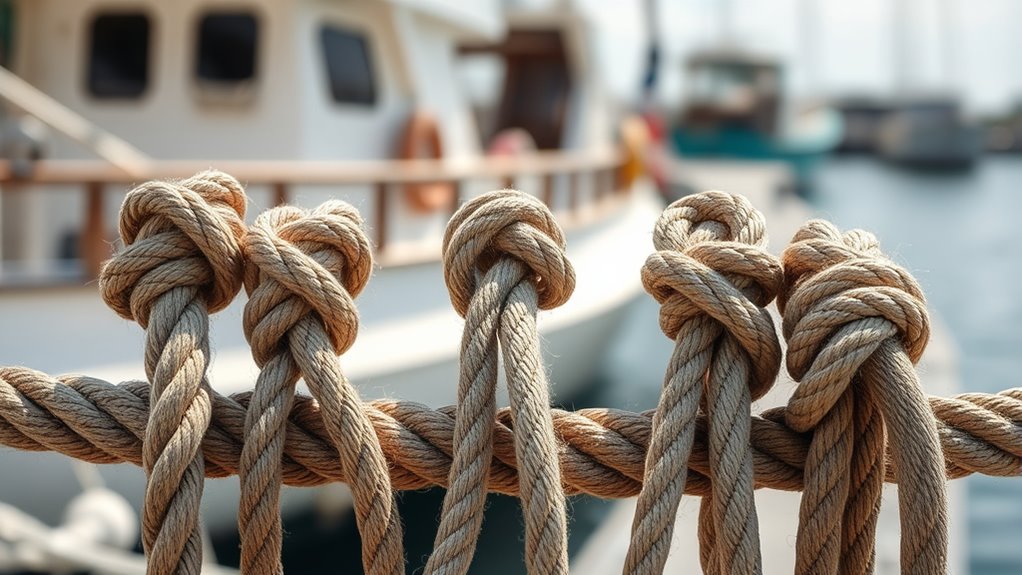
When it comes to securing loads, climbing, or sailing, relying on knots that never fail is vital for safety and effectiveness. You need knots you can trust to hold under pressure, resist slipping, and stay secure even in tough conditions. Knowing the right knots can make all the difference between a safe journey and a disaster. That’s why mastering a handful of dependable knots is worth your time. These knots are straightforward to learn, quick to tie, and dependable in real-world situations. They’re the ones you’ll reach for repeatedly because they’ve proven their strength and security.
First, the Bowline is a go-to knot for creating a secure loop that won’t slip or jam. It’s simple to tie, even under tension, and can be easily untied after being loaded. Whether you’re hoisting a sail, tying a rescue line, or securing a cargo, the Bowline’s reliability makes it a staple. Its strength lies in its structure, which distributes tension evenly and keeps the loop firm. Just remember, to guarantee extra security, you can back it up with a stopper knot.
Next, the Clove Hitch is incredibly versatile for anchoring a rope to a post or pole. It’s quick to tie and adjust, making it ideal for temporary setups or when you need to change the tension frequently. Its main advantage is that it’s easy to undo, even after bearing weight, which is vital when you’re adjusting lines or securing equipment. However, it’s important to use it with the right type of rope and in appropriate conditions because it can slip if not properly secured or if the load shifts.
The Sheet Bend is your best friend when joining two ropes of different diameters or materials. It’s strong, reliable, and resistant to slipping, making it perfect for extending lines or creating longer ropes on the spot. It’s straightforward to tie and untie, even after being under strain. When you need a secure connection that won’t come undone unexpectedly, the Sheet Bend is the knot to depend on.
The figure-eight knot is essential for creating a strong, secure stopper at the end of a rope. It’s simple to tie and prevents the rope from slipping through a pulley or hole. Its shape provides a large, secure loop that’s easy to inspect. Plus, it’s a foundational knot that can be used as the basis for more complex knots. Because it’s so trustworthy, it’s one of the first knots you should learn for climbing or any activity where safety is critical.
Lastly, the Double Fisherman’s Knot is ideal for tying two ropes together securely, especially in rescue or climbing situations. It’s one of the most secure knots for this purpose, as it tightens under load and resists slipping. It’s a bit more challenging to tie but well worth the effort when safety is a priority. Once mastered, it becomes a go-to for creating longer lines or joining ropes in critical scenarios.
Master these five knots, and you’ll have a solid foundation of dependable, fail-safe knots that you can trust in any situation. Additionally, understanding the principles of AI technology can help improve training methods for knot-tying through simulation and instructional tools.
As an affiliate, we earn on qualifying purchases.
Frequently Asked Questions
Which Knot Is Best for Securing a Tent?
The best knot for securing a tent is the taut-line hitch. It’s adjustable, reliable, and easy to tie, making it perfect for staking down your tent and tensioning guy lines. You can tighten or loosen it as needed, ensuring your tent stays secure in various weather conditions. Practice this knot before your trip, and you’ll be confident in its hold, keeping your campsite safe and stable.
How Do I Untie a Stubborn Knot?
Think of that stubborn knot as a locked treasure chest—tiresome but solvable. To untie it, you grab the loose end and gently wiggle, applying steady pressure while easing the tension. If it resists, try moistening the knot with water or soap, making the fibers more obedient. Patience is your best tool; often, a slow, deliberate approach will loosen even the most tenacious knots without damage.
Can These Knots Be Used for Climbing?
Yes, these knots can be used for climbing if they are appropriate for the specific situation. The knots discussed are reliable and secure, making them suitable for various climbing needs, such as tying into your harness or securing gear. However, always double-check the knot’s stability and make sure you’re using the right knot for the task. Proper training and practice are essential for safe climbing.
What’s the Fastest Way to Tie Each Knot?
To tie each knot quickly, practice is key. For the Bowline, form the loop, then pass the end through and around the standing part. For the Figure Eight, make a loop, then wrap the end around the standing line and back through the loop. The Double Fisherman’s involves wrapping the ends around each other twice before tightening. Repetition helps you become efficient, so practice each one until you can tie them swiftly.
Are These Knots Suitable for Heavy Loads?
Yes, these knots are suitable for heavy loads when tied correctly. You’ll find that knots like the bowline and double fisherman’s are reliable under stress, providing secure holds without slipping or failing. Just make sure you tighten them properly and double-check their stability before applying full weight. Practice these knots regularly to guarantee you can trust them in critical situations, especially when handling heavy loads or loads that require extra safety.
Conclusion
Just like Robin Hood’s trusty bowstring or MacGyver’s quick fix, these five knots become your reliable allies in any situation. Master them, and you’ll feel as confident as a sailor steering uncharted waters or an adventurer facing the wild. Remember, the true magic isn’t just in tying them but in knowing they’ll never fail you when it counts. So go ahead—trust your hands, and let these knots be your secret weapons.
Fall Picks
fall essentials
As an affiliate, we earn on qualifying purchases.