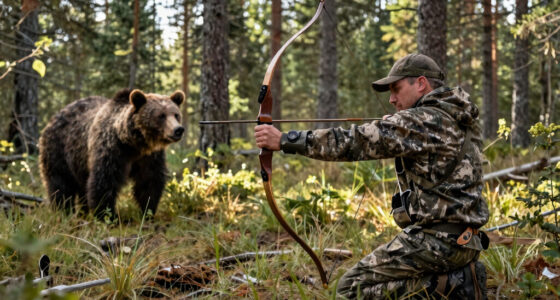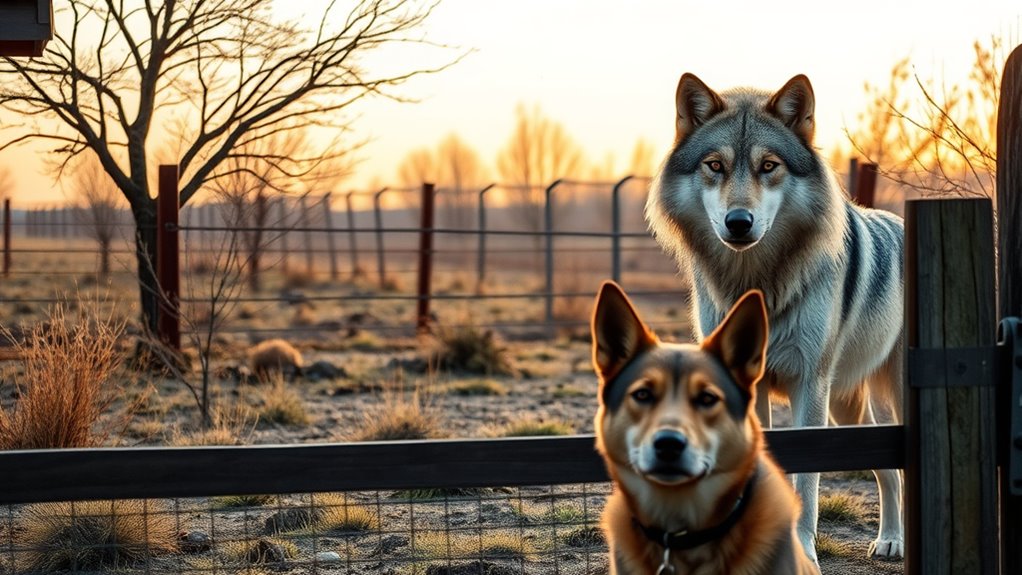

To stay safe around coyotes and wolves, always keep your distance and avoid approaching them. Keep pets on a tight leash, especially during dawn, dusk, and night, and don’t leave food or trash outside that might attract these animals. If you encounter one, stand tall, make yourself look bigger, and make loud noises to scare it away. If an attack seems likely, fight back strongly and protect your pets. Want to know more about effective safety strategies?

Get emergency and outdoor gear delivered free with Prime
- Fast, free delivery on millions of items
- Prime Video, Amazon Music and more included
- Member-only deals all year
Key Takeaways
- Keep pets on a tight leash and close to you, especially during dawn, dusk, or nighttime activity periods.
- Avoid approaching or feeding coyotes and wolves; maintain a safe distance to prevent provoking aggression.
- Make yourself appear larger and confident with posture and loud noises to deter animals from approaching.
- Do not run or turn your back if an animal shows aggression; stand your ground and use objects to defend yourself.
- Remove pet food, trash, and scent attractants from your property to minimize attracting wild animals.
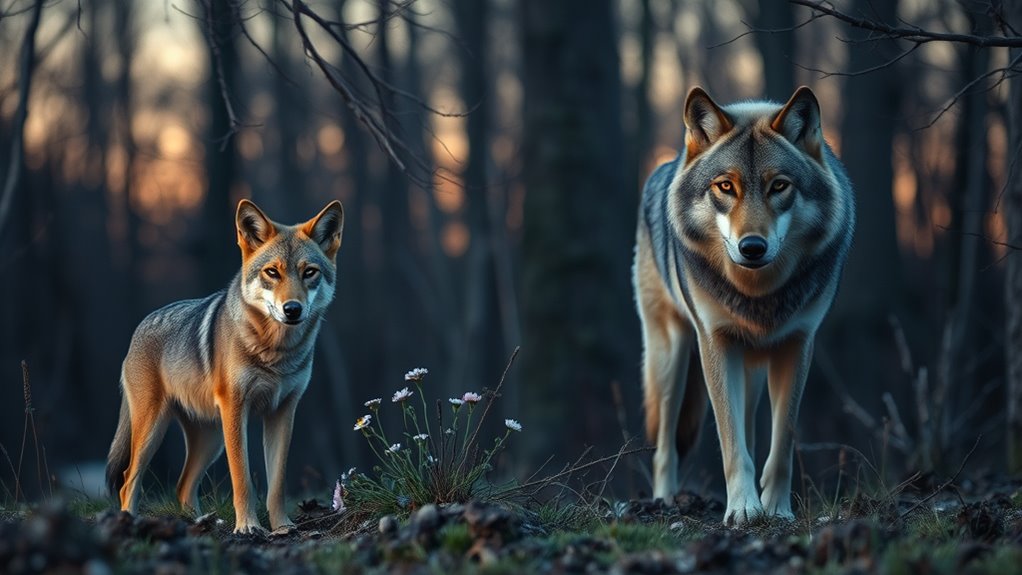
While coyotes and wolves generally avoid humans, understanding how to stay safe around these animals is essential. Knowing what behaviors to watch for and how to react can help protect both you and your pets. Coyotes and wolves are wild animals with instincts that drive their actions, especially when they feel threatened, cornered, or hungry. Although they usually steer clear of people, encounters can happen, particularly in areas where their natural habitats overlap with human activity. Being prepared and aware reduces the risk of conflict and guarantees safety for everyone involved.
Understanding coyote and wolf behavior helps keep you and your pets safe from potential encounters.
The first step is to keep a respectful distance if you see a coyote or wolf. Never approach these animals, no matter how curious or tame they seem. Approaching can trigger defensive behaviors, making them more likely to act aggressively. Instead, stay calm, stand tall, and make yourself look larger by raising your arms or opening your jacket. Avoid running, as this can trigger a chase response. Maintain eye contact without staring aggressively, and slowly back away while speaking in a firm, assertive voice. These actions help communicate that you are not prey and that you pose no threat to them.
If you’re walking in areas known for coyote or wolf activity, keep your pets on a tight leash and close to you at all times. Small pets are especially vulnerable, so avoid walking them during dawn, dusk, or nighttime when these animals are more active. Never leave pet food or trash outside, as scent attractants can lure animals closer. If you encounter a coyote or wolf near your property, make loud noises—clapping, shouting, or using a whistle—to discourage them from lingering. Maintaining a strong, confident posture will also help deter the animals from approaching further.
In case of an aggressive encounter, don’t turn your back or run. Stand your ground, make yourself appear as large as possible, and use any objects you have—like sticks or umbrellas—to appear more intimidating. If a coyote or wolf attacks, fight back aggressively, targeting sensitive areas such as the eyes, nose, or throat. For pets, keep them close and protect them as best as you can. Remember, most attacks are preventable if you remain vigilant and follow safety guidelines. Additionally, using vetted and professional-grade deterrents can be effective in discouraging these animals from getting too close.
Being knowledgeable about coyote and wolf behavior, staying alert, and acting decisively can make all the difference. While these animals usually avoid humans, respecting their space and knowing how to respond can prevent dangerous situations, keeping you and your pets safe in the wild and suburban landscapes alike.
As an affiliate, we earn on qualifying purchases.
Frequently Asked Questions
How Can I Identify Coyote and Wolf Tracks in Different Terrains?
You can identify coyote and wolf tracks by examining their size, shape, and pattern. Coyotes leave tracks around 2-3 inches long with toes that form a narrow, elongated shape, often showing claw marks. Wolves’ tracks are larger, 3-4 inches, with broader toes and a more robust appearance. In snow or mud, look for single-file tracks in dense terrain, and note the stride length—longer for wolves.
What Are the Legal Regulations Regarding Coyote and Wolf Encounters?
You should always check local wildlife laws before encountering coyotes or wolves. Many areas have specific regulations on how to respond, protect yourself, and manage encounters. Typically, it’s illegal to feed or harass these animals, and some regions require reporting sightings. Familiarize yourself with state and local rules, as they vary. Following these laws helps protect both you and the animals, ensuring safe and legal interactions.
Are There Specific Times When Coyotes and Wolves Are Most Active?
Coyotes and wolves are most active during dawn and dusk, known as crepuscular hours. During these times, they hunt and move around more than during the day or night. If you’re outdoors, especially in rural or wooded areas, stay alert during these early morning and evening hours. Keep your pets close, avoid attracting wildlife with food or trash, and make noise to deter their approach.
How Do Urban Environments Affect Coyote and Wolf Behavior?
Imagine a cityscape blending with wilderness—urban environments markedly influence coyote and wolf behavior. You might notice them becoming bolder, venturing closer to human activity, due to easy food sources like trash or pet food. Their adaptability is like a river carving new paths; they adjust to urban life, often during dawn or dusk. Your awareness and securing food sources help keep interactions safe, respecting their need to survive while protecting yourself and your pets.
Can Pets Be Safely Left Outside During Coyote or Wolf Activity?
No, you shouldn’t leave pets outside during coyote or wolf activity. These animals can be unpredictable and may see small pets as prey. Always supervise your pets outdoors, especially at dawn or dusk when coyotes and wolves are most active. Keep pets in secure, fenced areas or indoors, and avoid leaving food or trash outside that could attract these predators. Your vigilance helps keep your pets safe.
Conclusion
Staying vigilant around coyotes and wolves is like steering your ship through stormy waters—you need to keep your eyes open and your course clear. By keeping pets indoors, removing food sources, and making your property less inviting, you become a lighthouse guiding wildlife away. Remember, you hold the power to protect your loved ones and neighbors. Stay alert, stay safe, and be the beacon that keeps everyone secure in these wild waters.
Fall Picks
fall essentials
As an affiliate, we earn on qualifying purchases.