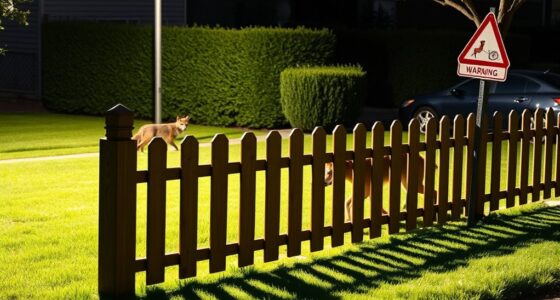
After wildfires, wildlife are forced out of their damaged habitats and often wander into human areas in search of food and shelter. This can lead to conflicts, such as animals damaging property, injuring people or pets, and spreading diseases. To reduce risks, avoid approaching or feeding wildlife, secure trash, and contact local agencies for help. Understanding how to coexist with displaced animals can protect both you and local ecosystems as you explore ways to manage these encounters.
Key Takeaways
- Wildfires displace native animals, forcing them into human communities seeking food and shelter.
- Habitat destruction reduces natural spaces, increasing wildlife encroachment into urban areas.
- Displaced animals may become aggressive or panicked, heightening risks of injury or property damage.
- Proper management includes avoiding feeding animals and contacting wildlife agencies for safe intervention.
- Increased human-wildlife encounters post-wildfire can lead to disease transmission and safety concerns.

When wildfires rage through forests and grasslands, they don’t just destroy vegetation—they also displace wildlife, forcing animals to venture into human communities in search of food and shelter. This sudden shift in habitat can lead to significant wildlife displacement, as animals lose their natural homes and seek refuge elsewhere. You might notice deer wandering into neighborhoods, raccoons scavenging near trash bins, or bears wandering into suburban areas. These animals are desperate to survive and adapt quickly, but their presence often sparks conflicts with humans.
Wildfire-driven habitat loss forces wildlife into human areas, increasing conflicts and safety risks for both animals and people.
Habitat destruction caused by wildfires drastically reduces the available space and resources for native species. When their homes are burned or rendered uninhabitable, animals are pushed into unfamiliar territory, often closer to human settlements. This displacement can create a cascade of issues. For example, prey animals like rabbits or rodents may invade gardens or farms, while predators such as foxes or coyotes might hunt in residential areas, creating tension and danger. You might find yourself worried about your safety or the safety of your pets as wildlife begins to encroach on your property.
The displacement of wildlife also disrupts natural behaviors and ecosystems. Animals that once thrived in their habitats are now forced to adapt to urban environments, which often lack the resources they need to survive long-term. This can lead to increased mortality rates or the spread of diseases between wildlife and humans. Additionally, suction power and filtration systems in some devices are crucial for managing debris and maintaining safety when dealing with displaced animals or cleaning up after encounters. For you, this situation means increased encounters with animals that are often panicked, disoriented, or aggressive due to stress and unfamiliar surroundings. Such interactions can sometimes result in property damage, injuries, or the transmission of zoonotic diseases.
Dealing with wildlife displacement after wildfires requires understanding and caution. It’s essential to avoid approaching or feeding these animals, as this can alter their natural behaviors and increase the risk of conflict. Instead, contact local wildlife agencies or animal control to safely manage the situation. Implementing secure trash containers, removing accessible food sources, and installing barriers can help prevent animals from seeking shelter on your property. Recognize that these displaced animals are simply trying to survive and that coexistence, when possible, benefits both humans and wildlife.
Ultimately, wildfires have a profound impact that extends beyond the immediate destruction of vegetation. They cause habitat destruction and wildlife displacement, forcing animals into human spaces and heightening the potential for conflict. Your awareness and responsible actions can help minimize risks, protect wildlife, and foster a safer environment for everyone affected by these devastating events.

WCS Pro-Cone One-Way Bat Excluder – Clear Polycarbonate Wildlife Exclusion Device for Bats, Flying Squirrels & Birds – Reusable, Humane Exit Cone for Attics, Soffits & Eaves (Not for Gray Squirrels)
ONE-WAY EXIT DESIGN – Animals push through the wide end to exit, but the tapered shape narrows toward…
As an affiliate, we earn on qualifying purchases.
As an affiliate, we earn on qualifying purchases.
Frequently Asked Questions
How Do Wildfires Impact Wildlife Migration Patterns Long-Term?
Wildfires can profoundly alter wildlife migration patterns long-term by disrupting fire ecology and damaging migration corridors. You might notice animals shifting their routes to avoid burned areas, seeking new water sources or shelter. These changes can fragment habitats and reduce connectivity, making it harder for species to move efficiently. Over time, this can lead to decreased genetic diversity and population declines, emphasizing the importance of preserving intact migration corridors for resilient ecosystems.
What Are the Most Affected Species by Wildfire-Related Conflicts?
You’ll find that species like bears, deer, and small mammals are most affected by wildfire-related conflicts. These animals struggle with habitat fragmentation, which disrupts their natural migration and adaptation processes. As their habitats shrink or become fragmented, they often venture into human areas seeking food or shelter, increasing conflicts. Your efforts to restore habitats and create wildlife corridors can help these species adapt better and reduce conflicts post-wildfire.
How Can Communities Prepare for Increased Wildlife Encounters Post-Wildfire?
Ironically, wildfires often leave you unprepared for the wildlife surprises that follow. To handle increased encounters, you should prioritize community engagement by educating residents about wildlife behavior and safe practices. Develop thorough emergency planning that includes wildlife management strategies, such as securing trash and food sources. Staying informed and working together helps you reduce conflicts, protect both residents and animals, and turn chaos into coordinated action after a wildfire.
Are There Successful Strategies for Wildlife Habitat Restoration After Fires?
You can successfully restore wildlife habitats after fires by focusing on native plant recovery, which provides essential food and shelter for local species. Incorporate erosion control techniques like planting cover crops or installing barriers to prevent soil loss. These strategies stabilize the landscape, promote healthy plant growth, and foster a resilient ecosystem. By actively implementing native plant restoration and erosion control, you help create a thriving environment for wildlife to recover naturally.
How Do Wildfire-Induced Conflicts Influence Conservation Policies?
Wildfire-induced conflicts prompt you to see the need for policy adaptation that balances human safety and wildlife conservation. You should engage stakeholders—local communities, conservationists, and policymakers—to develop effective solutions. This collaboration helps shape policies that mitigate conflicts, promote coexistence, and ensure resilient ecosystems. By actively involving all parties, you create a more adaptable, inclusive approach to managing post-wildfire wildlife issues.

Bear Proof Trash Can Locks,Universal Animal-Proof Garbage Can Lid Straps Against Raccoons and Wildlife,Adjustable Heavy Duty Security Strap for 28-96 Gallon Outdoor Bins (4 PCS)
Animal & Weather Resistant : A practical trash can lock strap that keeps your outdoor bin sealed—helps deter…
As an affiliate, we earn on qualifying purchases.
As an affiliate, we earn on qualifying purchases.
Conclusion
You might think wildfires only threaten the land, but ironically, they often bring humans and wildlife into closer conflict than ever before. As animals search for new habitats, you could find yourself face-to-face with wildlife in places you never expected. Instead of protecting nature, our fires sometimes force it into chaos—proving that even in destruction, we’re the ones truly playing with fire. So, next time, maybe think twice before pointing fingers—sometimes, we’re the biggest sparks.

2026 Upgraded Ultrasonic Solar Animal Repellent Outdoor, Deer Repellent Devices Squirrel Cat Raccoon Rabbit Dog Deterrent with Motion Sensor Flash Light for Yard Garden Lawn (2)
【Motion Sensor Design】Equipped with an advanced PIR motion sensor, this repellent instantly detects moving animals and activates powerful…
As an affiliate, we earn on qualifying purchases.
As an affiliate, we earn on qualifying purchases.

Owldacious Emergency Whistle Set – 6 Aluminum Whistles, 3 Paracord Lanyards, 3 Carabiners for Camping, Hiking, Fishing, Hunting & Survival. Loud Safety Rescue Signaling for Marine Boat Lifeguard
【Complete 12-Piece Set】Includes 6 aluminum whistles, 3 paracord lanyards (59” each), 3 aluminum carabiners and a user instruction…
As an affiliate, we earn on qualifying purchases.
As an affiliate, we earn on qualifying purchases.