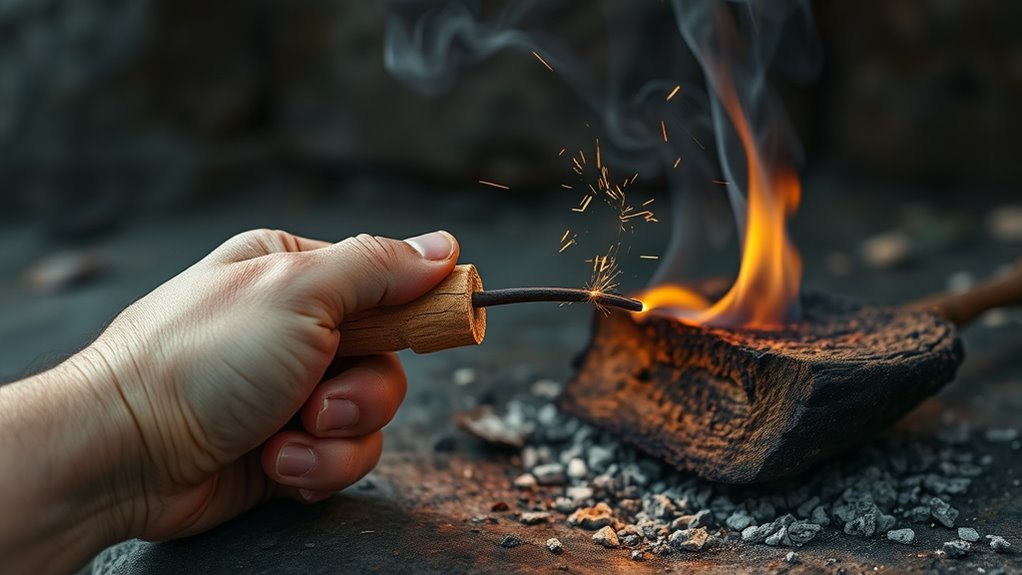

Primitive fire-starting techniques rely on natural materials and simple friction or spark methods to create flames without modern tools. You’ll select dry tinder like grass or bark, then use techniques such as striking flint against steel or spinning a bow drill to generate heat and sparks. With patience and practice, you’ll learn to produce an ember that can ignite your tinder and start a fire. Keep exploring these methods to reveal more ancient survival skills.
Listen free for 30 days with Audible
Thousands of audiobooks and originals — cancel anytime.
As an affiliate, we earn on qualifying purchases.
Key Takeaways
- Traditional methods include striking flint against steel or pyrite to produce sparks for ignition.
- Friction techniques like the bow drill and hand drill generate heat to create embers from wood.
- Selecting dry, fibrous tinder such as grass or bark is essential for catching sparks or embers.
- Proper technique, pressure, and speed are crucial for successfully producing an ember in primitive methods.
- Mastering these techniques reflects human ingenuity, resilience, and understanding of natural materials and physics.
Throughout history, humans have relied on primitive fire-starting techniques to ignite flames using simple tools and natural materials. These methods, often passed down through generations, showcase ingenuity and resourcefulness. One of the most fundamental skills is natural fire ignition, which involves creating a spark or friction to produce enough heat to start a fire. Before matches and lighters, people depended on traditional spark methods to light fires, demonstrating an impressive understanding of natural materials and physics.
Ancient humans mastered fire-starting using simple tools, natural materials, and understanding physics—demonstrating ingenuity and resourcefulness.
If you want to try natural fire ignition, your first step is to find suitable materials. Look for dry, fibrous substances like tinder—dry grass, bark, or cottonwood fuzz—that can catch a spark easily. To generate a spark, traditional methods often involve striking stones or producing friction. One classic approach is striking flint against steel, where the sharp edge of flint scrapes against steel to produce a shower of hot sparks. These sparks land on your tinder, igniting it if you’re quick enough. This technique requires practice to master the right angle and pressure, but once perfected, it proves reliable even in damp conditions.
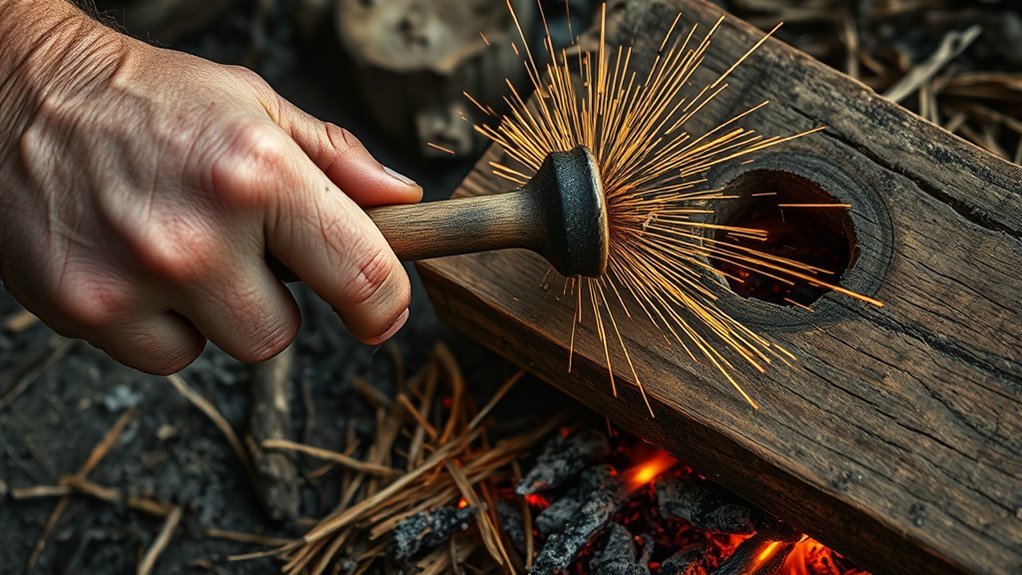
Another traditional spark method involves using pyrite or quartz combined with steel or flint. When struck together, these minerals produce sparks that can ignite tinder. You might also try the bow drill technique—using a wooden bow, spindle, and fireboard to generate friction. By applying steady pressure and moving the bow back and forth, you create heat through friction that eventually produces an ember. This ember can then be transferred to your tinder nest and gently blown into flame. The process demands patience and a good understanding of how to maintain consistent pressure and speed.
You can also experiment with simpler friction methods like the hand drill, where you spin a straight stick between your palms against a fireboard. This technique relies solely on your strength and rhythm to generate enough heat for an ember. Once you have a small ember, carefully transfer it onto your tinder, then gently blow to encourage a flame. All these traditional spark methods require you to be attentive and deliberate, but they are effective once you understand the mechanics behind them. Interestingly, mastering these primitive techniques can deepen your connection to human history and survival instincts.
Despite the availability of modern fire-starting tools, these primitive techniques highlight your ability to harness natural materials and physical principles. They serve as a testament to human resilience and ingenuity, especially when no modern conveniences are accessible. Practicing these methods not only deepens your appreciation for ancient survival skills but also improves your overall understanding of fire and its fundamental role in human history.
As an affiliate, we earn on qualifying purchases.
Frequently Asked Questions
Which Primitive Fire-Starting Method Is the Most Reliable?
You’ll find that the bow drill method offers the most reliable primitive fire-starting technique. Its fire starting reliability stems from consistent friction, making it more effective than other methods like hand drills or flint and steel. With proper technique and patience, the bow drill’s primitive method effectiveness shines, especially in damp conditions. Practice improves your chances of success, ensuring you can reliably start a fire when needed in survival situations.
Can These Techniques Be Used in Wet Conditions?
Yes, primitive fire-starting techniques can work in wet weather, but you need to adapt. You’ll want to find damp materials that are slightly dry or use natural insulators like bark and dry tinder tucked away from rain. Focus on creating friction or sparks quickly before moisture dampens your efforts. With patience and proper material selection, you can ignite a fire even through damp conditions, proving perseverance pays off.
How Long Does It Typically Take to Start a Fire?
It usually takes anywhere from a few seconds to several minutes to start a fire, depending on your fire starting speed and technique efficiency. If you use a quick, well-practiced method like a flint and steel or bow drill, you’ll light your fire faster. Wet conditions slow you down, but with proper technique and dry tinder, you can still ignite a flame effectively. Practice improves your speed and success rate markedly.
Are There Safety Precautions to Consider With Primitive Methods?
You definitely need to prioritize fire safety when using primitive methods—think of it as controlling a wild beast! Always clear a safe area, keep water or dirt nearby to smother flames, and never leave your fire unattended. Consider the environmental impact; avoid causing forest fires or harming wildlife. Respect nature’s power, and you’ll keep yourself and the environment safe while mastering ancient skills.
What Materials Are Best for Making Sparks or Friction?
You should use flammable stones like quartz or flint to create sparks effectively, striking them against a hard, sharp edge. Natural tinder such as dry grass, bark, or leaves helps catch the sparks and ignite your fire. Friction methods work best with softwoods like cedar or cedar bark, which produce good heat. Always make certain your materials are dry and free of moisture, and keep a safe distance to avoid injury.
Conclusion
Mastering primitive fire-starting techniques puts you in control of nature’s hidden sparks, turning you into a true survivor. With patience and practice, you’ll find yourself weaving through sparks and friction like a well-tuned instrument. Remember, every spark is a tiny heartbeat of life, waiting for you to nurture it into a blazing fire. So trust your instincts, stay persistent, and let the ancient art of fire-starting ignite your confidence and spirit.
NFL season / tailgating Picks
team gear
As an affiliate, we earn on qualifying purchases.