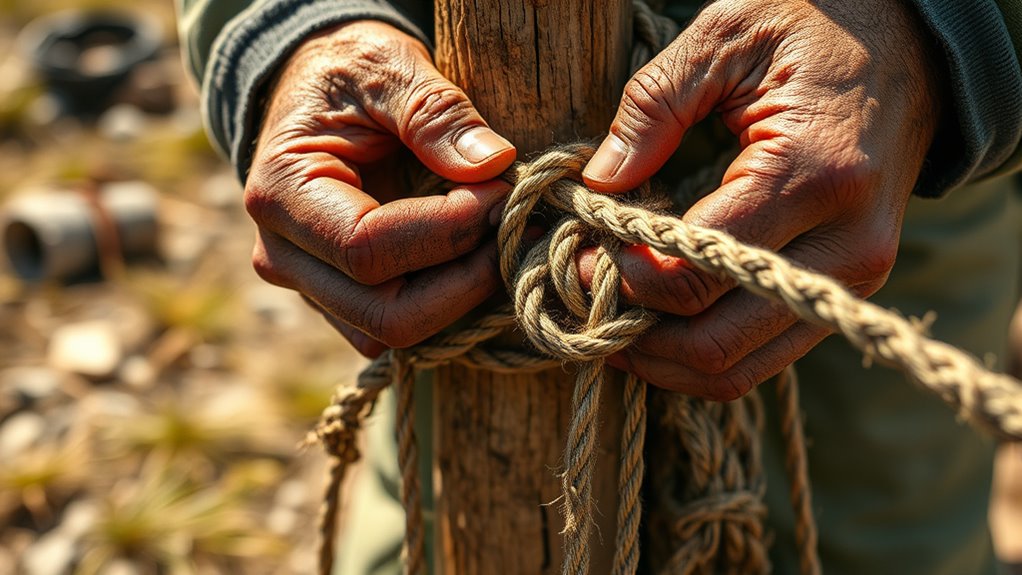

To make reliable cordage for survival, choose the right fibers—natural options like jute or hemp, or synthetic ones like nylon, based on your environment. Master secure knots such as the bowline or figure-eight, ensuring they’re snug and tightened properly. Practice knot-tying techniques frequently to maintain proficiency under stress. Incorporate backup knots when needed, and pay attention to fiber strength and tension. Keep learning, and you’ll be able to create strong lines when it matters most.

Get emergency and outdoor gear delivered free with Prime
- Fast, free delivery on millions of items
- Prime Video, Amazon Music and more included
- Member-only deals all year
Key Takeaways
- Choose appropriate natural or synthetic fibers based on environmental conditions and load requirements.
- Practice tying essential knots like bowline, figure-eight, and double fisherman’s for security.
- Ensure knots are snug, well-formed, with enough tail length to prevent slipping.
- Incorporate backup or stopper knots for added security in high-stress situations.
- Regularly practice knot-tying to improve speed, reliability, and confidence during emergencies.
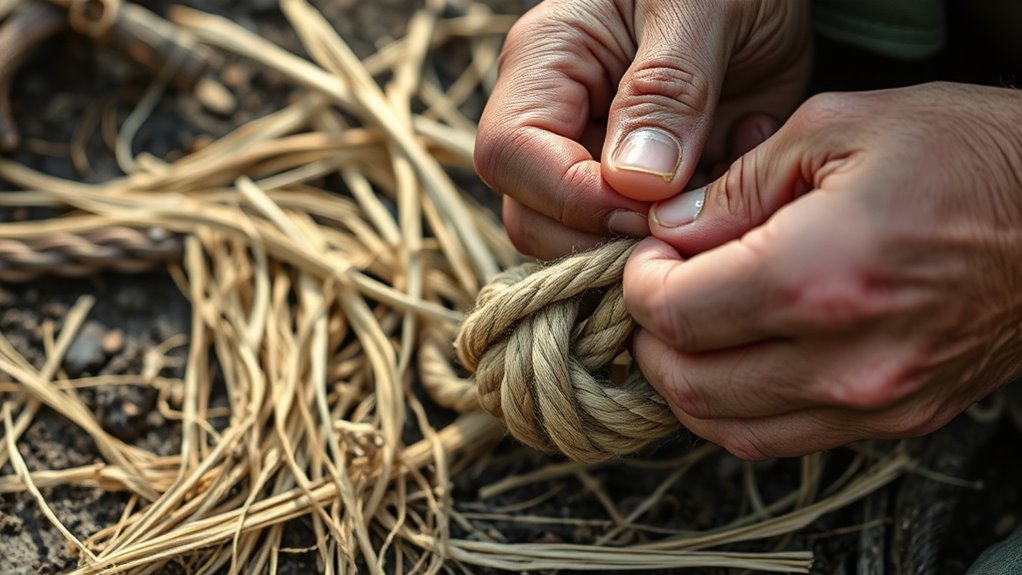
Have you ever wondered how to create strong, reliable cordage and knots when you’re in a survival situation? Mastering this skill can make the difference between safety and failure, so understanding the basics is essential. The first step is choosing the right fiber. Not all materials are equal; natural fibers like jute, sisal, or hemp are popular for their availability and strength, while synthetic fibers such as nylon or polyester offer durability and resistance to moisture. Your choice depends on the environment and the task at hand. For instance, natural fibers are biodegradable and easy to work with, but synthetic fibers tend to hold up better under wet conditions and heavy loads. Whichever you pick, guarantee the fiber is strong enough for your intended use, whether for building shelter, securing gear, or creating traps.
Once you’ve selected the fiber, the next critical factor is knot security. Even the strongest cordage is useless if the knot slips or fails under pressure. To maximize knot security, learn a few proven knot types like the bowline, double fisherman’s knot, or figure-eight knot. These knots are known for their reliability and ease of tying under challenging conditions. When tying knots, always assure the knot is snug and well-formed. Leave enough tail length to prevent slipping, but not so much that it becomes cumbersome. Tension is key; pull the knot tight to eliminate slack but avoid over-tightening, which can weaken the fibers or cause the knot to slip. Additionally, consider using multiple knots or a combination of knots for added security if the situation demands it.
Another tip for improving knot security is to incorporate a backup knot or a stopper knot, especially when the cord will bear significant weight or stress. Proper fiber selection combined with a secure knot will give you confidence that your cordage will hold when it matters most. Remember, practice makes perfect—practice tying these knots until they become second nature, especially under stress or in low-visibility conditions. The more familiar you are with different fibers and knots, the quicker and more reliably you’ll be able to rig up essential gear when every second counts. By paying attention to fiber selection and mastering knot security, you’ll considerably improve your survival toolkit, ensuring your cordage performs reliably whenever you need it most.
survival paracord with nylon fibers
As an affiliate, we earn on qualifying purchases.
As an affiliate, we earn on qualifying purchases.
Frequently Asked Questions
What Natural Fibers Are Best for Making Durable Cordage?
You should select natural fibers like hemp, jute, and flax for durable cordage because of their high natural fiber strength. These fibers are strong, flexible, and resistant to wear. To maximize durability, use proper fiber processing techniques, such as cleaning, retting, and twisting, which enhance the fiber’s strength and lifespan. These steps ensure your cordage remains reliable and tough in survival situations.
How Do I Choose the Right Knot for Different Survival Situations?
In survival, choosing the right knot is like selecting the perfect tool for a job. You need knot security to prevent slipping and load bearing strength to hold under pressure. For securing shelter, use a bowline for reliability. When tying gear, a square knot offers quick fastening. Match the knot to your task, considering the load and security needed, so your setup remains strong and dependable in critical moments.
Can Synthetic Materials Be Used Effectively for Survival Knots?
Yes, synthetic materials can be used effectively for survival knots. They offer excellent durability, resisting rot and moisture, which makes them reliable in harsh conditions. Synthetic ropes also allow for better knot tension optimization, ensuring your knots hold securely under load. With proper selection and tying techniques, synthetic materials provide strong, dependable options for survival situations, giving you confidence in your gear when it matters most.
What Are Common Mistakes to Avoid When Tying Survival Knots?
Tying survival knots is like walking a tightrope—you need focus to avoid mistakes. To guarantee knot security, don’t rush or skip steps, as common pitfalls can weaken your knot. Avoid loose loops, uneven tension, and improper finishing techniques. Double-check your knots before relying on them. Staying attentive helps you avoid these errors, ensuring your knots hold when you need them most. Proper technique keeps you safe in critical moments.
How Can I Quickly Repair Damaged Cordage in an Emergency?
To quickly repair damaged cordage in an emergency, you can use DIY repair techniques like wrapping the damaged area with strong tape or cordage. For a more secure fix, splice or tie a knot to join two ends temporarily. These emergency solutions help maintain strength until proper repairs can be made. Always carry some form of adhesive tape or extra cordage for quick fixes in survival situations.
Conclusion
Now that you know how to make cordage and tie essential knots, your survival skills just got a major upgrade. But remember, the real test comes when you face the unexpected—will your knots hold under pressure? Keep practicing, stay alert, and never underestimate the power of a well-tied knot. In the wild, every second counts. Are you ready to trust your skills when it matters most? The choice and the chance are in your hands.
Halloween Picks
halloween
As an affiliate, we earn on qualifying purchases.