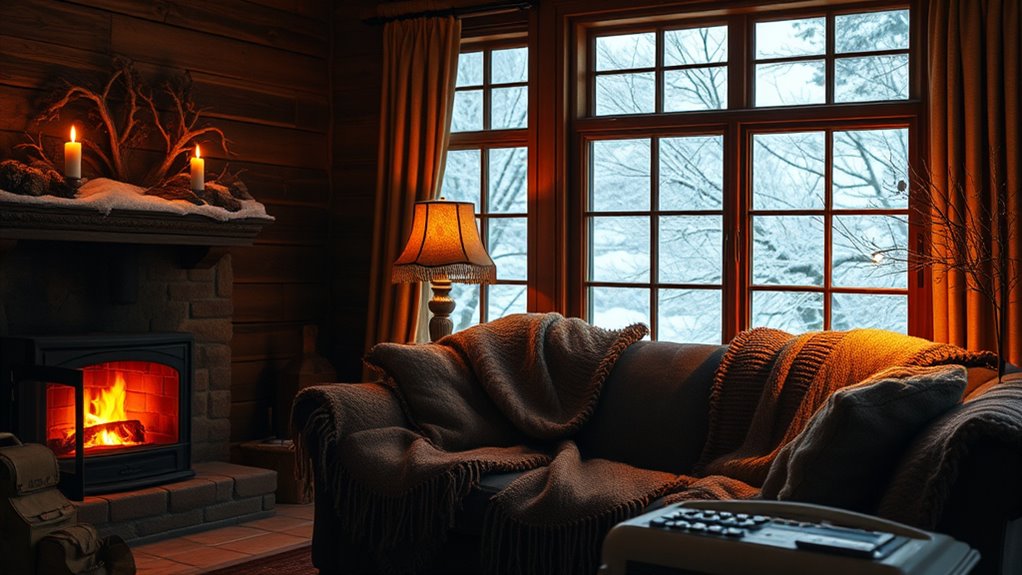

During a winter blackout, you should prioritize backup power sources like portable generators operated outdoors, make sure you have emergency food supplies such as canned goods and energy bars, and keep warm with blankets and suitable clothing. Store flashlights, extra batteries, and chargers nearby, and avoid venturing outside if possible. Proper safety measures and preparation can help you stay safe and comfortable until power is restored. Continue to explore ways to enhance your winter blackout preparedness for added peace of mind.
Key Takeaways
- Ensure a reliable power backup, such as a generator or batteries, to keep essential appliances and heating systems running.
- Stock emergency food supplies like canned goods and energy bars that do not require refrigeration or cooking.
- Prepare a winter blackout kit with flashlights, extra batteries, warm clothing, and blankets for quick access.
- Operate generators outdoors and maintain safety precautions to prevent carbon monoxide poisoning.
- Develop a comprehensive plan combining power backup, food supplies, and safety measures to minimize winter outage impacts.
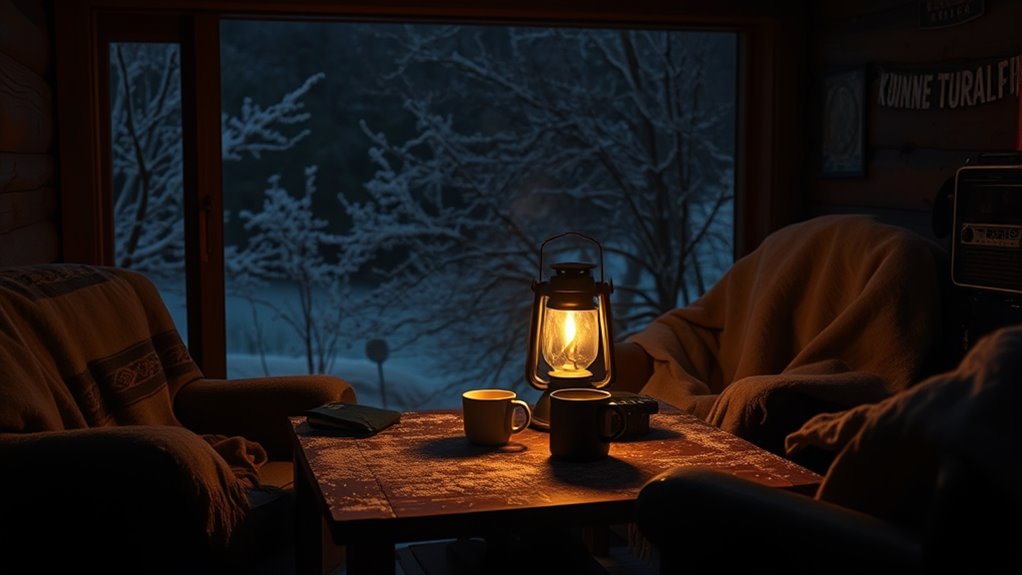
Winter blackouts can strike unexpectedly, leaving your home without power for hours or even days. When the lights go out in the middle of winter, it’s essential to be prepared to keep yourself safe and comfortable. One of the first things you should consider is having a reliable power backup. This could be a generator or battery-powered devices that can keep your essential appliances running. Power backup ensures that your heating system continues to operate, preventing pipes from freezing and maintaining a livable environment. It also allows you to charge your phone and access emergency communications, which are indispensable during extended outages. Without a power backup, you might find yourself stuck in a cold, dark house, vulnerable to the harsh winter elements.
Winter blackouts can leave you in the cold; a reliable power backup keeps your home warm and safe.
Along with a power backup, stocking up on emergency food is essential. Winter blackouts can last longer than expected, and having a supply of non-perishable food items can make all the difference. Think canned goods, dried fruits, nuts, and energy bars—foods that don’t require refrigeration or cooking. This way, even if your stove or microwave isn’t working, you’ll still have nourishing options readily available. Remember to store enough for several days, accounting for everyone’s needs and dietary restrictions. Don’t forget to keep a manual can opener nearby for easy access to canned foods. Proper planning for emergency food ensures you won’t have to venture outside into dangerous conditions just to find sustenance, especially when roads might be icy or blocked. Additionally, knowing how to properly store and preserve your supplies can extend their shelf life and reliability during an outage.
It’s also wise to prepare a winter blackout kit that combines both emergency food and power backup solutions. Include flashlights, extra batteries, warm clothing, blankets, and a portable phone charger. Keep this kit in a central, accessible location so you can grab it quickly when needed. Consider investing in a small, portable generator if your home’s power supply is unreliable. Make sure to operate it outdoors to avoid carbon monoxide buildup. Regularly test your backup power sources and keep fuel supplies fresh to guarantee they’re ready when you need them most. By having these essentials in place, you’re not just reacting to a blackout—you’re proactively safeguarding your home and loved ones from the worst winter can throw at you.
In the end, surviving a winter blackout hinges on preparedness. A dependable power backup keeps your home warm and connected, while sufficient emergency food supplies provide peace of mind. When you plan ahead and assemble the right tools and resources, you turn a potentially dangerous situation into a manageable inconvenience. Stay vigilant, stay warm, and remember that a little preparation now can save you from significant discomfort later.
Top picks for "surviv winter blackout"
Open Amazon search results for this keyword.
As an affiliate, we earn on qualifying purchases.
Frequently Asked Questions
How Can I Keep My Pets Warm During a Blackout?
To keep your pets warm during a blackout, prioritize pet safety by providing a cozy, insulated space away from drafts. Use blankets or a winter coat designed for pets to help retain body heat. Keep their bedding dry and consider placing a hot water bottle wrapped in a towel near them, but never direct heat. Regularly check on your pets to guarantee they stay comfortable and warm in the cold.
What Are Alternative Heating Options Without Electricity?
You can use wood stoves and propane heaters as effective alternatives to electric heating. Wood stoves provide reliable warmth if you have a safe, ventilated space and a supply of firewood. Propane heaters are portable and easy to operate, but guarantee proper ventilation to prevent carbon monoxide buildup. Both options help keep your home warm without electricity, ensuring your safety and comfort during a blackout.
How Do I Prevent Pipes From Freezing?
To prevent your pipes from freezing, you should guarantee proper insulation maintenance by adding pipe wrapping around vulnerable pipes. Keep your home’s thermostat at a consistent temperature, ideally above 55°F, even if the power goes out. Open cabinet doors to allow warm air to circulate around pipes, especially those near exterior walls. Dripping faucets slightly can also prevent pressure buildup, reducing the risk of bursting pipes during severe cold.
What Is the Best Way to Stay Informed Without Power?
Ironically, in a blackout, your best bet for emergency communication is a battery-powered radio, even if it seems outdated. You can stay informed about weather updates, emergency alerts, and other essential info without power. Keep extra batteries handy and tune in regularly. While smartphones might be dead, these radios ensure you’re connected to the outside world, giving you peace of mind and crucial updates when you need them most.
How Can I Maintain Hygiene During an Extended Blackout?
You can maintain personal hygiene during an extended blackout by conserving water and using alternative cleaning methods. Keep a supply of wet wipes or hand sanitizer for quick cleanups, and use a small basin of water for washing face or hands. Prioritize water conservation by limiting unnecessary water use, and store a few bottles of clean water for essential hygiene routines. This approach helps keep you fresh and healthy without relying on electricity.
Conclusion
Now that you know how to prepare and stay safe during a winter blackout, you’re better equipped to handle the unexpected. Remember, staying calm and resourceful can make all the difference. Keep your emergency supplies handy, dress warmly, and check on loved ones. So, are you ready to face the cold dark night with confidence? By taking these steps now, you can weather any storm that comes your way and keep yourself safe until power is restored.