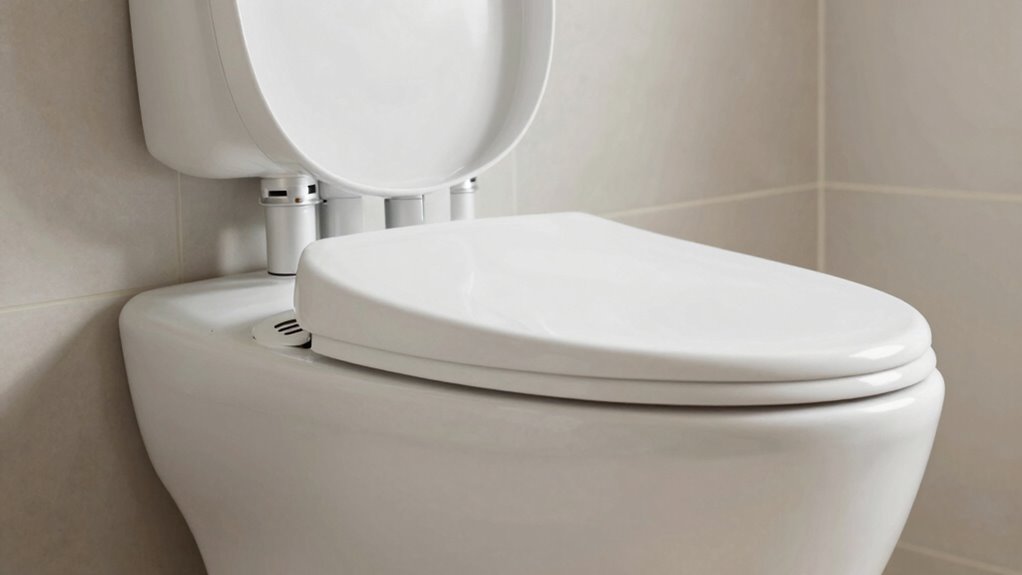

A healthy composting toilet keeps odors mild by ensuring proper venting and airflow outside, away from living spaces. When functioning well, you’ll notice a mild, earthy scent and compost that’s dark and crumbly. Regular maintenance, sufficient aeration, and correct moisture levels prevent foul smells. Monitoring vents, avoiding overloading, and using carbon-rich materials help keep the system odor-free. To learn how to maintain this balance and spot signs of a healthy system, keep exploring these essential tips.
Listen free for 30 days with Audible
Thousands of audiobooks and originals — cancel anytime.
As an affiliate, we earn on qualifying purchases.
Key Takeaways
- Proper vent placement directs airflow outside, preventing odors from entering living spaces.
- A healthy composting toilet emits a mild, earthy smell, indicating active aerobic decomposition.
- Regular maintenance, including vent checks and turning compost, keeps odors under control.
- Moisture should be damp, not wet, to avoid odors and leachate issues; proper aeration enhances decomposition.
- Signs of a normal system include gradual waste breakdown and consistent odor, while strong or foul smells suggest problems.
As an affiliate, we earn on qualifying purchases.
What Is a Composting Toilet and How Does It Work?

Have you ever wondered how a composting toilet functions without water or sewage connections? The answer lies in the different types of composting toilets available, such as self-contained units and split systems. These toilets work through the composting process, where waste is broken down by aerobic bacteria into compost, rather than being flushed away. When you use a composting toilet, waste falls into a chamber designed to promote aeration, which speeds up decomposition. These toilets often have a venting system to control odors and maintain airflow. The composting process relies on the right balance of moisture, oxygen, and bacteria to transform waste into safe, usable compost. Using a composting toilet effectively also involves understanding the importance of proper venting systems to prevent odors and ensure efficient decomposition. This eco-friendly approach eliminates water usage and sewage infrastructure, making it ideal for remote or sustainable settings.
How Can I Tell if My Composting Toilet Is Healthy and Working Properly?

To guarantee your composting toilet is functioning properly, you should regularly monitor its appearance, smell, and overall performance. Look for healthy biological indicators, such as a steady, earthy smell instead of foul odors. Check moisture levels; they should be damp but not overly wet or dry. Excess moisture can hinder composting, while too little slows decomposition. Observe the composting chamber’s consistency—it should be crumbly and dark. Also, inspect for any buildup or clogging around vents and air inlets. Regularly evaluating these factors helps ensure your system remains efficient. Maintaining ideal biological activity and balanced moisture levels keeps your composting toilet working smoothly, reducing odors and promoting healthy decomposition. Additionally, keeping an eye on Free Floating elements like airflow and temperature can further support the composting process. Monitoring biological activity provides insight into whether your system is thriving or needs adjustments, and tracking system parameters can help identify potential issues early. Ensuring proper ventilation also helps prevent odors and maintains aerobic conditions necessary for healthy composting.
How Do I Manage Odors and Keep Ventilation Effective?

To keep odors under control and ventilation effective, start by ensuring your vent is properly placed to direct air outside. Implement odor control strategies like using carbon filters or covering waste with bulking material regularly. Don’t forget to perform regular maintenance checks to keep everything functioning smoothly and prevent unpleasant smells. Additionally, incorporating halal-friendly odor neutralizers can help maintain a fresh environment in accordance with cultural practices. Proper airflow around the vent and maintaining clean filters are essential to support air purifier maintenance dos and don’ts, ensuring the system operates efficiently and reduces odors effectively. Regularly inspecting and replacing filters helps maintain optimal ventilation performance, which is crucial for odor management and air quality.
Proper Vent Placement
Ever wonder how proper vent placement can keep your composting toilet odor-free and functioning efficiently? It all comes down to strategic vent placement to maximize airflow optimization. Position the vent outlet above the roofline, ideally away from windows and entrances, to prevent odors from drifting back. Ensure the vent pipe slopes upward to facilitate smooth airflow and prevent stagnation. Use a vent cap with a screen to keep out debris and pests. Proper placement minimizes odor escape and maintains ventilation effectiveness. Additionally, venting standards recommend maintaining appropriate vent height and placement to ensure proper odor control and airflow. Regularly inspecting the vent system helps prevent airflow disruptions that could compromise odor management. Incorporating proper ventilation practices ensures consistent airflow, reducing the risk of odors escaping into living spaces. Maintaining correct vent placement is essential for optimal odor control and overall system performance. Properly designed ventilation systems are crucial for long-term odor management and system reliability.
Odor Control Strategies
Effective odor control starts with maintaining a well-ventilated system that actively disperses smells away from your living space. Understanding the biodegradation science behind composting helps you choose the right composting materials, like carbon-rich bedding, to minimize odors. Using a combination of aeration and proper layering encourages aerobic decomposition, which produces fewer smells. Regularly adding composting materials such as sawdust, coconut coir, or leaves helps absorb moisture and odors, keeping the system dry and less smelly. Ventilation fans should be powerful enough to pull air through the system continuously, preventing buildup of foul odors. Keep vents clear of obstructions, and ensure airflow remains consistent. Incorporating aerobic conditions into your system is essential, as they promote the activity that reduces foul odors. Ensuring proper ventilation design helps maintain airflow efficiency and prevents odor buildup. Additionally, understanding biodegradation science can help you optimize the balance of materials and airflow for better odor management. Proper airflow velocity can significantly enhance odor dispersal and system performance. Maintaining adequate ventilation capacity ensures that odors are effectively expelled and do not accumulate, which is crucial for odor control. These strategies work together to manage odors effectively, maintaining a fresh environment around your composting toilet.
Regular Maintenance Checks
Regular maintenance checks are essential for keeping your composting toilet functioning properly and odors under control. You should perform bi-weekly inspections to identify any issues early, ensuring the system stays balanced. During these checks, monitor moisture levels closely, as excess moisture can lead to odors and venting problems. Keep an eye on the compost pile’s dryness and aeration to prevent smells from escaping. Regularly verify that the ventilation system operates effectively, clearing any blockages or buildup. Additionally, consider these key points:
- Inspect the ventilation fan and ductwork for obstructions
- Check compost temperature and adjust for ideal decomposition
- Test for proper airflow and odor extraction
- Maintain a consistent schedule for moisture monitoring and adjustments
- Ensure your system’s charger settings are correctly configured to prevent overcharging or undercharging, which can impact ventilation and odor control.
Consistent checks help maintain a fresh, odor-free environment.
What Are Normal Signs and Behaviors When Using a Composting Toilet?

When using a composting toilet, you’ll notice that odors stay mild and manageable if ventilation works properly. Your usual usage pattern involves depositing waste regularly and adding composting material as needed. These signs help confirm you’re maintaining a healthy, odor-free environment. Maintaining proper ventilation and considering ergonomic seating can further enhance comfort and ease during use. Proper waste management practices are essential to ensure the composting process functions correctly and odors remain controlled. Additionally, understanding environmental impact can motivate consistent maintenance to minimize ecological footprint. Ensuring effective air circulation is also vital for preventing unpleasant smells and supporting microbial activity essential for composting.
Normal Odor Levels
Understanding what to expect regarding odor levels can help you feel confident while using a composting toilet. Normal odor perception varies, but typically, you’ll notice a mild, earthy scent that indicates proper composting. It’s important to recognize that some odor is normal and doesn’t necessarily signal a problem. To maintain user comfort, monitor for signs like:
- A faint smell of compost, not sewage
- Consistent, mild earthy odor during use
- No overwhelming or foul odors
- Stable smell over time without sudden intensification
If odors become stronger or unpleasant, it may suggest ventilation issues or the need to adjust the composting process. Knowing these signs helps you stay comfortable and ensures your composting toilet functions smoothly.
Usual Usage Patterns
Using a composting toilet typically involves predictable behaviors that indicate it’s functioning properly. Most users develop a consistent usage frequency, often using it several times a day or as needed. Your habits may include covering waste with composting material afterward, which helps control odor and promotes proper decomposition. Normal signs include seeing the compost chamber filling gradually, without sudden or excessive accumulation. You might notice a steady, mild smell rather than strong odors, reflecting good ventilation and proper maintenance. Regularly checking moisture levels and adding browns or carbon-rich materials aligns with typical user habits. If your usage patterns stay steady, and waste breaks down gradually without causing odors or leaks, it’s a strong sign that your composting toilet operates efficiently and healthily.
Common Problems With Composting Toilets and How to Fix Them?

Despite their many benefits, composting toilets can sometimes present common problems that frustrate users. One issue is excess moisture, which can lead to leachate management problems and foul odors. To fix this, guarantee proper compost bin aeration to promote airflow and drying. Another problem is inadequate airflow, causing slow composting and odors; improving ventilation helps. Overloading the system can also hinder decomposition, so use the right amount of material and waste. Finally, improper layering of carbon-rich and nitrogen-rich materials can disrupt composting. Regularly turning the compost and maintaining proper moisture levels help keep the process on track. Addressing these issues promptly ensures your composting toilet remains odor-free and functions efficiently.
Tips for Maintaining a Smell-Free and Efficient Composting System
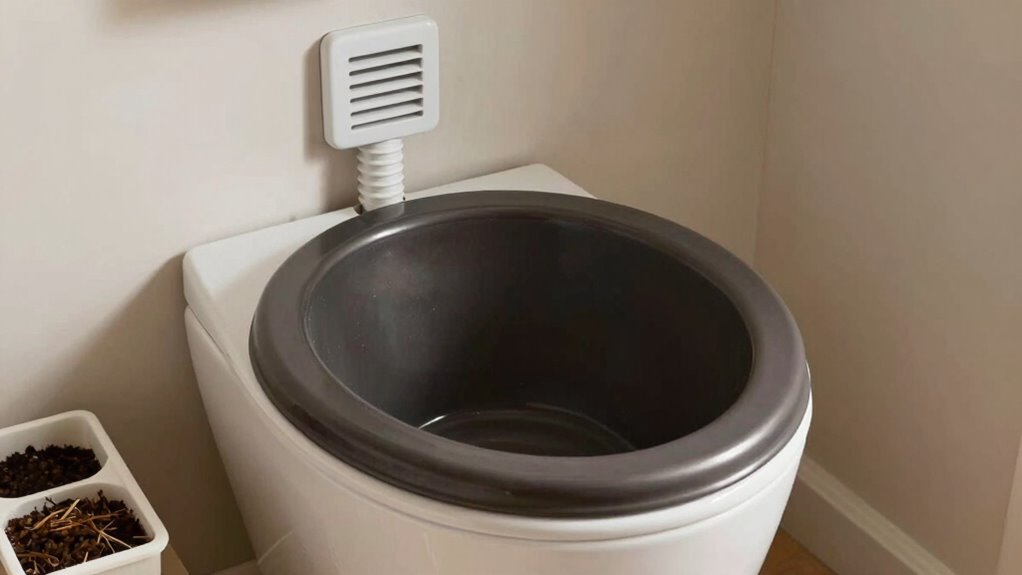
Maintaining a smell-free and efficient composting system requires regular attention and proper practices. To prevent drainage issues, ensure your system has adequate ventilation and avoid overloading it with waste. Regularly mix or turn the compost to promote aeration and decomposition. Address seat comfort by choosing a well-padded, sturdy seat that encourages proper posture, reducing strain and making use more pleasant. Keep the area clean and dry around the toilet to minimize odors. Use appropriate carbon-rich materials, like sawdust or peat moss, to balance moisture and control smell.
| Tip | Benefit |
|---|---|
| Check drainage regularly | Prevents pooling and odors |
| Focus on seat comfort | Encourages consistent use |
| Mix compost often | Accelerates breakdown |
| Keep area dry | Reduces smell and pests |
Frequently Asked Questions
Can Composting Toilets Be Used in Cold Climates Effectively?
Yes, you can use composting toilets effectively in cold climates. To overcome insulation challenges, add extra insulation around the unit to retain heat. Consider heating solutions like small electric heaters or heat mats to keep the compost warm enough for proper decomposition. Proper venting also helps maintain airflow and control odors. With these adjustments, your composting toilet will function well even in chilly environments.
How Often Should I Add Bulking Agents Like Sawdust?
You should add bulking agents like sawdust during your maintenance schedule whenever the compost pile feels too wet or compacted. Generally, every 1-3 days, check your compost and add material recommendations like sawdust to guarantee proper airflow and moisture balance. This helps control odor and promotes efficient composting. Regularly monitoring your system assures it stays odor-free and functions smoothly, especially in colder climates where decomposition slows down.
Are Composting Toilets Suitable for Use by People With Health Issues?
Composting toilets can be suitable for people with health issues if you consider health considerations and accessibility adaptations. You should choose models with easy access, ergonomic design, and minimal handling of waste. Guarantee proper ventilation to reduce odors and health risks. If mobility or health concerns are significant, consult a professional to ensure the toilet setup meets your specific needs and provides a safe, comfortable environment.
What Are the Environmental Benefits of Composting Toilets?
Composting toilets benefit the environment by conserving water and enriching soil. You reduce water use considerably since they don’t rely on flushes, helping preserve this precious resource. Plus, the composted material becomes nutrient-rich soil amendment, promoting healthy plant growth. By choosing a composting toilet, you actively support eco-friendly practices, lessen your ecological footprint, and contribute to healthier landscapes and water systems.
How Long Does It Take for Waste to Fully Compost?
You might wonder how long waste takes to fully compost in your toilet. Scientific studies suggest that waste decomposition and compost maturity typically take between 6 months to a year, depending on factors like temperature, moisture, and aeration. Proper management accelerates this process, ensuring safe, nutrient-rich compost. So, patience and proper care are key to turning your toilet waste into valuable compost within that timeframe.
Conclusion
Think of your composting toilet like a garden’s heartbeat—when it’s healthy, everything runs smoothly. I once had a neighbor who ignored odor issues, and it turned into a stinky mess. Regular maintenance and monitoring keep your system thriving, just like tending a garden. With a little effort, you’ll enjoy a smell-free, efficient composting toilet that feels as natural as breathing—keeping your space fresh and sustainable for years to come.
Fall Picks
fall essentials
As an affiliate, we earn on qualifying purchases.