Solar cooking offers an eco-friendly and cost-effective way to prepare food by harnessing the sun’s energy. You can use solar ovens with reflective surfaces like aluminum foil or Mylar sheets to concentrate sunlight. Proper placement, maintenance, and mirror adjustments maximize efficiency. Besides solar options, alternative methods like bio-gas, induction, and solar-powered appliances also reduce reliance on traditional fuels. Keep exploring to discover how these methods can transform your cooking experience sustainably.
Key Takeaways
- Solar cooking uses renewable sunlight, reducing reliance on traditional fuels and lowering environmental impact.
- Reflective surfaces like aluminum foil and Mylar enhance heat concentration for efficient solar cooking.
- Proper construction, positioning, and maintenance of reflectors maximize sunlight capture and cooking performance.
- Alternative methods include using wind or biomass energy, offering sustainable options for diverse environments.
- Combining solar and other eco-friendly cooking methods promotes energy conservation and cost savings.

Solar cooking methods harness the sun’s energy to prepare food efficiently and sustainably. When you choose to cook with a solar oven, you’re opting for a clean, renewable energy source that reduces reliance on traditional fuels. One of the most critical factors influencing your solar oven’s performance is its efficiency, which determines how effectively it converts sunlight into heat to cook your meals. To maximize solar oven efficiency, you’ll want to pay close attention to the reflective surface types used in the design.
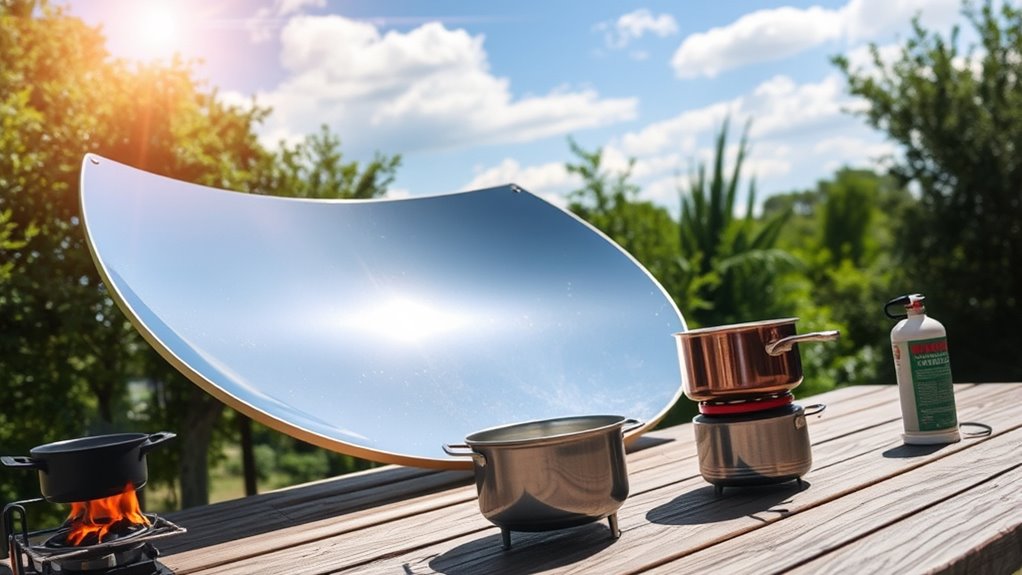
Reflective surfaces are essential because they direct and concentrate sunlight onto the cooking chamber. There are various types of reflective surfaces you can choose from, each with its advantages. Aluminum foil is a popular choice due to its affordability and high reflectivity, making it easy to line the interior of your oven or create reflective panels. Its shiny surface helps bounce sunlight efficiently, increasing the amount of heat trapped inside. Mylar sheets are another excellent option, offering even higher reflectivity and durability, which can improve cooking times and overall efficiency. These sheets are lightweight and flexible, allowing for easy installation and adjustment.
Reflective surfaces direct sunlight efficiently, with aluminum foil and Mylar sheets offering affordable, high-performance options.
Mirror surfaces provide an even more focused reflection, but they can be more expensive and fragile. Using glass mirrors or polished metal surfaces can concentrate sunlight more effectively, but you need to ensure they’re securely mounted and protected from damage. The shape and placement of these reflective surfaces also matter. Parabolic reflectors, for example, focus sunlight into a single point, notably boosting heat concentration. Flat reflectors, on the other hand, are easier to construct and adjust but may not achieve the same level of concentration. Regardless of the type you choose, the goal is to maximize the amount of sunlight directed toward the cooking chamber while minimizing heat loss.
Maintaining the reflective surfaces in good condition is crucial, as dirt or dust can significantly decrease their reflectivity, reducing overall efficiency. The efficiency of your solar oven depends heavily on how well the reflective surfaces are maintained and positioned. Keep the surfaces clean and free of dust or dirt that can reduce reflectivity. Adjust the angles throughout the day to track the sun’s movement, ensuring maximum sunlight capture. Additionally, the quality of your reflective surfaces influences how much heat you can generate and retain. The better the reflectivity, the faster your food cooks, saving you time and energy.
Frequently Asked Questions
Can Solar Cookers Be Used During Cloudy Weather?
Yes, solar cookers can still be used during cloudy weather, but their effectiveness decreases considerably. Clouds diffuse sunlight, reducing the amount of solar energy your cooker receives. You might notice longer cooking times or less consistent heat. To optimize results, choose a solar cooker designed for low-light conditions, and guarantee it’s positioned where it can get the maximum possible sunlight. Keep in mind, cloudy days limit efficiency, so plan accordingly.
What Are the Safety Precautions for Solar Cooking?
A stitch in time saves nine, so always prioritize safety with solar cooking. You should wear protective gear, like oven mitts, to prevent burns and handle reflective surfaces carefully to avoid eye injuries. Keep children and pets away from the cooking area, and never leave the cooker unattended. Follow proper cooking precautions, guarantee the cooker is stable, and check for leaks or damages. Solar safety is vital for a safe, enjoyable experience.
How Energy-Efficient Are Solar Cooking Methods Compared to Traditional?
You’ll find that solar cooking methods are highly energy-efficient compared to traditional cooking, leading to significant energy savings. By relying on sunlight instead of electricity or gas, you reduce your environmental impact and lower energy bills. Solar cooking minimizes fossil fuel use, making it a greener choice. Overall, it offers an eco-friendly, cost-effective way to prepare meals while conserving resources and reducing your carbon footprint.
Are Solar Cookers Suitable for All Types of Food?
Solar cookers work well for many foods, but they’re not ideal for all. You might notice food texture varies depending on the dish, and cooking time can be longer compared to traditional methods. For example, stews and grains cook nicely, but you’ll want to avoid delicate foods like eggs or quick-cooking vegetables. Adjust your expectations, and you’ll enjoy energy-efficient cooking that’s great for many meals.
What Maintenance Is Required for Solar Cooking Devices?
Think of your solar cooker as a garden that needs tending. You should regularly perform cleaning routines to prevent dust and grime from blocking sunlight, and inspect components like reflectors and seals for damage or wear. Keep reflective surfaces shiny and intact, and check for cracks or leaks. Proper maintenance guarantees your solar cooker operates efficiently, much like nurturing a plant to ensure it flourishes and serves you well over time.
Conclusion
So, next time you’re craving a hot meal, forget about those fancy gadgets or gas stoves—just stare at the sun a little longer. Who needs electricity or fossil fuels when you can master the art of solar cooking? It’s eco-friendly, budget-friendly, and makes you look like a futuristic chef. Embrace the power of the sun; after all, it’s been patiently waiting to cook your dinner since the dawn of time.