To build an effective root cellar, focus on insulating the space with eco-friendly materials like straw or foam and dig deep into the ground for natural cooling. Install ventilation vents at both the top and bottom to promote airflow and regulate humidity, aiming for 85-95%. Use breathable containers for storage and keep the temperature between 32°F and 40°F. Proper planning guarantees a stable environment that preserves your food longer—continue exploring for more tips.
Key Takeaways
- Select a cool, dark, and stable underground location to naturally regulate temperature.
- Build with insulated walls using eco-friendly materials like straw or foam to maintain consistent temperatures.
- Install vents at the top and bottom to promote proper airflow and moisture control.
- Use breathable storage containers to prevent moisture buildup and mold growth.
- Plan for future expansion and incorporate sustainable construction practices for long-term use.
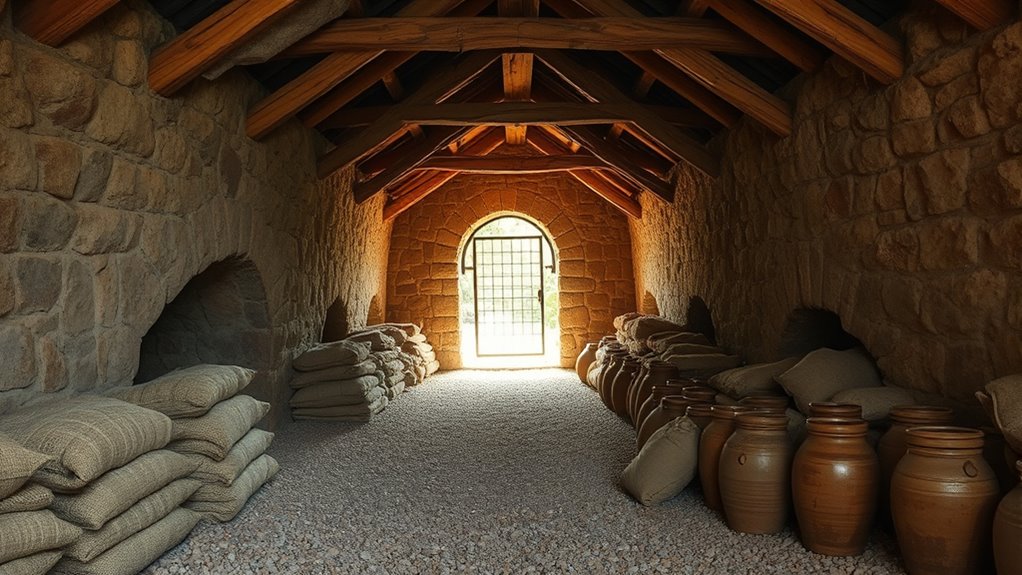
Have you ever wondered how to keep your vegetables fresh through the winter? Building a root cellar is one of the best ways to do that, and understanding how to control the environment inside is key. When constructing your cellar, focus on creating a space that maintains consistent temperature regulation and moisture control. These two factors are essential for preserving your harvest without spoilage or rot.
First, think about temperature regulation. Your goal is to keep the interior temperature steady, ideally between 32°F and 40°F, mimicking a natural underground environment. To achieve this, you need to contemplate the depth and insulation of your cellar. Digging deep enough into the ground helps leverage the earth’s natural cooling properties, maintaining a stable temperature. Insulating the walls with materials like straw, foam, or other eco-friendly options prevents temperature fluctuations caused by outdoor weather changes. The thicker the insulation, the less your cellar’s temperature will fluctuate, ensuring your vegetables stay fresh longer.
Maintain a steady 32°F to 40°F temperature by digging deep and insulating your root cellar effectively.
Moisture control is equally critical. Excess moisture can lead to mold, rot, or sprouting, while too little can cause vegetables to dry out and lose flavor. To manage moisture effectively, incorporate a ventilation system that allows fresh air to circulate without letting in excess humidity or cold air. Small vents placed near the top and bottom of your cellar promote air exchange, helping to regulate humidity levels naturally. Additionally, lining the shelves with materials like straw or sand can help absorb excess moisture and keep the environment stable. Use a hygrometer to monitor humidity levels, aiming for around 85-95% depending on the crops stored. By maintaining this balance, you prevent mold growth while keeping your produce crisp and firm.
Another practical tip is to store vegetables in breathable containers or baskets rather than sealed plastic bags, which trap moisture and promote spoilage. Also, keep your storage area well-organized so you can easily check on your produce regularly. Regular inspection allows you to remove any decayed items before they affect others, preserving the overall quality of your stored foods. Additionally, understanding personal finance management principles, like budgeting for materials or planning for future storage needs, can help you build a more effective and sustainable root cellar over time.

SmartSHIELD -5mm 16''X50ft R17 Reflective Insulation Roll, Foam Core Radiant Barrier, Thermal Insulation – FOIL / FOIL
- High Reflectivity: Reflects 95% of radiant energy
- Vapor Barrier: Prevents condensation from moisture
- Standards Compliant: Meets ASTM C1313 and fire safety standards
As an affiliate, we earn on qualifying purchases.
As an affiliate, we earn on qualifying purchases.
Frequently Asked Questions
What Are the Best Materials for Insulating a Root Cellar?
You should use sustainable materials like straw bales, cellulose, or recycled denim for insulating your root cellar. These insulation techniques provide excellent thermal protection while being eco-friendly. You can also consider adding foam board or spray foam for extra insulation, but prioritize sustainable options. Proper insulation helps maintain consistent temperatures, keeping your stored food fresh longer. Remember to seal all gaps to maximize insulation efficiency and make sure your root cellar stays cool and dry.
How Deep Should a Root Cellar Be Dug Underground?
A stitch in time saves nine, so dig your root cellar about 4 to 6 feet deep. This depth ensures soil stability and helps maintain consistent temperatures. You’ll also want to take into account moisture control, so choose a well-draining site and add proper insulation. Going deeper can improve temperature regulation, but make certain you’re not compromising soil stability or moisture balance. Proper planning guarantees your cellar stays cool and dry year-round.
What Is the Cost Estimate for Building a Root Cellar?
You should budget around $2,000 to $5,000 for building a root cellar, depending on its size, materials, and complexity. Conducting thorough cost estimation helps you plan your budget effectively, ensuring you allocate funds for excavation, insulation, and ventilation. By carefully evaluating all expenses, you can avoid surprises and make informed decisions that fit within your financial limits while creating a functional, durable food storage space.
Are There Specific Permits Required for Underground Storage?
You’ll need to check building codes and zoning regulations in your area before constructing your underground storage. Permits are often required to verify your root cellar meets safety and structural standards. Contact your local building department to understand specific requirements, which may include permits for excavation, electrical work, or plumbing. Failing to obtain necessary permits could lead to fines or issues if you decide to sell or insure your property later.
How Can I Ensure Proper Ventilation in My Root Cellar?
To guarantee proper ventilation in your root cellar, you should install ventilation systems that promote airflow and prevent stale air. Use vents or exhaust fans to facilitate moisture control, which helps prevent mold and rot. Regularly check and clean your ventilation openings, and consider adding adjustable vents to regulate airflow based on weather conditions. Proper ventilation keeps your stored food fresh and maintains a healthy environment in your root cellar.
Conclusion
Building your root cellar transforms your space into a cool, earthy haven where harvests rest peacefully. As you carve out a sturdy foundation and fill it with fresh produce, you create a sanctuary beneath the surface, whispering promises of abundance. Feel the cool dampness, hear the gentle hum of preservation, and imagine your pantry of vibrant roots and crisp vegetables, all stored safely in your underground retreat—a timeless cycle of growth, preservation, and sustenance.