
Flood dynamics are influenced by rainfall, land features, sediment buildup, and how urban development alters natural water flow. When cities expand into floodplains and cover surfaces with concrete, runoff speeds up and increases flood risk. Sediment deposits clog waterways, worsening flooding over time. Effective floodplain management restores natural buffers like wetlands and uses green infrastructure to slow water flow. To understand how these strategies work together, keep exploring these essential considerations.
Key Takeaways
- Flood dynamics are influenced by rainfall, topography, land use, and sediment deposition, affecting water flow and channel capacity.
- Urban development increases runoff and sediment accumulation, reducing natural flood mitigation features and heightening flood risks.
- Sediment deposition in waterways causes aggradation, narrowing channels, and increasing flood severity over time.
- Restoring natural floodplains, wetlands, and implementing green infrastructure can reduce runoff, trap sediments, and mitigate floods.
- Effective floodplain management requires integrating ecological, infrastructural, and land-use strategies to minimize flood impacts.
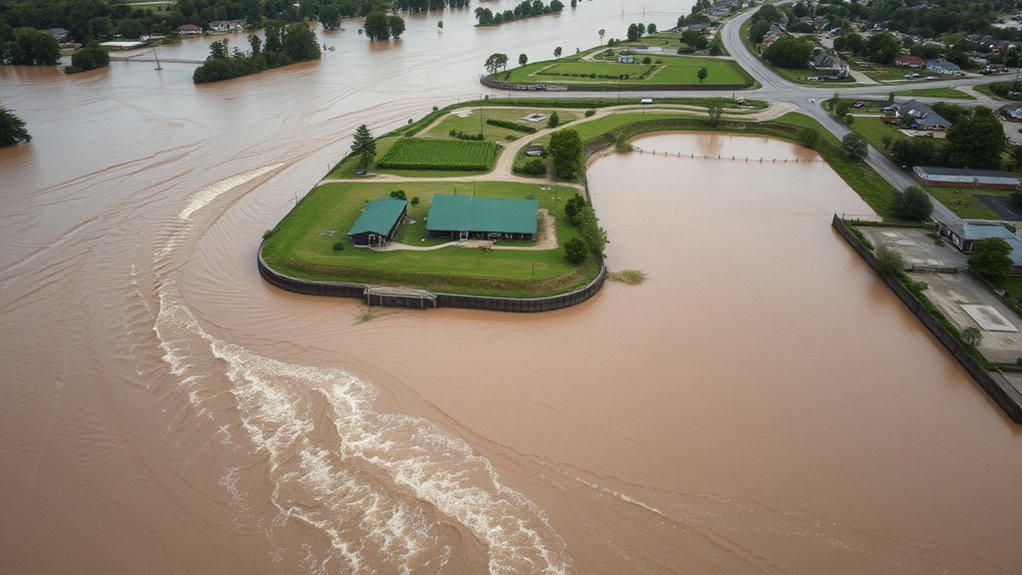
Flood dynamics refer to how water moves and behaves during flood events, influenced by factors such as rainfall, topography, soil saturation, and land use. When heavy rain falls, water rushes across the landscape, following the natural contours and valleys. But human activities, particularly urban encroachment, substantially alter these natural patterns. As cities expand into floodplains, impervious surfaces like concrete and asphalt prevent water from soaking into the ground, increasing runoff volume and speed. This heightened flow not only raises flood risks but also accelerates sediment deposition in waterways, clogging channels and reducing their capacity. Sediment accumulation can cause water to back up, creating localized flooding even during moderate storms. Urban development often fragments floodplain areas, disrupting natural flood mitigation features like wetlands and vegetated areas, which would otherwise absorb excess water and trap sediments. Without these natural buffers, floodwaters become more intense and unpredictable.
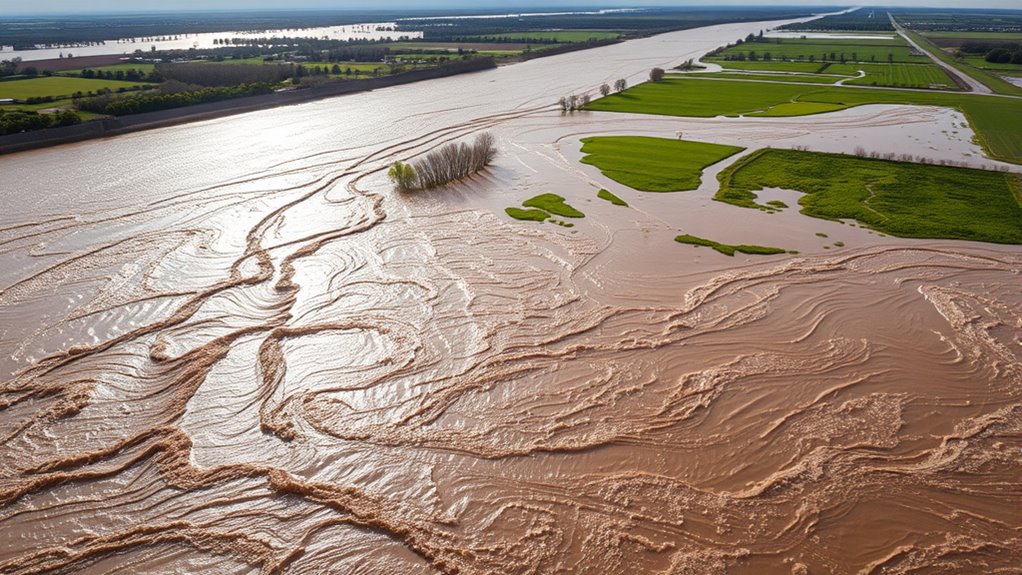
Understanding how sediment deposition interacts with urban encroachment is key to managing flood dynamics. As sediments settle in streams and rivers, they gradually raise the bed levels, narrowing channels and reducing their ability to carry floodwaters efficiently. This process, known as aggradation, worsens flood severity over time, especially in urban settings where construction and land modification disturb the natural sediment flow. When floodwaters encounter these sediment-laden channels, they tend to spread laterally, inundating areas that might have previously been safe. If urbanization continues unchecked, the combination of increased runoff and sediment buildup can create a vicious cycle, where flood risks grow more severe and costly to manage.
Effective floodplain management requires an all-encompassing understanding of these dynamics. You need to contemplate how land use decisions influence flood behavior, particularly in urban areas. Implementing measures like green infrastructure—such as permeable pavements, green roofs, and rain gardens—helps reduce runoff and sediment transport. Restoring natural floodplains and wetlands can also slow water flow, trap sediments, and protect communities from flood damage. Proper zoning and land-use planning are essential; restricting development in high-risk flood zones prevents further encroachment into vulnerable areas. Where urban growth is unavoidable, engineered solutions like levees and retention basins can help control water flow and sediment deposition, but they must be part of a broader strategy that emphasizes ecological resilience. Ultimately, managing flood dynamics involves balancing development needs with natural processes, ensuring that floodplains can serve as buffers rather than liabilities during heavy rain events.

Vodaland Permeable HexPave System – Grass & Gravel Pavers – 100% Recycled PPE Plastic, Handles 27,000 lbs, 1" Depth, 65 s.f / 22 Units
- Eco-Friendly Material: Made from 100% recycled PPE plastic
- High Load Capacity: Supports up to 27,000 lbs
- Coverage Area: Covers 65 sq ft with 22 units
As an affiliate, we earn on qualifying purchases.
As an affiliate, we earn on qualifying purchases.
Frequently Asked Questions
How Do Climate Change Effects Influence Flood Frequency?
Climate change increases climate variability, which leads to more intense storms and unpredictable rainfall patterns. As a result, you’ll notice a rise in flood recurrence, especially during heavy downpours. These extreme weather events become more frequent, overwhelming drainage systems and natural flood controls. You may experience more frequent floods, making it essential to adapt flood management strategies to these changing conditions to protect communities and infrastructure effectively.
What Are the Economic Costs of Floodplain Management?
You face significant economic costs with floodplain management, including infrastructure investment and ongoing maintenance. Conducting a cost-benefit analysis helps you weigh these expenses against potential flood damages avoided. While initial investments can be high, effective floodplain management reduces long-term costs, protecting communities and infrastructure. You must balance upfront costs with the benefits of minimizing flood risks, ensuring sustainable development and resilience against future flood events.
How Do Urban Developments Impact Flood Risk?
Urban developments dangerously deepen flood risks through unchecked urban sprawl, overwhelming natural water pathways. Your expansion efforts can hinder infrastructure resilience, making communities more vulnerable to flooding. When you push development into flood-prone areas, you increase the chances of water woes, damaging property and disrupting lives. To mitigate these risks, prioritize planning that promotes proper drainage, preserves natural floodplains, and strengthens infrastructure resilience, ensuring safer, sustainable urban growth.
What Role Do Natural Floodplains Play in Ecosystem Health?
Natural floodplains play a crucial role in ecosystem health by supporting wetland functions that filter pollutants, recharge groundwater, and control floods. You can see how they boost biodiversity conservation by providing habitats for diverse plants and animals. Protecting these floodplains guarantees healthy ecosystems, enhances resilience to climate change, and maintains the ecological balance that benefits both nature and human communities.
How Can Community Participation Improve Flood Management Strategies?
Did you know that communities with higher engagement reduce flood risks by up to 30%? Your involvement boosts community awareness and encourages local engagement, leading to more effective flood management strategies. When residents participate in planning and decision-making, it fosters better preparedness and resilience. Your active role helps identify vulnerabilities, supports sustainable solutions, and guarantees that flood response measures are practical and widely accepted, ultimately protecting lives and property.
Conclusion
As you navigate flood dynamics and manage floodplains, you’ll notice how nature’s rhythms subtly shape the landscape. When rivers swell unexpectedly, their gentle whispers remind you of the delicate balance you endeavor to maintain. In these moments, the water’s quiet surge feels almost like a secret shared between earth and sky, urging you to stay vigilant. Together, understanding these patterns helps you protect communities, turning unpredictable floods into manageable, natural events.