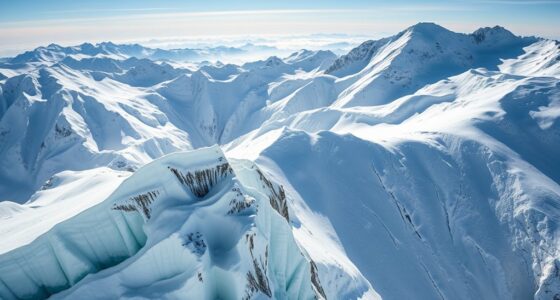
As temperatures rise, permafrost begins to thaw, releasing trapped organic matter that microbes break down into greenhouse gases like methane and carbon dioxide. This process creates a feedback loop, speeding up global warming and causing ground instability, infrastructure damage, and ecosystem disruption. The release of potent methane markedly amplifies climate change, making each small increase have a big impact. To understand how this cycle continues and what you can do, explore the full picture behind permafrost’s climate implications.
Key Takeaways
- Permafrost thaw releases stored organic carbon, leading to increased greenhouse gas emissions, especially methane and CO₂.
- Methane from thawed permafrost acts as a potent short-term climate warming feedback.
- Thawing causes ground instability and infrastructure damage, impacting ecosystems and human communities.
- The process accelerates climate change through a self-reinforcing feedback loop of warming and permafrost thaw.
- Addressing permafrost-related emissions is critical for mitigating rapid climate change and its global impacts.
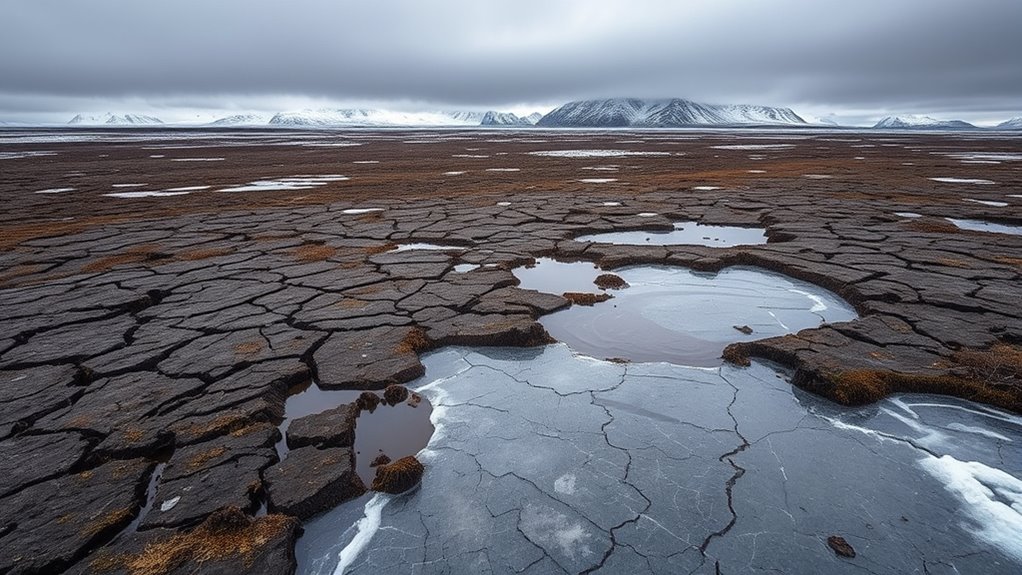
As global temperatures rise, permafrost—permanently frozen ground—begins to thaw at an unprecedented rate. This process isn’t just about melting ice; it has serious implications for the climate you’ve been trying to slow down. When permafrost thaws, it exposes organic material that has been locked away for thousands of years. Microbes then break down this material, releasing greenhouse gases like carbon dioxide and methane into the atmosphere. Methane release, in particular, is alarming because methane is a potent greenhouse gas—much more effective at trapping heat than carbon dioxide in the short term. As this gas escapes, it creates a feedback loop: more warming leads to more permafrost thaw, which releases more methane, amplifying the greenhouse effect. This is what scientists call a carbon feedback, where the climate change you’re witnessing accelerates itself through natural processes.
You might not see it happening directly, but the impact is global. The release of methane from thawing permafrost adds to the overall greenhouse gases in the atmosphere, pushing temperatures even higher. This process is self-reinforcing, meaning that once it begins, it can spiral out of control unless significant mitigation efforts are implemented. The more permafrost thaws, the more methane and carbon dioxide are released, further trapping heat and destabilizing climate systems. This positive feedback loop could significantly accelerate climate change, making it harder for your efforts to curb emissions to be effective in the long run.
It’s also important to understand that this thawing permafrost doesn’t just affect the atmosphere; it can cause ground subsidence, damaging ecosystems, infrastructure, and communities. As the ground becomes unstable, it can lead to infrastructure collapse, disrupt wildlife habitats, and even release ancient pathogens that have been trapped for millennia. The release of methane is particularly alarming because it acts quickly and has a much higher heat-trapping capacity than carbon dioxide over short periods. This means that even small increases in methane levels can have outsized impacts on global temperatures.
In short, the thawing of permafrost isn’t a distant problem; it’s a direct feedback mechanism that can accelerate climate change faster than previously anticipated. Your actions to reduce emissions are vital, but understanding and addressing this natural feedback process is equally important. If unchecked, the release of methane and other greenhouse gases from permafrost could lock in more warming, making it even more difficult to stabilize the climate in the future.
As an affiliate, we earn on qualifying purchases.
Frequently Asked Questions
How Does Permafrost Thaw Affect Local Wildlife?
When permafrost thaws, you’ll notice soil disturbance that can disrupt local wildlife habitats. Animals relying on stable ground, like burrowing mammals and nesting birds, face habitat loss as the landscape shifts. Additionally, thawing exposes new areas to erosion, further threatening species that depend on consistent conditions. This habitat loss forces wildlife to adapt, migrate, or face decline, impacting the entire ecosystem’s balance.
Can Permafrost Thaw Trigger New Natural Disasters?
You might not realize it, but permafrost thaw can trigger new natural disasters, like landslides. As the ice melts, it destabilizes slopes, increasing landslide risks. Additionally, thawing permafrost releases trapped methane, a potent greenhouse gas, which accelerates climate change. For example, in Siberia, melting permafrost has already caused landslides and methane bursts, demonstrating how thawing permafrost can lead to unpredictable and dangerous natural events.
What Are the Economic Impacts of Permafrost Melting?
You face significant economic costs as permafrost melts, leading to infrastructure damage that requires costly repairs and replacements. The thaw weakens foundations of buildings, roads, and pipelines, increasing maintenance expenses and potentially halting development projects. Additionally, there’s a ripple effect on local economies due to disrupted transportation and resource extraction. Overall, melting permafrost strains budgets, hampers growth, and demands urgent investments to mitigate further damage.
How Do Indigenous Communities Adapt to Permafrost Changes?
You adapt to permafrost changes by drawing on traditional knowledge, which guides your community in adjusting building methods and land use. You may reinforce structures to prevent shifting or damage and develop new ways to hunt, fish, and gather resources. Your community resilience shines through in collective efforts to share knowledge, innovate, and support each other, ensuring your way of life endures despite the environmental challenges posed by thawing permafrost.
Are There Any Geoengineering Solutions to Slow Permafrost Thaw?
Yes, geoengineering interventions can help slow permafrost thaw through permafrost stabilization techniques. You might explore methods like reflective surfaces to reduce heat absorption or injecting substances to insulate the ground. These strategies aim to preserve permafrost and mitigate climate impacts. While promising, they require careful research and risk assessment before widespread implementation. By focusing on permafrost stabilization, you could contribute to climate change mitigation efforts.
Conclusion
As you consider the impact of permafrost thaw, remember that it holds about 1,500 billion tons of stored carbon—twice the amount released by human activities so far. When permafrost melts, this carbon can release as methane and carbon dioxide, accelerating climate change. So, your actions today matter. By understanding these processes, you can help advocate for policies that protect our planet’s fragile icy regions and reduce overall emissions.