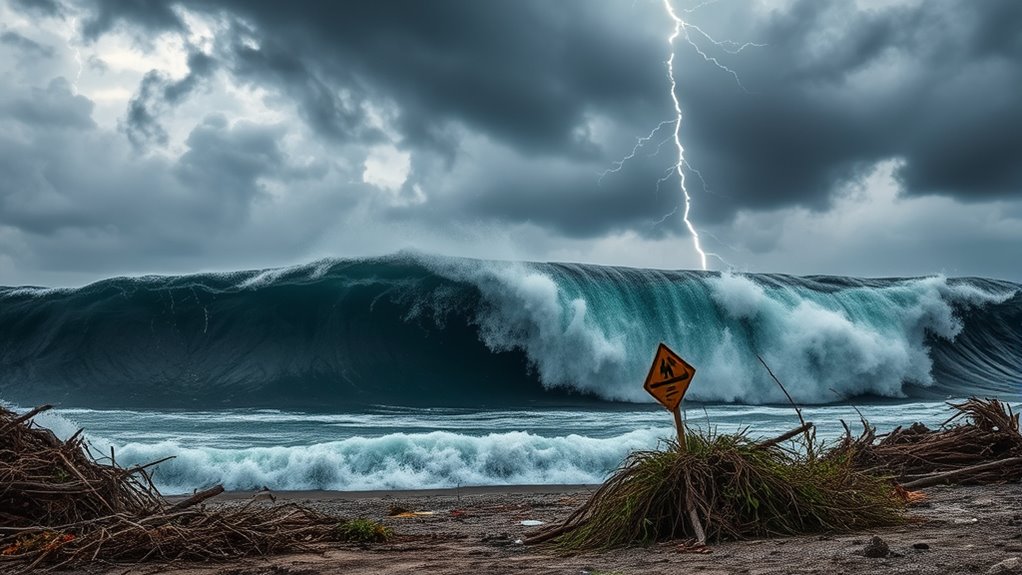
Tsunamis are caused by underwater disturbances like earthquakes, volcanic eruptions, or landslides that displace large amounts of water. Warning signs include a sudden retreat of water and a loud roar like a train. To stay safe, recognize natural signs and follow evacuation protocols quickly. Be familiar with local routes and participate in drills. If you want to understand more about how tsunamis form, warning signs, and preparedness strategies, there’s more to learn here.
Key Takeaways
- Tsunamis are caused by underwater earthquakes, volcanic eruptions, or landslides that displace large water volumes.
- Natural warning signs include sudden water withdrawal and loud roaring sounds before waves arrive.
- Monitoring seismic activity and sea levels helps predict and detect potential tsunamis early.
- Evacuate immediately to higher ground upon official alerts or natural signs to ensure safety.
- Community awareness, regular drills, and understanding evacuation routes improve preparedness and response.
Have you ever wondered what causes a tsunami? These powerful waves often originate from underwater disturbances such as earthquakes, volcanic eruptions, or landslides. When a significant seismic event occurs beneath the ocean, it can displace a large volume of water, generating a series of waves that travel across the ocean at high speeds. Although most earthquakes are too small to produce tsunamis, those with a magnitude of 7.0 or higher, especially near coastal areas, can trigger these destructive waves. Understanding the causes helps authorities develop better tsunami prediction systems, which are fundamental for saving lives. Tsunami prediction involves monitoring seismic activity and sea level changes in real time, allowing authorities to identify potential threats early. When a warning is issued, coastal residents need to act swiftly, following evacuation protocols to reach higher ground or designated safe zones. Coastal evacuation becomes an indispensable part of tsunami preparedness. Knowing the local evacuation routes and practicing drills ensures that people can leave the danger zone quickly and efficiently when a warning sounds. It’s imperative to have a clear emergency plan in place, including designated meeting points and communication strategies. Many regions prone to tsunamis have siren systems and alert services that notify residents of an impending danger. Responding immediately when these signals are heard can make the difference between safety and tragedy. The key to effective evacuation is awareness; you should familiarize yourself with the signs of an impending tsunami, such as a sudden, rapid withdrawal of water from the shoreline or a loud roar like a train. These natural signs often precede the waves reaching the coast, giving you precious moments to move to higher ground. These early warning signs are often connected to natural indicators that precede official alerts, highlighting the importance of community awareness. Relying solely on natural signs is risky; that’s why official warnings and alerts are critical components of tsunami preparedness. Educating yourself and your community about tsunami risks, warning systems, and evacuation procedures can greatly reduce the danger. Local authorities often conduct drills to ensure everyone knows what to do when a tsunami warning is issued. Remember, every second counts during a tsunami event, and knowing how to respond quickly can save your life. By staying informed about tsunami prediction methods and maintaining an active awareness of evacuation plans, you can better protect yourself and your loved ones from this formidable natural disaster. Preparing today means less panic tomorrow, so take the time to learn and practice safety measures now.

Mini First Aid Kit - 150 Piece Small Waterproof Hard Shell Medical Kit
- Complete Emergency Supplies: Over 150 professional-grade medical items
- Lightweight & Compact: Measures 6.4 x 4.9 x 2.7 inches, 0.73 lbs
- Travel-Friendly Design: Includes zippers and carabiners for easy carrying
As an affiliate, we earn on qualifying purchases.
Frequently Asked Questions
How Can Individuals Effectively Respond During a Tsunami Warning?
When a tsunami warning occurs, you should immediately follow evacuation procedures by moving to higher ground or inland away from the coast. Grab your emergency kit with essentials like water, food, and first aid supplies, and leave your home quickly and calmly. Stay updated through official alerts, and avoid returning until authorities declare it safe. Acting swiftly and prepared can save your life during a tsunami.
What Long-Term Environmental Impacts Do Tsunamis Cause?
You’ll notice that tsunamis can cause long-term environmental impacts like coastal erosion and sediment displacement. These powerful waves reshape coastlines, washing away beaches and altering habitats. As a result, ecosystems struggle to recover, affecting local flora and fauna. You might also see changes in water quality and sediment layers, which can impact fishing and tourism industries. It’s essential to monitor these changes and support restoration efforts after a tsunami.
Are There Specific Regions More Vulnerable to Tsunamis?
A picture is worth a thousand words, and in tsunami-prone zones, the landscape often reveals the danger. Coastal regions near tectonic plate boundaries, like Japan, Indonesia, and the Pacific Northwest, face heightened regional vulnerabilities. These areas are more vulnerable due to their proximity to seismic activity and oceanic trenches. If you live in or visit these zones, stay alert and prepared, because some regions are naturally more susceptible to these powerful waves.
How Do Tsunami Warning Systems Detect Incoming Waves?
You can rely on tsunami warning systems that detect incoming waves by using seismic sensors to monitor undersea earthquakes, which often trigger tsunamis. When these sensors pick up significant seismic activity, the system quickly assesses the risk and sends alerts through various communication channels. This rapid alert dissemination helps communities prepare and evacuate in time, reducing potential harm from the approaching tsunami.
What Role Does Community Education Play in Tsunami Preparedness?
Community education plays a crucial role in tsunami preparedness by increasing public awareness and encouraging proactive measures. You can participate in community drills, which help you recognize warning signs and practice safe responses. When residents are informed and prepared, they respond quickly and effectively during a tsunami threat, reducing risks and saving lives. Your involvement in local safety programs ensures everyone understands evacuation routes and safety protocols, making your community more resilient.
Conclusion
Remember, staying alert and prepared helps you dance gracefully around the ocean’s gentle whispers and mighty waves. By recognizing subtle signs and knowing what to do, you can turn a challenging moment into a calm, confident response. Embrace the wisdom of early awareness, and let it guide you smoothly through nature’s stories. With a little awareness and preparation, you’ll find yourself in harmony with the sea’s rhythm, ready for whatever gentle or grand surprises it may bring.