
TL;DR

Get emergency and outdoor gear delivered free with Prime
- Fast, free delivery on millions of items
- Prime Video, Amazon Music and more included
- Member-only deals all year
Outdoor Life published a report on a family-owned FN Mauser sporting rifle, made in Belgium in 1951 and chambered in .270 Winchester. The rifle illustrates a postwar class of purpose-built hunting rifles that were sold under several brands, though the report’s claim that the FN Mauser deserves recognition as a top deer rifle is an assessment, not a historical consensus.
Outdoor Life published a report Nov. 3, 2026, examining a Belgian-made FN Mauser sporting rifle from 1951 and arguing that the postwar model merits more attention as a deer rifle. The rifle, chambered in .270 Winchester, belonged to the writer’s great-grandfather; the article presents it as an example of purpose-built sporting Mausers that are less remembered than other mid-century hunting rifles.
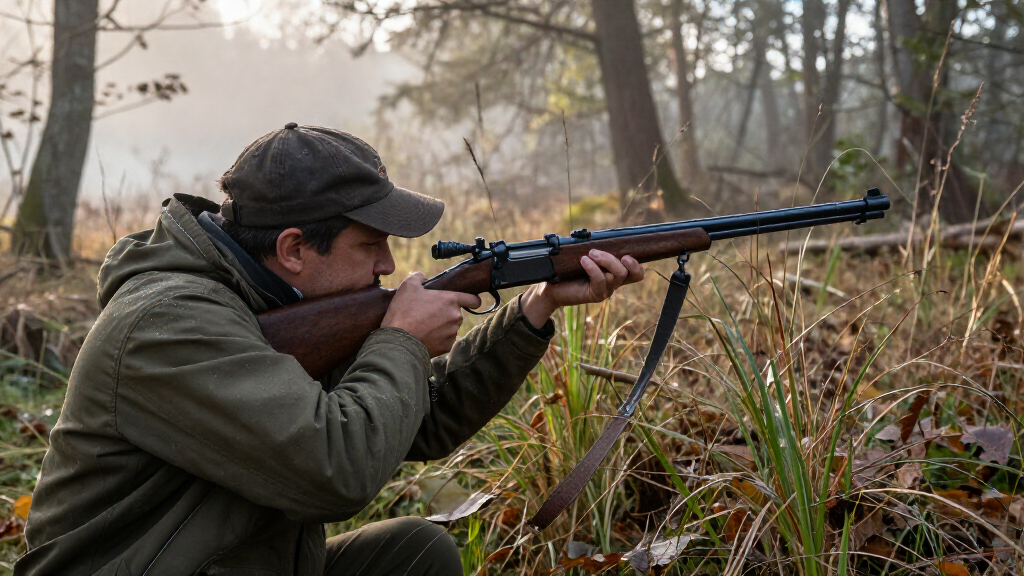
The rifle reviewed by Outdoor Life writer Tyler Freel is built around a Mauser 98 action and has a custom stock, much like the rifles discussed in this comparison of favorite deer rifles. Its listed specifications include a 22-inch chrome-vanadium steel barrel, a 1:10 twist, an adjustable trigger set at 3 pounds, 7 ounces, and a weight of 9 pounds, 10 ounces. The article says the rifle retains a Redfield Bear Cub 2.75-power fixed scope, a type of optic considered in reviews of deer-hunting rifle scopes.
Freel reports that the receiver and barrel have matching serial numbers and appropriate proof marks, and that both carry a 1951 date. He believes the barrel may have been shortened from the 24 inches he says was generally standard for these rifles. The account says family members told him his great-grandfather’s brother, a gunsmith, built the rifle for him. The article does not independently establish the rifle’s full build history.
The report distinguishes these rifles from military Mausers later converted for hunting: FN made the rifles as sporting firearms. They were imported and sold in different configurations, including through companies such as Sears, Weatherby, Harrington & Richardson and Colt. Freel cites 1950s advertisements for FN-based rifles sold as the JC Higgins Model 50 and by Parker-Whelen. The review combines those historical details with observations about the heirloom’s stock fit, bedding and metalwork.
A Forgotten Postwar Hunting Rifle
The report adds detail to a familiar era of American hunting: the postwar boom in hunters and demand for rifles. Pre-64 Winchester Model 70s, Savage 99s and vintage Marlins often dominate popular recollections of that period. Outdoor Life’s account points to FN Mausers as another option, one that could reach buyers through several retailers and rifle makers rather than one widely recognized brand identity.
For readers interested in older hunting firearms, the distinction between a factory sporting rifle and a converted military action matters. The FN rifles were designed for sporting use, while the article describes many other postwar Mausers as surplus military rifles adapted for hunting. That history helps explain why the FN examples may be less familiar today, even as individual rifles remain in use as heirlooms.
The review’s praise is based in part on one rifle’s construction and family use, not on a broad comparative test. Its weight, custom stock and fixed-power scope also differ from many modern hunting setups. The article makes a case for historical recognition; it does not establish that the FN Mauser is objectively the best deer rifle or suitable for every hunter.
Popular right now

Ninja Foodi Dual Zone Smart XL Air Fryer, 10 Qt, 6-in-1, Black (DZ550)

Bose QuietComfort True Wireless Earbuds with Active Noise Cancellation, Black

eufy C28 Robot Vacuum Cleaner and Mop for Pet Hair, 15,000 Pa
As an affiliate, we earn on qualifying purchases.
How FN Rifles Reached U.S. Buyers
After World War II, the U.S. hunting market grew alongside interest in new rifles and cartridges. In its report, Outdoor Life places the FN Mauser in the same broad period as the Pre-64 Model 70 and Winchester Magnum cartridges, while noting that the Belgian-made rifles have received less attention in later accounts of classic deer guns.
The article says FN rifles and barreled actions entered the U.S. through importers and were marketed under multiple names. A November 1951 Outdoor Life advertisement described the Sears JC Higgins Model 50 as an FN Mauser and listed it with a scope for $135. A Parker-Whelen catalog advertisement from September 1952 listed .30-06 and .270 versions at $137.50 without a receiver-mounted rear sight. These advertisements provide evidence of period sales, but do not identify the exact route by which Freel’s family rifle was purchased.
“These FN Mausers weren’t sporterized — they were manufactured for a couple decades as sporting-specific guns.”
— Outdoor Life, describing the rifles’ production
The Rifle’s Exact Build History
The article says the rifle may have arrived as a barreled action and may have had its original 24-inch barrel shortened to 22 inches. Those points are presented as deductions from markings and dimensions, not as confirmed records of the rifle’s assembly. The family account identifies a gunsmith as its builder, but the report does not provide documentation naming the rifle’s original importer, retailer or configuration.
The article also does not offer a controlled accuracy test, a comparison with other deer rifles, or a complete production history for the FN sporting models. Its headline’s ranking of the rifle as the best deer rifle history forgot is an editorial judgment. The available material supports the rifle’s specifications, period advertising and reported family use, but not a definitive claim that it was the era’s best-performing hunting rifle.
A Case Built on One Heirloom
The published report is a retrospective review rather than a breaking development with a scheduled next milestone. Its account leaves room for further research into FN’s U.S. imports, the different retailer-branded versions and the provenance of individual rifles. For now, readers can distinguish what the article documents—the rifle’s markings, listed specifications and period advertisements—from what remains an inference about this particular gun’s original form and build.
Anyone evaluating an old rifle for use would need to establish its condition and suitability independently; the article’s historical praise does not substitute for an inspection by a qualified gunsmith. The report does not announce a new FN production run or a change to current hunting rules.
Key Questions
What is the FN Mauser in the report?
It is a Belgian-made sporting rifle reviewed by Outdoor Life, built around a Mauser 98 action and chambered in .270 Winchester. The example discussed is dated 1951 and has a custom stock.
Was it a military rifle converted for hunting?
The article says FN made these models as sporting-specific rifles, distinguishing them from surplus military Mausers later converted for hunting. It also notes that FN barreled actions could be used by rifle builders.
What is known about this rifle’s history?
Freel says family members told him the rifle was built for his great-grandfather by his great-grandfather’s brother, a gunsmith. The barrel and receiver are reported to have matching serial numbers and 1951 markings, but the full build and sales history is not established.
Did the report prove it is the best deer rifle?
No. The headline expresses the report’s editorial assessment. The article describes one heirloom rifle and historical advertisements but does not present a controlled comparison proving it outperforms other deer rifles.
What are the rifle’s listed specifications?
The article lists a .270 Winchester chambering, Mauser 98 action, 22-inch barrel, 1:10 twist, adjustable trigger set at 3 pounds, 7 ounces, and a weight of 9 pounds, 10 ounces. It also reports a Redfield Bear Cub 2.75-power scope.
Source: outdoorlife.com