TL;DR

Get emergency and outdoor gear delivered free with Prime
- Fast, free delivery on millions of items
- Prime Video, Amazon Music and more included
- Member-only deals all year
An Outdoor Life report published Nov. 7 outlines common reasons trail cameras stop working or miss images, drawing on testing and advice from Trail Cam Pro’s Rich Howell. Battery choice, cellular send frequency, solar-panel placement and mounting can all affect performance, though no single fix prevents every failure.
Trail camera failures can stem from batteries, settings, solar panels or mounting, according to a Nov. 7 report by Outdoor Life that draws on advice from Rich Howell of Trail Cam Pro. The report says cameras from every brand can malfunction in the field, making practical setup and maintenance important for hunters relying on images to monitor wildlife, including choosing a trail camera suited to their needs.
Battery problems are one cause cited in the report. Outdoor Life says standard alkaline batteries may not supply enough power for reliable operation, particularly at night, when the camera needs to fire its flash. A camera may still show a reasonable battery level while producing black nighttime images. Howell also reported that some lithium batteries fail quickly; he estimated about one in 20 went bad within days in his experience. The report says he recommends rechargeable lithium batteries, with spares rotated through use.
Cellular transmission settings can affect battery life, too. The report says hunters often start by having cellular cameras send each image immediately. Howell and the Outdoor Life writer recommend considering batch delivery every 12 or 24 hours instead. The writer says he uses a 24-hour schedule and reviews cameras together each morning, which can help compare activity across a property. A guide to cellular trail cameras can help explain available transmission and subscription options. That is the writer’s practice, not a guarantee that the setting will suit every camera or hunting situation.
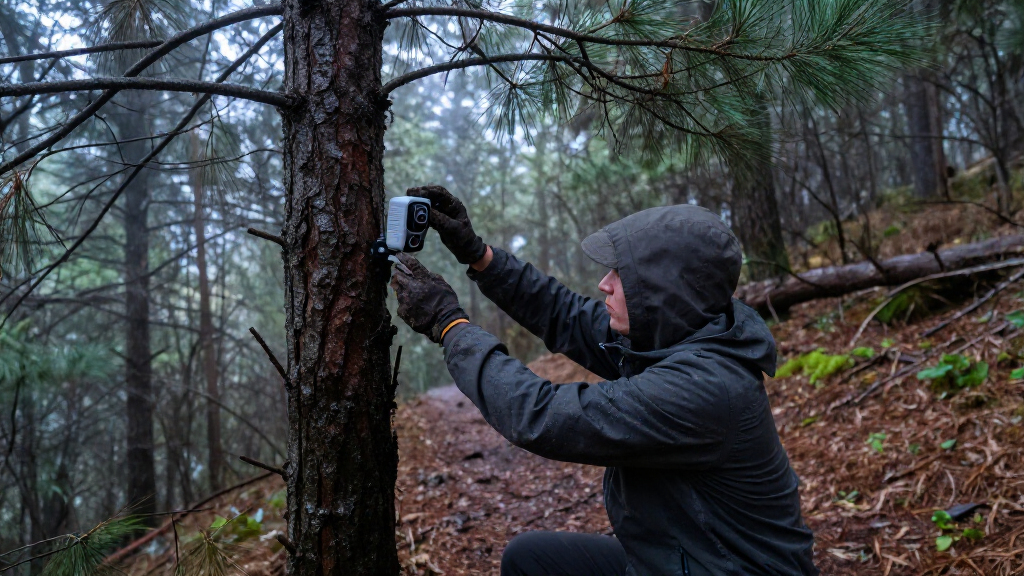
Solar panels and stock straps can create separate problems. Howell says panels should face south to capture sunlight, which may conflict with the direction a camera needs to face. Squirrels may also chew panel wires, particularly in hardwood areas. For mounting, the report cautions that stock straps can loosen or limit positioning, and suggests an adjustable tree mount. These are potential failure points, not evidence that every panel or strap will fail.
Keeping Cameras Useful in the Field
Hunters use trail-camera images to track animal activity and decide when and where to hunt. A dead camera or missing nighttime images can leave gaps in that record, while frequent photo transmissions may drain power sooner. The problems described in the report are practical: reviewing battery type, transmission frequency, panel placement and mounting may help users get more consistent data without assuming a particular camera brand is immune to failure.
The advice also points to trade-offs rather than a single solution. A south-facing panel may gather more sun but may not fit the desired camera angle; sending images less often can conserve power but delays notifications. Hunters need to weigh those choices against their site, equipment and monitoring needs.
Popular right now

KitchenAid Artisan 5-Quart Tilt-Head Stand Mixer, Blue Velvet

Bose QuietComfort Wireless Noise-Cancelling Headphones, Cypress Green

KitchenAid Classic Series 4.5-Quart Tilt-Head Stand Mixer, Onyx Black
As an affiliate, we earn on qualifying purchases.
How the Report Was Prepared
Outdoor Life published the report on Nov. 7, 2026, ahead of the peak of hunting season, according to its page. The writer said he had been testing trail cameras since the previous summer and running them year-round for several years. He interviewed Rich Howell of Trail Cam Pro on the Outdoor Life podcast; Howell, the report says, has tested and experimented with trail cameras for more than 20 years.
The article frames its recommendations as field observations and expert advice, not as a controlled comparison proving that one battery, setting or mount works best in every environment. It also notes that camera construction and use can both contribute to failures. The report does not identify a particular model or manufacturer as responsible for the issues.
“Standard alkaline batteries often don’t have the required power to keep a trail camera running reliably.”
— Outdoor Life report, describing Rich Howell’s advice
Limits of the Field Advice
The report does not provide a controlled test comparing battery brands, transmission schedules, solar-panel designs or mounting systems. Howell’s estimate that about one in 20 lithium batteries failed quickly is presented as his observation; the article does not specify the sample size, brands or conditions behind it. It is therefore unclear how closely that figure applies to other users.
Outdoor Life also does not quantify how much battery life is gained by switching to scheduled uploads, or how often squirrels damage solar-panel wiring. The causes of any individual camera failure can vary, and the article does not establish that a single adjustment will resolve a specific malfunction.
Checks Before the Next Camera Visit
The report’s recommendations point users toward checking their power source and reviewing camera settings before relying on a camera for ongoing monitoring. Hunters can test nighttime operation, consider rechargeable lithium batteries and set cellular uploads to a schedule that fits their needs. They can also inspect solar-panel orientation and wiring, then check whether an adjustable mount holds the camera securely at the intended angle.
Outdoor Life points readers to Trail Cam Pro’s website and newsletter for additional camera information. The report does not announce a new product, recall or formal testing standard; it offers troubleshooting guidance, and the performance of any change will depend on the equipment and field conditions.
Key Questions
Why might a trail camera take daytime photos but miss nighttime images?
The report says insufficient battery power can prevent the camera from firing its flash at night, even if the displayed battery level looks acceptable. Battery condition and camera-specific requirements may vary.
What battery type does the report recommend?
Outdoor Life says Howell recommends rechargeable lithium batteries, kept in rotation. The report also notes that some lithium batteries can fail quickly, based on Howell’s experience.
How often should a cellular trail camera send photos?
The report suggests considering 12- or 24-hour batch uploads rather than immediate delivery to help preserve battery life. The writer says he uses a 24-hour schedule; the best choice depends on how quickly a user needs images.
Do solar panels prevent trail camera power failures?
No. Howell says panels can help, but their placement and wiring can cause problems. The report advises facing them south where possible and notes that squirrels may chew through wires.
Why use an adjustable mount instead of the supplied strap?
The report says stock straps can loosen and make precise positioning difficult. An adjustable tree mount may offer more control over camera angle and placement.
Source: outdoorlife.com