TL;DR

Get emergency and outdoor gear delivered free with Prime
- Fast, free delivery on millions of items
- Prime Video, Amazon Music and more included
- Member-only deals all year
An Outdoor Life report published Nov. 7 says harvesting a doe during the whitetail rut can attract bucks to the area and help hunters meet population-management goals. National Deer Association communications chief Lindsay Thomas Jr. supports the tactic, while stressing careful shot recovery; the report also notes that meat should not be left out in warm conditions.
Outdoor Life reported Nov. 7 that hunters need not automatically avoid harvesting does during the whitetail rut: the article says a doe carcass may attract bucks, while taking antlerless deer can also help meet a property’s herd-management goals. Lindsay Thomas Jr., chief communications officer of the National Deer Association, supports the tactic, though the report emphasizes that hunters must recover the animal responsibly and account for meat spoilage.
The debate centers on whether a live doe is more useful to a hunter than one harvested nearby. Some hunters pass does during the rut because a live animal could draw a buck along its trail or return when it enters estrus. Thomas takes the other view. He called a doe on the ground the strongest buck attractant, saying natural scent and the appearance of a doe can be more compelling than commercial scent products or calls. That is his field-based assessment, not a guarantee that a buck will appear.
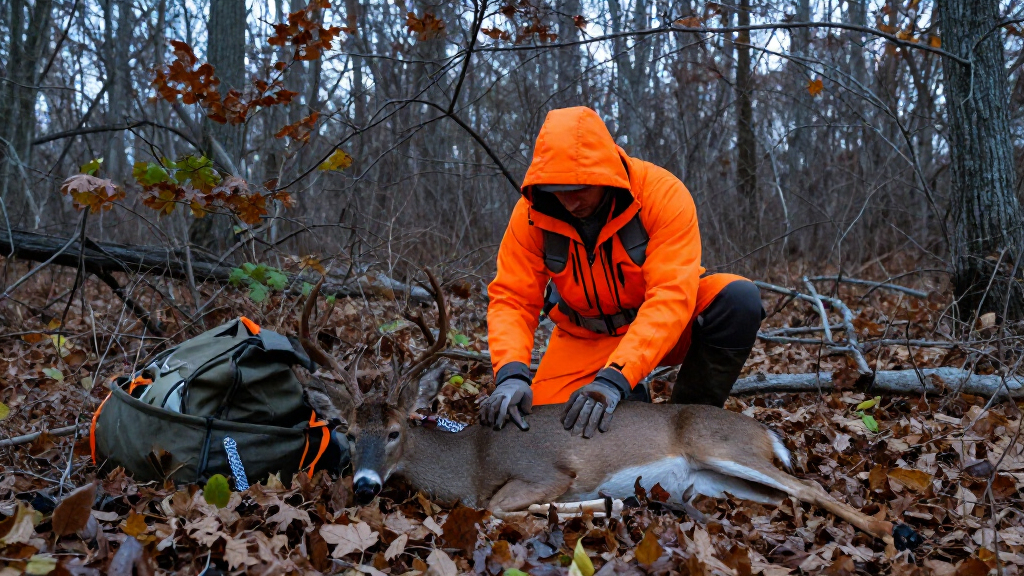
The Outdoor Life writer recounts shooting a doe about 40 yards from a stand during an afternoon hunt the previous year. Two young bucks came to investigate about an hour later. The writer passed them, but the account illustrates the possibility rather than establishing how often the approach works. Thomas also referred to video by wildlife biologist Grant Woods showing a buck attempting to rouse a dead doe with its antlers. He said a buck may not find a doe lying down unusual during rutting behavior, when an estrus doe can bed for a period before breeding.
Placement and recovery matter. A wounded deer can travel, particularly after an arrow shot, and a carcass that ends up far from the stand may be less visible or accessible to a passing buck. The report says Thomas would avoid extensive tracking or walking around the area during the hunt, but might move a doe if its location is known and the move can be made quickly. The hunter’s duty to make an ethical shot and recover the animal comes first; the report also advises using the tactic only when temperatures are cold enough to protect the meat.
Balancing Rut Tactics and Herd Goals
For hunters with antlerless tags, the question affects both how they plan a rut hunt and whether they meet local deer-management objectives. Harvesting a doe could create an opportunity to encounter a buck while also reducing deer numbers on a property. Those aims are compatible in the report’s account, but neither outcome is assured: a buck may not investigate, and population benefits depend on local conditions and the management plan.
Thomas says reducing deer density can leave more forage for the animals that remain. The article gives an adult doe’s daily forage consumption as 6 to 10 pounds, but that figure does not by itself establish a specific ecological effect for every property. Hunters should weigh local herd conditions, regulations, their tags, and meat recovery rather than treat the tactic as a universal recommendation.
Popular right now

Dyson Cyclone V10 Origin Cordless Vacuum

KitchenAid Artisan 5-Qt Tilt-Head Stand Mixer – Almond Cream (KSM150PS)

KitchenAid Artisan 5-Quart Tilt-Head Stand Mixer, Blue Velvet
As an affiliate, we earn on qualifying purchases.
Why Hunters Disagree About Does
The source describes two competing rut strategies. One favors passing does so live animals can draw bucks through the hunting area or return when they become receptive. The other favors harvesting a doe nearby, based on the idea that her scent and presence may prompt a buck to investigate. The disagreement is tactical; the article does not present controlled research comparing success rates.
The National Deer Association has advocated taking does early in the season to help meet property management goals, according to the report. Thomas says the timing can include the rut. He identifies age and nutrition as two factors hunters can influence in producing mature bucks, while genetics is not under the same direct control. The article’s management argument is that lowering deer density can increase forage available to other deer as winter approaches.
“I don’t think you want to get down and spend an hour blood trailing if it’s not going to be an easy blood trail.”
— Lindsay Thomas Jr.
What the Rut Tactic Cannot Promise
The report offers expert opinion, hunter experience and an example from a hunt, but it does not provide controlled data on how often a dead doe attracts a buck or compare that result with passing a doe. There is no success-rate estimate, and the outcome may vary with location, weather, deer behavior and the placement of the carcass.
The article also does not provide property-specific population data or a universal harvest target. Whether reducing deer numbers improves forage or herd health depends on local conditions. Hunters should follow applicable rules and any relevant management guidance; the source does not set out jurisdiction-specific regulations. The meat-safety advice is conditional on cold weather, with no temperature threshold specified.
Decisions Before the Next Shot
Hunters considering the approach should check their antlerless tags and local rules, then decide whether harvesting a doe fits their property’s management goals. During a hunt, shot placement and a realistic recovery plan take priority over the possibility of drawing a buck. If the animal is harvested, it must be tagged and recovered, and the hunter should not leave meat exposed in conditions that could spoil it.
The article identifies no forthcoming study or policy change. For now, its practical conclusion is limited: harvesting a doe during the rut is a defensible option, not a guaranteed buck tactic. Hunters should base the decision on local herd needs, safe meat handling and their ability to recover the animal.
Key Questions
Can a harvested doe attract bucks during the rut?
According to National Deer Association communications chief Lindsay Thomas Jr., a doe on the ground can attract bucks through her scent and appearance. The report shares hunter experience and an example, but does not give a measured success rate or guarantee a buck will come in.
Why do some hunters pass does during the rut?
Some hunters believe a live doe may lead a buck past their stand or return when she enters estrus. The report presents this as one side of a debated hunting tactic, not as a proven rule.
Should a hunter move a doe closer to a stand?
The report says Thomas would avoid extensive tracking or walking around the area. If the doe is known to be down and can be moved quickly, making her visible from more places may help; ethical recovery and local requirements come first.
How can doe harvest support deer management?
The National Deer Association supports doe harvest to help meet property management goals. Thomas says reducing deer density can leave more forage for remaining deer, but the appropriate harvest depends on local herd conditions.
When does the report recommend using a harvested doe as an attractant?
It advises doing so only on cold days when the meat will not spoil during the remaining hunt. It does not specify a temperature threshold, so hunters must follow safe meat-handling practices and applicable guidance.
Source: outdoorlife.com