Portable propane generators can power essentials during an outage or support an RV setup, but the right choice depends on how much wattage you need and how much weight, noise, and fuel flexibility you can accept. I name the Westinghouse WGen9500DFc my best overall pick for its high output and remote start, while the WEN DF680iX stands out for inverter power and the POXURIO 2450W for compact use. Larger open-frame models can run more household loads, while inverter options tend to suit sensitive electronics and quieter settings better. Dual-fuel capability adds flexibility, but propane output and runtime can differ from gasoline figures. Read on for the full comparison and guidance on matching a generator to your actual loads.

Get emergency and outdoor gear delivered free with Prime
- Fast, free delivery on millions of items
- Prime Video, Amazon Music and more included
- Member-only deals all year
Complete the kit


Key Takeaways
- The Westinghouse WGen9500DFc is the best overall balance in this group: it pairs substantial backup output with dual-fuel operation and remote starting, though its size makes it less suited to frequent transport.
- Inverter models serve a different job from large open-frame units: the WEN DF680iX and Generac iQ5200 DF offer inverter designs for buyers prioritizing cleaner power and a more portable format over maximum household output.
- Compact choices make real output compromises: the POXURIO 2450W and A-iPower 2300W are easier to place and carry, but they are better for selected appliances or recreational use than broad home backup.
- Several Westinghouse models target distinct load levels: the iGen2550DFc and iGen4000DFc favor smaller setups, while the WGen3600DFcv adds RV-ready 30A outlets and the WGen9500 models target heavier loads.
- Fuel flexibility is not the same as equal performance on every fuel: compare propane-specific output and runtime figures, not just gasoline peak wattage, before deciding whether a dual- or tri-fuel model can cover your planned loads.
| Westinghouse WGen9500DFc Dual-Fuel Portable Generator with Remote Start and CO Sensor |  | Best for High-Output Backup | Fuel: Gasoline or propane | Running output: 9,500 watts on gasoline; 8,500 watts on propane | Peak output: 12,500 watts on gasoline; 11,200 watts on propane | VIEW LATEST PRICE | See Our Full Breakdown |
| WEN DF680iX 6800-Watt Dual-Fuel Portable Inverter Generator |  | Best for Quiet, Clean-Power Backup | Fuel: Gasoline or propane | Surge output: 6,800 watts on gasoline; 6,000 watts on propane | Engine: 224 cc | VIEW LATEST PRICE | See Our Full Breakdown |
| POXURIO 2450W Dual-Fuel Inverter Generator |  | Best Compact Pick for Camping | Fuel: Gasoline or propane | Stated output: 2,450 watts | Voltage and frequency: 120 volts; 60 hertz | VIEW LATEST PRICE | See Our Full Breakdown |
| DuroMax XP13000EH 13,000-Watt Dual Fuel Portable Generator |  | Best Heavy-Duty Output | Fuel: Gasoline or propane | Running output: 10,500 watts | Starting output: 13,000 watts | VIEW LATEST PRICE | See Our Full Breakdown |
| WEN DF360iX 3600-Watt Dual-Fuel Portable Inverter Generator |  | Best for RV and Campground Use | Fuel: Gasoline or propane | Output: 3,600 surge and 2,900 rated watts on gasoline; 3,500 surge and 2,600 rated watts on propane | Engine: 149cc 4-stroke | VIEW LATEST PRICE | See Our Full Breakdown |
| WEN DF5600X 5,600-Watt Dual-Fuel Portable Generator with Electric Start and CO Sensor |  | Best for Mid-Range Backup Power | Fuel: Gasoline or propane | Surge output: 5,600 W gasoline; 5,000 W propane | Engine: 224 cc | VIEW LATEST PRICE | See Our Full Breakdown |
| Westinghouse iGen2550DFc Dual-Fuel Portable Inverter Generator, 2550 Peak Watts |  | Best Compact Inverter for RV Trips | Fuel: Gasoline or propane | Peak output: 2,550 W | Running output: 1,900 W | VIEW LATEST PRICE | See Our Full Breakdown |
| Generac iQ5200 DF 5,200-Watt Dual-Fuel Portable Inverter Generator |  | Best Premium Inverter for Backup Loads | Fuel: Gasoline or liquid propane | Gasoline output: 3,900 running W / 5,200 starting W | Propane output: 3,500 running W / 4,700 starting W | VIEW LATEST PRICE | See Our Full Breakdown |
| A-iPower 2300W Dual-Fuel Inverter Generator | 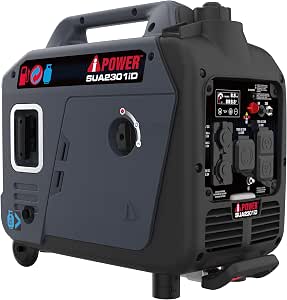 | Best Lightweight Value for Essential Loads | Model: SUA2301iD | Fuel: Gasoline or propane | Gasoline output: 1,800 running W / 2,300 starting W | VIEW LATEST PRICE | See Our Full Breakdown |
| Westinghouse WGen9500TFc Tri-Fuel Portable Generator with Remote Electric Start |  | Best for High-Output Multi-Fuel Backup | Fuel types: Gasoline, propane, natural gas | Running output: 9,500 W gasoline; 8,500 W propane; 7,500 W natural gas | Peak output: 12,500 W gasoline; 11,200 W propane; 9,500 W natural gas | VIEW LATEST PRICE | See Our Full Breakdown |
| Westinghouse iGen4000DFc Dual-Fuel Portable Inverter Generator |  | Best for Quiet, Electronics-Friendly RV Power | Peak wattage: 4,000 watts | Fuel: Gasoline or propane | Voltage: 120 volts | VIEW LATEST PRICE | See Our Full Breakdown |
| Westinghouse WGen3600DFcv Dual-Fuel Portable Generator, 4,650 Peak Watts, RV-Ready 30A Outlets |  | Best for Longer RV Trips | Peak wattage, gasoline: 4,650 watts | Running wattage, gasoline: 3,600 watts | Peak wattage, propane: 4,180 watts | VIEW LATEST PRICE | See Our Full Breakdown |
| Westinghouse WGen9500DF Dual-Fuel Portable Generator, 12,500-Watt Peak, Remote Electric Start |  | Best for High-Load Home Backup | Peak wattage, gasoline: 12,500 watts | Running wattage, gasoline: 9,500 watts | Peak wattage, propane: 11,200 watts | VIEW LATEST PRICE | See Our Full Breakdown |
| portable propane generator | Fuel | Runtime | Engine | Outlets |
|---|---|---|---|---|
| Westinghouse WGen9500DFc Dual- | Gasoline or propane | — | 457 cc 4-stroke OHV | — |
| WEN DF680iX 6800-Watt Dual-Fue | Gasoline or propane | Up to 6.1 hours on gasoline at half load; up to 9 hours on a 20-pound propane tank at half load | 224 cc | L14-30R 120V/240V, two 120V receptacles, TT-30R, 12V DC, and two 5V USB ports |
| POXURIO 2450W Dual-Fuel Invert | Gasoline or propane | — | — | — |
| DuroMax XP13000EH 13,000-Watt | Gasoline or propane | — | 500cc 4-stroke OHV | — |
| WEN DF360iX 3600-Watt Dual-Fue | Gasoline or propane | Up to 5 hours at half load on gasoline; up to 14 hours at half load on a 20-pound propane tank | 149cc 4-stroke | Two 120V NEMA 5-20R, one 120V TT-30R, one 12V DC, and two 5V USB |
| WEN DF5600X 5,600-Watt Dual-Fu | Gasoline or propane | Up to 12.5 hours at half load on gasoline | 224 cc | Two 120 V 20 A 5-20R, one 120 V 30 A TT-30R, one 120 V 30 A L5-30R |
| Westinghouse iGen2550DFc Dual- | Gasoline or propane | Up to 12 hours | — | TT-30R 30 A, 120 V outlets, USB ports |
| Generac iQ5200 DF 5,200-Watt D | Gasoline or liquid propane | Up to 11 hours on a 20 lb propane tank at 50% load | — | 120 V 30 A L5-30R, two 120 V 20 A GFCI, USB-A, USB-C |
| A-iPower 2300W Dual-Fuel Inver | Gasoline or propane | Up to 9 hours | 80 cc, 4-stroke OHV | Two USB 5 V DC, one 12 V DC, one L5-30R 30 A 120 V, one duplex 5-20R 20 A 120 V |
| Westinghouse WGen9500TFc Tri-F | — | Up to 12 hours | 457 cc, 4-stroke OHV | Two GFCI 120 V 5-20R, one 120 V L14-30R, one 120/240 V 14-50R |
| Westinghouse iGen4000DFc Dual- | Gasoline or propane | Up to 7 hours | — | — |
| Westinghouse WGen3600DFcv Dual | Gasoline or propane | Up to 14 hours on gasoline; up to 16.5 hours on a 20 lb. propane tank | 212cc 4-stroke OHV | 5-20R 120V duplex, TT-30R 30A, and L5-30R 30A |
| Westinghouse WGen9500DF Dual-F | Gasoline or propane (LPG) | Up to 12 hours on gasoline | 457cc 4-stroke OHV | Two GFCI 120V 5-20R; one 120V L14-30R; one 120/240V 14-50R |
More Details on Our Top Picks
Westinghouse WGen9500DFc Dual-Fuel Portable Generator with Remote Start and CO Sensor
I’d put the WGen9500DFc near the top for buyers who need a portable propane generator capable of powering several home circuits through an appropriate transfer setup. Its 8,500 running watts on propane exceed the propane output of the WEN DF680iX, making it better suited to larger loads; the tradeoff is a much heavier, less manageable machine at 212.1 pounds. Remote, electric, and recoil starting give you several ways to get it running, while its 50-amp outlet supports compatible backup connections. The CO sensor and low-oil shutdown add useful safeguards, but they do not replace outdoor-only operation. Propane buyers should also plan around their tank supply: the listed 12-hour runtime applies to gasoline, not propane, and the generator’s large frame takes substantial storage space.
Pros:- Provides 8,500 running watts on propane for substantial backup loads.
- Remote, electric, and recoil starting give buyers several starting options.
- Includes a 50-amp outlet for compatible transfer-switch or RV connections.
- CO shutdown, low-oil shutdown, and overload protection add operating safeguards.
Cons:- At 212.1 pounds, it is difficult to move despite its wheels.
- The up-to-12-hour runtime is specified for gasoline, not propane.
- Its large footprint requires considerable storage and operating space.
Best for: Homeowners seeking strong propane output for multiple backed-up circuits and who can store and position a 212-pound generator.
Not ideal for: Campers, apartment dwellers, and anyone needing a generator they can lift or move without help; its size and weight are better suited to a fixed home backup spot.
- Fuel:Gasoline or propane
- Running output:9,500 watts on gasoline; 8,500 watts on propane
- Peak output:12,500 watts on gasoline; 11,200 watts on propane
- Engine:457 cc 4-stroke OHV
- Gasoline tank:6.6 gallons
- Gasoline runtime:Up to 12 hours
- Starting methods:Remote, electric, and recoil
- Weight:212.1 pounds
Our verdict“Choose the WGen9500DFc when propane-powered home backup output matters more than easy transport or a compact footprint.”
WEN DF680iX 6800-Watt Dual-Fuel Portable Inverter Generator
The WEN DF680iX fills a useful middle ground: it offers inverter power and a 240V outlet without the size and weight of the Westinghouse WGen9500DFc. On propane, it supplies 4,500 rated watts, enough for a range of household or RV needs, though buyers should match that figure to their appliances rather than rely on its 6,000-watt surge rating. Its low stated harmonic distortion suits sensitive electronics, and the L14-30R outlet adds a connection option not found on the smaller WEN DF360iX. The bonded-neutral 240V setup can support low-power Level 2 EV charging, but it is not a promise of fast charging. A 64 dB rating at quarter load and a wheeled, telescoping-handle design help with day-to-day use; its gasoline runtime is only up to 6.1 hours at half load.
Pros:- Inverter output has low stated harmonic distortion for sensitive electronics.
- Provides 4,500 rated watts on propane and a 120V/240V L14-30R outlet.
- Wheels and a telescoping handle make it easier to position than large-frame backup models.
- CO shutdown, low-oil and low-fuel shutdown, and overload protection are included.
Cons:- Propane rated output is lower than gasoline output at 5,100 watts.
- Gasoline runtime is up to 6.1 hours at half load.
- The parallel connection kit is sold separately.
Best for: RV owners and homeowners who want inverter-style power, a 240V connection, and manageable mobility for moderate backup loads.
Not ideal for: Buyers needing the WGen9500DFc’s higher propane output or long gasoline operation between refills.
- Fuel:Gasoline or propane
- Surge output:6,800 watts on gasoline; 6,000 watts on propane
- Engine:224 cc
- Noise:64 dB at quarter load
- Runtime:Up to 6.1 hours on gasoline at half load; up to 9 hours on a 20-pound propane tank at half load
- Outlets:L14-30R 120V/240V, two 120V receptacles, TT-30R, 12V DC, and two 5V USB ports
- Portability:Onboard wheels and telescoping handle
Our verdict“Pick the DF680iX for moderate loads that benefit from clean inverter power and 240V capability, rather than maximum whole-home output.”
POXURIO 2450W Dual-Fuel Inverter Generator
At 43 pounds, the POXURIO is the most compact-feeling choice in this group for buyers who value carrying and storage ease over broad backup capacity. Its dual-fuel design lets campers bring propane instead of relying solely on gasoline, while pure sine wave output is intended for electronics that benefit from cleaner power. Against the WEN DF360iX, it is lighter and has a lower stated noise level, but the WEN offers more clearly differentiated fuel-specific output figures and a listed propane runtime tied to a 20-pound tank. The POXURIO’s stated 2,450-watt output leaves less room for simultaneous high-draw appliances, and its 1.6-gallon tank means gasoline operation needs planning. It makes more sense for smaller loads, weekend trips, or select essentials than for powering several home circuits.
Pros:- At 43 pounds, it is lighter than the WEN DF360iX and easier to pack or reposition.
- Runs on gasoline or propane for fuel flexibility away from home.
- Pure sine wave inverter output is intended for sensitive electronics.
- Stated 59 dB noise level suits settings where a quieter generator is preferable.
Cons:- The 2,450-watt stated output limits simultaneous use of high-demand appliances.
- Its 1.6-gallon tank and listed maximum runtime of 8.3 hours call for fuel planning.
- The supplied data does not separate running and peak output by fuel.
Best for: Campers and RV users who want a lightweight dual-fuel inverter for electronics and a limited number of modest loads.
Not ideal for: Households expecting to run multiple high-demand appliances or buyers who need clearly specified propane output and fuel-specific runtime figures.
- Fuel:Gasoline or propane
- Stated output:2,450 watts
- Voltage and frequency:120 volts; 60 hertz
- Power type:Pure sine wave inverter output
- Fuel tank:1.6 gallons
- Listed runtime:Up to 8.3 hours
- Noise:59 dB
- Weight and dimensions:43 pounds; 19.3 x 19.3 x 11.8 inches
Our verdict“Choose the POXURIO for lightweight camping and modest electronics loads, not as a substitute for a higher-output home backup generator.”
DuroMax XP13000EH 13,000-Watt Dual Fuel Portable Generator
The DuroMax XP13000EH is the high-output, rugged-frame choice here, with 10,500 running watts and a 50-amp outlet for compatible transfer-switch connections. Compared with the Westinghouse WGen9500DFc, its stated running output is higher, and its 500cc engine and all-metal construction point toward a machine intended to stay in a home backup role rather than accompany trips. That strength comes with a substantial mobility penalty: at 234 pounds, it is heavier than the Westinghouse, so its wheels and foldable handle help with rolling but not lifting. The supplied data lists just three hours of runtime and a 0.5-gallon tank volume; those figures are unusually restrictive for a generator of this class, so I would verify the fuel-capacity and runtime details before relying on it for extended outages. It is a poor fit for buyers prioritizing compact storage or long operation between refills.
Pros:- 10,500 running watts and a 13,000-watt starting rating suit substantial loads.
- 50-amp outlet supports compatible transfer-switch connections.
- All-metal frame, copper windings, and no-flat tires are geared toward durable use.
- Electric start, fuel selector, and foldable handle support operation and repositioning.
Cons:- At 234 pounds, it is the heaviest option in this five-product group.
- The listed runtime is only three hours, a major limitation for extended backup.
- The supplied 0.5-gallon tank-volume figure is difficult to reconcile with this output class and merits verification.
Best for: Homeowners who need high stated running output and a durable, wheeled frame for a mostly stationary backup setup.
Not ideal for: Campers, frequent movers, and outage planners who need long runtime without frequent refueling; its 234-pound weight and listed three-hour runtime are limiting.
- Fuel:Gasoline or propane
- Running output:10,500 watts
- Starting output:13,000 watts
- Engine:500cc 4-stroke OHV
- Voltage and frequency:240 volts; 60 hertz
- Listed runtime:3 hours
- Listed fuel tank volume:0.5 gallons
- Weight and dimensions:234 pounds; 30 x 29 x 26 inches
Our verdict“Consider the XP13000EH for high-output, stationary home backup only after confirming its fuel-capacity and runtime details.”
WEN DF360iX 3600-Watt Dual-Fuel Portable Inverter Generator
The WEN DF360iX makes a practical case for RV use: its TT-30R outlet connects directly to compatible RV setups, and its inverter output is designed for sensitive electronics. At 49 pounds, it is far easier to move than the Westinghouse WGen9500DFc, though the lighter build brings a much lower ceiling for home backup. Propane output is 2,600 rated watts, below its 2,900-watt gasoline rating, so buyers should size loads using the fuel they plan to run. The listed propane runtime—up to 14 hours at half load on a 20-pound tank—can be useful for a trip, while gasoline operation is listed at up to five hours at half load. Its CO shutdown sensor and fuel-shutoff feature add practical protections, but buyers wanting more output should compare it with the larger WEN DF680iX. Parallel capability requires a separately sold kit.
Pros:- TT-30R RV receptacle, USB ports, and 12V DC outlet support common camping needs.
- Inverter output is intended for sensitive electronics.
- Listed propane runtime reaches up to 14 hours at half load with a 20-pound tank.
- At 49 pounds, it is far easier to reposition than the large-frame Westinghouse WGen9500DFc.
Cons:- Propane rated output is 2,600 watts, lower than its 2,900-watt gasoline rating.
- Gasoline runtime is up to five hours at half load.
- The parallel connection kit is sold separately.
Best for: RV owners and campers who want a portable dual-fuel inverter with a TT-30R connection, USB ports, and useful propane runtime.
Not ideal for: Homeowners needing high-output backup or buyers who expect to run several large appliances at once, especially on propane.
- Fuel:Gasoline or propane
- Output:3,600 surge and 2,900 rated watts on gasoline; 3,500 surge and 2,600 rated watts on propane
- Engine:149cc 4-stroke
- Noise:65 dB at quarter load
- Fuel tank:1.5 gallons
- Runtime:Up to 5 hours at half load on gasoline; up to 14 hours at half load on a 20-pound propane tank
- Outlets:Two 120V NEMA 5-20R, one 120V TT-30R, one 12V DC, and two 5V USB
- Weight and dimensions:49 pounds; 18 x 11.63 x 19.68 inches
Our verdict“Choose the DF360iX for RV-focused portability and moderate loads, but step up to the DF680iX if you need more output or a 240V connection.”
WEN DF5600X 5,600-Watt Dual-Fuel Portable Generator with Electric Start and CO Sensor
The WEN DF5600X is a practical middle ground for buyers who need more than a compact inverter can supply but do not need a full-size 9,500-watt machine. On propane, it provides 4,050 running watts, enough capacity for a broader set of household or RV loads than the Westinghouse iGen2550DFc, though it lacks that model’s inverter output for sensitive electronics. Electric start reduces startup effort, while the recoil backup gives you another way to get it running. The CO shutdown sensor and wheel kit add useful safety and moving support. Its tradeoffs are size and expectations around runtime: the 12.5-hour figure applies at half load on gasoline, and its nearly 26-by-22-by-27-inch footprint takes real storage space.
Pros:- Provides 4,050 rated watts on propane for a wider range of loads than compact inverter models.
- Electric start is backed by a recoil starter.
- CO shutdown sensor adds an automatic response to dangerous carbon monoxide levels.
- Wheel and handle kit help move the sizable unit.
Cons:- Its large dimensions require substantial storage space.
- The stated 12.5-hour runtime is at half load on gasoline, not a guaranteed propane runtime.
- Unlike the Generac iQ5200 DF, it is not specified as an inverter generator with low-distortion output.
Best for: Households or RV owners who want propane-capable backup power above compact inverter capacity and value electric starting.
Not ideal for: Buyers needing quiet inverter power for sensitive electronics or a generator that fits easily in a small storage area.
- Fuel:Gasoline or propane
- Surge output:5,600 W gasoline; 5,000 W propane
- Engine:224 cc
- Starting system:Electric start with recoil backup
- Fuel tank:4.3 gallons
- Runtime:Up to 12.5 hours at half load on gasoline
- Outlets:Two 120 V 20 A 5-20R, one 120 V 30 A TT-30R, one 120 V 30 A L5-30R
- Dimensions:25.98 × 21.85 × 27.17 in
Our verdict“Choose the WEN DF5600X if you want mid-range propane capacity and electric starting, and can make room for a conventional generator.”
Westinghouse iGen2550DFc Dual-Fuel Portable Inverter Generator, 2550 Peak Watts
For portable propane use where weight, quiet operation, and clean power matter more than running several large appliances, the Westinghouse iGen2550DFc is the most travel-friendly fit in this group. At 43.2 pounds and as low as 52 dBA, it is easier to carry and less intrusive at a campsite than the 107-pound Generac iQ5200 DF. Its less-than-3% THD inverter output suits sensitive electronics, and the TT-30R outlet gives RV owners a direct 30-amp connection. The tradeoff is firm: 1,900 running watts limits what it can power at once, particularly on propane, for which the listed output is not specified here. Parallel capability can add capacity, but it requires another compatible Westinghouse inverter generator.
Pros:- At 43.2 pounds, it is much easier to carry than the Generac iQ5200 DF.
- Inverter output has less than 3% THD for sensitive electronics.
- Noise level is listed as low as 52 dBA.
- Includes an RV-ready TT-30R outlet, USB ports, and parallel capability.
Cons:- The 1,900-watt running output limits simultaneous loads.
- Parallel operation requires another compatible Westinghouse inverter generator.
- Its 1.11-gallon tank is small compared with the WEN DF5600X’s 4.3-gallon tank.
Best for: Campers and RV owners who prioritize low carry weight, quiet operation, and inverter power for electronics over high output.
Not ideal for: Households seeking to run multiple high-demand appliances or buyers who do not want to rely on a second compatible unit for more capacity.
- Fuel:Gasoline or propane
- Peak output:2,550 W
- Running output:1,900 W
- Power quality:Less than 3% THD
- Outlets:TT-30R 30 A, 120 V outlets, USB ports
- Noise:As low as 52 dBA
- Fuel tank:1.11 gallons
- Weight:43.2 lb
- Runtime:Up to 12 hours
Our verdict“Pick the iGen2550DFc for quiet, lightweight RV and campsite power when modest running capacity is enough.”
Generac iQ5200 DF 5,200-Watt Dual-Fuel Portable Inverter Generator
The Generac iQ5200 DF pairs inverter-quality output with more capacity than the compact Westinghouse iGen2550DFc, making it a stronger fit when electronics need clean power alongside larger household or RV loads. Its propane rating is 3,500 running watts, and the less-than-3% THD specification addresses power quality; those numbers make it more capable than small travel-focused inverters, though still below the WEN DF5600X’s 4,050 propane-rated watts. Electric start, an LED display, and COsense automatic shutdown add convenience and monitoring. Wheels and a folding handle help with rolling, but they do not make 107 pounds easy to lift into a vehicle. The optional parallel kit also adds an extra purchase and setup step for buyers seeking still more output.
Pros:- Less than 3% THD inverter output is suited to sensitive electronics.
- Delivers 3,500 running watts on propane, more than the Westinghouse iGen2550DFc’s 1,900 running watts on gasoline.
- Electric start and COsense automatic shutdown add convenience and safety features.
- Never-flat wheels and a folding handle support rolling the 107-pound unit.
Cons:- At 107 pounds, lifting and loading can be difficult despite the wheels.
- The parallel kit is sold separately.
- Propane running output is lower than the WEN DF5600X’s listed propane output.
Best for: Homeowners or RV users who want clean inverter power, electric start, and mid-to-high output for a mix of electronics and appliances.
Not ideal for: Solo campers who need a genuinely easy-to-lift generator or buyers who want expansion capability included in the box.
- Fuel:Gasoline or liquid propane
- Gasoline output:3,900 running W / 5,200 starting W
- Propane output:3,500 running W / 4,700 starting W
- Power quality:Less than 3% THD
- Runtime:Up to 11 hours on a 20 lb propane tank at 50% load
- Outlets:120 V 30 A L5-30R, two 120 V 20 A GFCI, USB-A, USB-C
- Starting method:Electric start with included 12 V battery
- Weight:107 lb
- Warranty:3-year residential / 2-year commercial limited warranty
Our verdict“Choose the Generac iQ5200 DF if clean inverter power and useful backup capacity matter more than low weight or included parallel expansion.”
A-iPower 2300W Dual-Fuel Inverter Generator
The A-iPower SUA2301iD prioritizes easy transport and essential-load coverage over the larger output of the Generac iQ5200 DF or WEN DF5600X. Its 40.3-pound weight, telescoping handle, and flat-free wheels make it a portable choice for short trips, while its inverter output is listed at 3% THD for electronics. On propane, capacity falls to 1,600 running watts, so buyers should plan around a small set of loads rather than expect whole-home backup. The included LPG hose and regulator, RV adapter, and parallel cable make setup and RV use more straightforward than buying those accessories separately. Still, the 0.9-gallon tank and up-to-nine-hour runtime call for realistic load planning; this is a compact utility option, not a high-output substitute.
Pros:- At 40.3 pounds, it is lighter than the Generac iQ5200 DF and includes wheels and a telescoping handle.
- Runs on gasoline or propane and provides inverter output rated at 3% THD.
- Includes an LPG hose and regulator, RV adapter, and parallel cable.
- CO sensor, LED light, and data display add useful operational feedback.
Cons:- Propane running output is limited to 1,600 watts.
- The 0.9-gallon gasoline tank is small for extended operation.
- Its 61 dB minimum listed sound level is higher than the Westinghouse iGen2550DFc’s 52 dBA figure.
Best for: Solo campers, tailgaters, and RV owners who want a wheeled, relatively light propane inverter for electronics and a few essential loads.
Not ideal for: Households expecting to power several appliances at once or buyers who need long runtime without frequent fuel planning.
- Model:SUA2301iD
- Fuel:Gasoline or propane
- Gasoline output:1,800 running W / 2,300 starting W
- Propane output:1,600 running W / 2,000 starting W
- Engine:80 cc, 4-stroke OHV
- Fuel tank:0.9 gallons
- Runtime:Up to 9 hours
- Weight:40.3 lb
- Outlets:Two USB 5 V DC, one 12 V DC, one L5-30R 30 A 120 V, one duplex 5-20R 20 A 120 V
Our verdict“Pick the A-iPower for portable, lower-load propane inverter use when included accessories and easy rolling matter more than output or long refueling intervals.”
Westinghouse WGen9500TFc Tri-Fuel Portable Generator with Remote Electric Start
For buyers who need to run substantial household loads and want fuel flexibility beyond propane, the Westinghouse WGen9500TFc has the broadest output in this batch: 8,500 running watts on propane, plus the option to use gasoline or natural gas. That puts it well above the WEN DF5600X and inverter models, but the conventional generator format is a different choice from the Generac iQ5200 DF: it prioritizes capacity over inverter power quality. Remote electric, electric, and recoil starting provide several ways to start it, while transfer-switch and RV connections support more demanding backup setups. The tradeoffs are substantial size and gasoline dependence for the stated 12-hour runtime; its 6.6-gallon tank needs refilling, and some assembly is required before use.
Pros:- Provides 8,500 running watts on propane, far exceeding the WEN DF5600X’s 4,050 propane-rated watts.
- Tri-fuel support lets buyers use gasoline, propane, or natural gas.
- Remote electric, electric, and recoil starting offer multiple startup options.
- Includes 120/240 V and transfer-switch-ready outlets plus CO and low-oil shutdown features.
Cons:- Its high-output conventional-generator format is not specified as inverter power for sensitive electronics.
- The 6.6-gallon gasoline tank needs refilling for extended gasoline operation.
- Some assembly is required before use.
Best for: Homeowners preparing for outages who need high propane output, transfer-switch connectivity, and the option to use natural gas or gasoline.
Not ideal for: Campers, apartment residents, or buyers who need a lightweight unit, quiet operation, or specified inverter output for sensitive electronics.
- Fuel types:Gasoline, propane, natural gas
- Running output:9,500 W gasoline; 8,500 W propane; 7,500 W natural gas
- Peak output:12,500 W gasoline; 11,200 W propane; 9,500 W natural gas
- Engine:457 cc, 4-stroke OHV
- Fuel tank:6.6 gallons
- Runtime:Up to 12 hours
- Starting methods:Remote electric, electric, recoil
- Outlets:Two GFCI 120 V 5-20R, one 120 V L14-30R, one 120/240 V 14-50R
- Safety and monitoring:CO sensor and shutdown, low-oil shutdown, fuel gauge, digital hour meter, overload protection
Our verdict“Choose the WGen9500TFc for high-demand home backup when tri-fuel flexibility and transfer-switch connections outweigh portability.”
Westinghouse iGen4000DFc Dual-Fuel Portable Inverter Generator
The iGen4000DFc is the most convenience-focused choice of these three for buyers who want portable propane power without stepping up to a large open-frame generator. Its inverter output has less than 3% total harmonic distortion, and the stated noise level starts at 52 dBA, making it a better fit for sensitive electronics and quieter campsites than the higher-output WGen3600DFcv. Remote, electric, and recoil starting give you several ways to get it running, while the rotating display helps track output and remaining runtime.
The tradeoff is limited endurance on gasoline: its 1.69-gallon tank runs for up to 7 hours, and output is 120V only. Compared with the WGen3600DFcv, it also gives up sustained wattage and longer tank-based operation. I’d choose it for RV and campsite loads where inverter quality and easier handling matter more than powering larger equipment.
Pros:- Gasoline or propane operation gives flexibility when one fuel is harder to obtain.
- Inverter output with less than 3% THD is suited to sensitive electronics.
- Remote, electric, and recoil starting accommodate different startup needs.
- Never-flat wheels and an extendable handle make moving it easier.
Cons:- The 1.69-gallon gasoline tank supports up to 7 hours of runtime, so longer outages call for refueling.
- 120V-only output rules out 240V loads and connections.
Best for: RV owners and campers who want lower-noise inverter power for electronics and modest 120V loads, plus remote starting and easy rolling.
Not ideal for: Households seeking extended backup for multiple large appliances or any buyer who needs 240V output; its 120V-only output and small gasoline tank limit those uses.
- Peak wattage:4,000 watts
- Fuel:Gasoline or propane
- Voltage:120 volts
- Runtime:Up to 7 hours
- Gas tank capacity:1.69 gallons
- Starting methods:Remote, electric, and recoil
- Noise level:As low as 52 dBA
- Total harmonic distortion:Less than 3%
Our verdict“Choose the iGen4000DFc for portable, quieter 120V inverter power and flexible starting, not for long-duration or 240V backup.”
Westinghouse WGen3600DFcv Dual-Fuel Portable Generator, 4,650 Peak Watts, RV-Ready 30A Outlets
The WGen3600DFcv makes a practical case for buyers who value fuel endurance and RV connections over inverter-style portability. It delivers 3,240 running watts on propane and includes both TT-30R and L5-30R 30A outlets, so it can serve a broader range of RV and 120V equipment than the inverter-focused iGen4000DFc. Its stated runtime—up to 16.5 hours on a 20-pound propane tank—also makes it more appealing for a long stretch of use than the iGen4000DFc’s small gasoline tank.
This is an open-frame generator rather than an inverter model, and the supplied data does not specify low-distortion output or a noise figure. Its 120V-only output also excludes 240V equipment, while the 4-gallon gasoline tank still means fuel planning matters. I’d favor it over the iGen4000DFc when RV-ready outlets and longer propane operation matter more than inverter credentials.
Pros:- Runs on gasoline or propane, with fuel switching available without shutting down.
- Offers TT-30R and L5-30R 30A outlets alongside a household duplex outlet.
- Specified propane runtime reaches up to 16.5 hours on a 20-pound tank.
- Automatic low-oil and CO shutdown, overload protection, and voltage regulation add protective controls.
Cons:- Its 120V output does not support 240V appliances or connections.
- No inverter rating or noise figure is supplied, leaving less guidance for sensitive electronics and quiet-use settings.
- Minimal assembly is required before use.
Best for: RV owners and campers who need 30A connections and want extended operation from a 20-pound propane tank.
Not ideal for: Buyers who need 240V output, documented low-THD inverter power, or a compact generator for quiet, close-quarters camping.
- Peak wattage, gasoline:4,650 watts
- Running wattage, gasoline:3,600 watts
- Peak wattage, propane:4,180 watts
- Running wattage, propane:3,240 watts
- Fuel:Gasoline or propane
- Gas tank capacity:4 gallons
- Runtime:Up to 14 hours on gasoline; up to 16.5 hours on a 20 lb. propane tank
- Engine:212cc 4-stroke OHV
- Outlets:5-20R 120V duplex, TT-30R 30A, and L5-30R 30A
Our verdict“Pick the WGen3600DFcv for RV-ready 120V power and long propane runs, but skip it if you need 240V output or documented inverter performance.”
Westinghouse WGen9500DF Dual-Fuel Portable Generator, 12,500-Watt Peak, Remote Electric Start
The WGen9500DF is the clear capacity leader among these three: it supplies 8,500 running watts on propane, far beyond the WGen3600DFcv’s 3,240 propane running watts or the iGen4000DFc’s 3,300 rated watts. That headroom is useful for buyers planning to connect several household loads or use a transfer switch, and its 120/240V 14-50R and 120V L14-30R outlets give it options the two smaller, 120V-only models lack. Remote and electric starting also make a large generator easier to start than relying on recoil alone.
The capacity comes with a substantial handling burden: wheels, a handle, and a lift bracket help, but they do not make this a lightweight camping unit. Its up-to-12-hour runtime is specified for gasoline, not propane, so buyers should not assume the same duration on LPG. I’d choose it for serious backup needs, not for a compact RV setup.
Pros:- Provides 8,500 running watts on propane for demanding backup loads.
- 120/240V 14-50R and 120V L14-30R outlets support transfer-switch and RV connections.
- Remote, electric, and recoil starting offer flexibility at startup.
- Wheels, a handle, and a lift bracket help with moving and loading.
Cons:- Its large output and steel-and-cast-iron construction make it less suitable for frequent solo transport.
- The stated runtime of up to 12 hours is based on gasoline; propane runtime is not specified in the supplied data.
- Some assembly is required.
Best for: Homeowners who need high-capacity dual-fuel backup, including propane operation and transfer-switch or RV connections.
Not ideal for: Campers and RV travelers who prioritize low weight, compact storage, or inverter output; this high-output model is built around capacity rather than easy transport.
- Peak wattage, gasoline:12,500 watts
- Running wattage, gasoline:9,500 watts
- Peak wattage, propane:11,200 watts
- Running wattage, propane:8,500 watts
- Fuel:Gasoline or propane (LPG)
- Engine:457cc 4-stroke OHV
- Gas tank capacity:6.6 gallons
- Runtime:Up to 12 hours on gasoline
- Outlets:Two GFCI 120V 5-20R; one 120V L14-30R; one 120/240V 14-50R
Our verdict“Choose the WGen9500DF when high propane output and 120/240V backup connections outweigh the burden of handling a large portable generator.”
How We Picked
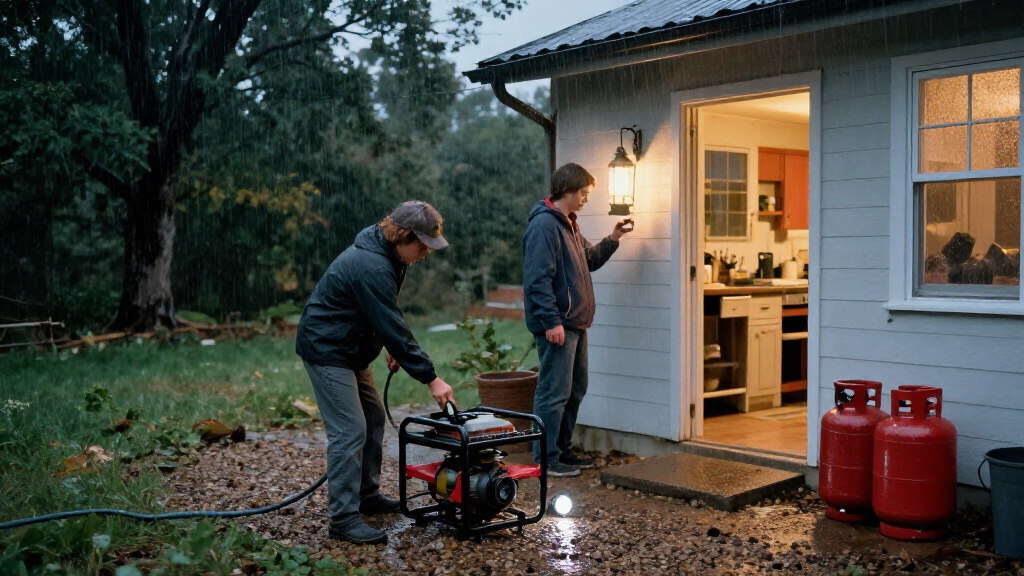
I compared the 13 portable propane generators by the factors that change the buying decision most: propane-rated running output, starting capacity, inverter design, portability, outlet options, starting method, safety features, and fuel flexibility. I also considered whether each model’s form and feature set fit its likely role, from compact recreational power to heavier home backup. Advertised wattage alone is not enough; starting loads, propane derating, and outlet compatibility can limit what a generator can actually run at once.
The ranking favors useful balance over the largest headline number. The Westinghouse WGen9500DFc leads as a broadly capable home-backup pick, while inverter models rank higher for buyers who value power quality and a more manageable format. Smaller units earn places for portability and simpler loads, not for matching large generators’ capacity. Models with overlapping output are separated by their specific advantages, such as RV-ready outlets, tri-fuel choice, or electric and remote starting; each still has tradeoffs in size, complexity, or capacity.
| portable propane generator | Fuel |
|---|---|
| Westinghouse WGen9500DFc Dual- | Gasoline or propane |
| WEN DF680iX 6800-Watt Dual-Fue | Gasoline or propane |
| POXURIO 2450W Dual-Fuel Invert | Gasoline or propane |
| DuroMax XP13000EH 13,000-Watt | Gasoline or propane |
| WEN DF360iX 3600-Watt Dual-Fue | Gasoline or propane |
| WEN DF5600X 5,600-Watt Dual-Fu | Gasoline or propane |
| Westinghouse iGen2550DFc Dual- | Gasoline or propane |
| Generac iQ5200 DF 5,200-Watt D | Gasoline or liquid propane |
| A-iPower 2300W Dual-Fuel Inver | Gasoline or propane |
| Westinghouse WGen9500TFc Tri-F | — |
| Westinghouse iGen4000DFc Dual- | Gasoline or propane |
| Westinghouse WGen3600DFcv Dual | Gasoline or propane |
| Westinghouse WGen9500DF Dual-F | Gasoline or propane (LPG) |
Factors to Consider When Choosing Portable Propane Generators
Before choosing from these portable propane generators, I would start with the job the unit must do rather than the largest number on the label. A generator that is easy to store but cannot start a critical appliance is a poor fit, while an oversized unit can add weight and fuel demands you never use. These broader checks help narrow the field before comparing individual models.
Size the generator around starting loads
List the appliances you need at the same time, then distinguish their running watts from the brief surge required to start motors. Refrigerators, sump pumps, and air conditioners can draw much more during startup than during steady operation. Add the running demands of the loads you expect to use together, then check that the generator can handle the largest startup surge without dropping other essentials. Avoid sizing from a whole-house wish list unless you plan to manage circuits or use a transfer setup. A little headroom can help, but buying far more capacity than you need can mean a heavier, harder-to-store machine.
Compare propane output and runtime, not fuel labels alone
Dual-fuel and tri-fuel generators give you options, but rated output and runtime can vary by fuel. Check the propane-specific running wattage and the conditions behind the runtime claim, including tank size and load percentage. A small appliance load may stretch a tank much longer than a collection of high-draw equipment. Confirm the regulator, hose, and tank connection requirements before an outage, and keep spare fuel plans practical for your storage space. Do not assume a gasoline wattage figure applies unchanged when the generator is running on propane.
Choose inverter or conventional output for the setting
Inverter generators are often the better match for camping, RV use, and electronics, where a compact form and cleaner power may matter more than maximum output. Conventional open-frame models usually focus on higher capacity and can be a better fit for backup loads, but they tend to be bulkier and less suited to quiet settings. Inverter technology does not automatically mean a model is silent, so compare sound figures under similar loads if noise matters. Also check whether the generator offers the outlets and rated capacity your equipment needs. Buyers can avoid paying for a design advantage that does not match their main use.
Check portability as a complete setup
“Portable” can mean wheels and handles rather than a machine one person can lift into a vehicle. Look at listed weight, dimensions, handle design, and whether the generator needs a clear, stable operating area. A large unit may be movable across a driveway yet awkward to load, store, or position during bad weather. For frequent RV trips, a smaller inverter can be more convenient even if it runs fewer devices. For home backup, a heavier unit may be acceptable if it can stay in a planned location and connect safely to the household.
Match outlets and connection plans to your equipment
Outlet type can matter as much as wattage: RV-ready 30A outlets, standard household receptacles, and higher-amperage connections serve different needs. Check your RV plug, appliance cords, and transfer equipment before buying, and avoid relying on improvised adapters to solve a mismatch. A transfer switch or properly installed interlock can connect selected household circuits without running cords through doors or windows. Have a qualified electrician handle permanent wiring and confirm that the generator’s connection method is compatible. Planning this before an outage prevents an otherwise capable generator from sitting unused.
Treat safety and maintenance as ownership requirements
Carbon monoxide sensors can add a layer of protection, but they do not make indoor or enclosed operation safe. Operate any generator outdoors, well away from doors, windows, and vents, following the manual’s clearances. Plan for oil checks, scheduled servicing, and safe fuel storage so the machine is ready when needed. Electric or remote starting can simplify operation, but the battery and starting system still require upkeep. A basic maintenance and storage routine can matter more to long-term readiness than an extra convenience feature.
Frequently Asked Questions
Can a portable propane generator run a central air conditioner?
It depends on the air conditioner’s running and startup demands, the generator’s propane-rated output, and what else is connected at the same time. Central systems often need substantial startup power, so a generator’s peak-watt figure alone does not prove compatibility. Check the equipment nameplate or consult an HVAC professional for the required starting capacity, then compare it with the generator’s propane specifications. A soft-start device may reduce startup demand on some systems, but it does not replace a proper capacity check. If the numbers are close, plan to shed other loads when the compressor starts.
Is a dual-fuel generator as powerful on propane as it is on gasoline?
Not necessarily. Many dual-fuel models have different rated output figures for each fuel, so use the propane rating when planning a propane setup. Propane also requires a suitable tank and connection, and runtime depends on both the load and the amount of fuel available. Compare the model’s fuel-specific running watts and published runtime conditions rather than relying on its largest headline number. If propane is your main fuel, treat gasoline capability as backup flexibility rather than a measure of propane performance.
Should I choose an inverter generator for home backup?
An inverter model can make sense if your backup plan centers on a modest set of electronics, small appliances, or RV equipment and you value a more compact design. It may be the wrong fit if you need to run several high-draw household loads at once, since many compact inverter units offer less capacity than larger open-frame generators. Make a load list before deciding, including motor startup demands. Also compare outlets and propane output, not just inverter labeling. The best choice depends on whether portability and power quality outweigh the need for broader load coverage.
What should I check before connecting a generator to my RV?
Start with the RV’s required amperage and plug type, then check that the generator has a compatible outlet and enough propane-rated running and starting capacity for the equipment you plan to use. Air conditioning is often the limiting load, particularly when other appliances run at the same time. Confirm any adapter’s rating and follow the generator and RV manufacturers’ instructions rather than forcing an incompatible connection. If you plan to power multiple appliances, account for their combined draw and startup overlap. A short test at home can expose outlet or load conflicts before a trip.
Is a CO sensor enough to make generator placement safe near a house?
No. A carbon monoxide sensor is an added safety feature, not permission to operate a generator indoors, in a garage, or close to openings. Follow the manual’s outdoor placement and clearance instructions, keeping exhaust away from doors, windows, and air intakes. Use working carbon monoxide alarms inside the home as another layer of protection, and never run the generator during unsafe weather in an enclosed space. Plan a dry, open operating location before an outage. Safe placement matters regardless of the model’s sensor features.
Conclusion
For most buyers seeking a capable propane backup unit, I recommend the Westinghouse WGen9500DFc as the best overall, with its combination of high output, dual-fuel operation, and remote start. The best value-oriented fit depends on your load plan: the WEN DF5600X offers a midrange conventional format, while compact buyers can look at the A-iPower 2300W if modest capacity is enough. For a premium, high-capacity choice, the DuroMax XP13000EH targets heavier loads; buyers who want three fuel options can instead compare the Westinghouse WGen9500TFc. The best starting point for beginners is a smaller, simpler inverter such as the Westinghouse iGen2550DFc, provided its output covers the intended devices. For RV-specific use, I would shortlist the WGen3600DFcv for its 30A RV-ready outlets; choose the WEN DF680iX or Generac iQ5200 DF when inverter design and broader portable power matter more. Match propane-rated capacity, connection needs, and storage space to your own setup before deciding.