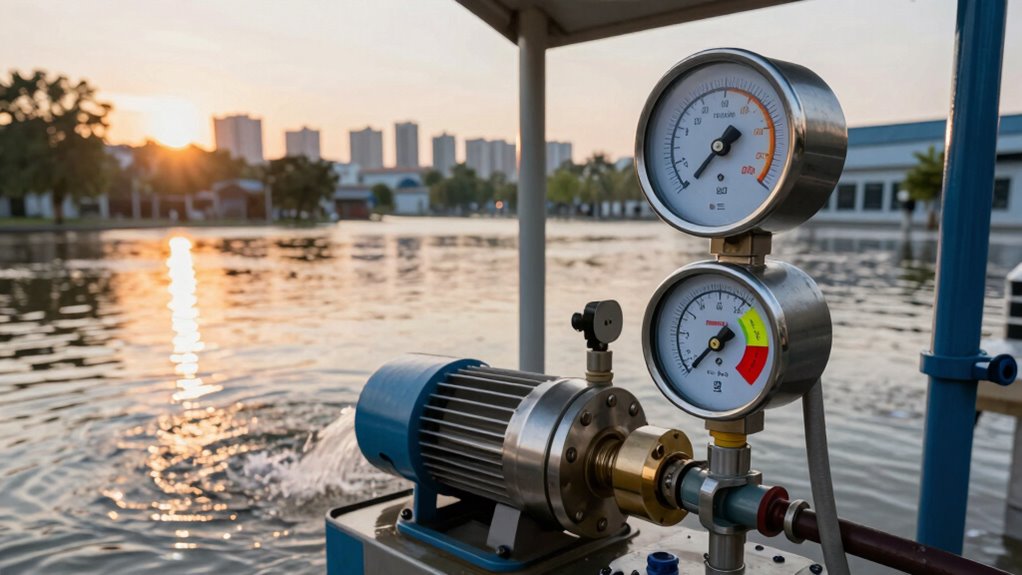

Flood pumps help remove excess water during floods by moving large volumes efficiently. The flow rate shows how much water the pump can move per minute, while head height indicates how high it can lift water. Both are essential for proper flood management; higher flow rates drain water faster, but higher head height lifts water from lower areas. Understanding these factors helps you choose the right pump. Discover more about balancing these features below.
Listen free for 30 days with Audible
Thousands of audiobooks and originals — cancel anytime.
As an affiliate, we earn on qualifying purchases.
Key Takeaways
- Flow rate indicates how much water a flood pump can move per minute, essential for rapid drainage.
- Head height measures the maximum elevation the pump can lift water, affecting water removal from low-lying areas.
- Increasing head height reduces flow rate, balancing between water volume moved and lifting capacity.
- Selecting the right pump involves matching flow rate and head height to flood scenario requirements.
- Understanding both parameters ensures effective flood management and prevents pump overload or failure.
As an affiliate, we earn on qualifying purchases.
What Are Flood Pumps and Why Are They Essential?
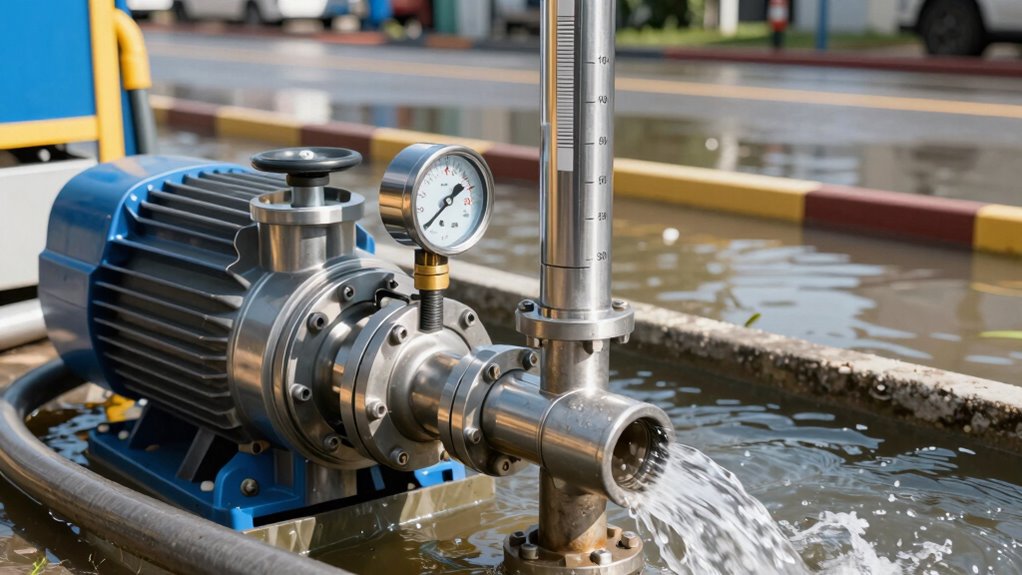
Flood pumps are specialized machines designed to quickly remove excess water from flood-prone areas, helping to prevent damage and protect communities. They play a crucial role in flood control efforts by efficiently moving large volumes of water away from vulnerable zones. Advanced pump technology allows these machines to operate under varying conditions, ensuring reliable performance during storms or high water events. By rapidly reducing water levels, flood pumps minimize property damage and safeguard infrastructure. Their essential function supports emergency response strategies and long-term flood prevention plans. Flow rate is a key factor in determining a pump’s capacity to handle large volumes of water effectively. With the ability to handle significant water flow, these pumps are vital tools in managing flood risks. Properly designed and maintained flood pumps can make the difference between disaster and safety during extreme weather events. Additionally, understanding how head height impacts pump performance helps in selecting the appropriate equipment for specific flood scenarios.
How Much Water Can a Flood Pump Move (Flow Rate)?
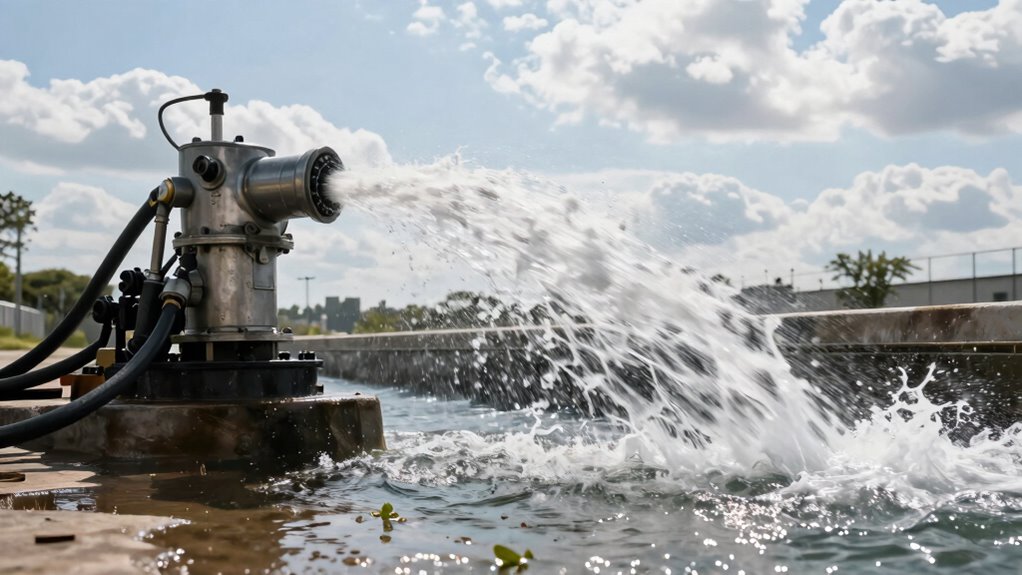
You’ll want to know how much water a flood pump can move to guarantee it fits your needs. Typical flow capacities vary depending on the pump’s size and design, affecting how quickly water is removed. Several factors, like head height and debris, can influence the volume a pump can handle efficiently. Understanding pump capacity helps ensure you select the right pump for your specific requirements. Additionally, being aware of flow rate specifications can help you evaluate a pump’s performance more accurately in real-world conditions. Knowing these performance characteristics can also assist in planning for unexpected challenges during water removal, especially when considering the impact of debris or obstructions on flow efficiency. Recognizing how system efficiency varies with different setups can further optimize your water removal strategy.
Typical Flow Capacities
A flood pump’s flow capacity determines how much water it can move in a given time, typically measured in gallons per minute (GPM) or cubic meters per hour (m³/h). This hydraulic capacity varies widely depending on the pump’s size and design. For small residential pumps, flow rates might be around 50-200 GPM, suitable for minor flooding. Larger commercial or industrial flood pumps can move thousands of gallons per minute, providing critical capacity during major events. Proper pump sizing ensures you select a unit that matches your flow needs without overloading the system. Keep in mind that the pump’s hydraulic capacity directly influences its effectiveness in flood situations, making understanding typical flow capacities essential for efficient flood management.
Factors Affecting Volume
Several factors influence how much water a flood pump can move, impacting its overall flow rate. Storm surge levels can increase the volume of water needing removal, while debris filtering affects pump efficiency. If debris isn’t filtered properly, it can clog the system and reduce flow. Additionally, the pump’s power, hose diameter, and elevation height play roles in determining capacity. For example, shipwreck preservation techniques demonstrate how understanding flow dynamics is crucial for effective water management. Understanding water movement is essential for optimizing flood response efforts. To ensure maximum efficiency, it’s important to consider ADAS sensor calibration and other safety measures in related systems. Here’s a quick overview: Free Floating
| Factor | Effect on Volume |
|---|---|
| Storm Surge | Higher surge increases water volume moved |
| Debris Filtering | Proper filtering maintains flow efficiency |
| Pump Power | More power equals higher flow rate |
| Hose Diameter | Larger diameter allows more water flow |
| Elevation | Higher elevation decreases flow capacity |
Understanding these helps optimize your flood response.
How High Can a Flood Pump Lift Water (Head Height)?

Your flood pump’s ability to lift water depends on its power and design, which determine the maximum head height. Fluid viscosity also plays a role, as thicker water resists flow and reduces lift capacity. Understanding these factors helps you gauge practical limits for effective flood control. Additionally, selecting the right home air systems can improve overall water management efficiency. By optimizing your pump choice and understanding the flow rate vs head height relationship, you can better manage flood risks and water movement in various settings. For large-scale projects, considering the conversion between crores and millions can help in budgeting and resource planning. Recognizing the pump performance factors is essential for selecting equipment suited to specific flood situations. Moreover, being aware of fluid properties can aid in predicting how different water conditions may influence pump effectiveness.
Pump Power and Height
Understanding how high a flood pump can lift water is essential for selecting the right equipment for your needs. Pump power directly influences the maximum height limitations a pump can achieve. The more powerful the pump, the greater its ability to lift water against gravity. Pump power is typically measured in horsepower (HP) or kilowatts (kW), and higher ratings generally mean higher head heights. However, other factors like impeller design and motor efficiency also play roles. Keep in mind that as the height increases, the flow rate tends to decrease. Pump efficiency significantly impacts how well a pump can perform at higher head heights. So, selecting a pump with enough power guarantees it can handle your required head height without sacrificing performance. Always check the pump’s specifications to match your height and flow needs accurately, especially considering system requirements to ensure proper operation. Additionally, understanding the flow rate helps in optimizing overall system performance at different lift heights.
Fluid Viscosity Effects
Fluid viscosity considerably impacts a flood pump’s ability to lift water to a certain height. Higher viscosity increases resistance to fluid flow, making it harder for the pump to generate the necessary pressure. This viscosity impact means that thicker, more viscous fluids require more energy to move and may reduce the maximum head height achievable. When fluid viscosity rises, expect:
- Reduced flow rate due to increased internal resistance
- Lower head height, limiting lifting capacity
- Increased strain on pump components, risking damage
- Proper understanding of fluid properties is essential for optimal pump selection and operation. Additionally, fluid viscosity can vary with temperature changes, further influencing pump performance. Recognizing how viscosity interacts with other fluid characteristics can help optimize pump efficiency under varying conditions. It is also important to consider viscosity measurement methods to accurately assess fluid behavior.
Understanding how viscosity affects fluid flow helps you select the right pump for specific conditions. Thinner fluids flow more easily, enabling higher lift heights, while thicker fluids demand more power and lower flow rates. Adjusting for viscosity ensures efficient pump performance.
Practical Lift Limits
The maximum height a flood pump can lift water, known as its head height, depends on several factors, including the pump’s design, power source, and the properties of the fluid being moved. Pump efficiency plays a vital role; the more efficient your pump, the higher it can lift water without excessive energy use. Typically, flood pumps can lift water between 10 to 30 meters, but this varies with size and type. To guarantee optimal lift capacity, regular maintenance is essential. Keep the pump free of debris, check seals and impellers, and ensure proper lubrication. Proper maintenance tips help sustain pump efficiency, enabling it to reach its maximum practical lift limits and perform reliably during critical flooding events.
How Do Flow Rate and Head Height Affect Flood Pump Performance?
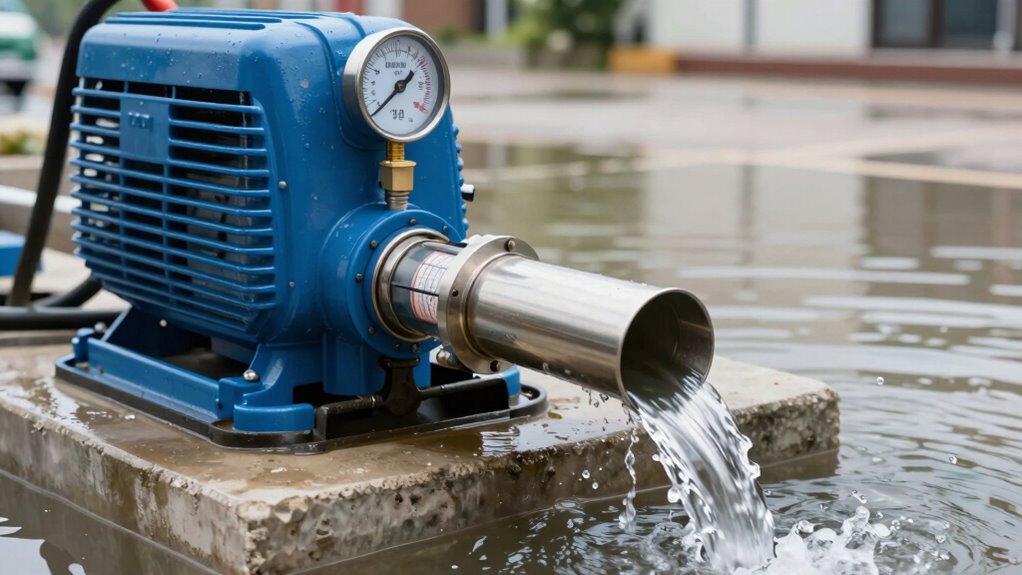
Flow rate and head height are key factors that directly impact flood pump performance. Your water flow depends on these elements, influencing how effectively the pump moves water. If the head height is too high, the pump must work harder, reducing pump efficiency. Conversely, a lower head height allows for higher water flow without sacrificing efficiency. Consider these points:
Optimizing flow rate and head height ensures efficient flood pump performance and reliable water movement.
- Increasing head height decreases water flow, limiting flood control capacity.
- Reducing head height boosts water flow, improving flood response.
- Maintaining an ideal balance ensures maximum pump efficiency and reliable water movement.
How Do You Choose the Right Flood Pump for Your Needs?
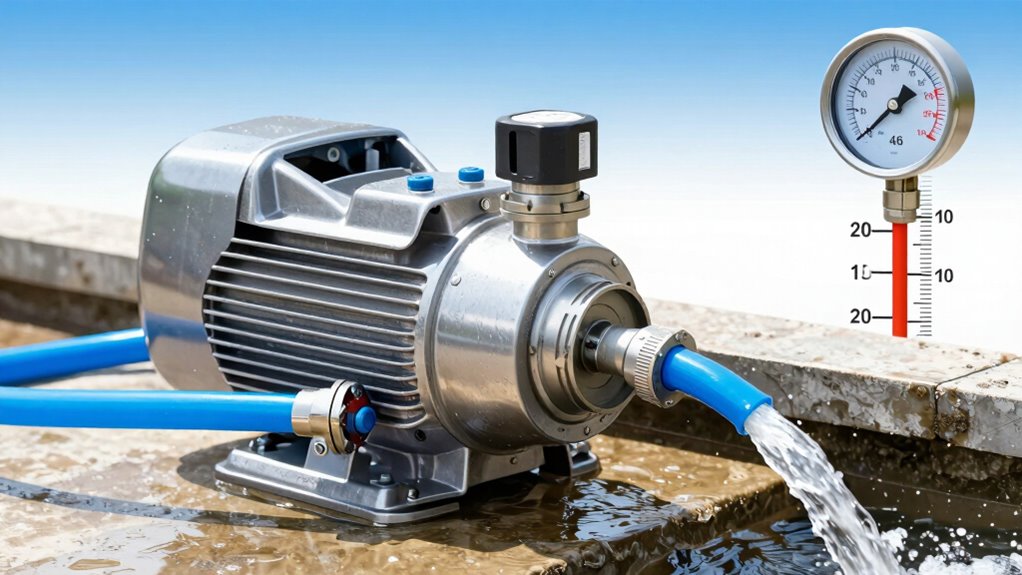
Choosing the right flood pump depends on understanding your specific needs and how factors like flow rate and head height will affect performance. To do this effectively, assess the volume of water you need to move and the height it must be lifted. Consider safety precautions to prevent accidents during installation and operation, such as proper grounding and protective gear. Also, think about the environmental impact; select pumps that minimize energy use and avoid harming local ecosystems. You should match the pump’s specifications with your site’s requirements, ensuring it can handle peak conditions safely. Proper selection not only optimizes performance but also reduces risks and environmental damage, making your flood management more effective and sustainable.
What Are the Different Types of Flood Pumps and When Should You Use Them?
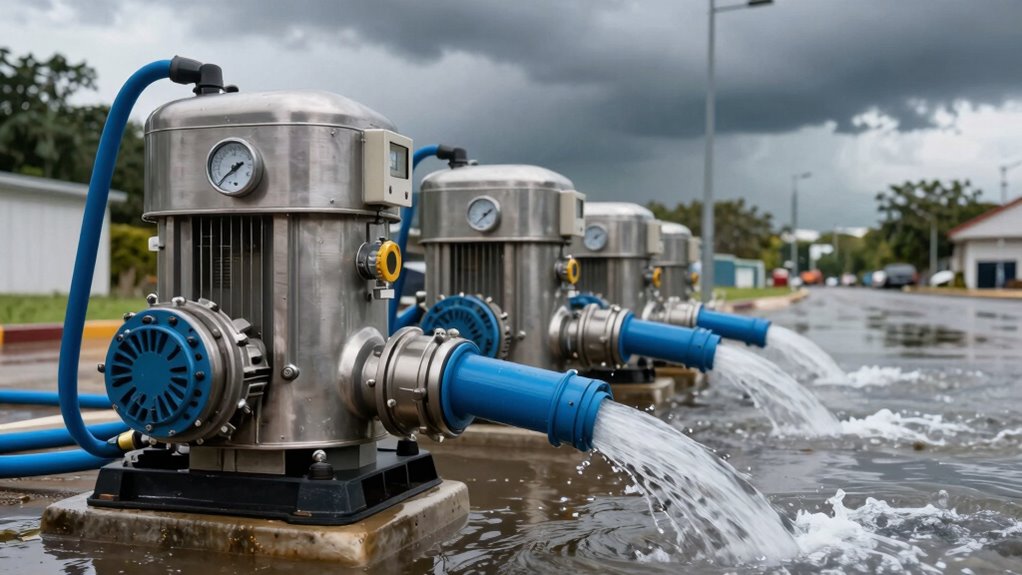
Understanding the different types of flood pumps helps you choose the right one for your needs. You’ll find submersible and surface pumps, each suited for specific situations. Additionally, application-specific pumps are designed to handle particular flood scenarios effectively.
Submersible vs Surface Pumps
Have you ever wondered which type of flood pump is best suited for your needs? The main options are submersible and surface pumps. Submersible pumps sit underwater, providing several advantages such as better cooling and reduced noise. They’re ideal for deep flooding or areas with limited space. Surface pumps, on the other hand, stay above water, often being easier to maintain and install. However, surface pump limitations include potential exposure to debris and less efficiency in deep water. When choosing, consider:
- Depth of water and flooding severity
- Ease of maintenance and accessibility
- Specific site constraints and environmental factors
Knowing these differences helps you select the right pump for your situation, ensuring effective flood management and minimal downtime.
Application-Specific Pump Types
Different flood pump types are designed to meet specific needs based on the flooding situation and site conditions. For example, centrifugal pumps are ideal for moving large volumes of water quickly, making them suitable for rapid flood response. Submersible pumps are perfect when you need to operate underwater or in confined spaces, thanks to their hydraulic design and sealed pump materials. Diaphragm pumps are useful for handling contaminated or debris-laden water, as their pump materials resist corrosion and damage. When choosing a pump, consider factors like flow rate, head height, and pump durability. The hydraulic design influences efficiency and suitability, while the pump materials ensure longevity in harsh environments. Selecting the right application-specific flood pump guarantees effective and reliable flood management.
What Factors Affect Flood Pump Efficiency and Effectiveness?
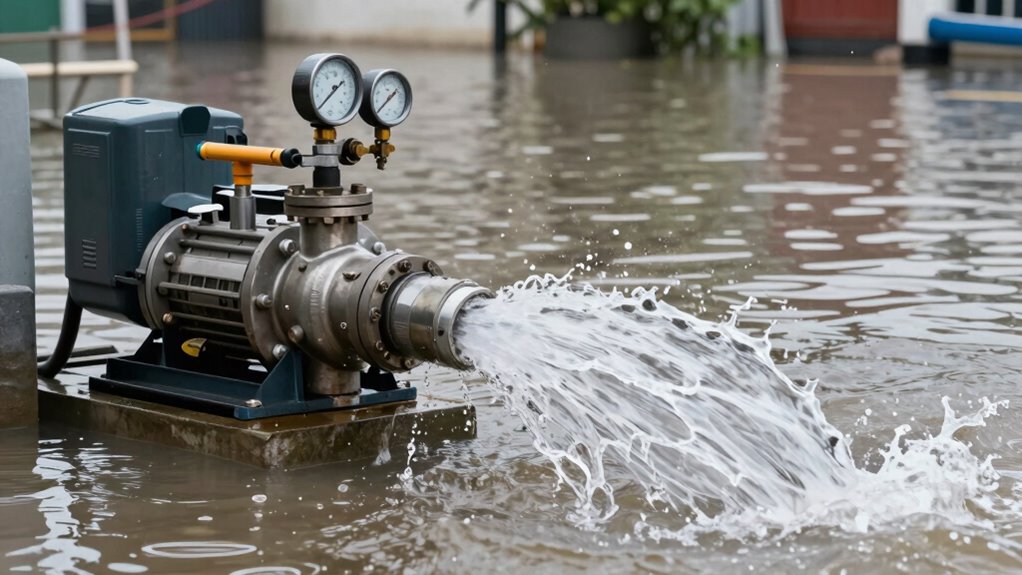
Several factors directly influence how well a flood pump performs during an emergency. First, the pump material affects durability and efficiency; sturdy materials resist corrosion and wear, ensuring longer operation. Second, environmental impact plays a role—pumps designed with eco-friendly components reduce harmful waste and energy use. Third, the pump’s design and size determine its ability to handle flow rate and head height effectively. To optimize performance, you should consider the pump material’s resistance to water conditions, minimize environmental impact through sustainable choices, and select a design suited to your flood scenario. These factors work together to improve efficiency and ensure reliable operation when it matters most.
How Do You Install and Maintain a Flood Pump Properly?

Proper installation and regular maintenance are key to guaranteeing your flood pump operates reliably when needed. Start with installation tips like placing the pump on a stable, level surface, preferably above water level to prevent flooding, and ensuring it’s connected securely to power sources. Use appropriate piping to avoid leaks and minimize airflow restrictions. For maintenance, follow a checklist: regularly clean the intake and impeller to prevent clogs, inspect hoses and connections for wear, and test the pump periodically to confirm it functions properly. Check for corrosion or damage and replace parts as needed. Keep the area around the pump clear of debris and ensure proper drainage. Following these simple steps helps maintain peak performance and prolongs your flood pump’s lifespan.
What Are Common Flood Pump Problems and How Can You Fix Them?
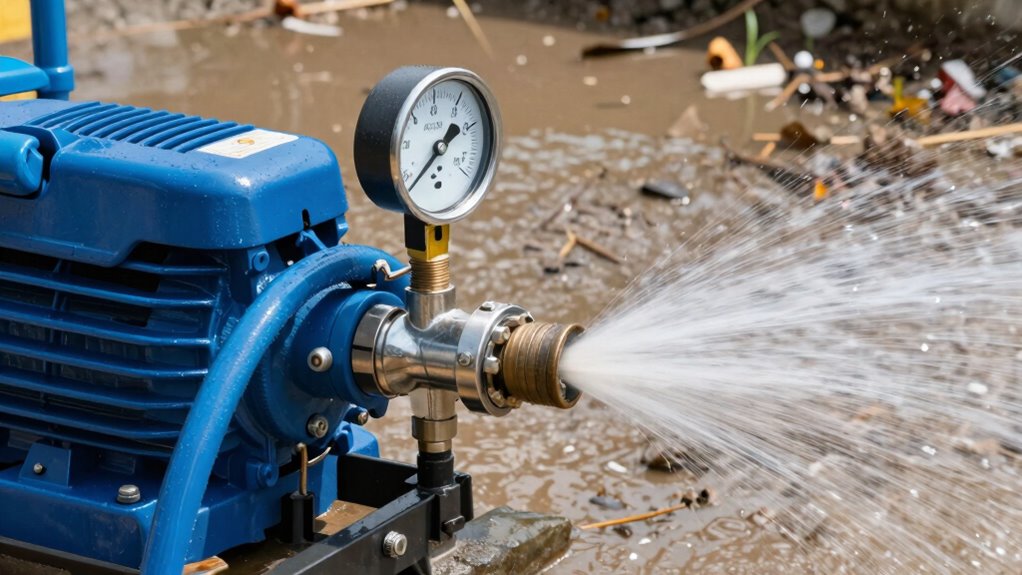
Have you ever noticed your flood pump struggling to operate or failing to turn on? Common problems include excessive pump noise, which signals potential issues, or the pump simply not activating. To troubleshoot, start with these steps:
- Check your maintenance schedule—regular cleaning prevents debris buildup that can cause noise or blockages.
- Inspect the power connection for faults or loose wires.
- Examine the pump’s impeller and inlet for clogs or damage.
Addressing pump noise often involves removing debris or lubricating moving parts. Following a consistent maintenance schedule helps identify issues early, reducing downtime. If problems persist despite these efforts, consider consulting a professional to prevent further damage. Staying proactive keeps your flood pump functioning efficiently when you need it most.
What Key Terms Should You Know When Evaluating Flood Pumps?

Understanding the key terms related to flood pumps helps you evaluate their suitability and performance more effectively. Focus on hydraulic principles like flow rate and head height, which determine how much water a pump can move and how high it can lift water. Familiarize yourself with pump specifications such as power rating, efficiency, and capacity, as these details influence operation and durability. Knowing these terms guarantees you select a pump that matches your flood control needs, whether for quick drainage or sustained water removal. By understanding hydraulic principles, you can compare different models accurately. Additionally, reviewing pump specifications helps you assess whether a flood pump can handle the volume and height required in your situation, leading to better decision-making and more effective flood management.
Frequently Asked Questions
What Safety Precautions Should Be Taken When Operating Flood Pumps?
When operating flood pumps, you should always wear safety gear like gloves, goggles, and ear protection to stay safe. Make sure you’re familiar with emergency procedures in case of malfunctions or power outages. Keep the area clear of obstructions, and regularly inspect the equipment for damage. Proper training helps prevent accidents, so never operate the pump without understanding its safety features and protocols.
How Do Environmental Factors Affect Flood Pump Performance?
Environmental factors like climate change and ecological disruption profoundly impact flood pump performance. Rising temperatures and unpredictable weather can increase flood frequency, requiring pumps to operate more efficiently. Ecological disruptions may clog intakes with debris or alter water levels, reducing effectiveness. You need to regularly monitor environmental conditions, maintain your equipment properly, and adapt your flood management strategies to guarantee your flood pumps work reliably amidst these changing environmental challenges.
Can Flood Pumps Be Used for Purposes Other Than Flood Control?
Flood pumps are versatile machines, like Swiss Army knives, capable of more than just flood control. You can use them for alternative purposes such as irrigation, draining swimming pools, or flood emergency applications during natural disasters. Their ability to move large volumes of water quickly makes them invaluable in emergencies. So, don’t think of flood pumps as one-trick ponies; they’re adaptable tools for various water management needs.
What Are the Environmental Impacts of Using Flood Pumps?
Using flood pumps can cause ecological disruption and habitat disturbance in nearby areas. You might unintentionally harm aquatic ecosystems by altering water levels or flow patterns, which affects plants and animals. Additionally, increased energy use from pumps contributes to environmental pollution. To minimize these impacts, you should consider eco-friendly pump options, operate them responsibly, and monitor environmental effects regularly to protect local habitats.
How Does Power Consumption Vary Between Different Flood Pump Models?
Think of flood pumps as different race cars; some are sleek and fuel-efficient, while others prioritize power. Power consumption varies between models based on design and technology, affecting energy efficiency and operational costs. More advanced pumps often use less energy for the same flow rate, saving you money and reducing environmental impact. So, choose a model that balances power needs with efficiency to optimize your flood management efforts.
Conclusion
Understanding flow rate and head height is key to choosing the right flood pump. Don’t assume more power always implies better performance—matching your pump to your specific needs matters most. Remember, a well-maintained pump runs efficiently and lasts longer. Investigate and verify your options carefully; the right flood pump can make all the difference during emergencies. Prioritize proper installation and upkeep to guarantee your flood protection is reliable when it counts.
NFL season / tailgating Picks
team gear
As an affiliate, we earn on qualifying purchases.