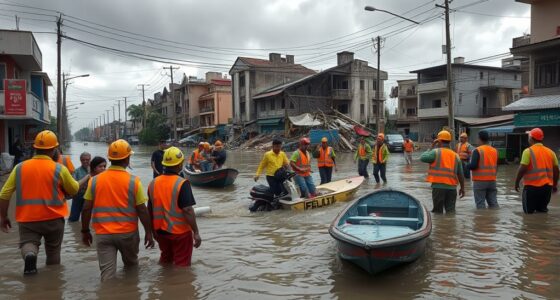

To be prepared for disasters, it’s important to understand how insurance works. Basic insurance helps protect you financially from unexpected events, but standard homeowners policies often don’t cover floods. You’ll need separate flood insurance through programs like the National Flood Insurance Program or private providers. Make sure to review your policies carefully, ask questions about exclusions, and consider adding coverage for gaps. Keep learning about insurance options so you can better shield yourself from natural calamities.

Get emergency and outdoor gear delivered free with Prime
- Fast, free delivery on millions of items
- Prime Video, Amazon Music and more included
- Member-only deals all year
Key Takeaways
- Understand that standard homeowners insurance often excludes flood damage; separate flood policies are necessary for comprehensive protection.
- Review policy exclusions and limitations carefully to identify coverage gaps and prevent surprises during disasters.
- Evaluate and tailor your insurance coverage by consulting providers to ensure all relevant risks are adequately covered.
- Recognize that flood insurance must be purchased proactively through programs like the National Flood Insurance Program or private insurers.
- Informed knowledge of your policy details enhances disaster resilience, helps avoid costly surprises, and ensures peace of mind.

Have you ever wondered how insurance works to protect you from unexpected financial setbacks? It’s a good question because, in times of disaster, having the right coverage can make all the difference. When it comes to protecting your home from natural calamities, flood coverage is a key component. Standard homeowners insurance often doesn’t include flood damage, so you might need a separate policy or rider to guarantee your property is protected against rising waters. Flood coverage helps cover repairs and replacements if floodwaters damage your house, belongings, or both. It’s essential to understand that flood insurance isn’t automatic; you have to purchase it separately through the National Flood Insurance Program or private insurers. Knowing what flood coverage includes and, just as importantly, what it excludes, can save you from surprises when disaster strikes.
Flood coverage isn’t automatic; purchase separately to protect your home from water damage and surprises during disasters.
Policy exclusions are another critical aspect to grasp. Insurance policies are legal contracts, and they don’t cover everything. They come with specific exclusions that outline what’s not covered, which can vary depending on the policy type and provider. For example, some policies may exclude coverage for flood damage, mold, or certain types of water damage unless you have the appropriate endorsements or riders. It’s vital that you read your policy carefully to understand these exclusions upfront. If you’re in a flood-prone area, relying solely on standard homeowners insurance without flood coverage can leave you vulnerable. Many policies also exclude coverage for damage caused by neglect or poor maintenance, so staying on top of property upkeep is essential. Additionally, understanding the contrast ratio in your insurance policies can help you better evaluate the quality of your coverage and its effectiveness during a disaster.
Understanding policy exclusions helps you avoid misconceptions about your coverage and ensures you’re adequately prepared for any disaster. If you’re unsure about what your policy covers or excludes, don’t hesitate to ask your insurance provider for clarification. They can help you identify gaps in your protection and recommend additional coverage options. Remember, while flood coverage is crucial in certain regions, it’s just one part of a broader disaster preparedness strategy. Combining different types of coverage and understanding the limitations of each policy boosts your resilience against unexpected events. Being proactive about these details helps you avoid costly surprises and ensures that you’re covered when disaster hits.
In essence, familiarizing yourself with flood coverage and policy exclusions is an empowering step in disaster preparedness. It helps you make informed decisions, tailor your insurance to your specific risks, and ultimately gives you peace of mind. Protecting your home and your finances isn’t just about having insurance — it’s about understanding it thoroughly. When you know what’s covered, what’s excluded, and how to fill those gaps, you’re better equipped to face whatever nature throws your way.
Frequently Asked Questions
How Can I Ensure My Insurance Covers Flood Damage?
To guarantee your insurance covers flood damage, review your policy carefully for flood coverage options. Many standard policies exclude flood damage, so consider purchasing a separate flood insurance policy through the National Flood Insurance Program (NFIP) or private insurers. Always check for policy exclusions that might limit coverage, and update your policy if necessary. This way, you’re better protected when floods occur, and unexpected costs don’t catch you off guard.
What Are the Best Disaster Insurance Policies for Renters?
You should look for renters insurance policies that include thorough disaster coverage. The best policies specifically cover damages from floods, storms, and other natural disasters, protecting your personal belongings. Make certain to review the policy details, as some providers offer add-ons or separate plans for disaster coverage. By choosing a policy with robust disaster coverage, you ensure you’re financially protected when disaster strikes, giving you peace of mind.
Does My Homeowner’s Insurance Include Coverage for Wildfires?
You might find it coincidental, but your homeowner’s policy often doesn’t automatically include wildfire coverage. It’s essential to review your policy carefully, as some policies exclude wildfires or require additional coverage. Contact your insurer to confirm if your homeowner policy provides wildfire coverage or if you need to add a rider. Being proactive guarantees you’re protected when wildfires threaten, giving you peace of mind during fire season.
How Do I File a Claim Quickly After a Disaster?
To file a claim quickly after a disaster, gather all claim documentation like photos, receipts, and repair estimates. Contact your insurance company immediately and provide detailed information about the damage. Keep emergency contacts handy in case you need assistance or further instructions. Stay organized, take notes during conversations, and follow your insurer’s guidance promptly. Acting swiftly guarantees your claim is processed efficiently and helps you recover faster.
Are There Discounts on Insurance Premiums for Disaster Preparedness Measures?
Imagine your home standing strong like a shield, protecting everything inside. Many insurers offer discount incentives or premium reductions if you take disaster preparedness measures, such as installing storm shutters or reinforcing your roof. These proactive steps not only safeguard your property but also lower your insurance costs. By investing in preparedness, you demonstrate responsibility, often earning you financial benefits through reduced premiums. It’s a win-win for your safety and wallet.
Conclusion
So, you’ve got the basics down—your insurance policy ready to go, disaster plans in place. Ironically, the very thing that’s supposed to protect you might just be the thing you hope never to use. But hey, it’s better to be safe than sorry, right? After all, when disaster strikes, you’ll be glad you prepared—even if it’s just so you can say, “At least I didn’t ignore insurance like some.” Stay ready!
Fall Picks
fall essentials
As an affiliate, we earn on qualifying purchases.