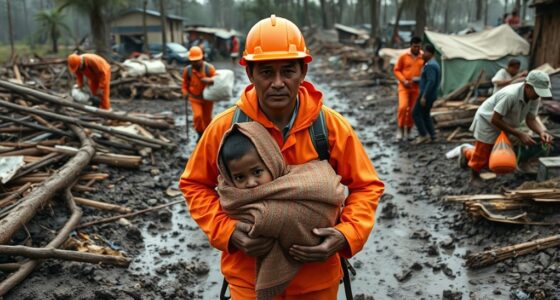
The ethical case for climate migration is clear: those least responsible for climate change suffer its worst impacts, forcing them to leave their homes and lives behind. As someone who cares about justice, you should recognize that wealthier nations and corporations have contributed most to emissions yet offer little support now. Addressing climate migration is about fairness, human rights, and moral responsibility. If you want to understand how systemic inequalities tie into this issue, there’s more to explore ahead.
Play games included with Prime
Start a Prime free trial and play with Amazon Luna on your devices.
As an affiliate, we earn on qualifying purchases.
Key Takeaways
- Climate migration is a moral imperative to address the disproportionate suffering of vulnerable populations affected by climate change.
- Wealthy nations and corporations have a responsibility to support displaced communities due to their historical emissions.
- Ensuring safe, voluntary movement and access to basic needs upholds principles of climate justice and human dignity.
- Addressing climate migration reduces humanitarian crises and promotes global equity, aligning with ethical obligations.
- Supporting displaced populations is a moral duty rooted in fairness, accountability, and recognition of systemic inequalities.

As climate change accelerates, millions of people will be forced to leave their homes due to rising sea levels, extreme weather, and environmental degradation. This reality raises urgent questions about climate justice and our moral responsibility to those affected. Climate justice advocates argue that those least responsible for global emissions—often marginalized communities—should not bear the brunt of climate impacts. You have a moral obligation to recognize that the current distribution of climate risks is unjust. Wealthier nations and corporations have contributed the most to greenhouse gas emissions, yet it’s the vulnerable populations who face displacement, loss of livelihoods, and increased health risks. Ignoring this imbalance perpetuates inequality and violates basic principles of fairness. From an ethical standpoint, climate migration becomes not just an issue of practicality but one of justice. It’s about acknowledging that the suffering caused by climate change isn’t random; it’s systematically tied to global economic and political structures that favor the wealthy and powerful. As someone concerned with ethics, you must see that dismissing or resisting climate migration disregards the principle of moral responsibility. We cannot pretend that those displaced by climate impacts are simply victims of natural forces; rather, they are victims of a system that allowed emissions to escalate without regard for human consequences. Addressing climate migration ethically means advocating for policies that facilitate safe, voluntary movement and provide support to displaced communities. It involves recognizing their rights to migrate without fear of discrimination or statelessness, and ensuring they have access to basic needs like shelter, healthcare, and employment. You also need to understand that climate migration is intertwined with global justice—demanding that those most responsible for climate change help fund adaptation and resettlement efforts. This isn’t about charity but about fulfilling moral duties rooted in fairness and accountability. Additionally, integrating Cultural Intelligence strategies can improve communication and cooperation with diverse displaced populations, ensuring their needs are understood and respected. By supporting climate migration, you’re upholding the idea that no one should be forced to endure environmental devastation simply because of where they were born. The ethical case emphasizes that now is the time to act responsibly, not only to protect human rights but to foster a more equitable world. Recognizing climate migration as a moral responsibility challenges you to rethink policies, prioritize justice, and support vulnerable communities. It’s about creating a future where climate impacts do not deepen existing inequalities but instead prompt collective action rooted in morality and justice. Your role involves not just understanding these issues but actively advocating for solutions that respect human dignity and uphold the principles of climate justice.
emergency shelter for climate refugees
As an affiliate, we earn on qualifying purchases.
As an affiliate, we earn on qualifying purchases.
Frequently Asked Questions
How Do Climate Migrants Impact Local Economies?
Climate migrants can boost local economies by increasing demand for goods and services, which enhances economic resilience. Your community benefits from their diverse skills and work ethic, creating new opportunities. However, social integration is essential; when migrants are welcomed and supported, it fosters a cohesive environment. This balance helps your local economy grow sustainably while maintaining social harmony, making climate migration a potential positive force for your community.
What Legal Protections Exist for Climate Refugees?
You might wonder about legal protections for climate refugees. Currently, legal frameworks are limited, and most countries don’t officially recognize climate migrants as refugees under the 1951 Refugee Convention. Without formal refugee status, they lack specific protections, making their situation precarious. Some advocates call for expanding legal definitions and creating new protections to address climate-induced displacement, ensuring these vulnerable populations receive the support and rights they deserve.
How Can Countries Cooperate to Manage Climate Migration?
Managing climate migration is like assembling a complex puzzle—you need all pieces to fit. You can encourage international collaboration by establishing clear policy frameworks that facilitate shared responsibilities and resource allocation. Countries should work together on data sharing, legal protections, and coordinated responses. By fostering open dialogue and building trust, nations can create effective solutions that safeguard vulnerable populations and ensure a more resilient global response to climate-induced displacement.
What Are the Long-Term Environmental Effects of Climate Migration?
Climate migration can lead to significant long-term environmental effects, including heightened sustainability challenges and ecological consequences. You might observe strain on local ecosystems as new populations settle, disrupting habitats and biodiversity. Increased resource consumption can accelerate environmental degradation, making it harder to maintain ecological balance. These changes underscore the importance of proactive planning and sustainable policies to mitigate adverse impacts and preserve ecological integrity for future generations.
How Do Cultural Differences Affect Migration Policies?
Cultural differences act like a bridge and a barrier, shaping migration policies in complex ways. You might find that policies are influenced by efforts of cultural adaptation, where governments aim to integrate newcomers while respecting identity preservation. These differences can lead to tensions or support, depending on how well societies balance openness with safeguarding their traditions. Your understanding of these dynamics helps you see that migration policies reflect deeper cultural values and priorities.
Conclusion
So, when you consider the ethical case for climate migration, ask yourself: isn’t it our moral duty to help those forced to leave their homes by climate change? Ignoring their plight only deepens injustice. We have the power and responsibility to create a more compassionate, equitable world. Will you stand by and do nothing, or will you choose to act and support the rights of those most affected? The choice is ours.
Fall Picks
fall essentials
As an affiliate, we earn on qualifying purchases.