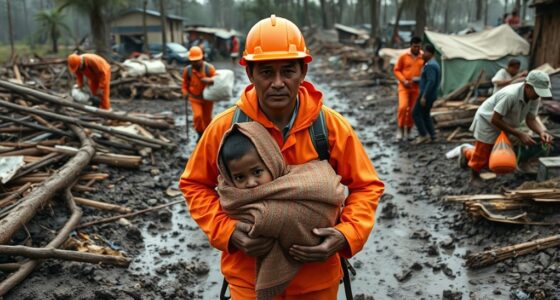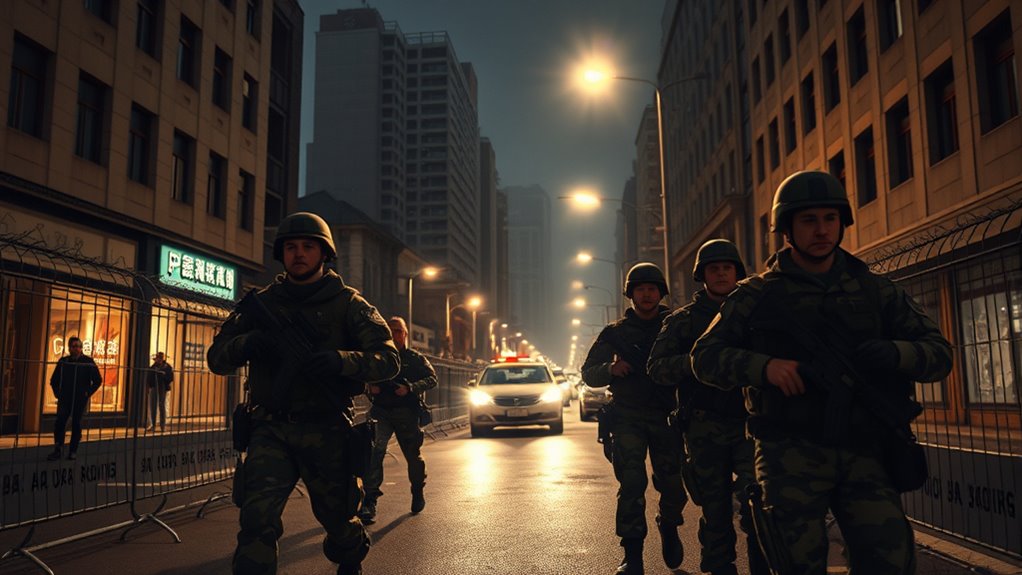

Martial law aims to keep you safe by restoring order quickly, but it can also threaten your freedoms like speech, movement, and privacy. While it might be necessary during crises, it often involves restrictions that can be abused or misused, leading to fear and oppression. Striking a balance requires temporary measures, transparency, and respect for human rights. You’ll discover how societies manage this delicate dilemma and protect both security and personal liberties further on.
Listen free for 30 days with Audible
Thousands of audiobooks and originals — cancel anytime.
As an affiliate, we earn on qualifying purchases.
Key Takeaways
- Martial law temporarily restricts civil liberties to maintain order, requiring careful oversight to prevent abuse.
- Effective martial law balances security needs with safeguarding fundamental rights through transparency.
- Clear, limited duration of martial law measures helps prevent long-term repression of freedoms.
- Citizens must remain vigilant to ensure military authority does not infringe on human rights and civil liberties.
- Properly implemented, martial law can restore safety without permanently sacrificing personal freedoms.
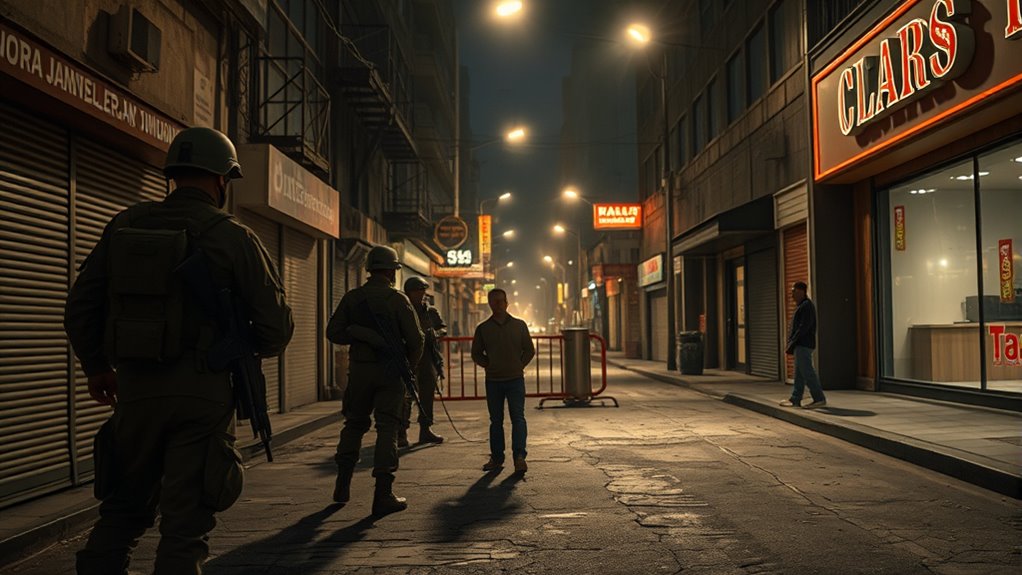
Have you ever wondered what happens when a government suspends normal laws and enforces military control? When martial law is declared, the usual civil liberties you take for granted—like free speech, assembly, and privacy—can suddenly be curtailed. During this time, military authority takes precedence over civilian government, and the military is empowered to maintain order by any means necessary. While this might sound like an effective way to restore stability, it raises serious questions about the balance between safety and personal freedoms.
Martial law suspends civil liberties to restore order, raising questions about safety versus personal freedoms.
Under martial law, the military assumes control of key institutions, often replacing local police and government officials. This shift can lead to rapid enforcement of rules designed to suppress unrest or threats to national security. However, it also means that your rights—such as freedom of movement, expression, and even due process—may be temporarily restricted. Military authorities might impose curfews, conduct searches without warrants, or detain individuals without formal charges. These actions, although justified by the need for security, can infringe upon your civil liberties, making you feel powerless against an unaccountable force.
The justification for martial law usually hinges on the premise of protecting citizens from chaos, violence, or rebellion. Yet, when military authority overrides civilian oversight, there’s a risk of abuse. History demonstrates that in some cases, martial law has been used not just to restore order but to suppress dissent and silence opposition. The suspension of civil liberties under military rule can lead to a climate of fear, where citizens hesitate to speak out or participate freely in society. This imbalance between safety and freedom is the core dilemma: how much personal liberty are you willing to sacrifice to ensure national or communal security. Moreover, the presence of Resources and Tools can influence the effectiveness and fairness of martial law enforcement.
Despite these concerns, proponents argue that martial law is sometimes necessary during extreme crises—wars, natural disasters, or insurrections—when civilian institutions are overwhelmed. They believe that military authority can act swiftly and decisively, preventing chaos from spiraling out of control. Still, it’s essential to remember that such measures should be temporary and carefully monitored. The challenge lies in safeguarding civil liberties even during emergencies, ensuring that military control doesn’t become a tool for long-term repression.
Ultimately, martial law puts you at the crossroads of security and freedom. While the military’s primary goal is to restore order, it’s essential to remain vigilant about the implications for civil liberties. Balancing these interests requires transparency, accountability, and respect for human rights. Because once military authority becomes the norm, it’s difficult to undo the restrictions placed on your personal freedoms, making it essential for societies to carefully consider when and how martial law is implemented.
As an affiliate, we earn on qualifying purchases.
Frequently Asked Questions
How Is Martial Law Different From a State of Emergency?
Martial law differs from a state of emergency because it places military authority over civilian functions, often suspending civil liberties like free speech and movement. When martial law is declared, you might find the military in control, enforcing curfews and limiting your rights. In contrast, a state of emergency usually involves government measures without fully transferring military authority, so your civil liberties are less likely to be restricted.
What Legal Processes Are Involved in Declaring Martial Law?
When declaring martial law, legal procedures require that the government, often through the executive branch, issues a formal proclamation. This declaration typically involves a review process, including judicial review to guarantee constitutionality. You should be aware that these steps aim to balance the need for security with legal safeguards, ensuring that the declaration is justified and temporary. The process varies by country, but it always involves legal oversight to prevent abuse of power.
Can Martial Law Be Declared in Response to Economic Crises?
Yes, martial law can be declared in response to economic crises if authorities believe it’s necessary to restore economic stability. However, you should understand that this move often results in restrictions on civil liberties, which can limit freedoms like speech and assembly. While it aims to stabilize the economy quickly, it’s essential to weigh these measures against the potential impact on individual rights and long-term societal trust.
How Do Authorities Ensure Civil Rights During Martial Law?
During martial law, authorities guarantee civil rights safeguards by implementing measures like judicial oversight and clear legal frameworks. You are protected through the involvement of courts that review and approve actions, preventing abuse. These safeguards help balance safety with freedom, ensuring that even in times of crisis, your rights are respected. Authorities must remain accountable, ensuring martial law doesn’t infringe on fundamental civil liberties unnecessarily.
What Historical Examples Illustrate Martial Law’s Impact on Societies?
You see that historical examples like Argentina’s military coups or Myanmar’s military interventions reveal how martial law can cause societal upheaval. During these times, governments often suspend civil liberties, leading to protests, oppression, and unrest. These instances show that while martial law aims to restore order, it frequently results in lasting societal damage, highlighting the delicate balance between maintaining safety and preserving freedom in times of crisis.
Conclusion
You see, while martial law aims to keep everyone safe, it’s essential to remember that over 70% of people in certain regions feel their freedoms are at risk during such times. Striking a balance between security and liberty isn’t easy, but it’s necessary. By understanding both sides, you can better appreciate why careful implementation matters. Ultimately, safeguarding safety shouldn’t come at the expense of your fundamental rights—finding that middle ground is key.
Fall Picks
fall essentials
As an affiliate, we earn on qualifying purchases.