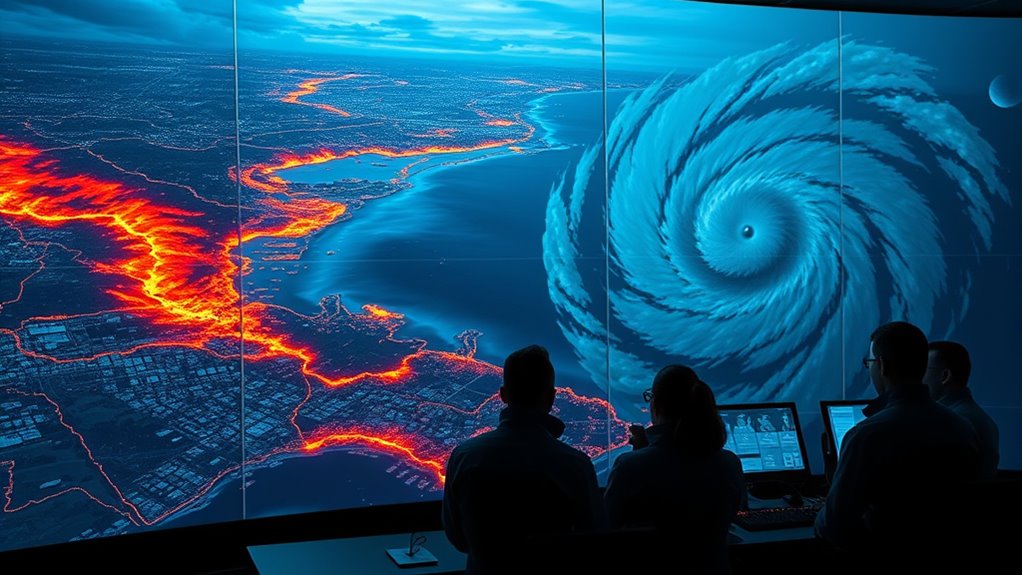

AI-enhanced disaster forecasting uses real-time data from sensor networks combined with advanced simulations to predict wildfires, floods, and hurricanes more accurately. By analyzing patterns like temperature, humidity, and wind speed, AI systems can forecast hazards early and issue warnings to help you prepare better. These technologies continuously learn and adapt, making predictions sharper over time. If you want to discover how these innovations are transforming disaster response, keep exploring this exciting field.

Get emergency and outdoor gear delivered free with Prime
- Fast, free delivery on millions of items
- Prime Video, Amazon Music and more included
- Member-only deals all year
Key Takeaways
- AI analyzes real-time sensor data to detect subtle environmental changes indicating imminent disasters.
- Integration of AI with sensor networks enhances accuracy of forecasts for fires, floods, and hurricanes.
- AI-driven models simulate future disaster scenarios, aiding in proactive planning and resource allocation.
- Early warning systems leverage AI to issue timely alerts, improving emergency response effectiveness.
- Continuous learning from incoming data ensures adaptive, reliable disaster prediction and mitigation strategies.

Artificial intelligence is transforming how we predict and prepare for natural disasters. In particular, AI is revolutionizing climate modeling, allowing us to better understand complex weather patterns that lead to catastrophic events like fires, floods, and hurricanes. Traditional climate models rely on static equations and historical data, but AI enhances this process by analyzing vast amounts of real-time information. This enables more accurate forecasts, giving communities essential lead time to take action. Sensor networks play a critical role in this advancement, as they continuously gather data from various sources such as weather stations, satellites, and ground sensors. When integrated with AI algorithms, these sensor networks create a dynamic system that detects subtle changes in environmental conditions, often before they escalate into disasters. AI also helps identify previously overlooked indicators that can signal imminent hazards, further improving prediction accuracy.
You can think of sensor networks as the nervous system of climate monitoring. They provide the granular, up-to-the-minute data needed for precise predictions. AI processes this influx of information rapidly, identifying patterns that might escape human notice. For instance, a slight rise in temperature, combined with humidity levels and wind speeds captured by sensors, can signal an increased risk of wildfire ignition. Similarly, sensor data on rainfall intensity and soil moisture can forecast potential flooding with higher confidence. This real-time analysis empowers emergency services and local authorities to issue warnings earlier, coordinate evacuations, and deploy resources more effectively.
Moreover, AI-driven climate modeling incorporates data from sensor networks to simulate future scenarios with greater accuracy. These simulations help predict the trajectory of hurricanes, the spread of wildfires, or the severity of floods. By understanding potential outcomes, responders can prepare tailored strategies that minimize damage and save lives. The fusion of AI and sensor networks also allows for continuous learning; as more data flows in, the models become smarter and more dependable over time. This adaptive capability is essential because climate conditions are constantly changing, and static models can quickly become outdated.
In essence, your ability to respond to natural disasters hinges increasingly on these technological systems. AI-powered climate modeling, fueled by sensor networks, enhances early warning systems and improves response plans. This synergy provides a more resilient approach to disaster management, helping you and your community stay one step ahead of nature’s most unpredictable events. As these tools evolve, they will become even more integral to safeguarding lives, property, and ecosystems from the devastating impacts of fires, floods, and hurricanes. Developing robust safety measures and addressing AI vulnerabilities will be crucial as reliance on these systems grows.
home weather station with sensor network
As an affiliate, we earn on qualifying purchases.
As an affiliate, we earn on qualifying purchases.
Frequently Asked Questions
How Does AI Improve Early Warning Systems for Disasters?
Imagine a vigilant sentinel watching over a city at night—you become the eyes that never tire. AI improves early warning systems by harnessing machine learning to analyze vast data streams and integrating diverse sources like weather, satellite, and sensor data. This rapid, essential approach detects patterns and anomalies early, giving you vital seconds or minutes to prepare and respond, ultimately saving lives and reducing damage.
What Are the Limitations of AI in Disaster Prediction?
You should be aware that AI has limitations like algorithm biases, which can skew disaster predictions, and data privacy concerns that restrict access to vital information. These issues can reduce accuracy and hinder timely alerts. Additionally, AI models depend on high-quality data, and gaps or inaccuracies can lead to missed warnings. Recognizing these limitations helps improve AI’s role in disaster prediction and response.
How Is AI Data Validated for Accuracy in Forecasts?
You validate AI data for forecast accuracy by evaluating data quality and testing model robustness. You ensure data sources are reliable, clean, and relevant, reducing errors. You also evaluate how well the model performs across different scenarios, stress-testing it to identify weaknesses. Continuous validation through real-world outcomes and updates helps maintain prediction accuracy, ensuring your forecasts remain dependable and useful for disaster preparedness.
What Ethical Concerns Arise With Ai-Based Disaster Forecasting?
You should consider that AI-based disaster forecasting raises ethical concerns like privacy concerns, as personal data might be used without clear consent. Bias mitigation is also essential since biased data can lead to inaccurate predictions, disproportionately impacting vulnerable communities. Ensuring transparency, respecting privacy, and actively working to reduce bias help you develop fairer, more reliable forecasts, ultimately protecting all populations more effectively.
How Accessible Are AI Tools for Disaster Management Agencies Worldwide?
Imagine AI tools as a lighthouse guiding ships through storms. AI adoption varies widely across disaster management agencies worldwide, often limited by resource disparities. While some nations leverage advanced systems, others struggle with basic access, making AI less accessible globally. These disparities mean many agencies can’t fully harness AI’s potential, leaving communities vulnerable. Bridging this gap requires international cooperation and investment, ensuring all can benefit from AI’s life-saving capabilities.
Conclusion
By harnessing AI for disaster forecasting, you can stay better prepared and respond more quickly to emergencies. For instance, AI models have improved hurricane prediction accuracy by over 20%, giving communities vital extra hours to evacuate. As technology advances, your ability to anticipate and mitigate the impacts of fires, floods, and hurricanes will only get better. Embracing these innovations helps protect lives and property, making disaster management more effective than ever before.
Halloween Picks
halloween
As an affiliate, we earn on qualifying purchases.