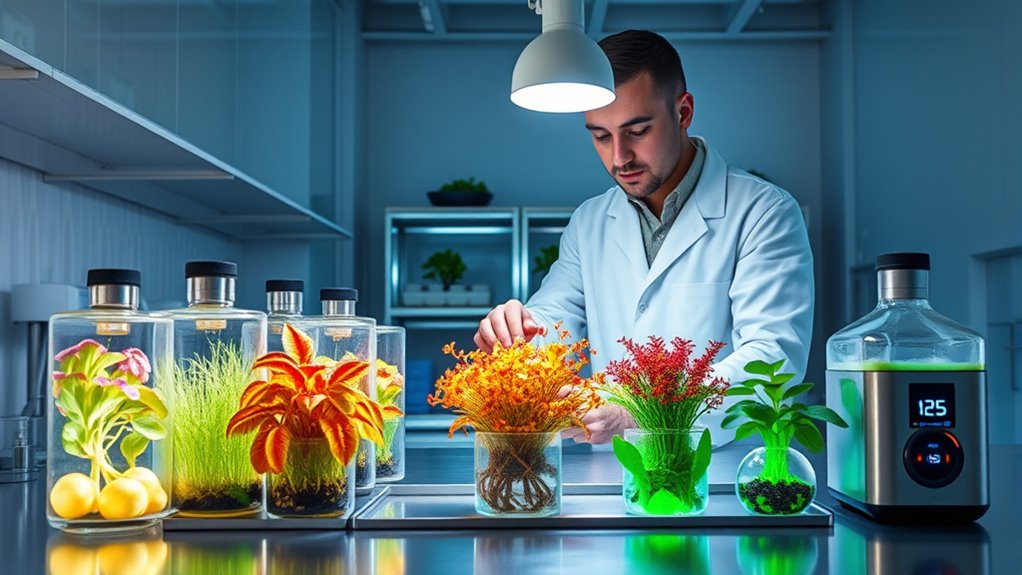

Biotech innovations like lab-grown and engineered crops help strengthen your food system by enabling crops to resist pests, drought, and climate stress. These methods can produce higher yields in less time, using fewer resources, and lower environmental impacts. They also allow for growing food in controlled environments or on marginal lands, reducing risks and ensuring food security. To discover how these breakthroughs shape a resilient future, keep exploring the details behind these cutting-edge solutions.
Key Takeaways
- Genetic modification introduces traits like drought tolerance and pest resistance, enhancing crop resilience to climate challenges.
- Lab-grown and controlled environment crops reduce resource use, minimize environmental impact, and ensure consistent food supply.
- Biotech innovations enable rapid development of climate-adapted crops, supporting global food security amid changing conditions.
- Engineered crops thrive on marginal lands, decreasing reliance on traditional farming and expanding agricultural potential.
- These technologies contribute to sustainable, nutrient-rich food systems with lower pesticide use and reduced greenhouse gas emissions.
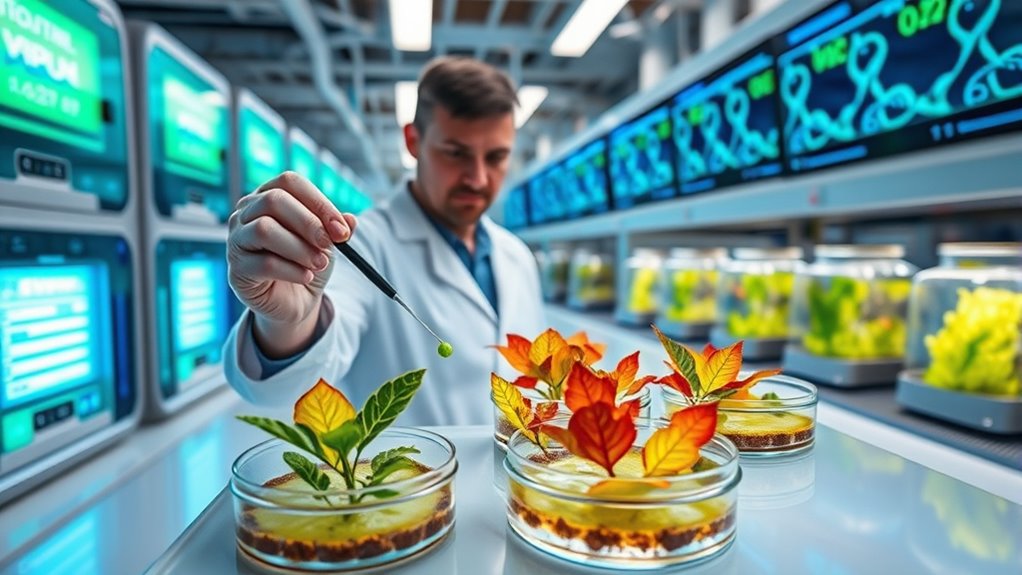
As climate change and global population growth intensify, biotech innovations are transforming how we guarantee food resilience. Among these, genetic modification and crop engineering stand out as powerful tools to create crops that can withstand environmental stresses, pests, and diseases. When you consider the future of food security, understanding how these technologies work helps you see their potential to revolutionize agriculture. Genetic modification involves altering a plant’s DNA to introduce desirable traits, such as drought tolerance or pest resistance. Crop engineering, on the other hand, often combines several genetic techniques to design plants with enhanced performance in challenging conditions. These approaches allow you to develop crops that not only survive in unpredictable climates but also produce higher yields, essential for feeding a growing world.
By leveraging genetic modification, scientists can insert specific genes into crop genomes to confer traits that traditional breeding might take decades to achieve. For example, engineering rice or wheat to resist pests reduces the need for chemical pesticides, lowering environmental impact and lowering costs for farmers. Similarly, crop engineering enables you to develop crops with improved nutrient profiles, which can combat malnutrition in vulnerable populations. These innovations are *essential* because they allow you to adapt crops rapidly in response to climate shifts, ensuring that food production stays resilient in the face of extreme weather patterns, soil degradation, or water shortages.
Moreover, biotech advancements enable the creation of lab-grown or cellularized crops, reducing reliance on traditional farming. When you consider lab-grown vegetables or fruits, you’re looking at products crafted in controlled environments, free from pests and diseases, with minimal resource input. This method not only aids in safeguarding food supplies against climate-induced disruptions but also reduces environmental footprints, such as water usage and greenhouse gas emissions. Crop engineering also opens doors to developing plants that can thrive on marginal lands, expanding agricultural possibilities into areas previously unsuitable for farming.
In essence, these biotech innovations empower you to participate in a sustainable food system that’s adaptable and resilient. They help mitigate risks associated with climate change while addressing nutritional needs. As you follow the progress of genetic modification and crop engineering, you’ll see how they shape the future of food security — making it possible to produce more food, with fewer resources, in a changing world. These advancements are not just scientific breakthroughs; they’re *crucial* steps toward ensuring that everyone has access to safe, nutritious, and reliable food sources for generations to come.

Carlyle Fruits and Veggies Supplement | 250 Capsules
- Fruits & Veggies: 30+ superfoods in one capsule
- Balanced Blend: 14 vegetables and 18 fruits
- Wellness Focus: Premium, honest supplement
As an affiliate, we earn on qualifying purchases.
As an affiliate, we earn on qualifying purchases.
Frequently Asked Questions
How Do Lab-Grown Crops Compare Nutritionally to Traditional Crops?
Lab-grown crops often have comparable nutritional content to traditional crops, but they can be engineered to enhance specific nutrients like vitamins or minerals. You might find these crops offer more consistent nutrient levels and potentially better crop diversity, since lab cultivation isn’t limited by soil or climate conditions. However, ongoing research continues to evaluate how well they match or surpass traditional crops in overall nutrition and ecological impact.
What Are the Regulatory Hurdles for Biotech-Engineered Food Products?
Regulatory hurdles hinder your access to biotech-engineered foods by complicating approval processes and creating intellectual property challenges. You face lengthy, layered review procedures designed to ensure safety, which can delay market entry. Additionally, patent disputes and ownership rights may pose significant barriers, making innovation and adoption more difficult. Overcoming these regulatory and IP obstacles requires traversing complex legal landscapes, which can be time-consuming and costly, but essential for bringing safe, sustainable biotech foods to your table.
How Affordable Are Biotech-Grown Foods for Average Consumers?
Biotech-grown foods are becoming more affordable as cost reduction strategies improve production methods. These innovations help lower prices, making them more accessible to average consumers. With increased market accessibility, you’ll likely see these foods available at competitive prices, narrowing the gap between traditional and biotech options. As technology advances, expect biotech-grown foods to become even more affordable, ensuring you can enjoy nutritious, sustainable options without overspending.
What Are Potential Environmental Impacts of Large-Scale Biotech Crop Deployment?
Ever wonder how large-scale biotech crop deployment might affect the environment? Well, it can lead to increased pest resistance, making pests harder to control over time. Additionally, it could impact soil health by altering nutrient cycles or reducing biodiversity. While biotech crops offer benefits, you should consider these potential environmental impacts carefully, as they could shape the sustainability of our ecosystems for years to come.
How Do Biotech Innovations Address Climate Change Challenges in Agriculture?
Biotech innovations help you tackle climate change challenges in agriculture through genetic modification, making crops more resilient to drought, floods, and extreme temperatures. By enabling climate adaptation, these crops can grow in harsher conditions and maintain yields, reducing the need for additional resources. This not only supports food security but also minimizes environmental impacts, helping you build a more sustainable and resilient agricultural system in the face of climate change.
Conclusion
By embracing biotech innovations, you hold the power to turn our food systems into a sturdy fortress against climate change and disruptions. Lab-grown and engineered crops are like seeds of hope, sprouting resilience in every field. As you support these advancements, you’re planting the roots for a sustainable future, where food security blossoms even in harshest conditions. Together, you can nurture a world where resilience grows as naturally as the sun rises each day.