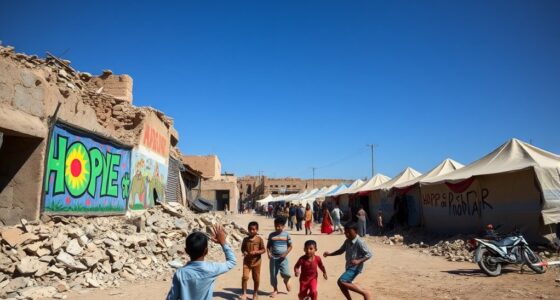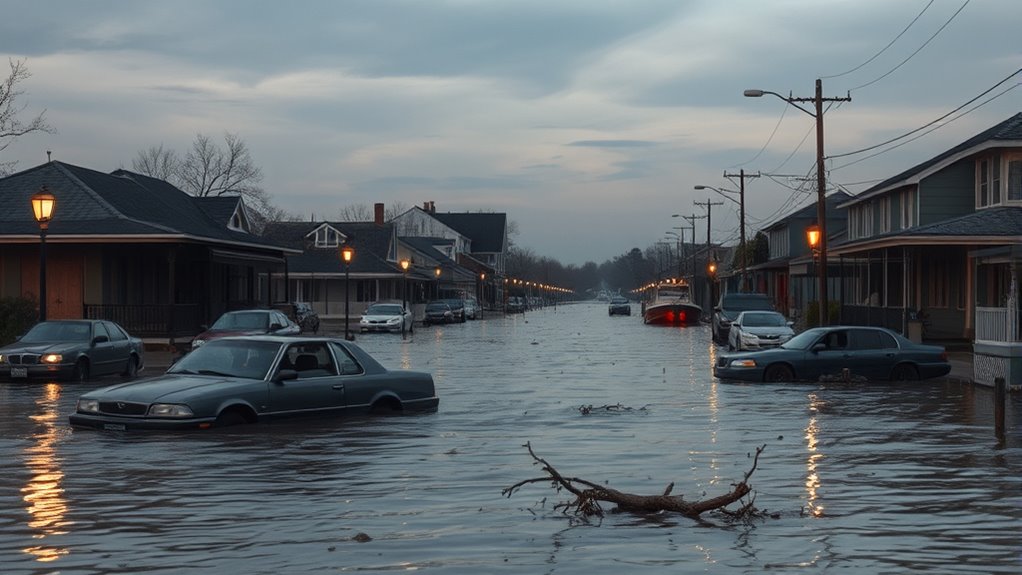

Hurricane Katrina highlighted critical urban resilience challenges, showing you that practical preparedness and robust infrastructure are essential. You need to guarantee emergency plans are executable during crises, especially for vulnerable communities with limited resources. Strengthening infrastructure like levees and drainage systems can prevent catastrophic failures. Inclusive planning, community engagement, and proactive drills are crucial for better response. Understanding these lessons will help you grasp how cities can enhance resilience and better protect their residents in future disasters.
Key Takeaways
- Effective emergency plans must be practical, community-specific, and regularly tested to ensure readiness during crises.
- Vulnerable communities need tailored evacuation routes, resources, and outreach to reduce disaster risks.
- Infrastructure weaknesses, such as levee failures, significantly worsened flooding and disaster impact.
- Upgrading and maintaining resilient infrastructure is critical for faster recovery and response.
- Proactive, inclusive planning and community engagement strengthen urban resilience against future disasters.
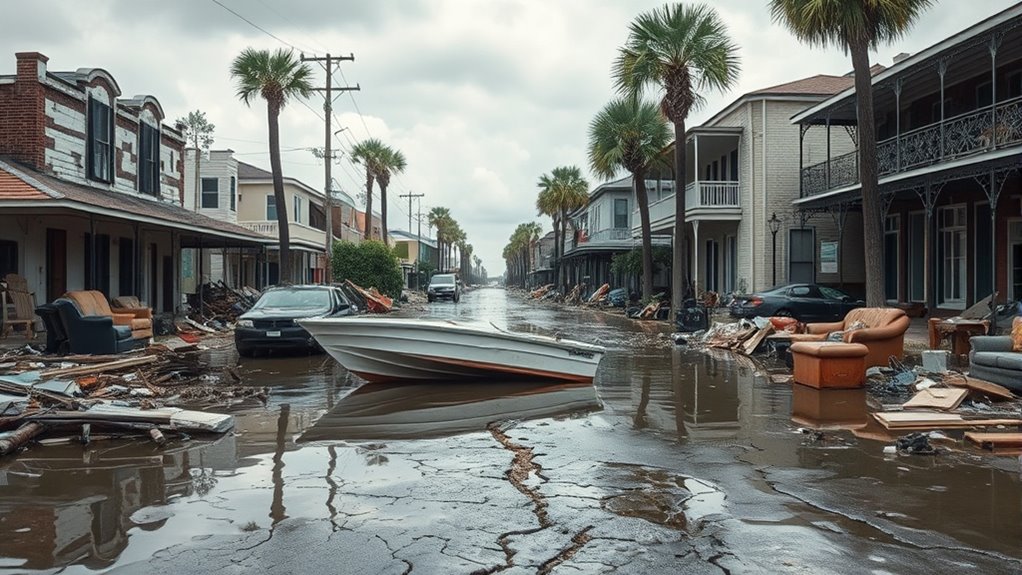
What can we learn from Hurricane Katrina about disaster preparedness and response? One of the most important lessons is that effective emergency preparedness isn’t just about having plans on paper; it’s about guaranteeing those plans can be executed when it counts. Katrina exposed significant gaps in how cities prepare for disasters, particularly in vulnerable communities. Many residents, especially in low-income neighborhoods, lacked access to reliable transportation, emergency supplies, or clear evacuation routes. This highlights that extensive emergency preparedness must consider the unique needs of all populations, not just the general population. You need to think beyond generic protocols and develop tailored strategies that can be quickly mobilized, including community outreach, early warning systems, and accessible shelter options. Without these, vulnerable populations face disproportionate risks, increasing the chaos and suffering during a crisis.
Effective disaster plans must consider vulnerable communities’ unique needs and ensure swift, tailored response strategies.
Another critical lesson from Katrina revolves around infrastructure vulnerabilities. The storm revealed how unprepared infrastructure can amplify disaster impacts. Floodwalls, levees, and drainage systems in New Orleans were designed with certain assumptions, but Katrina’s unprecedented strength exposed their weaknesses. Many levees failed, leading to catastrophic flooding that submerged large parts of the city. When infrastructure isn’t resilient, it becomes a primary point of failure during disasters. This underscores the importance of investing in infrastructure upgrades that consider worst-case scenarios, including stronger levees, improved drainage, and resilient power grids. You must recognize that infrastructure isn’t just physical assets; it’s the backbone of emergency response. When these systems fail, recovery becomes more difficult, and lives are put at greater risk. Additionally, ongoing infrastructure assessment and maintenance are crucial to ensure systems remain capable of withstanding severe events.
Katrina also demonstrated the importance of proactive planning and regular maintenance. It’s not enough to have a plan—you need to test and update it regularly, especially as climate patterns shift and urban landscapes evolve. Emergency preparedness should include drills, community education, and collaboration among agencies to ensure everyone understands their roles. Infrastructure vulnerabilities, meanwhile, require ongoing assessment and reinforcement to prevent failures. When these elements are neglected, the response to a disaster becomes reactive rather than proactive, costing lives and resources.
In essence, Katrina teaches us that disaster preparedness must be extensive, adaptable, and inclusive. It’s about addressing infrastructure vulnerabilities before a storm hits and ensuring every community member has the resources and knowledge to respond. The better prepared you are—both in planning and infrastructure—the more resilient your community will be in the face of future disasters.
Frequently Asked Questions
How Did Katrina Impact New Orleans’ Long-Term Urban Development?
Hurricane Katrina profoundly shaped your city’s long-term urban development by forcing a reevaluation of urban planning and infrastructure. You see more focus on resilient designs, flood protection, and sustainable growth to prevent future damage. Economic recovery efforts also prioritize revitalizing neighborhoods and attracting investments, which influence development patterns. Overall, Katrina made you realize the importance of building a more resilient, adaptable city to guarantee long-term prosperity and safety.
What Were the Psychological Effects on Residents Post-Disaster?
After Katrina, you likely experienced post-trauma that affected your mental health deeply. Many residents face ongoing anxiety, depression, and feelings of loss or helplessness. The disaster disrupted your sense of safety and community, making recovery emotionally challenging. You might also feel distrust toward authorities or worry about future disasters. Recognizing these psychological effects is essential to support your healing process and build resilience for future challenges.
How Did Government Response Influence Community Resilience?
Imagine a guiding hand during chaos—you played a crucial role in shaping community resilience. Your government’s swift evacuation planning and clear emergency communication fostered trust and coordination, helping residents feel supported. When authorities prioritized timely alerts and accessible information, they strengthened community bonds and encouraged collective action. This proactive approach turned a potential disaster into an opportunity for unity, demonstrating that effective response strategies truly make a difference in facing adversity.
What Role Did Infrastructure Upgrades Play in Recovery Efforts?
Infrastructure upgrades, like improved stormwater management and emergency communication systems, played a vital role in recovery efforts. You see, these upgrades help prevent flooding and guarantee timely information reaches residents during crises. By investing in resilient infrastructure, communities can respond faster, reduce damage, and rebuild more effectively. This proactive approach strengthens urban resilience, making recovery smoother and communities better prepared for future disasters.
How Can Cities Better Prepare for Future Hurricanes?
You should prioritize climate adaptation and enhance emergency planning to better prepare for future hurricanes. Develop thorough evacuation routes, invest in resilient infrastructure, and implement early warning systems. Strengthen community awareness through drills and education, ensuring everyone understands their role. By integrating these strategies, your city can reduce damage, save lives, and recover more swiftly from storms. Proactive planning and adaptive measures are essential for urban resilience against future hurricane threats.
Conclusion
You’ve seen how Hurricane Katrina revealed the fragility of urban resilience—like a house built on shifting sands. When floodwaters rose, entire communities sank, reminding us that preparedness isn’t optional. The city’s struggle to bounce back shows resilience isn’t just about infrastructure, but adaptation and unity. If you learn from these lessons, you’ll build stronger, more resilient cities—ready to face whatever storm comes next, just as a sturdy ship endures the fiercest sea.