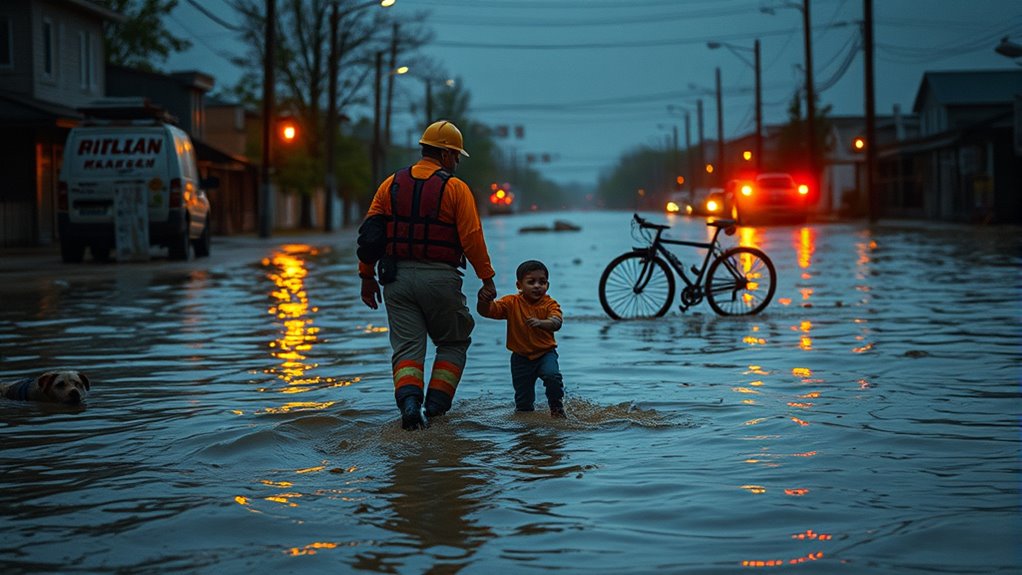

Preparing in advance for moral dilemmas during disasters helps you make responsible, ethical decisions when seconds count. By clarifying your core values, understanding your responsibilities, and setting priorities beforehand, you reduce impulsive choices driven by chaos. Reflecting on potential scenarios allows you to act with integrity and compassion, even under pressure. If you want to learn how to build this moral foundation and navigate tough situations more effectively, you’ll find useful insights ahead.
Key Takeaways
- Anticipate potential moral dilemmas during disasters to make informed, ethical decisions under pressure.
- Establish core values like honesty and compassion to guide responses in crises.
- Understand your responsibilities and ethical boundaries to avoid harmful shortcuts or compromises.
- Balance immediate needs with long-term impacts to ensure responsible, sustainable choices.
- Reflect and plan ahead to maintain integrity and consistency in morally challenging situations.

When disasters strike, they often force individuals and organizations into morally challenging situations where every choice has significant consequences. In these moments, quick decisions aren’t just about survival—they test your values, ethics, and sense of right and wrong. You might find yourself weighing the lives of different groups, deciding whether to prioritize safety over fairness, or choosing between transparency and secrecy. These dilemmas aren’t hypothetical; they require immediate action, often with limited information, and the pressure can be overwhelming. Preparing for such moments means thinking through potential scenarios ahead of time. If you haven’t considered what you’d do in a crisis, you risk making impulsive choices that could have long-lasting repercussions.
Disasters test our morals under pressure; preparation ensures we make responsible choices when every second counts.
One key step is establishing clear principles before chaos erupts. Ask yourself what your core values are—honesty, fairness, compassion—and how they might conflict in a disaster. For example, you might face a situation where revealing the full extent of a risk could cause panic, but withholding information could lead to greater harm later. Knowing how you want to balance transparency and safety helps you act consistently when the pressure is highest. It’s also essential to prioritize the well-being of the most vulnerable, even if doing so conflicts with other priorities like resource allocation or security concerns. Pre-determining these priorities ensures you don’t have to make difficult choices on the spot, when emotions are high and options are limited.
Another important aspect is understanding your responsibilities. Whether you’re a leader, a responder, or an individual, recognizing what you owe to others guides your decisions. In a disaster, you might face situations where cutting corners could save time but compromise safety. Knowing your ethical boundaries beforehand helps you resist shortcuts that could cause harm. It’s also wise to consider the long-term impact of your decisions. Short-term gains might seem attractive but could lead to greater problems down the line, such as loss of trust or legal repercussions. Planning ahead means weighing immediate needs against future consequences, so you’re better equipped to make balanced choices when time is scarce. Additionally, understanding modern farmhouses and their design elements can inspire practical solutions for emergency shelters or community resilience spaces in rural areas.
Ultimately, facing moral dilemmas in disasters is unavoidable, but you can prepare yourself by reflecting on your values, setting priorities, and understanding your responsibilities. The more you think through these challenges before they happen, the better you’ll be at making decisions that align with your principles, even under extreme pressure. When the moment arrives, you’ll have a clearer moral compass to guide you through the chaos, helping you act with integrity and compassion when it matters most.
ethical decision-making in disaster kits
As an affiliate, we earn on qualifying purchases.
As an affiliate, we earn on qualifying purchases.
Frequently Asked Questions
How Can Individuals Prepare for Moral Dilemmas During Disasters?
You can prepare for moral dilemmas during disasters by reflecting on your values and establishing personal priorities beforehand. Practice quick decision-making scenarios and consider possible outcomes to become more confident in your choices. Stay informed about ethical principles and community resources, so you’re ready to act responsibly under pressure. Building mental resilience and discussing tough situations with trusted individuals also helps you respond thoughtfully when faced with real-life moral challenges.
What Role Do Cultural Values Play in Disaster Decision-Making?
Cultural values are the compass guiding your decisions in disasters, shaping what you see as right or wrong. They influence how you prioritize resources, who you help first, and how you interpret risks. By understanding your cultural lens, you can navigate moral dilemmas more clearly, like a ship charting a course through stormy seas. Embracing diverse perspectives helps you make compassionate, culturally sensitive choices when stakes are high.
How Do Authorities Prioritize When Resources Are Scarce?
When resources are scarce, you should prioritize based on urgency, potential for saving lives, and the needs of the most vulnerable. You assess which groups or areas face the greatest risk and allocate supplies accordingly. It’s essential to stay transparent, communicate clearly, and adapt your strategies as situations evolve. By focusing on fairness and effectiveness, you can make difficult decisions that maximize positive outcomes during a disaster.
Can Moral Dilemmas Be Avoided With Better Planning?
Think of moral dilemmas like storm clouds on the horizon—you can’t always clear them entirely. Better planning helps you navigate around these clouds, but it doesn’t guarantee they’ll vanish. You can prepare protocols and training to guide decisions, yet some dilemmas will still challenge you. So, while planning reduces uncertainty, it doesn’t fully prevent moral dilemmas—they’re an inherent part of complex disaster responses.
What Psychological Effects Do These Dilemmas Have on Responders?
Moral dilemmas can cause responders to feel intense stress, guilt, and anxiety. You might struggle with feelings of self-doubt or question your decisions, which can lead to burnout or emotional exhaustion. These dilemmas challenge your moral compass, making it harder to maintain focus and resilience. Recognizing these effects helps you seek support, process your emotions, and stay mentally prepared for tough choices in disaster situations.
Conclusion
Think of moral dilemmas in disasters as storm clouds on the horizon—you can’t always predict them, but you can prepare your mindset. Deciding your values beforehand is like having a compass in the chaos, guiding you when clarity fades. By contemplating tough choices now, you anchor yourself amid turbulent times. When the storm hits, your prepared morals will be your sturdy ship, steering you safely through the rough seas of disaster.