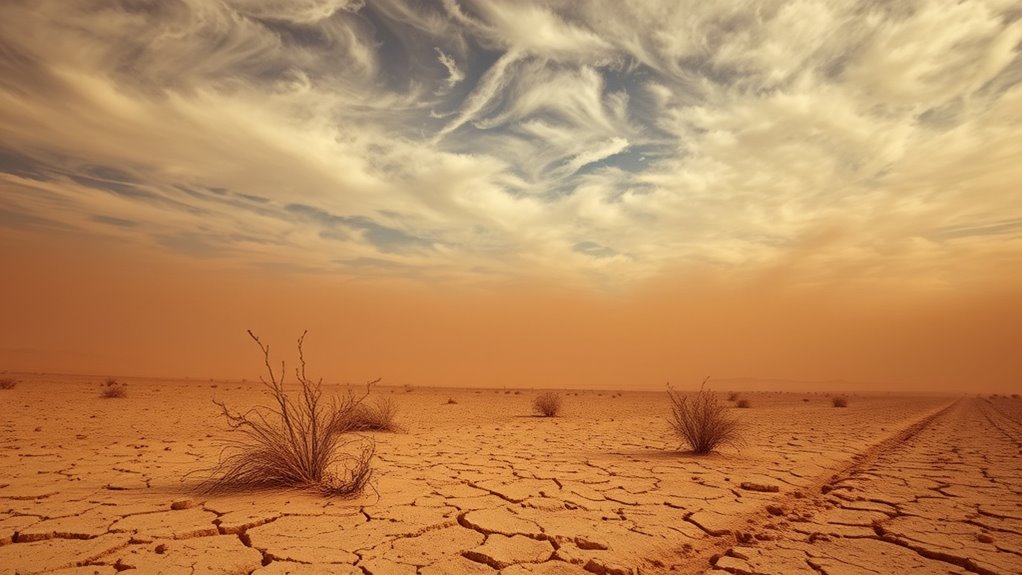
Dust storms play a major role in speeding up desertification by removing fertile topsoil and damaging ecosystems. When loose soil is lifted into the air, it can travel long distances, leaving land barren and less able to support vegetation. Human activities like overgrazing and deforestation worsen this process by destabilizing soil. Understanding how dust storms impact climate and land can help you see how they contribute to desertification worldwide—stay with us to explore more about this environmental challenge.
Key Takeaways
- Dust storms accelerate desertification by eroding fertile topsoil and stripping vegetation, creating a self-perpetuating cycle.
- They disrupt local climates and rainfall patterns, reducing vegetation growth and land recovery.
- Human activities like overgrazing and deforestation increase soil vulnerability to dust storms, worsening desertification.
- Dust particles transport nutrients, pollutants, and influence global climate, impacting ecosystems and weather worldwide.
- Mitigation strategies include sustainable land management and reducing land disturbance to prevent dust storm formation.
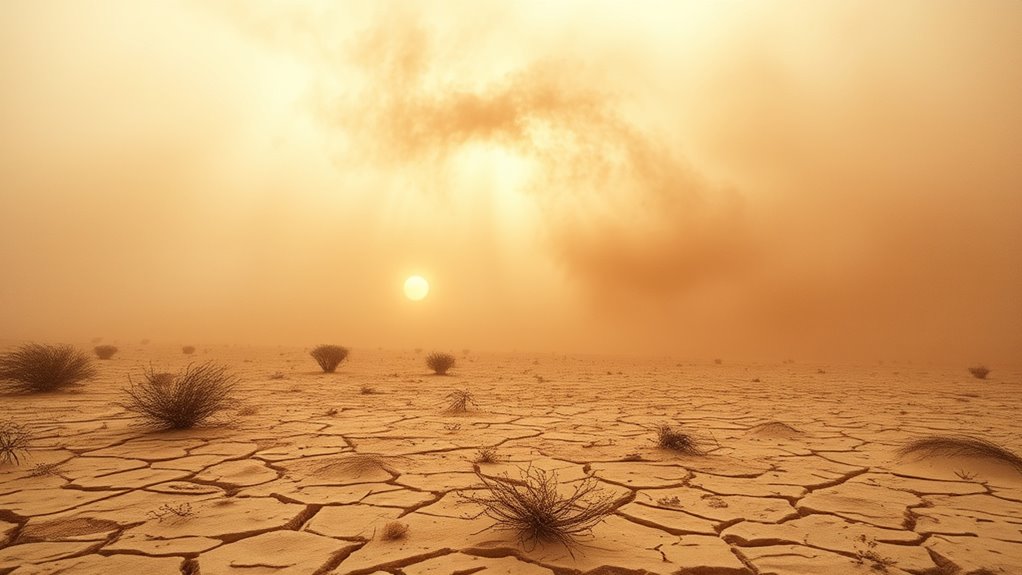
Have you ever wondered how dust storms contribute to the ongoing process of desertification? When strong winds pick up loose soil and carry it across vast distances, they accelerate soil erosion, stripping away the fertile top layer that plants depend on for nutrients and growth. This loss of topsoil makes the land increasingly barren, turning once-productive areas into inhospitable deserts. As the soil erodes, vegetation struggles to survive, which in turn exposes more ground to the elements, creating a vicious cycle that feeds into the larger issue of desertification. This process doesn’t just transform local landscapes; it also has significant climate impacts. Dust particles released into the atmosphere can influence weather patterns by altering temperatures and cloud formation, which can exacerbate drought conditions in affected regions. These changes can disrupt rainfall cycles, making rainfall less predictable and reducing the chances for plants to recover or establish themselves. When dust storms become more frequent and intense, they effectively weaken the natural resilience of ecosystems, pushing the environment further toward desertification.
You might notice that dust storms often originate in areas where human activities, such as overgrazing, deforestation, or improper farming, have already disturbed the soil. These activities leave the land vulnerable, especially when vegetation cover is stripped away, leaving behind loose, dry soil that’s easily lifted into the air. Once airborne, dust particles can travel hundreds or even thousands of miles, affecting regions far from the original source. This not only spreads desertification but also contributes to climate impacts on a much larger scale. The particles in dust storms can influence the Earth’s radiation balance by absorbing and reflecting sunlight, which can lead to localized cooling or warming. Additionally, dust can transport nutrients or pollutants across continents, impacting air quality and weather systems globally.
Understanding the link between dust storms, soil erosion, and climate impact helps you grasp the importance of managing land use wisely. Tackling desertification isn’t just about planting trees or conserving water; it’s also about preventing the conditions that lead to dust storms in the first place. By reducing activities that disturb the soil and implementing sustainable land management practices, you can help slow down soil erosion and mitigate the climate impacts associated with these storms. Recognizing the interconnectedness of these issues underscores the urgency of taking action now. When dust storms decrease in frequency and intensity, it signals a healthier, more stable environment, where soil can retain its nutrients, vegetation can thrive, and the climate remains balanced. Your awareness and efforts toward sustainable practices directly contribute to combating desertification and preserving the land for future generations.
Frequently Asked Questions
How Do Dust Storms Impact Human Health Long-Term?
Dust storms can seriously affect your long-term health. You might develop respiratory diseases like asthma or bronchitis from constant exposure to airborne particles. Over time, the stress and anxiety caused by frequent dust storms can also impact your mental health, leading to increased depression or anxiety. It’s important to protect yourself by staying indoors during storms and wearing masks when outside, reducing your risk of these serious health issues.
Can Desertification Be Fully Reversed Once It Occurs?
While desertification poses serious challenges, full reversal isn’t always feasible. Restoration efforts face obstacles like degraded soil and water scarcity, making complete recovery difficult. You might imagine trying to turn a barren, cracked landscape back into lush greenery—it’s a complex journey. Though some areas can be rehabilitated, the reversal’s success varies, and often, sustainable management becomes the best way to coexist with these transformed lands.
What Are the Economic Costs of Dust Storms?
Dust storms cause significant economic impact by disrupting transportation, damaging property, and reducing air quality. You may face agriculture loss as crops get destroyed or contaminated, leading to lower yields and income. These storms also increase health costs due to respiratory issues. Overall, dust storms threaten local economies, forcing communities to spend more on cleanup, healthcare, and mitigation efforts, which can strain budgets and slow economic growth.
How Do Climate Change and Desertification Interact?
Climate change and desertification dance a deadly waltz, each fueling the other’s steps. As global temperatures rise, climate feedback accelerates land degradation, turning fertile ground into barren wastelands. This vicious cycle worsens desertification, which in turn worsens climate change by releasing stored carbon. You can see how they intertwine, each amplifying the other’s impact, threatening ecosystems and communities with relentless expansion of deserts and escalating climate crises.
Are There Global Efforts to Combat Desertification Effectively?
Yes, there are global efforts to combat desertification effectively. You can support initiatives like international policies that promote sustainable practices, such as reforestation, efficient water management, and land restoration. Organizations like the UN’s Convention to Combat Desertification (UNCCD) work worldwide to implement these strategies. By advocating for and adopting sustainable practices, you help strengthen these efforts and contribute to preventing desertification’s spread and impact.
Conclusion
Remember, a stitch in time saves nine. By understanding how dust storms and desertification threaten our environment, you can help take action to prevent further damage. Protecting soil health, supporting sustainable practices, and raising awareness are essential steps. Every effort counts in preserving our land for future generations. So, stay informed and proactive—because when we work together, we can turn the tide and restore balance to our fragile ecosystems.